Off the record.

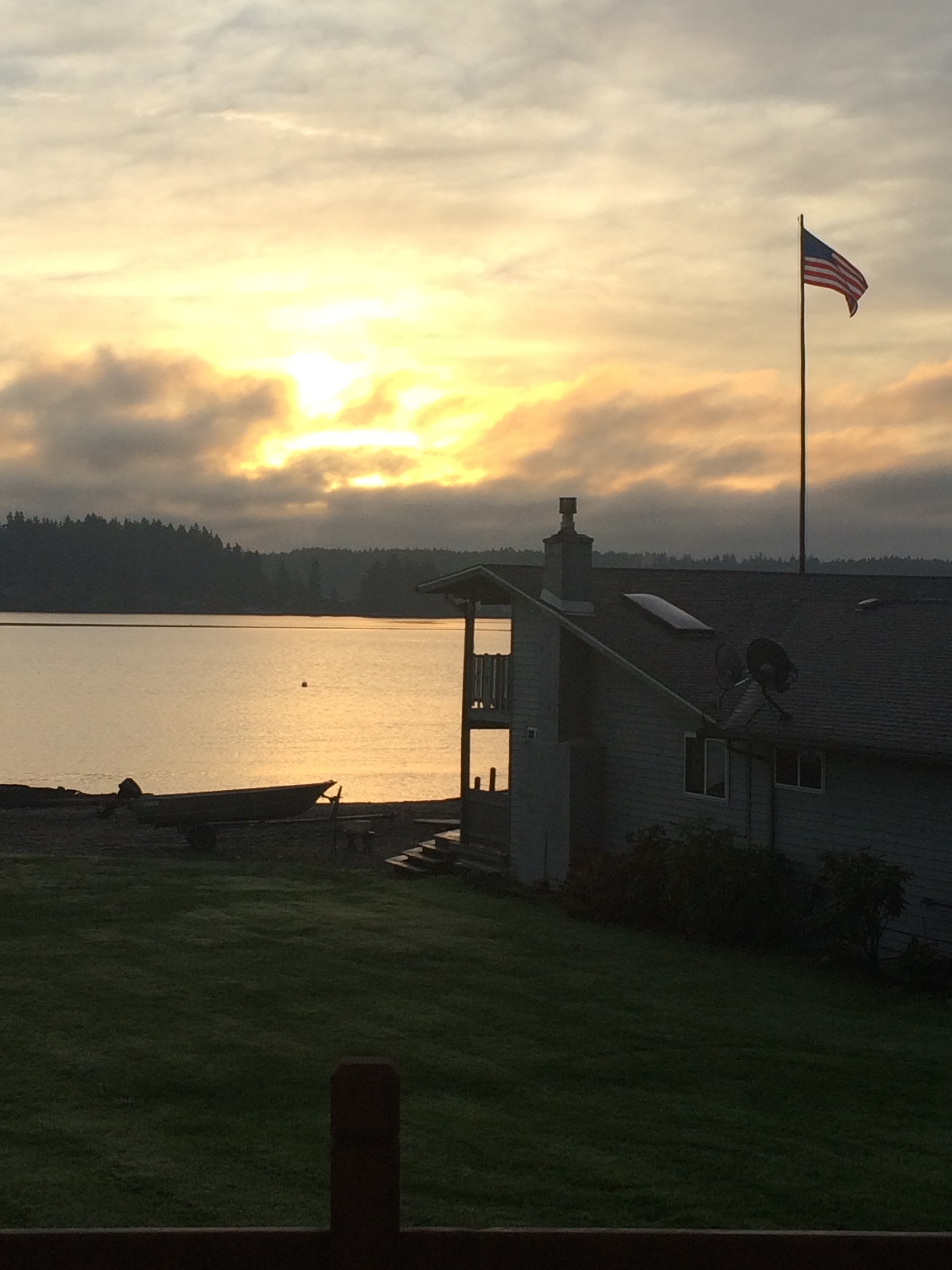
Late in the evening on July 4th, I sat alone on an expansive wooden deck overlooking the water, a cinnamon-scented candle glowing beside me, breathing in the stars and gunpowder as fireworks exploded and unfurled their brilliant colors across the night sky.

IMG_7834

Our own little family celebration on the rocky shores of Case Inlet had just ended. My aunt and uncle had gone to bed; my cousins had gone home. It was a subdued holiday – nothing like the ruckus of previous years – but we built a bonfire on the beach and watched the colored lights boom and sparkle above the bay, and that was enough for me.

I have spent countless Fourth of July holidays on that beach and each one of them has been different. My grandfather – who bought the land all the way back in 1959 – had a saying that he wrote to me, years ago, in a letter, which I’ve cited on this blog more than once: “The beach never changes, ‘tis only we who change.”

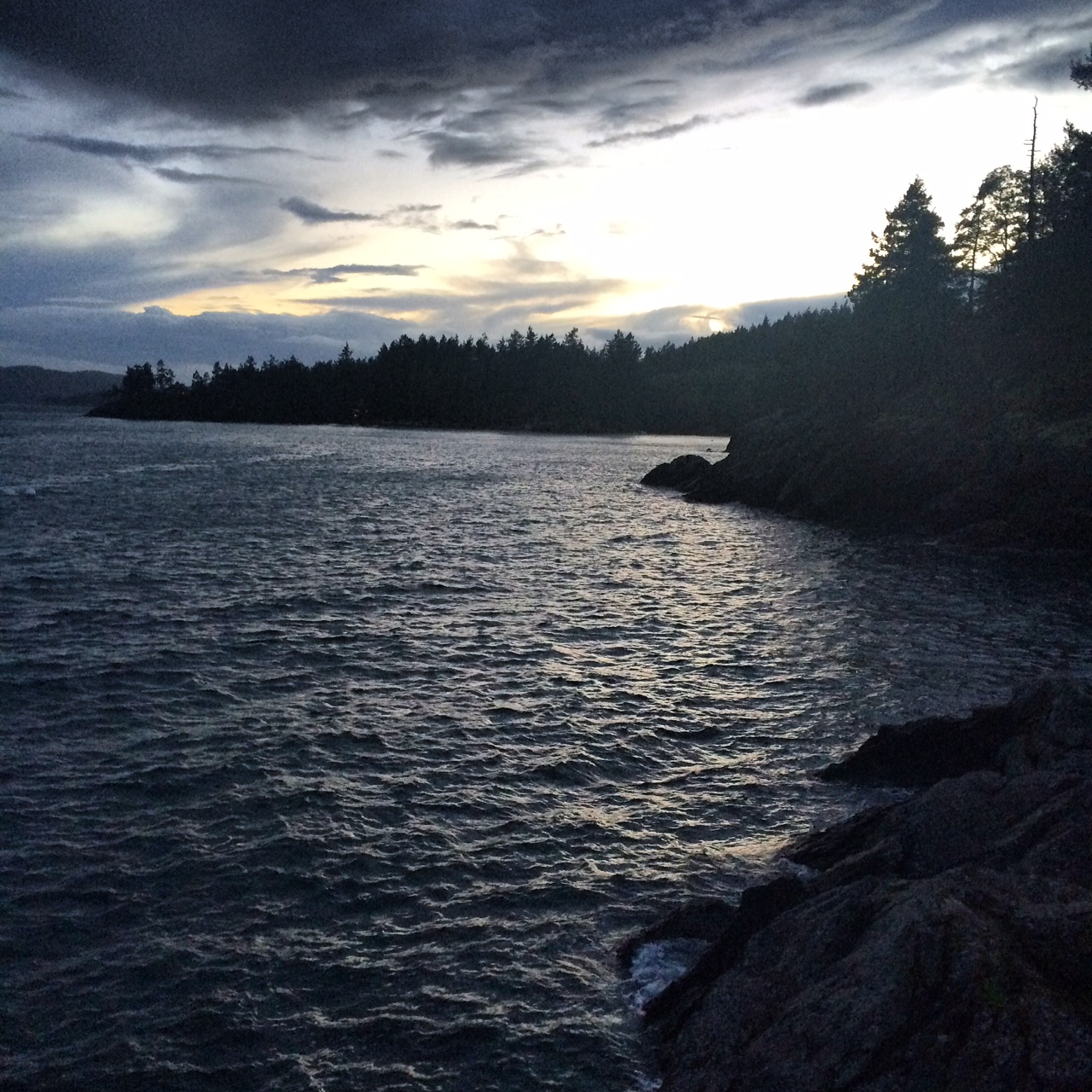
He’s right, and he isn’t. The beach is very different than the magical place I remember from childhood; both the passage of time and the passing of loved ones have seen to that. But more than fifty years after my grandparents cemented this spot as a permanent part of our family’s legacy, placing a sign reading, Popelkas: Off the Record, at the entrance to the property – a nod to their careers as court reporters – its fundamentals remain the same: it’s still a small slice of heaven tucked away on one of Puget Sound’s inland waters, the saltwater bay framed by banks of evergreen trees, the stately Mount Rainier towering above, keeping watch over us all.

This Fourth of July placed me in uncharted territory. It was my first visit to the beach since Grandpa’s hospice last fall, my first time ever being there without him. My decision to go was last minute – ticket booked a few days before travel – and this visit would be in addition to another, longer trip I’d already planned just five weeks later, in August. But the last few months in Los Angeles had left me exhausted and in need of a spiritual reboot, and the beach had always had the power to ground me in a way that the gritty, noisy, crowded, city never could. And so I went.
FullSizeRender

It was not a perfect trip, not by any means. Unexpected family drama bubbled to the surface, reopening wounds that I thought had closed. I spent much of the emotionally charged four-day visit feeling nostalgic for a past that no longer existed.

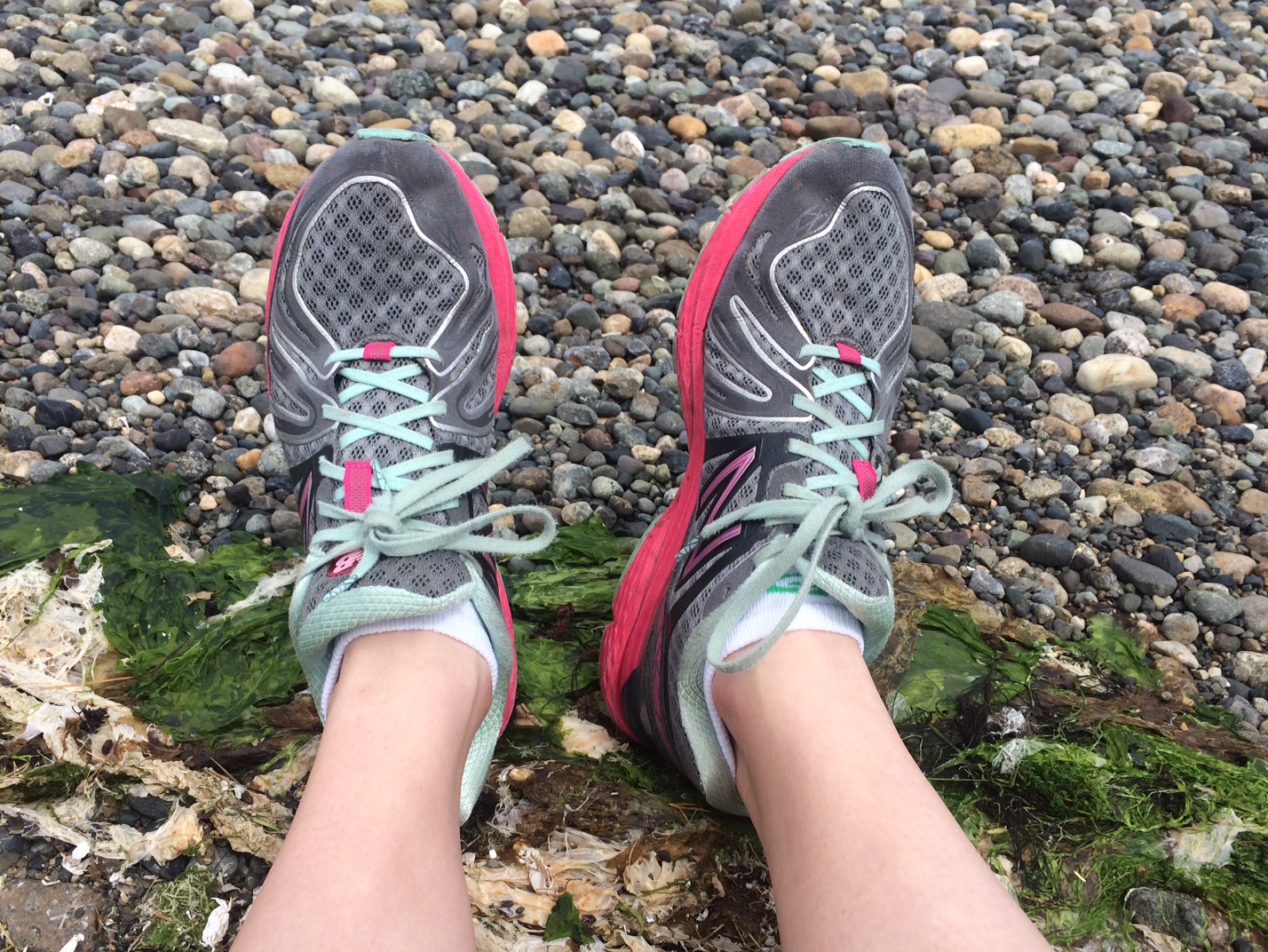
But I slept. And I wrote. And I wandered the beach, searching for seashells and agate stones. I ran three miles on the shoulder of the heavily forested Grapeview Loop Road, and was impressed – as I always am – by the friendliness of the locals. (One motorist even stopped, rolled down her window, and offered me a bottle of water. City girl that I am, I declined.) One morning, I arose early, drank coffee, and watched through my window as the sun stubbornly pushed through layers of clouds, slowly turning the morning from grey to blue as slivers of light danced across the sound, causing the water to glimmer and dance like liquid silver.

And gradually, I grew calmer and more centered and I felt my equilibrium returning. Because despite the way that life shakes and shifts around me, despite how greatly the beach’s present reality differs from my past memories of the place, there’s something that continues to hold true: my history is firmly anchored there. And whenever I return, when I remind myself of who I am and where I’ve come from, I know myself just a little bit better. And it’s in that space, no matter how confused or lost or frustrated I may have been, that I’m able to figure out what it is I want to do next.

“The beach never changes, ‘tis only we who change.”

Until next time, friends.

IMG_7819

Limbo.

Grandpa sits in his usual spot in the living room, staring out the picture window at the placid, silvery surface of Case Inlet, framed by evergreens that have turned an early November shade of amber. His yellow-tinged eyes reflect the vacant gaze of someone who’s looking but not seeing. “What are you thinking about?” I ask, patting him on the shoulder. I expect his typical response: “Nothing.” Instead, he intones softly, “I’m thinking about how quickly the time has gone.”

I’ve been at the beach for fifteen days, though of course, that’s not the measure of time that Grandpa is referring to. This evening, barring a catastrophe, I will leave, and board a plane headed back to Los Angeles. It is staggering to me that my time here has passed so swiftly, and yet, has contained so much within its rapidly elapsing days. I feel as though I’ve been moving in slow motion for weeks, traveling from joy to despair to fear in the space of a single hour, sometimes in a single minute. There is always another hospice appointment, another phone call, another email, another problem, another difficult conversation. And in between it all, I’ve been working, straddling two worlds – here and there – with the aid of an unreliable Wi-Fi connection.

I’ve never been very good at living in the moment, but these last couple weeks, the moment is all I’ve had. It’s no wonder my sense of time is so screwy, with Grandpa’s feeling borrowed and mine suspended. What a strange sort of limbo it is to sit with someone you love as they face the end of their life. The question that looms before us is when? It is the question he asks of everyone: his caregivers, the hospice nurses, the chaplain, the social worker, and of course, his family. It is the question that no one has the answer to, least of all me.

IMG_5702

I am prepared for what’s coming in a way that I wasn’t able to be with either of my parents, and for that I am grateful. I am grateful for all of the time I’ve been able to spend with him. But after fifteen days, there is little for me to do but wait.

Twenty-four-hour care is in place; contingency plans have been made. And the look Grandpa now sees reflected back in my eyes is one of someone who’s watching his every move, searching his face for signs of what’s to come. I can’t do this any longer. I can no longer sit around this rain-soaked place – beautiful as it is – waiting for my 89-year-old Grandfather to die.

I feel selfish for craving a way out, for craving warmth and palm trees and cheap, delicious Mexican food, and a hike in the hills and the sight of the Pacific and a desperately needed session with my therapist, but I do. I crave all of these things. I even crave the to-do list that awaits me upon my return, because it represents routine, and the opportunity to pretend, for a little while, that everything is normal.

So back I will go, for now. My return to the beach is already booked, but every ticket is refundable, every plan changeable. This type of freedom, it turns out, is expensive. But it’s the price you pay when you’re in limbo. When you’re left with nothing to do but wait.

photo 1


Doe Bay.

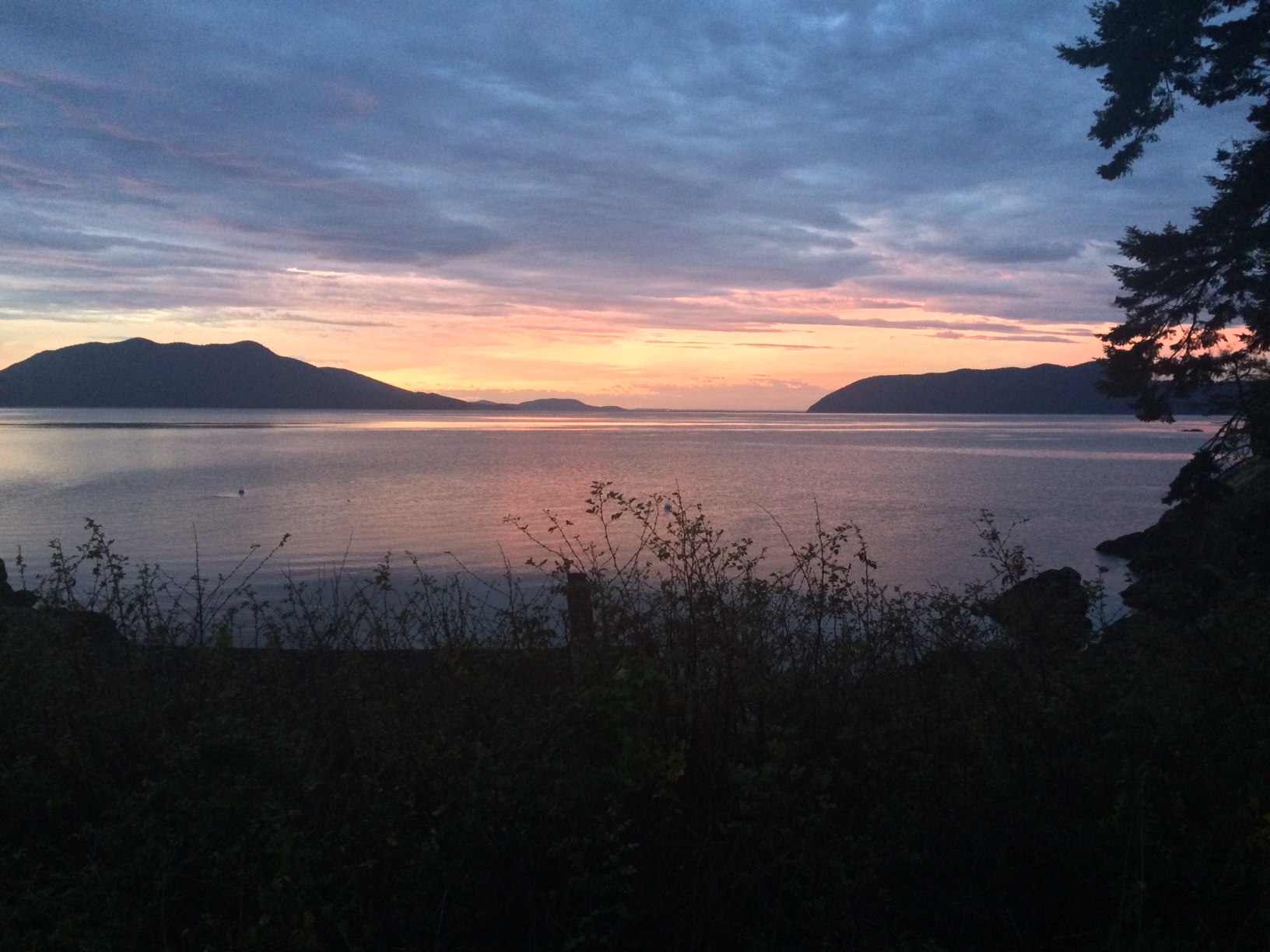
I’m sitting on Meditation Point, a promontory overlooking the sea, trying to decide where to fix my gaze. The unseasonably warm October weather has abruptly turned cold, and I’m shivering in my thin flannel shirt. I long for the puffy down jacket I left behind in the Retreat House, but I brush the longing aside, choosing instead to focus my attention on the rippling waters of Otter’s Cove, and the fog rolling over the tops of impossibly tall evergreen trees.

IMG_5550

A few minutes ago, as part of her workshop at Write Doe Bay, papercut artist Nikki McClure led us on a walk through the woods, instructing us to remain silent as we followed the forested trail toward the overlook. Rather than speak, we were meant to simply observe the natural beauty all around us, find a spot to settle in, and sketch what we saw.

As our group of writers trudged along, passing campsites, we encountered a middle-aged couple cavorting among the trees, the door of their yurt flung open as they enjoyed a morning picnic. They hollered “hello!” at us, and though I (mostly) obeyed the instructions to stay quiet, the pair’s unchecked exuberance left me unable to suppress a chuckle. I wanted to shout greetings back at them, but instead, I smiled. A smile that said, “I know just how you feel.”

I’ve been back from Doe Bay for just over a week, and though it was my second time attending Write, this trip was a markedly different experience for me. Sure, the teaching artists were different, as were most of the attendees. But one year later, I was also different. And it was this difference that I found to be the most striking.

IMG_5545

There’s a phrase that the founders of Write often use when referring to the workshop and to Doe Bay itself: The power of a place to unlock you. To underscore this idea, participants exchange vintage keys at the close of the workshop, placing them around each other’s necks on a string of suede.

But here’s the thing: if a person is going to be unlocked, they have to be willing to open up. And last year, I wasn’t. I came to Doe Bay fragile and frightened, hollowed out by tragedy, and desperately seeking some magic elixir to heal my battered psyche. I listened to the powerful stories of the other writers. I was moved. And I tried my best to be present. But if I’m honest, I wasn’t able to allow myself to participate in the workshop in any meaningful way.

Fast forward one year later. On this visit, waking up to the staggering sunrise outside the window of my cabin felt like nothing short of a miracle. On this visit, I found myself passionately curious about all of the attendees, wanting to connect with each and every one of them – even if only for a few minutes – in the short time we had together. And on this visit, the fear that churned in my stomach at the thought of reading my unpolished workshop writing or deeply personal stories from my life served as motivation to jump in and share, rather than something that held me back.

IMG_5533

During her workshop at Write, Jenny Feldon asked us to consider changing one thing upon our return to our “normal” lives. “Change one thing,” she said, “and believe that other changes will follow.”

One year later, with Doe Bay as my barometer, I can tell you that, for me, many things have changed. Maybe the island and the rolling fog and the space we share together over the course of those three days really are magic. And maybe I simply needed to try again, to come back to this beautiful place tucked away amidst the trees, to realize how much – over the last year – I have been coming back to myself.

The power of a place to unlock you.

Until next time, friends.

Doe Bay Fall 2015

The memory of a place.

We received a brief respite from the heat this week in Los Angeles – even a desperately needed bit of rain – before the mercury began to spike again, signaling the arrival of another sweltering September weekend. In all the years I’ve lived here, I always remember September being hot, but never quite as insufferable as the recent Sunday evening when I returned to L.A. after a two-week absence. Upon crossing the threshold of the little stucco box that is my one-bedroom apartment, I was greeted by a wall of heat so humid, so stale, and so oppressive, that it nearly immobilized me. As I began to unpack, giant beads of sweat dripping down my nose, I imagined I was back in my seat on the Amtrak Cascades, gazing dreamily out the rain-kissed window at Puget Sound, the train pressing steadily onward toward British Columbia.

IMG_5114

Is it possible to feel homesick for a place that was never really home? While it’s true that sandwiched between my youth in Anchorage, Alaska and my adult life in Los Angeles, I did spend four years of high school in the Pacific Northwest town of Olympia, Washington, that was merely a blip, and the late 90’s were so long ago. Over the course of my life, I’ve been less of a resident of the Pacific Northwest, and more of a frequent visitor.

Still. Nearly all of my family – at least the family members that I know – live somewhere between Anchorage and Medford, Oregon, with most of them tracing their roots to Washington State and Oregon. And while Mom and I joined Dad in Alaska shortly after my birth at Seattle’s Swedish Hospital, Mom never fully settled into life in Anchorage. The Pacific Northwest was in her blood, and we returned there often. Many of my childhood memories are hazy mental photographs of my grandparents’ home on Beach Drive in West Seattle: playing catch in the long driveway, Grandpa’s rose garden, the living room with its seascapes and sea gull décor, the blond shag carpeting and terrier (Benji) to match.

And then of course there’s the Beach – the property on Case Inlet in Southwest Washington that I wrote about at length in my last post. That place is not only where several of my close family members reside, it is forever entrenched in my history.

As beautiful as the Pacific Northwest is, it has been difficult for me not to feel a bit haunted whenever I return there. Amid the inlets and elbows of Puget Sound, the tall evergreen trees, the gorgeous views of Mount Rainier, are memories of people that are no longer living, and a life that’s no longer mine.

IMG_5103

But this time – and I’m not quite sure why – the ghosts of the past seemed to peacefully coexist with the experiences of the present. The familiar was no longer haunting; it was a source of comfort. The Pacific Northwest was markedly different, yet ever the same.

The tree-lined drive along Highway 3 into Shelton – where I took my driver’s test –this time made in Grandpa’s ice blue Honda CR-V with the handicapped sticker hanging from the mirror. The same, yet different.

Olympia. The loop around Capitol Lake – where I would walk so many times, rain or shine – and the Capitol Building, with its dome that I used to photograph for the school paper. This time, a walk downtown for lunch with one new friend, then coffee with another on the Capitol campus, where she works. The same, yet different.

Seattle. Echoes of my mother’s laughter all around Westlake Center. The flagship Nordstrom where we’d spend an afternoon lunching and shopping for shoes. The Paramount Theatre, the site of one of my first concerts – Garbage – now hosting the band Hall and Oates. The waterfront – and the arcade where we spent our high school grad night – now mired in new construction. This time, I stop to ask a handsome police officer if he can point the way to Ivar’s restaurant. He laughs and directs us through scaffolding and over a rickety wooden walkway. Ivar’s – the place I’d feed seagulls and watch departing ferryboats as a child– now a spot to enjoy a leisurely lunch with my sister Marion, sipping wine and planning our trip to Bainbridge Island. The same, yet different.

IMG_5128

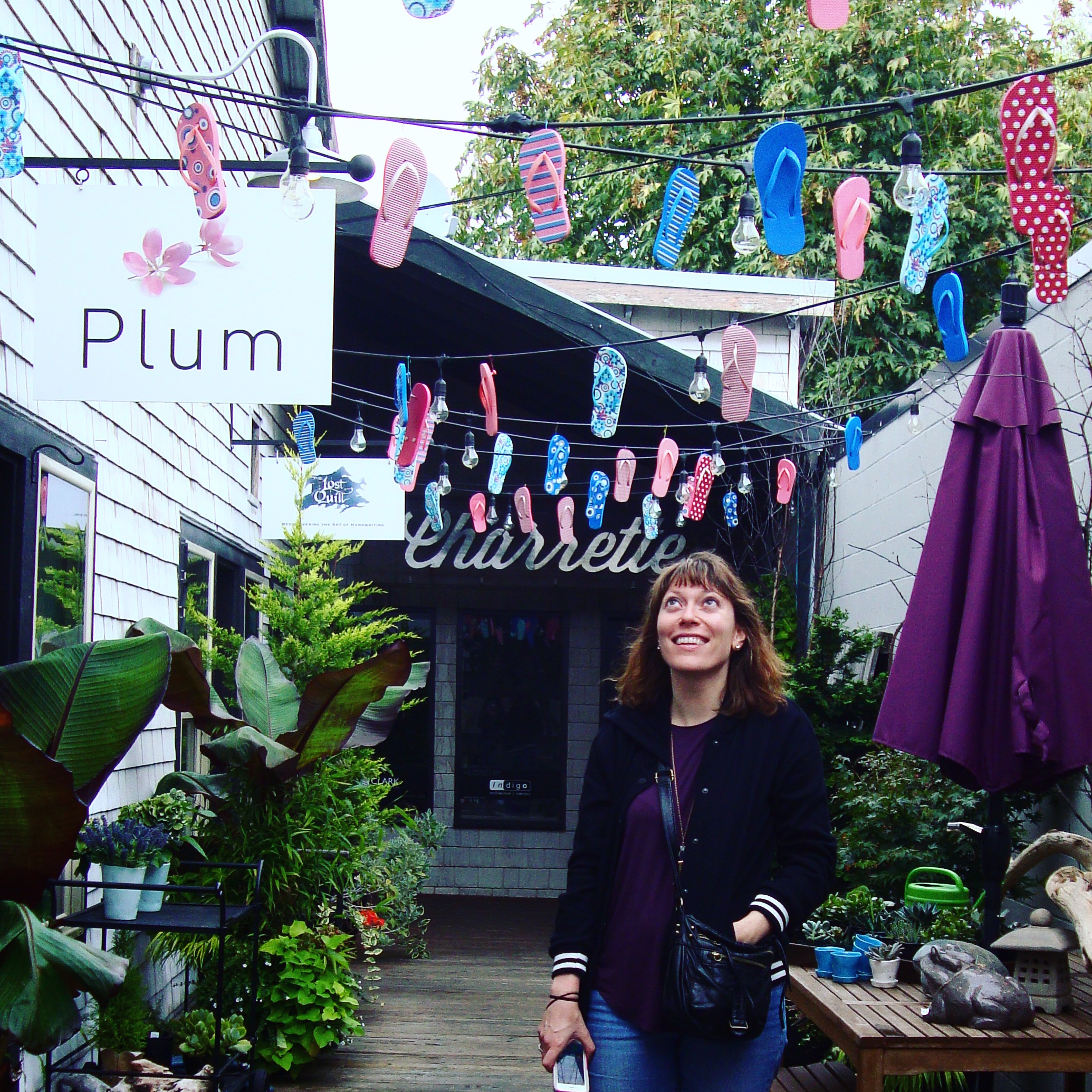
The border crossing into Vancouver. That same Amtrak train – number 510 – departing daily from King Street Station, with its iconic clock tower and cavernous marble lobby. This time, sitting on a wooden bench, ticket in hand, waiting to board and remembering the summer I drove across the border by myself, just seventeen, in my maroon Toyota Rav-4, receiving endless harassment from the border agents. The same, yet different.

Vancouver’s West End. The condo on Nelson Street where my sister and brother-in-law lived when my niece Nora was just a toddler, before my nephew Quinn was born. Now, Quinn is in high school, and Nora is away at University in Montreal.

It’s all the same, but it’s all so different. Yet for the first time that I can remember, the differences don’t seem to bother me. They don’t feel tinged with sadness like they usually do.

Perhaps it’s me that’s different, and not these places. Perhaps the change is simply the result of the passage of time and the slow healing that comes along with it. Or perhaps love of place has finally been able to transcend the pain of all that’s missing.

But whatever the reason, this time, the ghosts stayed at bay. And I was able to make new memories. Good ones. Memories that I will hold on to, dreaming of the gentle breeze off Puget Sound, until I’m able to return again.

Until next time, friends.

IMG_5183

Blog at WordPress.com.