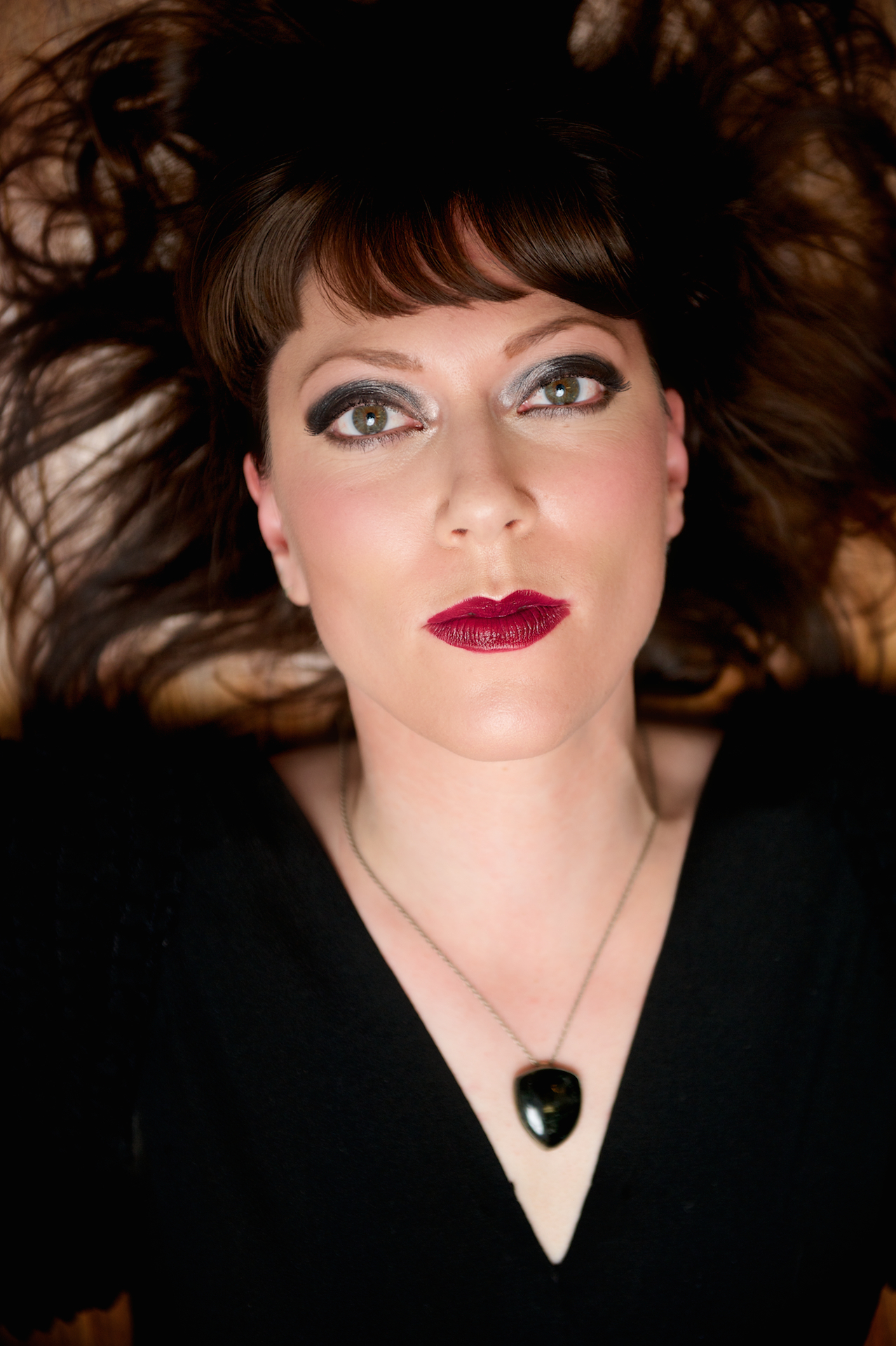
The price.

For the last several months I’ve been meditating on a big idea. A vast, multi-faceted idea. An idea that can be approached from different sides and attacked from numerous angles. An idea that for me, as an artist and as a creative being, is on par with questions like ‘What is the meaning of life?’ ‘What’s my higher purpose?’ and ‘Why are we all here?’

I don’t think I can tackle the question weighing on my mind in one post. It’s too big. It will probably become a recurring theme in my work (echoes of it appear in my blog, Broken), or in a series of posts. I’m not sure yet.

But, to begin. What I’ve been puzzling over is this: in order to create great art, is suffering a necessary, and in fact, inevitable, part of the process?

Our history is rife with visionary creators who harbored broken souls. Tennessee Williams, Vincent Van Gogh, Sylvia Plath. More recently, Heath Ledger, Phillip Seymour Hoffman. The talented and tortured musicians who are members of that infamous 27 club: Jimi, Janis, Jim, Kurt, Amy.

There’s no doubt that among the gifted and the sensitive, there’s a proclivity toward addiction and self-destruction. But why? Don’t mistake me; I’m not suggesting that in order to be a great artist (or even a mediocre one), alcoholism, drug abuse, depression, even suicidal tendencies, are a prerequisite. If anything, this toxic and destructive behavior produces inertia that stands in the way of the creative process. But the idea that I keep coming back to is this: as artists, we suffer more than the rest of people. We feel things more exquisitely. In order to be visionary, we must be honest to the point that it’s painful. We must be willing to expose our most private, secret parts, our deepest vulnerabilities, and the darkest parts of our hearts. We must walk into the full range of human emotions open and unguarded.   And for that, we pay a hefty price.

I have a uniquely personal experience with the idea that the act of creation produces suffering, and it’s the reason I’ve been meditating on it at such great length. Over the last year and a half, I’ve lost three of the most important people in my life in dramatic fashion. And I lost not only their physical presence, but also something much deeper and more profound. Through their deaths, I’ve been faced with hard truths about my family that I didn’t want to know. Truths that have shaken and shattered my foundation and left me questioning everything I thought I knew: my childhood, my relationships, my history, and my very identity.

But here’s the gift. When I finally, recently, landed at zero, I became more creative. My writing got better. Ideas started clicking, and synapses started firing in a way they never had before. I found myself suddenly harnessing an authority that I’d never owned before; an authority that I’m not only compelled to share with others, but an authority that I have to share in order to survive. I know this like I know the color of my eyes or the place that I was born.

All human beings suffer. It’s inevitable. We make terrible, tragic mistakes. We experience great pain. We love deeply and we lose profoundly. Most people don’t walk into these emotions willingly. They avoid them because they’re painful, and only experience them as the inevitable by-product of being alive. But as artists, we wade into the most intense human experiences willfully, and with abandon. We welcome the pain, the joy, the agony and the ecstasy. We say bring it on. We want to feel everything. But sometimes we feel too much. Enter booze, drugs, sex, crazy, destructive behavior, in order to numb the pain. And that’s when we get into trouble.

Speaking from personal experience, it’s incredibly difficult to put my heart on the line and my grief on display in such a vulnerable way without becoming a little fucked up and unhealthy about it in the process. The intense feelings I’ve been wading into and moving through have made me feel closer to Tennessee and to Sylvia and to Vincent and to Kurt. I understand them better. My gift and my curse is that the hole in my heart is only filled through sharing my very personal story with the world. And yet to sit in those feelings without letting them swallow me whole is the great challenge that I’m still trying to sort out. The powerful conundrum that we face as artists is that our very lives depend on telling our stories – honestly, openly, nakedly, no holds barred – and yet the act of doing so is so dangerous to our psyches that it threatens our survival. It is the ultimate Catch 22, the tightrope we must all walk.

And so, my fellow poets, beautiful dreamers, dear friends, brave and broken souls, I invite you to join me in meditation on this question: how do we do what we must do, what we were born and put on this earth to do, without allowing it to destroy us?

It’s an open dialogue, if you’d like to have it.

Until next time, friends.

Nothing.

Tell me if this has happened to you before: you’re confronted with a problem that you don’t know how to solve, and so, rather than react, you wait.  And while you’re waiting, this problem magically takes care of itself.  It could be an email that you don’t know how to respond to, a request for help from a needy friend that you just don’t have time for, or a work problem that you’re not sure how to tackle.  And sometimes, as with a computer glitch, all you really need to do is turn it off for a while and leave it alone.  It’s the equivalent of shutting down and rebooting your system.

I’m the last person to advocate ignoring a problem in hopes that it will just go away.  I’m a doer.  Anybody who has worked with me on one of the plays or films I’ve produced knows that I’m about 100 miles from lazy.  It is simply not in my DNA to do nothing.

But sometimes in life, it’s important to take a beat.  Sometimes waiting and letting the dust settle is the only thing that can be done.  Sometimes, inaction is the best course of action.

Since I’ve become the girl who writes about very sad things – don’t blame me, blame the cosmic forces at work in shaping my life’s trajectory over the last twenty-four months – allow me relate the power of doing nothing back to another very sad thing.

When my Dad was diagnosed with stage four pancreatic and liver cancer in the spring of 2012, he decided that the best course of action was to do nothing.  The tumors in his liver numbered at least ten – too many to operate successfully – and the pancreatic tumor he had was so rare that the only chemo drug available was brand new to the market, experimental at best, and wouldn’t eradicate the tumor.  In short, there was no cure.  His only treatment option might buy him some time, but it could also make him very sick.  Why add more years to your life, if the life in your years was full of vomiting, pain and misery?

Dad, ever the pragmatist, opted to let his life run its inevitable course.  He figured that at 81, he’d lived a good life and he was going out on his terms.  Plus, any chemo meant that he would have to stop drinking, and there was no way the Irish rascal was giving up his booze, especially not with a looming expiration date.  As Dad’s internist said when his diagnosis came down, ‘If I had your prognosis, Bernie, I’d buy a one-way ticket to a Caribbean island, park myself on the beach with a tropical drink in hand, and lie in the sun until my time was up.’

I thought my Dad’s decision was brave, and it was the one I would have made had I been faced with the same set of circumstances.  My Mom, on the other hand, couldn’t accept it.  I had numerous conversations with her in which I laid out all of the facts on the ground and explained how all reason and logic necessitated that this was the only way to proceed.  And after all, it was Dad’s decision, and we had to respect his wishes.  But no amount of reasoning or logic ever got through to my Mother.  She became obsessed with the idea that this experimental, unproven, non-cure of a drug might work, or that there had to be something else, some unseen solution, something no doctor had ever heard of that just might be a miracle cure.

Accepting that there is nothing that you can do when someone you love is going to die is probably the toughest form of acceptance there is.  There’s a reason why there are five stages of grief and acceptance is the last one.  It is not an easy road to get there.  But as I reflect on the way that my Mom obsessed on Dad’s decision – to the point of making herself literally insane – and how that obsession exacerbated her own addictions and the numerous issues she was already battling, I can’t help but see her behavior as a cautionary tale.

I am my Mother’s daughter.  I am anxious like her and I worry like her and I make endless to-do lists and I lose sleep over the contents of those to-do lists.  I would always, always, rather do something than do nothing.  But, I am trying to learn to be OK with the fact that sometimes there’s nothing to be done.

I can be impulsive and a bit rash (blame the stars, I’m a Sagittarius).  Often, I try too hard and do too much and in doing so, I can turn a situation that’s just fine on its own into a mess.  I am impatient, and frequently just want to get on with it.  But there’s an art to knowing when to act and knowing when to let it be.  When to do something and when to do nothing.  When to take a breath, and relax and let life take care of itself.  And to realize that sometimes, time is the only thing that heals.

Until next time, friends.

The gift.

A recurring theme in my life these days seems to be the idea that good can come from bad, that great beauty can be born from great adversity, that even the most oppressive rain clouds possess their silver lining, if you’d only look for it.  Several days ago when I was having a particularly tough day, I returned to a poem called Roll the Dice by Charles Bukowski.  It was introduced to me several years ago by my friend Barbara and I’ve leaned on it many times over the years when I’ve needed a lift (If you’d like to read it, it’s pasted below, at the bottom of this blog).  The poem is about dedicating yourself to your passion and being so committed to it that you’re willing to suffer through any hardship in order to make it happen.  A couple lines in particular stand out:  Isolation is the gift.  All the others are a test of your endurance, of how much you really want to do it.

Isolation is the gift.  It’s tough to be alone.  It’s more fun to be with other people, to be social.  But it’s also a distraction.  My acting teacher said something in class a few weeks ago and I wrote it down because it really hit home.  Anyone who’s trying to do something wonderful will suffer in loneliness.  He was talking about artists – actors in particular – and the art of creation.  But I think it’s true for most people. As much as we are social beings, we need time on our own.  To do our work.  To figure out who we really are without the opinions of others reflecting back upon us like mirrors.

I have a complicated relationship with my aloneness. I hate it because it makes me feel just that:  lonely.  But I also need it.  There was so much to do after my mother’s death, that I didn’t have time to grieve.  My dad was ill and he was alone.  My grandmother was ill.  Bad things kept happening and crisis management stretched on for months.  And after both my dad and grandmother passed, I threw myself into work, co-producing a play festival and a film, and just keeping so, so busy.

At the time, I think being busy and distracted was what I needed to do.  I had to keep moving in order to get through.  But now – finally – I’ve arrived at the place where in order to get better and to heal, I have to sit with myself and let the feelings land where they land.  No one else can do that for me.  No one can grow for me, or process my emotions for me, or get healthy for me, or make the changes I need to make for me.  That’s my job.  And like it or not, it’s a path I’ve got to walk alone.

It feels paradoxical to say that because throughout all the tough stuff, I’ve been surrounded by wonderful, loving people who’ve buoyed me up, who’ve supported me, and without whom I never would have survived the darkest of the dark.  I don’t want to slight them or diminish their crucial importance in my life.  I’m eternally grateful for every helping hand and kind word.  But now I’ve got to scour the depths of my soul for what’s next and the only one who can do that is yours truly.

We don’t walk into the great unknown willingly because change is uncomfortable and, at times, terrifying.  But life, through circumstance, will drive us to change.  It pushes us to be better when we won’t do it on our own.  It shakes us up when we need to be shaken; it creates obstacles that we must overcome, so that we can surprise ourselves with our resourcefulness and stand in our own strength.  ‘What doesn’t kill you makes you stronger,’ has become such a cliché I almost hate to type it on the page, but clichés are anchored in our vernacular for a reason:  they’re true.

I’ve survived a lot of traumatic life events over the last two years, but I’m starting to see the gift in what has happened to me.  It’s tough to admit that because it almost sounds like I’m grateful for the bad stuff, or that I somehow wanted it to happen.  I’m not, and I didn’t.  But I’m grateful for what it has taught me, for what it is teaching me.  I’m grateful for the ability to look at my life through different, wiser (and yes, sadder) eyes and appreciate how truly beautiful it is, and what a gift I have indeed been given.

Isolation is the gift.  For me, right now, it is.  I’m surrounded by amazing people who love me and whom I love back.  I’m lucky.  But – at least for the time being – I’m on a path that, on a fundamental level, I must walk alone.  To grow.  To explore.  To write and to do my work.  And to just come home.  To me.

Until next time, friends.

Roll the Dice by Charles Bukowski:

If you’re going to try, go all the way.

Otherwise, don’t even start.

This could mean losing girlfriends, wives, relatives and maybe even your mind.

It could mean not eating for three or four days.

It could mean freezing on a park bench.

It could mean jail.  It could mean derision.  It could mean mockery — isolation.

Isolation is the gift.

All the others are a test of your endurance, of how much you really want to do it.

And, you’ll do it, despite rejection and the worst odds.

And it will be better than anything else you can imagine.

If you’re going to try, go all the way.

There is no other feeling like that.

You will be alone with the gods, and the nights will flame with fire.

You will ride life straight to perfect laughter.

It’s the only good fight there is.

Bye bye, BlackBerry.

photoI have officially entered the ranks of people living in 2014:  a week ago, I bought my first iPhone.  As much as I love the conveniences that my sparkling new 5s has afforded me, it was not easy for me to part ways with my dinosaur of a smart phone.  Call me sentimental, call me stubborn, call me touch screen averse – all true.  I will admit to being slightly irrational for holding on to it for so long, but damn it, I loved that phone.

I got my BlackBerry Tour just over 4 years ago (4 years!  That phone was indestructible. I am convinced that it could have survived a nuclear holocaust).  Purchased at a Sprint store in Tacoma, Washington, it was a birthday present from my Mom and my first ever smart phone.  My plan came with a generous Boeing discount, because, in the words of the friendly (Yes, friendly!  Because everyone is friendly in the Pacific Northwest) Sprint employee, ‘everyone here knows someone who works for Boeing.’

It may be pretentious and kind of weird to personify a phone, but over the last four plus years that BlackBerry was as reliable as any of my besties.  It traveled with me to London, Paris, Chicago, New Orleans, Phoenix, Amsterdam (to name a few), and all over the Pacific Northwest from Vancouver to Seattle to Olympia to Medford, Oregon with stops in between.  It was a vital tool in coordinating both creative endeavors (co-producing several plays, as well as my first film) and crisis management (planning details of my parents’ memorial services, fighting a bad case of identify theft, troubleshooting an insurance nightmare after a rental car break-in in Chicago).  Through it all, my phone was there, and with it, the ability to send lighting fast emails and text messages on my beloved keypad.

The truth is, I’m still a bit of an analog girl living in a digital world.  I love the smell of books and I’d rather hold one in my hand than read it on a Kindle.  I find sublime happiness in flipping through a glossy magazine.  And I’m convinced I do my best writing pen to paper, rather than fingers to keyboard.

Maybe it’s for these reasons that I resisted upgrading the technology of my phone.  Maybe (definitely) there’s a great deal of sentimental value attached to that pocket computer given who gave it to me and where it came from.  Maybe after all we’ve been through together, BlackBerry, it’s just hard to quit you.

But like all good things, this too had to come to an end.  For years, my phone was the little engine that could.  But when the battery started to go and I had to be plugged into a charger for any conversation lasting longer than 3 minutes, I knew it was time to say goodbye.

So bye bye, BlackBerry.  Bye bye generous Boeing discount, keypad and the beloved ‘ding’ you made whenever I received a text message.  Hello Instagram, super fast internet, convenience, and (gulp) a real cell phone bill.  You may be gone, old friend, but you’ll never, never be forgotten.

Until next time, friends.

Ghosts.

stub020

Grief experts will tell you that with time, eventually you’ll get to a place where the memory of a lost loved one will make you smile and think of happy times, rather than dwell on the pain of the loss.  How long this takes is, understandably, unique to the situation, and to the person who has suffered the loss.

It has been a year and a half since I lost the most significant person in my life, my Mom, and I’m not there yet.  The passage of time has helped – the nightmares that used to come frequently now occur only once every so often and they’re less wrenching and raw than they used to be, and certain triggers like a photograph or a song or a movie don’t affect me as much as they used to.  But there’s still that ever-present ache that tugs at my insides whenever I think of her.  And I’m never not thinking of her.  I keep myself busy and distracted so that for a time, I can forget.  But, like a shark that has to keep swimming in order to breathe, I have to keep moving, or I will drown.

Unlike other loved ones that I’ve lost, there’s very little peace to be found around my Mom’s death.  She haunts me like a wounded ghost, crying out for my help.  Help that I wasn’t able to give her when she so desperately needed it.  No matter how many people, especially those with intimate knowledge of the situation, tell me that I shouldn’t feel guilty or hold myself responsible for her death, I can’t help but think what if?  She was closer to me than anyone else in the world.  She trusted me; she told me secrets that she never told anyone else, secrets that I, in turn, will never tell.  In many ways, from a very young age, I was often the parent, and she was the child.  She took care of me, but I took care of her too.

caramel apples

But for the last year or so before she died, and in particular, the four months between my Dad’s cancer diagnosis and her death, I didn’t understand her behavior.  It was crazy, it was irrational, and it scared me.  She would send me emails at 3 a.m., rambling on about one nonsensical thing or another, she wouldn’t shower for days, she refused to eat and her body became rail thin, and worst of all, she barely seemed to know who I was.  The most terrifying thing of all was the blank stare, as though she was looking through me, (me, her person) and I didn’t exist.  Then the phone calls came, hysterical.  ‘Mom,’ I said, ‘I think you’re having a nervous breakdown.  I’m worried.  I think you need to talk to a professional.’

I put the resources in her hands but I didn’t make the calls.  I left it up to her, and of course (I can see now), she didn’t and couldn’t do it.  She told me that she had found someone, a psychiatrist, but when I looked up the doctor’s name online and couldn’t find any record of her, Mom said that she was ‘really new,’ to her practice.  I knew she was telling me lies; that she’d made up an imaginary doctor to get me off her back, but what could I do?  What should I have done?

It’s those questions and those relentless what ifs that will drive a person crazy.  I was my Mom’s best friend and she was mine.  She leaned on me so much throughout her life, but when she needed me the most, she pushed me away, and slammed the door in my face.  And even worse, I let her do it.  Was she suffering so much that she didn’t want me to intervene, and she just wanted the pain to be over?  Or did she desperately want my help but was trying to protect me, and she just needed me to push harder and to be tougher and to not take no for an answer?  These are the questions in which my nightmares take root.

me and mom kitchen

Recently, I was in New Orleans to celebrate my sister Marion’s birthday, and we had our palms and tarot cards read by a lady named Miss Irene.  Miss Irene is 86 years old and has been reading cards since she was 16, a total of 70 years.  She looked at some lines on my palm and told me that I’d lost a lot of people that I loved and that they were now my angels watching over me.  Be skeptical if you want to be – I am – but I’m telling you, this lady was no joke.

I wonder:  when will the ghost that’s haunting me become the angel watching over me?  When will the good memories of my Mom – of which there are so, so many – replace all the pain and the guilt and the terrible, relentless what ifs?  We were so very different in so many ways and yet, we were the same.  No matter how much I’m my own person, for the rest of my life, she’s in me.  I am her and she is me.  There isn’t a moment in the last year and a half that she’s been gone where I haven’t wondered, ‘What would Mom do?’ or ‘What would Mom think about this?’  There are times when I’ve done exactly what she would have wanted, to honor her, and times when I’ve deliberately acted out and done something she would have hated, like a rebellious teenager out to assert my independence.  No matter.  She is always, always top of mind.  Being as kind, as compassionate, and as lovely as she was is my greatest aim, and avoiding her pitfalls is my greatest challenge.

For better or for worse, my Mother – the way she lived and the way she died – is the ghost that I am living with.  Pain aside, maybe it’s not such a bad thing to be haunted.  At least, as a ghost, I won’t forget her.  She is always, always with me.  She is the thing that pushes me to be better.  She is the thing that threatens to destroy me.  She is the thing that I will never stop chasing, and the reason I will never stop striving.  The source of the ever-present ache is this:  no matter what I do, it’s impossible to make a ghost proud of you.  It’s impossible to make a ghost happy.  I know that.  But I can’t, and I won’t, stop trying.

Until next time, friends.

Mom and Eadie

Truth.

DSC_1740-small

How honest is too honest?  For me, that has been the trickiest part about blogging.  Over the last several months I’ve laid a lot of things bare.  I’ve exposed personal things about my life, my family, and the inner workings of my heart that, at times, have made me uncomfortable because they were so honest.  I’ve been worried about hurting other people, and I’ve been worried about hurting myself.  But I’ve also realized that if I’m not honest, I might as well not write.  If it doesn’t matter to me, if it’s not meaningful, then what the hell is the point?  So I find myself back at square one, telling the truth.  The complete, unabashed and sometimes, ugly, truth.

I’m not a nice person.  That’s the truth.  If you talk to anyone who knows me intimately, they’ll tell you two things:  I have a heart the size of Texas and I’m fiercely and loyally devoted to those I love, and I’m also a complete and total bitch.  It’s true.  Casual acquaintances know me as the ‘nice’ girl.  But those who know me better know that I have another side.  A side that’s unforgiving.  A side that’s not afraid to be vicious if you’re standing in the way of something that matters to me.   A side that’s primal, fiercely protective, and about claws-out survival.

I used to shy away from this part of myself.  I used to deny it.  After all, we’re taught to play nice.  We’re taught to obey the rules.  Especially us girls.  What will people think of me if I let my dark and twisted side out to roam free in the civilized world?

My Mom was nice.  She was the nicest person I ever knew.  She literally did not have a mean bone in her body.  And I adored her.  She was my best friend, and my favorite person on this earth.

DSC_1467-small

But she was also the unhappiest person I ever knew.  She loved (no, worshipped) my Dad, but he was a difficult man.  A brilliant, often wonderful man, but difficult as hell man to live with.  She probably should have left him.  At times, she wanted to.  She cried to me about it when I was a little girl, making plans about where we’d go, where we’d start our new life.  But she didn’t leave.  She stayed – even though she was unhappy – because she loved him.  My Mom was like that.  Always doing the right thing, no matter what the personal cost.  Maybe it was the Catholic thing.  Maybe she was afraid of rocking the boat.  Maybe she wasn’t brave.  Maybe all of those things.

My Mom died.  And when I say died, what I mean is she imploded in a spectacular fashion.  She did it all, was everything to everyone, until she couldn’t be anymore.  She couldn’t be anything to anyone, least of all herself, and she self-medicated and retreated into a bottle for relief and it killed her.  It was shocking, it was heartbreaking, and it should have been obvious all along that this could have been the only end to her sad story.  My sweet, kind, miserably unhappy mother, too sensitive for this world and who tried to do too much for too many, in the end, had nothing left for herself.

It’s a strange thing to idolize someone, to love them desperately and completely, to be willing to do anything for them, and yet be absolutely determined not to be like them, come hell or high-water.  From a very young age, I knew I didn’t want to be my Mom.  Her choices terrified me.  They felt like a self-imposed prison that flew in the face of everything I dreamed of:  an unconventional life that was adventurous and free and fun, that embraced art and beauty, a life that took risks, that was creative, spontaneous and inspired.

DSC_1961-small

In the last year and a half, I’ve lost a lot of people that I love.  People who have been been literal giants in my life and crucial to my development as a human being.  Both of my parents.  My only remaining Grandmother.  And a dear friend.  For a long time, all of this death and dying, sadness and loss, left me underwater.  It left me numb.  I didn’t know what to do with myself or where to go.  I felt defeated.  I felt angry.  I felt sad.  And for a long time, I abandoned the one thing I really should have been doing throughout all this, which is to write it all down.  Truthfully.

No more.  I don’t care who doesn’t like it.  I don’t care who doesn’t like me.  I am done, to quote Lanford Wilson, “Telling lies to protect the guilty.”  Telling the truth about my family – with all of their imperfections and frailties – doesn’t mean I don’t love them or miss them or wish that they were still here.  It just means that I want to survive their mistakes.  I want to learn from them.  So that I can be better and stronger and smarter.  And doing that means no more apologizing.  It means embracing the side of myself that’s not so nice.  The side that wants to kick ass.  The side that doesn’t give a damn what you think.  And the side that’s all about telling the truth, no matter how ugly or uncomfortable it can sometimes be.

Until next time, friends.

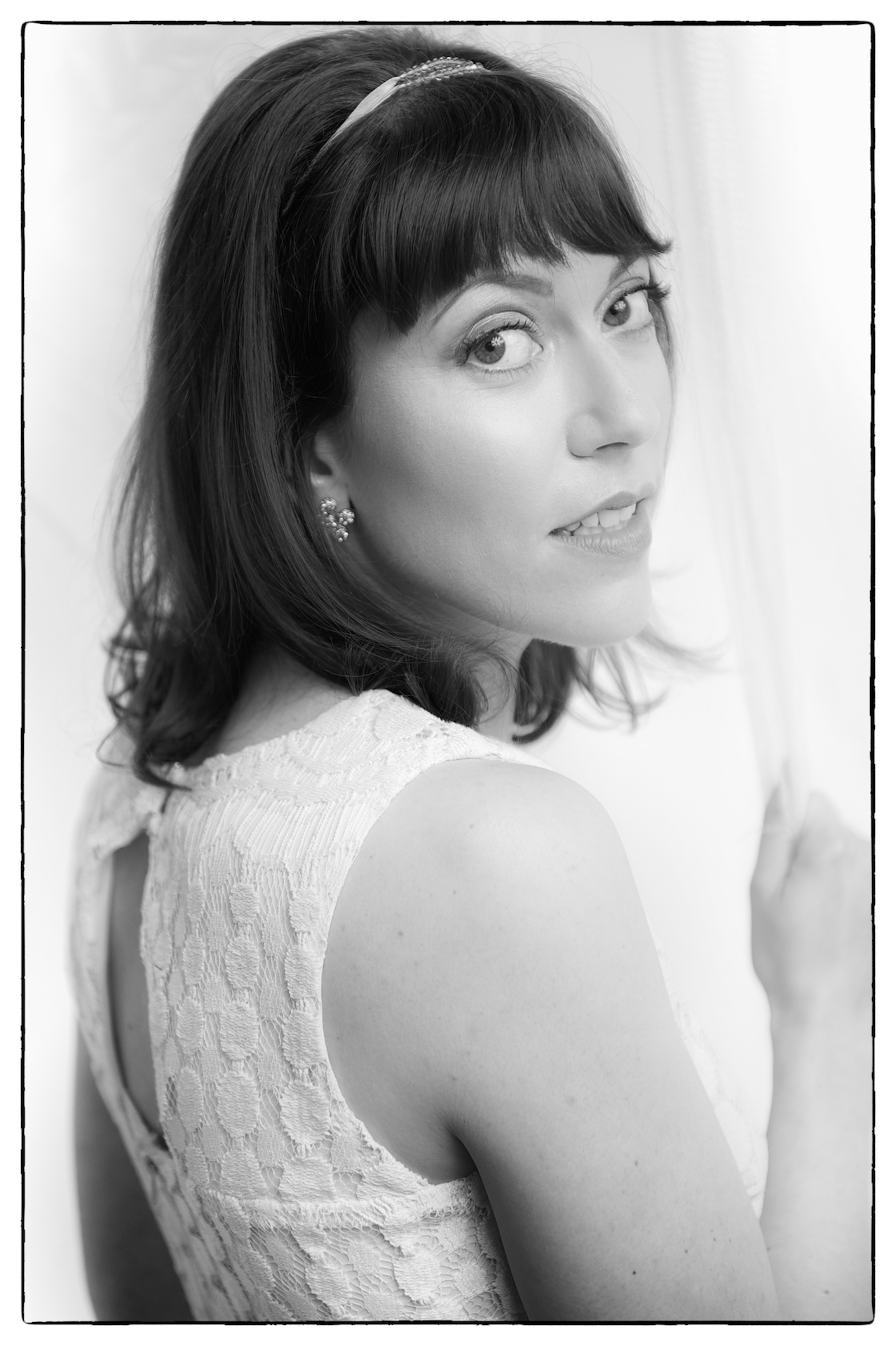
P.S. – Special thanks to Lemon Melon Photography for the kick-ass photos, and to the incomparable Becca Weber for the hair and makeup magic.

DSC_1676-BW-small

Familiar.

It’s funny the little habits that you get used to.  The everyday comforts that make up your daily routine; things you don’t really notice until they’re gone.  The gym is one of those comforts for me.  I’m a person who never stops going – I’m always working, juggling projects, tackling a to-do list that continually rolls over – and exercise is a crucial tool I use to not only stay healthy and feel good about myself, but also to manage stress and to release the tensions that build up in the course of my busy life.

The other day I found myself working out in an unfamiliar gym.  It was weird.  All of the equipment was different and suddenly I didn’t know which settings to put the machines on or how much weight to lift.  I wasted a lot of time trying to figure out what I was doing, all the while trying to look like I knew what I was doing so that some testosterone-fueled meathead didn’t offer to help me.  Ugh.

Wandering around this unfamiliar place, a song I always skip on my iPod (because it’s too damn sad) came on, and suddenly it was a year ago and I was back in Olympia.  After our Dad died, my sister Deirdre and I spent a week camped out in the house he shared with my Mom.  We sorted through old books and music and photos.  We did everything from ordering flowers to placing obituaries in newspapers to picking out gravestones to meeting the lawyer, to booking travel to Medford, Oregon for the memorial, to figuring out how we were going to transport Dad’s ashes to said memorial (that is a story in and of itself), and about a million other little things.  I spent a couple days essentially living in my Mom’s closet, going through piles of clothes and jewelry and beauty products, and her epic collection of Stephanie Johnson bags that I’d given her over the last eight years.

We worked hard and it was sad but it also felt good to work, to do stuff.  We’d collapse each night and wake up with the sun each morning, the to-do list never ending.  We’d talk over coffee first thing in the morning and review the day and write absolutely everything down because our brains were so frazzled with overwhelm from impossibly hard jobs and the utter emotional exhaustion of sorting through a house filled with a lifetime of memories.

After several days of this, I hit a breaking point.  The never-ending freezing February Olympia rain made the thought of running outside unappealing, but I knew I had to exercise or I was going to lose my mind.  So I told Deirdre I was taking a break from the vortex (our term for this weird, disorienting time in our lives and the Olympia house in particular; time disappeared inside the vortex) and getting a guest pass to the local 24 Hour Fitness.

And there I was.  In a gym full of unfamiliar equipment, unfamiliar faces.  My Dad had a membership there and saw a trainer 2-3 times a week until very close to the end of his life.  Dad’s trainer’s name was Dave, an exceptionally wonderful soul who, when he found out that none of Dad’s kids were able to get to Olympia for Thanksgiving, delivered a turkey to his home so that he wouldn’t miss out on his Thanksgiving meal.

I wandered around the gym, wondering what type of exercise Dad could possibly do when he was so sick, wondered at Dave’s patience, wondered if I should ask for him so that I could meet this man who’d been so kind to my father, but also knew if I met him I’d break down instantly and I couldn’t do that because I was barely, barely holding it together.

I wandered around the gym like a zombie, tried and failed at a few machines.  I finally settled on a treadmill because that I knew how to do.  And I ran and ran and ran.  And that song that I always skip came on my iPod, with lyrics about trying your best and not succeeding, about losing something you can’t replace, about learning from mistakes (fuck you, Coldplay) and this time I decided to let it play.  I can only imagine what I must have looked like.  Between the endorphin release of the run, and that stupid song and fighting so hard against the vortex that was sucking me in. Scanning the gym in this unfamiliar place, looking for my missing father (did I somehow think he’d still be there, that I’d find him?), in a town that used to be my home but was so far away from home now.

I don’t know how long I ran.  I was exhausted, I was weeping, I was drenched in sweat, but I couldn’t stop.  I knew that back in the vortex more sad jobs were waiting and I didn’t want any part of them.

There’s a lyric from a new Ingrid Michaelson song that as of late has been running through my head:  I’m a little bit home, but I’m not there yet.  That’s how I felt in the vortex.  That’s how I felt in that 24 Hour Fitness in Olympia.  And that’s how I felt in the unfamiliar gym the other day.  I’m a little bit home, but I’m not there yet.

So I guess I’ll keep running.

Until next time, friends.

February.

Oh February, what a month you’re turning out to be.  I’ve experienced overwhelming joy and crushing loss, sometimes in the same day.  I’ve grieved for my family.  I’ve grieved for my childhood.  I’ve grieved for things I’ve lost which can’t be found again.  I’ve grieved for things I’ve lost that were never really mine.

But I’ve also been touched by kindness and compassion, both by virtual strangers and lifelong friends.  I’ve started learning to ask for help – so hard for me to do – and I’ve felt my heart open up.  I’ve felt how much my close friends love me and how willing they are to step into the void left by my family.  I’ve realized that my friends are my family.  I’ve been caught by the striking beauty of a single moment, and have in turn been bowled over by the heartbreaking wonder that is this precious and too-ephemeral life.

When I was at my lowest, I received an unexpected gift:  my first ever network television audition, for Grey’s Anatomy.  The best part of going in to read those three lines today was being able to walk into the room and not need anything from anyone except to simply be who I am, to sit inside myself, free, and say the words on the page aloud.

Thank you, universe.  I am blessed.  I am grateful.  I am listening.

Until next time, friends.

Dad.

056

For most of my life, I had a complicated and difficult relationship with my father.  He was a charming and brilliant man, a career-obsessed and highly successful trial lawyer, and a lifelong alcoholic.

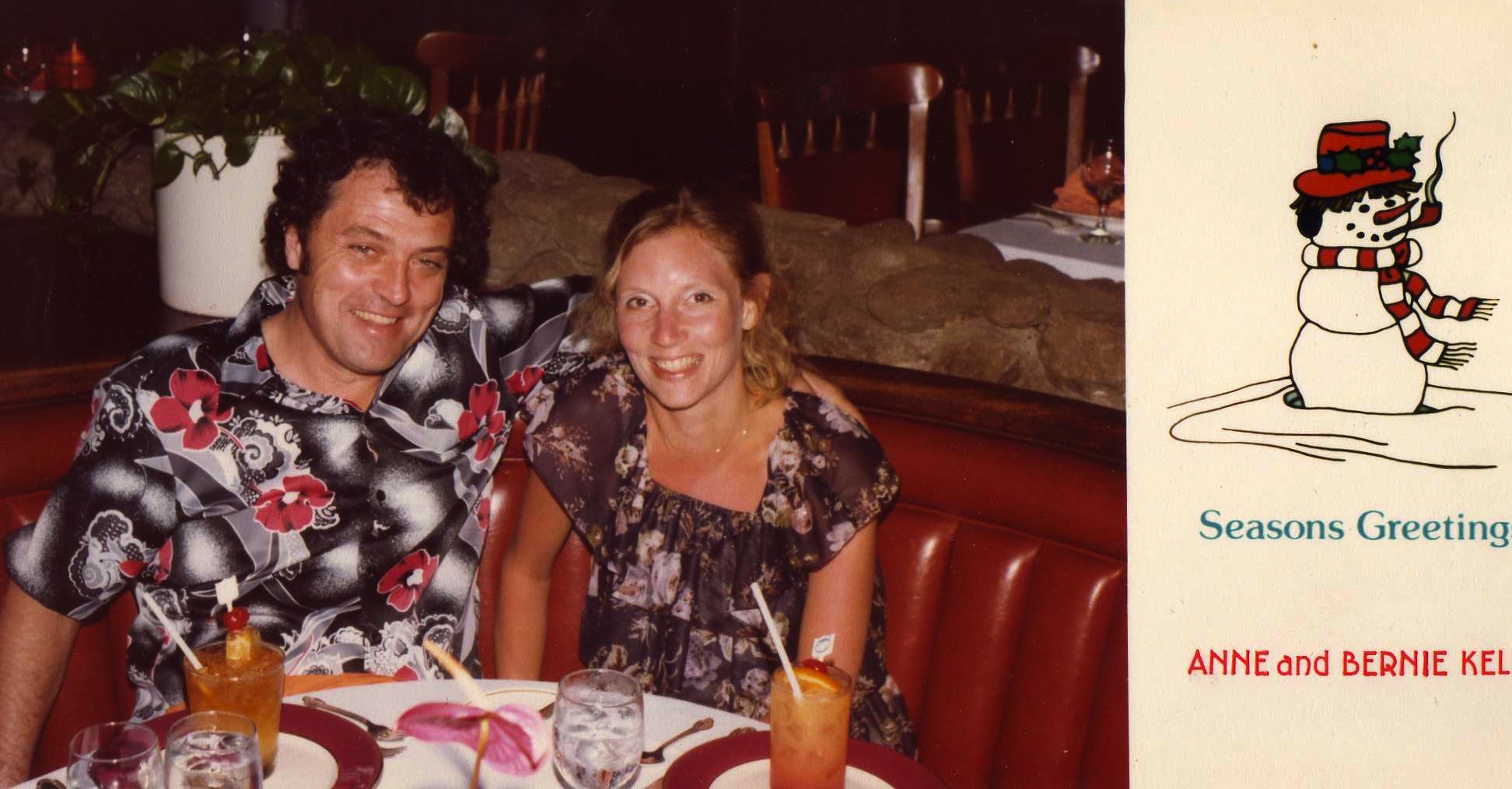
My Mom often told me that when she met my Dad, he swept her off her feet.  She was a young, pretty court reporter living in Seattle and Dad, twenty-two years her senior with a legal practice in Anchorage, Alaska, was confident, handsome, and driven.  She’d never met anyone like him before, and he made her feel like she could do anything.  So, undaunted by their age difference and the fact that he had four children in their teens to early twenties from his previous marriage, she married him and moved to Alaska.  A year later, I was born, their only child.

Anchorage was a magical, wonderful place to grow up.  I remember Mom waking me up in the middle of the night to catch a glimpse of the Northern Lights streaking the sky a brilliant emerald green, feeding apples to an enormous moose out of our car window on more than one occasion, ice skating, sledding, and snowball fights in the winter, and long summer nights when it never seemed to get dark and I was allowed to stay up way past my bedtime.

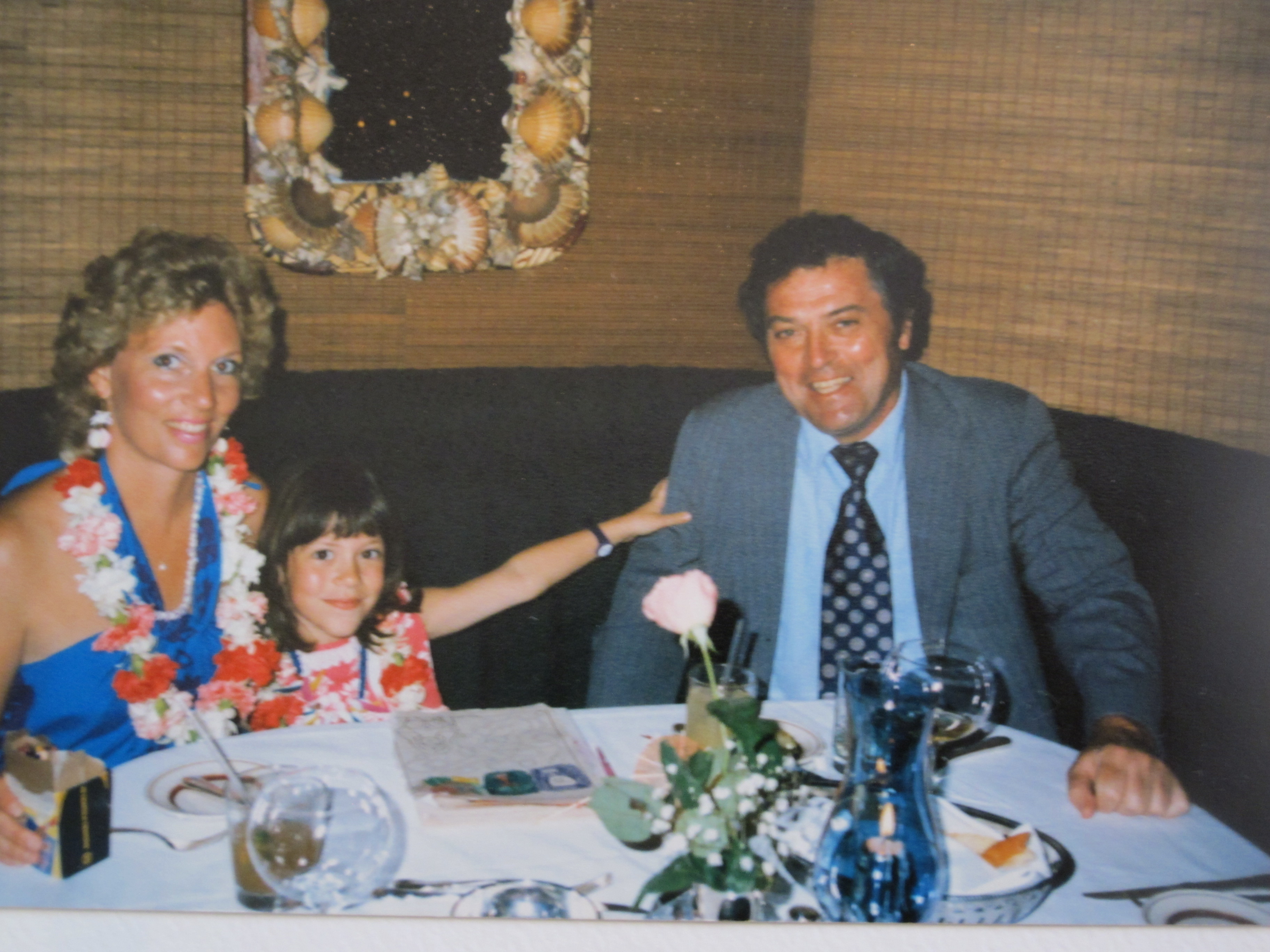
Mom and Dad Hawaii copy

But for my Mom, Anchorage was a dark and depressing place.  My Dad was often away on business, and when he was home, cocktail hour would stretch on for hours, often ending in screaming matches between the two of them.  I wasn’t old enough to understand everything that was going on, but I knew that my Dad was often drunk and that my Mom was sad, and I blamed him for it.

When Dad reluctantly closed his law practice due to his declining health, we moved to Olympia, Washington to be closer to my Mom’s parents.  But retirement wasn’t good for Dad.  The law was the only thing he ever really loved, that and sports  – something we share – and depressed and hobbled by increasingly severe hearing loss (the unfortunate side effect of medication he’d taken to save his life during a childhood illness), he retreated into himself and he drank more than ever.

I got through high school by keeping as busy as I could.  My grades were perfect, I sang in the choir, wrote for the school paper, and stayed out of the house as much as I could.  I almost never invited friends over because I never knew what shape Dad was going to be in.

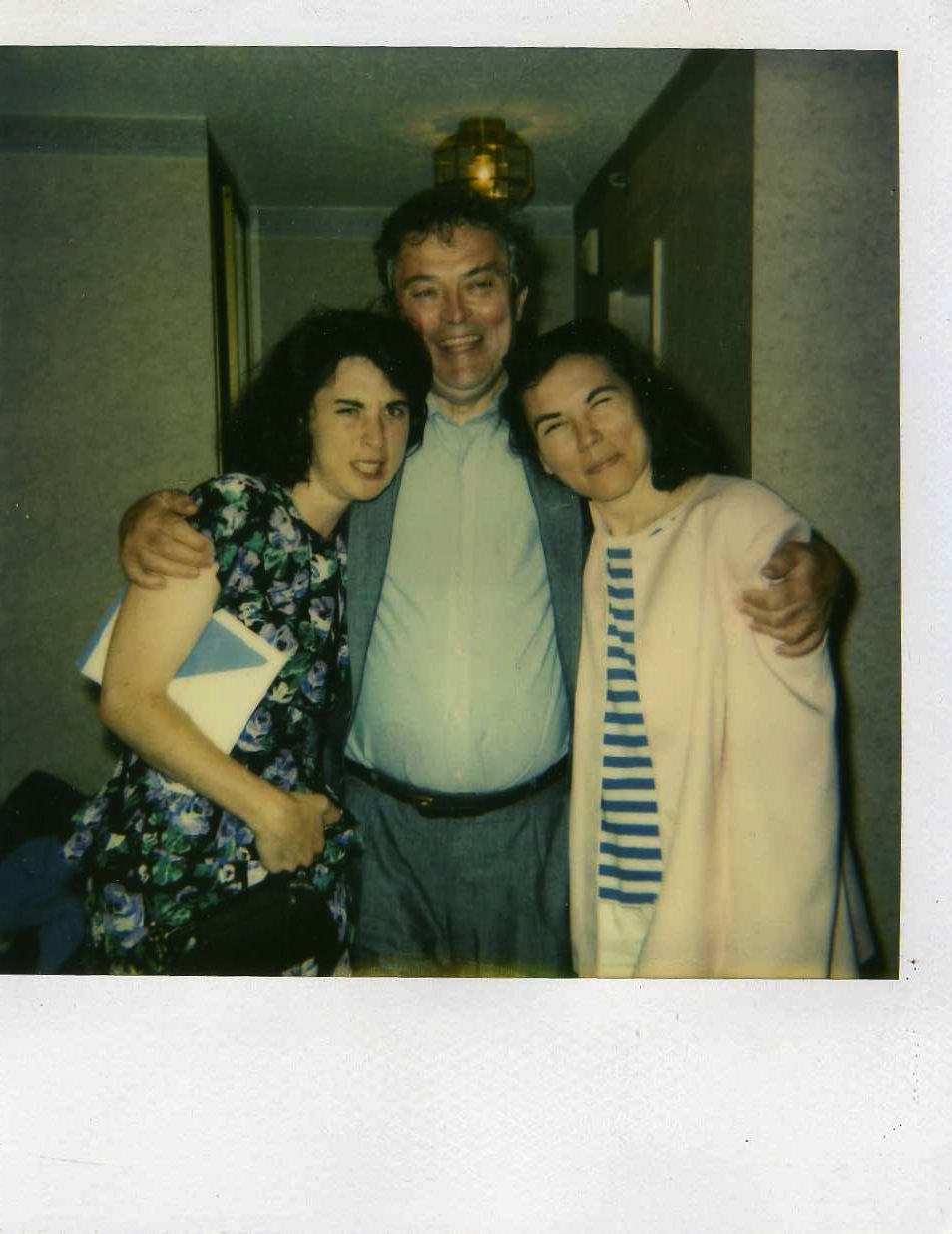
Marion, Deirdre, Dad copy

When I was accepted to USC, I jumped at the chance to get away.  I’d had enough of the drinking, the depression, my Mom’s tears and the fucking Olympia rain.  The bright lights and the big city were calling.  I moved to Los Angeles, found jobs in the summers so I could stay, and I never looked back.

It’s funny how as you get older, life has a way of knocking you around, shifting your perspective, and making you less rigid and less sure of what you thought you knew.  I had my own hardships – I suffered greatly in my first few years as a young actress trying to make it in L.A.  I was broke, I was depressed, I couldn’t get a break, and with all of my college friends starting ‘real’ careers, I felt so, so alone.

My Mom worried about me and encouraged me to pursue a more stable career.  My Dad never did.  Ever the trial lawyer, he’d engage in a series of probing and uncomfortable questions about my life – something my siblings and I refer to as being ‘put on the witness stand.’  I’d explain to him how hard it was to break into the business, and his response would always be, ‘Well then you’ll just have to work harder.’
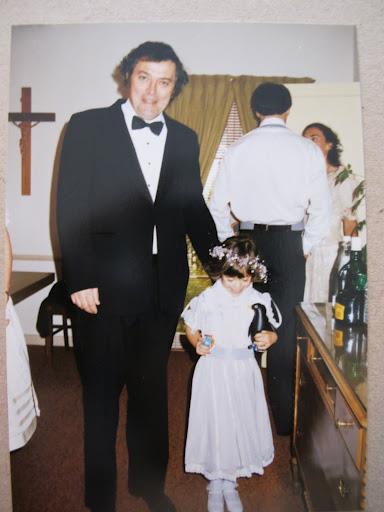
Dad and Flower Girl

That was the thing about Dad.  He was a gambler, a risk-taker, and he loved a challenge.  The guy who often said, ‘I’d rather be lucky than good’ (but really, he was both), who put himself through law school by playing poker, who offered up thousands of dollars of his own money taking cases to defend clients who’d been victimized by insurance companies and large corporations, David versus Goliath type cases that no one thought he could win (and win, he did, in sometimes spectacular fashion), this was a man who didn’t believe in quitting.  He was tenacious, he was a fighter, and when he told me that I’d ‘just have to work harder,’ I’ll be damned if he wasn’t always right.

Even before he was diagnosed with the pancreatic cancer that eventually killed him, I knew something was wrong with my Dad.  He lost weight, his skin was sallow.  He was still as mischievous as ever, but he’d lost a little bit of his edge.  The twinkle in his eye faded.
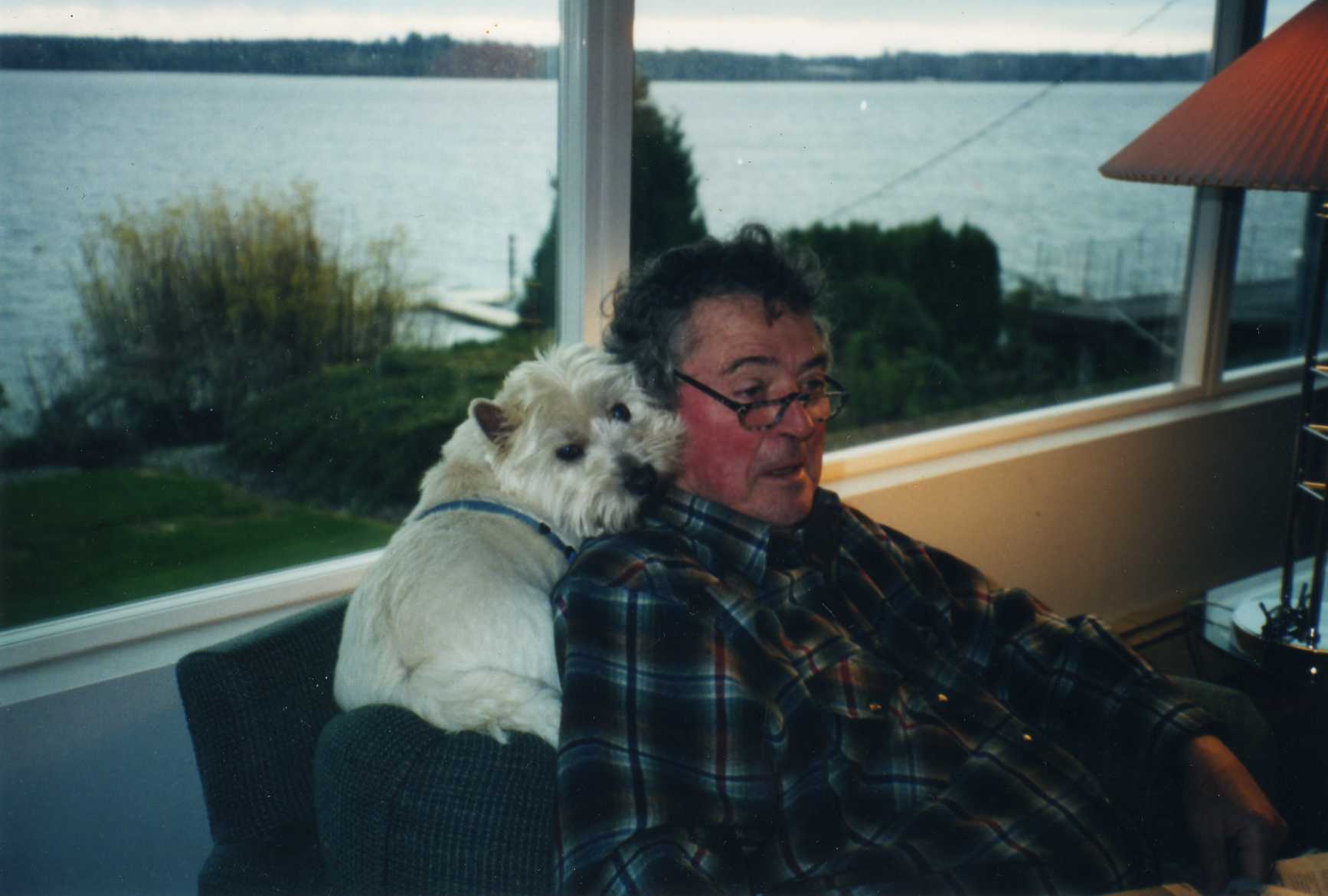
Dad and Max copy

He was nearing 80 years old and becoming frail, and I suddenly realized my Dad wouldn’t be around forever.  I softened my stance.  I came to grips with the fact that it was unfair to blame him for choosing alcohol over his family.  It wasn’t a choice, it was a disease and holding on to my anger about it was only hurting me.  The truth was, he’d never been mean.  Though at times he was maddening, he was kind, generous, and I never doubted that he loved me.  I chose to forgive him, and it made me free.

In her beautiful book The Rules of Inheritance, Claire Bidwell Smith writes about the death of both of her parents, her mother during her teenage years, and her father several years later when she was in her mid-20’s.  Like me, she had a much older father and grew up closer to her Mom.  But in her book, she makes a striking admission and it’s this:  that if she had to lose both of her parents, she was glad that her Mom went first, because otherwise she would never really have gotten to know her father.

It’s difficult for me to admit this, but I feel the same way.  Though my parents’ deaths were only four and a half months apart, and though my Dad was very sick – and often stubborn, maddening, impossible – I cherish those last months I had with him.  We talked on the phone nearly every day.  He told me was lonely, but that he was grateful for his children, that he loved us so very much and that we were getting him through.  We talked about football.  We talked about how much we missed my Mom.

When I visited him in Olympia, he was kind and sweet to me, and so appreciative of little things like when I’d hold his arm to steady him when he was having trouble walking.  During the last Christmas we spent together, cheering the Seahawks on to victory against the hated San Francisco 49ers, Dad turned to me and said, ‘I think we’re good friends now, Sar.’  ‘We are, Dad,’ I agreed.  He grinned.
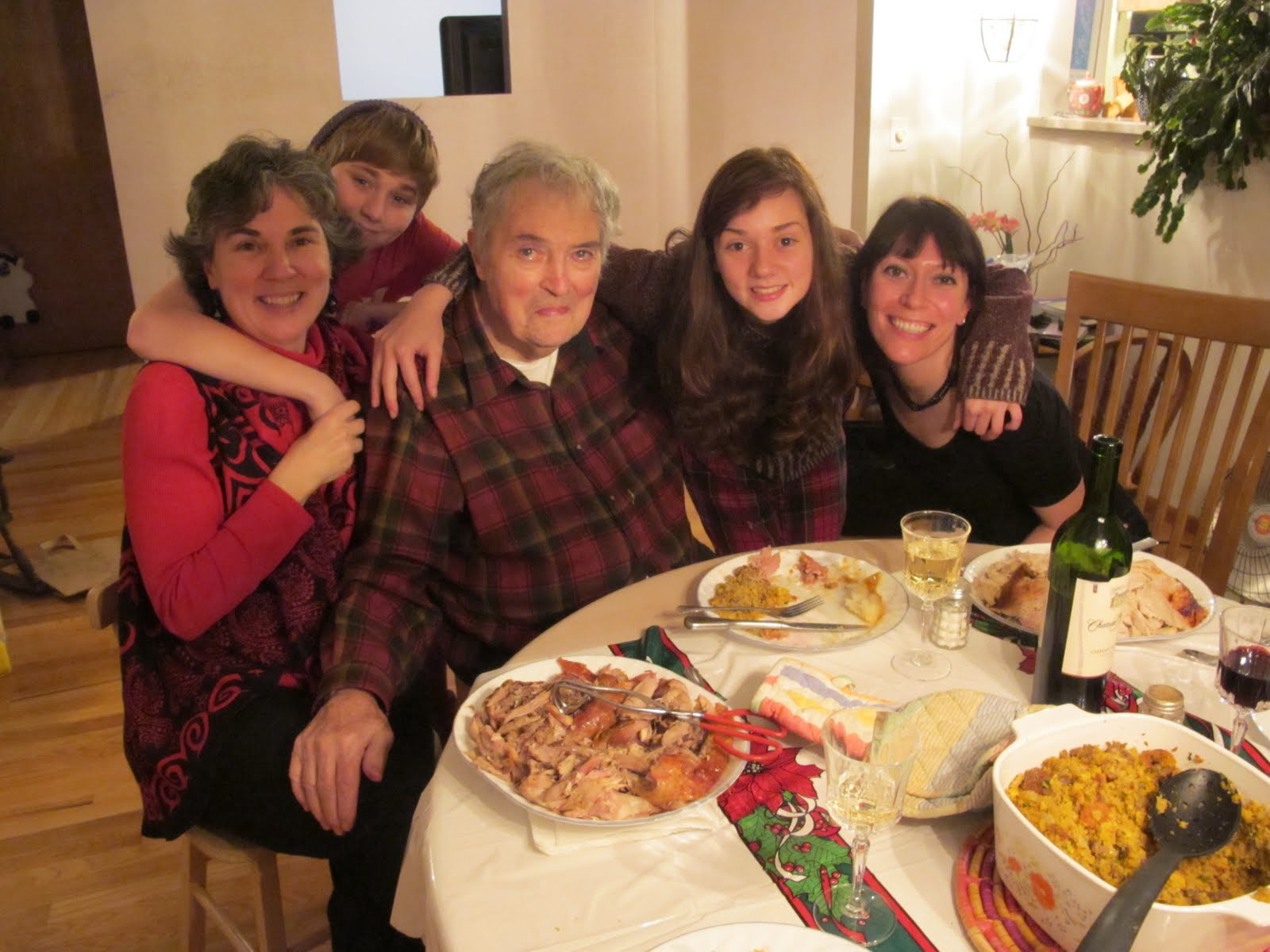
Dad last christmas

At a reception in his honor following his funeral, one of his lifelong friends read Dad’s favorite poem, If, by Rudyard Kipling.  It’s about living life boldly without fear of what others think of you, and without fear of loss.  It’s how my Dad lived his life.

As much as I adored my mother, I can’t help but feel grateful for all of the gifts I inherited from my father.  A lot of the things I really like about myself are pure Dad.  I’m tenacious, I’m tough, I believe in fighting for the underdog, and –most importantly, and something I’ve leaned on in the last year and a half of my life – I possess the ability to remain cool headed in a crisis, and to laugh in the face of things that make others weep.  It all stems from my Dad’s view of the world:  that life is an adventure not to be taken too seriously, that obstacles are just exciting challenges to be met head on, and that no matter what life throws at you, everything always has a way of working out.

One of the last times I talked to him – before he was too sick to talk – was last year after our beloved Seattle Seahawks suffered a crushing loss to the Atlanta Falcons in the playoffs.  While I was down and depressed, Dad barely seemed discouraged.  ‘Sar, listen,’ he said, his voice full of excitement.  ‘I’ve been watching these guys.  They’re really good.  They’re going to be good for a very long time.  We’ll get ours.’  A couple of weeks ago, when we finally did get ours, I couldn’t help thinking that my irrepressible father had something to do with it.
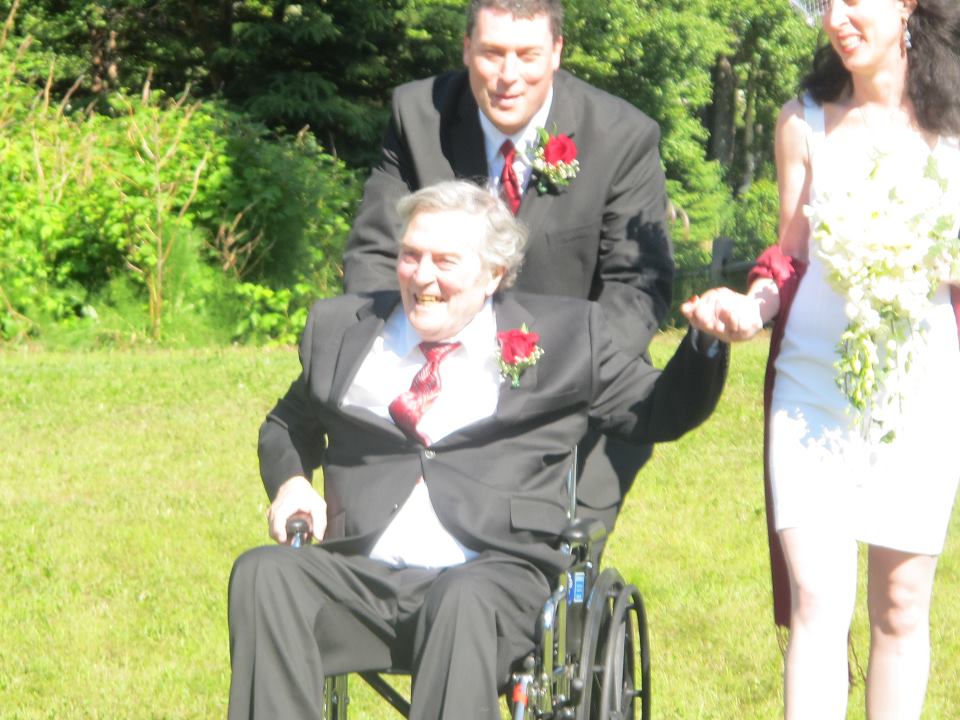
Dad Marions Wedding

In the same way that I can laugh in the face of things that make other people weep, I don’t think it’s a bummer that my Dad died on Valentine’s Day.  I think he did it on purpose.  Now my siblings and I have a forever reminder of him on a day that’s all about love.  And I think that’s kind of sweet.

So Happy Valentine’s Day, Dad, you charming, insufferable, wonderful, impossible, lovable Irish rascal.  I miss you.  I love you.  And I’m so grateful that I’m your daughter.

P.S. – I’ve pasted Dad’s favorite poem below, if you’d like to read it.  It’s pretty great.

Until next time, friends.
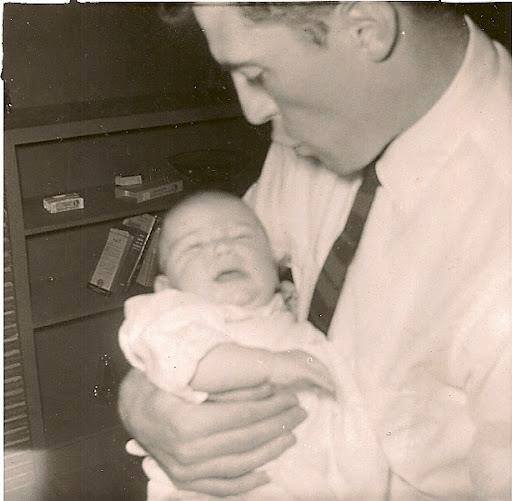
Dad with Baby

If—

BY RUDYARD KIPLING

(‘Brother Square-Toes’—Rewards and Fairies)

If you can keep your head when all about you

Are losing theirs and blaming it on you,

If you can trust yourself when all men doubt you,

But make allowance for their doubting too;

If you can wait and not be tired by waiting,

Or being lied about, don’t deal in lies,

Or being hated, don’t give way to hating,

And yet don’t look too good, nor talk too wise:

If you can dream—and not make dreams your master;

If you can think—and not make thoughts your aim;

If you can meet with Triumph and Disaster

And treat those two impostors just the same;

If you can bear to hear the truth you’ve spoken

Twisted by knaves to make a trap for fools,

Or watch the things you gave your life to, broken,

And stoop and build ’em up with worn-out tools:

If you can make one heap of all your winnings

And risk it on one turn of pitch-and-toss,

And lose, and start again at your beginnings

And never breathe a word about your loss;

If you can force your heart and nerve and sinew

To serve your turn long after they are gone,

And so hold on when there is nothing in you

Except the Will which says to them: ‘Hold on!’

If you can talk with crowds and keep your virtue,

Or walk with Kings—nor lose the common touch,

If neither foes nor loving friends can hurt you,

If all men count with you, but none too much;

If you can fill the unforgiving minute

With sixty seconds’ worth of distance run,

Yours is the Earth and everything that’s in it,

And—which is more—you’ll be a Man, my son!

Broken.

I needed to have my heart broken in order to feel alive.  I needed to have my heart broken in order to understand my capacity for love.  I needed to be devastated, destroyed, pushed beyond the brink of what I thought I was capable of, beyond all reason, beyond all hope, to know with certainty that hope was the only thing worth holding on to.

I needed to lose everything – my pride, my love, my mind, every inch of earth upon which I stood to understand that I would do anything – claw and fight and scrape – to rebuild what I had lost into something different, something stronger, something better.

I didn’t want any of this.  Any of it.  I tried desperately to hold on even while the center was caving in all around me.  Even while I could feel the universe laughing in my face at how futile it was to try to hold on, like clinging to bits of string while the great downy quilt was breaking apart into piles of feathers, blowing in the wind into nothing.

There’s a hole inside me now.  It used to be filled up with all the things I thought I knew.  Now it’s just a great cavernous hole.  Nothing will fill it.  I write and I play scenes and I work and I dream while I’m awake and it all helps, but nothing, nothing fills it.  It’s an ever-present ache.  It drives me, it fuels me with fire, it burns my insides.  It hurts, but in a strange way I need it.  It reminds me that I can’t stop, that I can’t go back.  It reminds me of who I am.

If you could see me now, what would you think of me?  Would I scare you?  Would you be proud of me?  Sometimes in my dreams we’re laughing.  We’re warm and safe.  And sometimes you’re in pain and you’re afraid.  I reach out for you but you dissolve and disappear into nothing.  Sometimes I wake up screaming.

I didn’t want any of this.  I often wish that it hadn’t happened.  That I didn’t know what I know.  That life hadn’t slapped me across the face with these incredible, unthinkable truths.

I didn’t want this.  But the sweet irony is that I needed it.  I needed it to forge me and to shape me and to understand just what the hell it is I’m made of.  I am dark and sharp-edged and tough, yet at the same time as fragile as a porcelain doll, one fall away from splintering into shards of glass.  I don’t welcome the break.  But I know now it’s inevitable.  And when it happens I will build myself back up.  Each time a little stronger, but each time a little less.

God, I miss you.  I miss you so much that I can’t think about it too much or breathing becomes impossible. I would give anything to wrap my arms around you and tell you that.  But I can’t.  So I wrap my arms around myself instead and I tell myself that I’m enough.  That I will make it through this.  That the hard fought truths that now reside in the base of my being are truths that you already knew.  That you always knew.  Truths that you wanted to teach me but that I had to learn for myself through fire, through pain, through this incredible longing and ache that will never, ever go away.

I needed to be broken in order to understand the depths of my heart.  I needed to lose everything in order to know how much more I still stand to gain.  I needed to have my faith shaken to the core in order to understand how powerful it is to say, “I believe.”  I needed to have my heart shattered in order to feel alive.  I needed it.  But that doesn’t mean that I like it.

Blog at WordPress.com.