Identity theft.

“Hopefully, this will be the last time I ever talk to you,” he said.  “Because that will mean that you’re not the victim of a crime again.  Good luck, and have a great life, Sarah.”
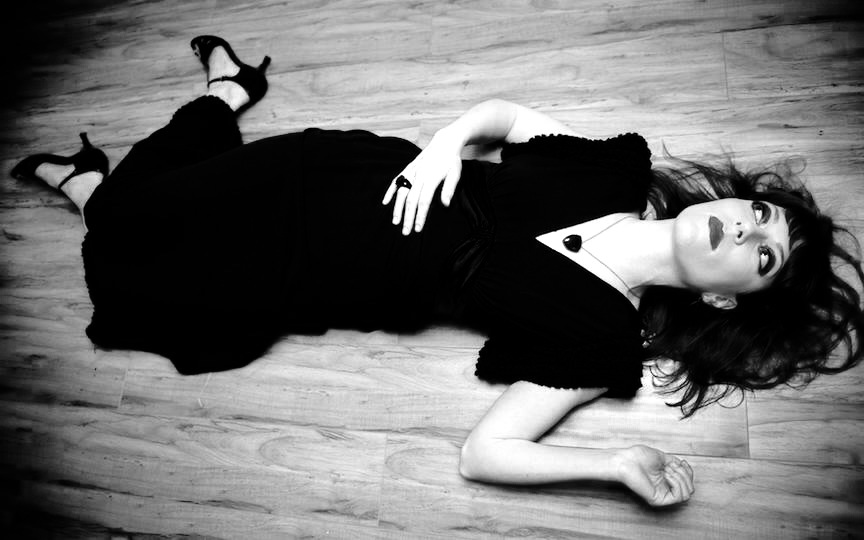
Broken Doll B & W

Have a great life.  The finality of those words sure stick, don’t they?

For the last couple of days, I’d been playing phone tag with a prosecutor in the San Diego District Attorney’s office.  Nearly two years after she’d stolen my identity, made a fake I.D. with my name, address and date of birth on it, and impersonated me all over San Diego County, the woman who’d opened up a slew of fraudulent credit cards in my name had been caught and was going to jail.  Justice was being done. I couldn’t believe it.

However, when it came time to make the final call to the Assistant D.A. to confirm the information that he needed – that I had successfully disputed all the fraudulent charges and that the banks, not me, had absorbed the financial burden of this woman’s theft – I was strangely reticent.  I wasn’t sure why I was dragging my feet, why I was delaying calling him back.  I was busy (of course, I’m always busy), but it was more than that.  There was something about closing this chapter in my life that I didn’t feel quite ready for.

I first learned that my identity was hijacked on February 4, 2013, when I received a call from a fraud investigator at Neiman Marcus.  A woman had visited their San Diego location to fill out an application for a store credit card, and Neiman’s flagged her right away as suspicious.  She was nervous, and appeared to be taking instructions from a man (surveillance cameras picked him up in another area of the store) via cell phone.  Neiman’s did a quick Google search to try to locate the real me (good luck  – there are about a million Sarah Kellys in this world), but were unable to find definitive evidence in a short span of time that this woman was an impostor.  Unable to act without proof, they accepted her application, flagged it as potential fraud, and sent her on her way.

Almost immediately after my conversation with Neiman Marcus’s fraud department, they started arriving:  the avalanche of both credit cards and rejection letters.  I would spend countless hours over the coming days, weeks and months undoing the damage that had been wrought in the space of one weekend-long credit card application joyride in San Diego.  Time spent canceling cards, filing fraud alerts, getting documents notarized, faxing, sorting, calling – sometimes pleading – with the powers that be that it was me, that I was who I said I was.  Nobody has time for this garbage.  It is a full time job to reclaim your identity when it has been taken away from you.  And in my case, the timing could not have been worse.
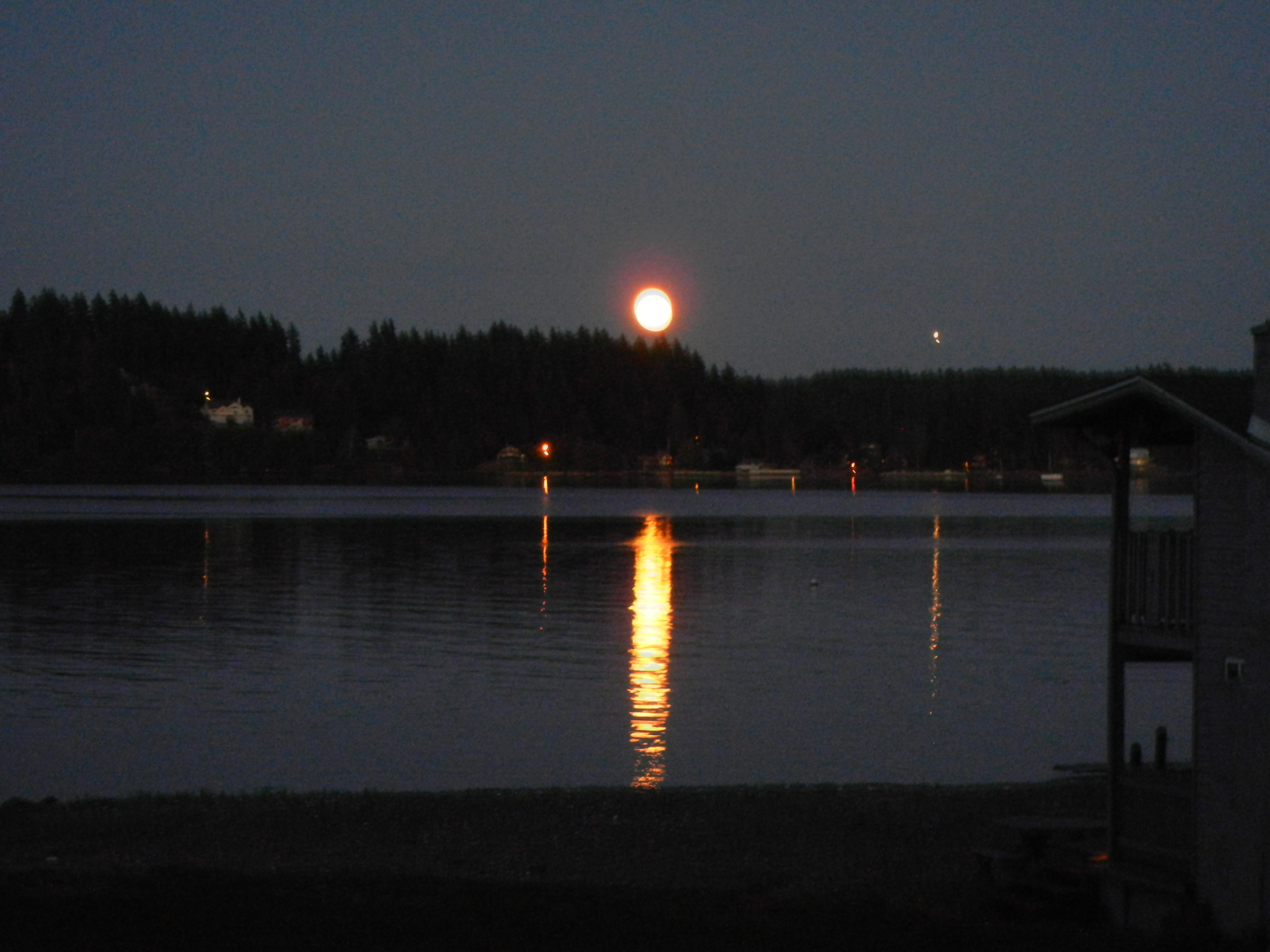
DSCN0565

When I received the call from Neiman Marcus, my father was in the hospital, gravely ill with stage four pancreatic and liver cancer, and awaiting a transfer – arranged by my half-sister Deirdre – to at-home hospice care.  Ten days later, on Valentine’s Day, dad passed away, quietly, at home.  His death was a mere four and a half months after the sudden death of my mother, a death which sent shockwaves through my life that I still haven’t recovered from.  I can see now, with perspective, that I didn’t even begin to process my mom’s death until well after my dad died.  He was too sick, there was too much to worry about, too many fires to put out.  Not the least of which was my maternal grandmother’s rapid decline into advanced Alzheimer’s disease.  One day she knew who I was, the next day, I became a person of no consequence.

My identity theft was a relentless pain in the ass that I didn’t need, that I didn’t have time for and that I certainly didn’t have the emotional wherewithal to deal with.  When it happened, I couldn’t believe it.  I made jokes about it, laughed at the unfairness of it all.  But really, it felt like a sucker punch, like the universe kicking me in the gut when I was already about as low as I could go.

But here’s the awkward truth; a truth that I’m literally coming to terms with in this moment as I write this blog.  It’s a truth that reveals my hesitancy to wrap up that unfortunate chapter once and for all.  In the midst of the biggest crisis of my life, there was something incredibly powerful about having to fight for who I was.  What I lamented as some sort of karmic curse was actually, in all likelihood, a gift.  Not only did it offer a distraction from all the impossible, emotionally loaded jobs that had to be done in the wake of my father’s death, but at a time when I felt like I was drowning, when I felt like I was disappearing into nothingness, my identity theft fight required me to state clearly, emphatically, over and over again:  I am who I say I am.  I am Sarah. I am still here. I exist, dammit.

So when it came time to call the Assistant D.A., I procrastinated.  I put it off.  And at first, it didn’t make sense to me.  After all, I’m happy to have this case resolved.  I’m happy the person who stole something so precious from me is being punished.  It’s a win, but strangely, it also feels like a loss.  Because though I won this battle, the war rages on.  Twenty-one months later, I’m still fighting to find my way back to me.  A wild, fearless, big-dreaming me from my youth that I lost long ago, or a me that I always wanted to be but that I never quite became.  I don’t really know.  What I do know is that in the case of my identity theft, there was a path to follow.  A long, arduous, tedious, frustrating paper trail of a path, but a path nonetheless.  But with everything else, there is no path.  Just an ongoing struggle to heal, to rediscover, to fall in love with life again, and to try to figure out who I’m supposed to be.

And so, with one chapter now closed, the fight goes on.

Until next time, friends.
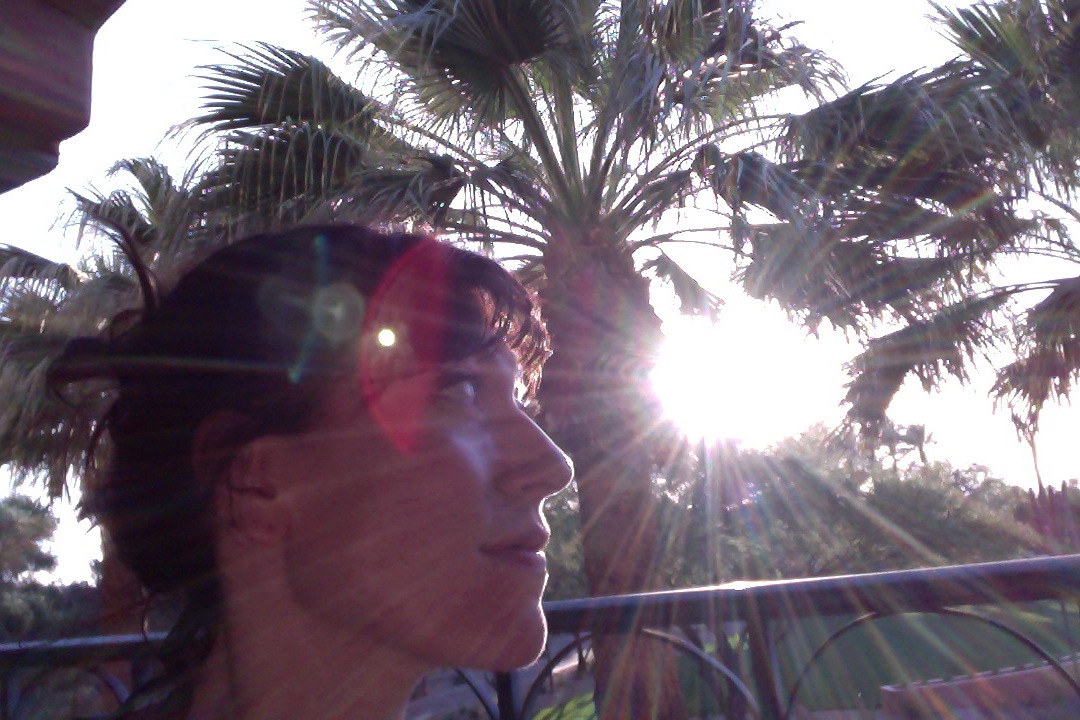
Photo on 5-15-13 at 6.31 PM

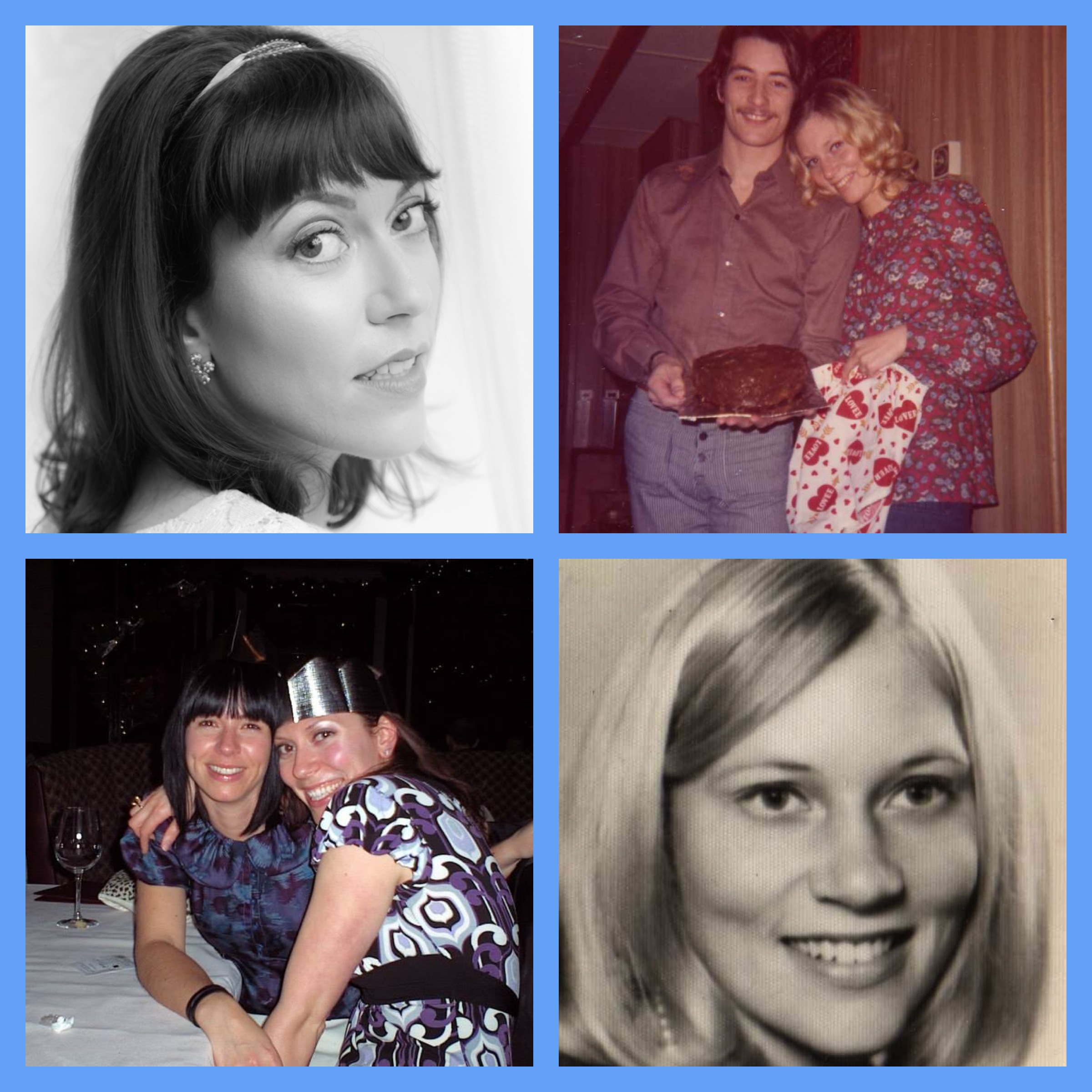
The things my mother gave me.

Scan 142120032

Today makes two years. It was two years ago today, on September 23rd, that I received the worst phone call of my life. It was Sunday morning and I was still in bed, my phone in the other room. I heard it ringing, distant, the musical jingle breaking through the quiet September morning. I rolled over slowly, a sense of unease already stirring in the pit of my stomach. It was too early; who could be calling? Not that early, true, but early for a Sunday. The first football game hadn’t started yet. On Fox, Terry, Howie, Jimmy and the gang were still making their predictions about which teams would win, still letting fantasy owners know which probable and questionable players were active.

I lifted myself up out of bed, crossed the room, and picked up my phone. I retrieved the voicemail, a tearful message from my Aunt Sandy, my Mom’s brother’s wife, telling me it was an emergency, telling me to call her, or my Dad, at home. I called Dad. I should have called her.

I think about that moment – that decision about who to call – often. I wish I could go back and redo it. My Aunt would have been gentler, would have been kinder when delivering the news. But it was my Dad that I wanted to talk to. My Dad, hard of hearing, elderly, gravely ill with stage four pancreatic and liver cancer. My Dad, who was incapable of softening the blow. ‘Mom’s dead,’ he said, across the line, distant, emotionless. The bottom fell out.

And so they began. Two years that would shake and stretch and shape me. Two years that would threaten to shatter me. Two years during which – at times – I struggled and fought and kicked and screamed and rebelled against circumstance, insisting upon being OK by the sheer force of my will. And two years during which – at other times – I gave in. Two years during which I almost gave up. Two years that carved a hole in my family, that carved a whole in my sense of who I thought I was.

Today, as I stand on the other side of those twenty-four months, scanning the distance between then and now, thinking about what and who I’ve lost, and what – ironically – I’ve also gained, there’s one image that’s burned in my mind.

10525590_10203354589998704_100421518368571484_n

The image I can’t escape is of the last time I saw my mother. She is standing in the driveway of my parents’ house in Olympia. Rail thin, slightly disheveled, though she had pulled it together quite significantly from her collapse of a few days prior. Pulled it together for me, I suppose. We’ve just hugged goodbye, and after providing her with a list of caretaker referrals to help with Dad, after securing a promise from her that she’ll find a counselor, that she’ll talk to someone, I board the airport shuttle. As I turn to wave goodbye one last time, there’s a look on her face that I don’t think I’ve ever seen: it’s soft, yet sorrowful, with an intensity that’s completely unfamiliar, an intensity that’s very unlike my one-hundred-miles-from-intense mother.

I’ve thought about that moment many times over the last two years. I’ve wondered if she knew then that she was dying. I’ve wondered if she knew that this would be the last time she’d see me, her only child. I’ve wondered if the reason the look was so unfamiliar, if the reason she held me in her gaze so intently, was because she knew this was it, and she was trying to memorize my face. I’ve wondered if, in that moment, she was trying to memorize my face for all eternity.

There are so many gifts that my mother gave me; she was generous to a fault. There were cherished treasures that she bestowed upon me while she was still alive, and equally valuable gifts that I could never have anticipated receiving after she was gone. In addition to the ruby and emerald rings, the gold pieces from her jewelry box, the vintage wardrobe gems like two pairs of knee high Finnish leather boots, a Chloe scarf, a pink hand-beaded Leslie Fay cocktail dress, there are other, less tangible, things I take with me. Lessons about the person I want to be, based on who she was, and who she wasn’t. There are qualities I strive to emulate – her kindness, her compassion, her generosity, her sweetness. There are things I’ll never achieve. I’ll never be as good of a chef as she was, never master her green thumb in the garden. And I’m definitely not as nice as my mother was, not as giving, not as yielding. I’m more stubborn, more argumentative, more selfish.

stub021

But many of the qualities that I admired about my mother also let her down. I can see now that she never took time for herself, never set boundaries, couldn’t say no to the demands of others, even when they were outrageous. I can see how people took advantage of her, and how she let them. I can see how she absorbed every harsh word, internalized every worry, how insecure and how fragile she was. I can see how she burned out, how she couldn’t ask for help, even when she desperately needed it.

People who knew us both tell me that we’re alike, my mother and I. We have the same smile, the same laugh, the same mischievous sense of humor. We look alike and we even sort of talk alike. I’m grateful for all of it. But (I’m sorry, Mom), I’m also grateful for the ways that we’re not alike. I’m grateful that I’m able to set boundaries in order to protect myself, in ways that you couldn’t. I’m grateful that I’m strong enough to say no when something isn’t right for me. And I grateful that, though, like you, I’m strangely resistant to asking for help when I need it, I’m beginning to overcome that. I’m starting to ask. And I’m learning that when I ask, help tends to arrive, and it really does, well, help.

So on days like today – which are often – when I’m missing my Mom so badly that it threatens to overwhelm me, I try to hold on to what I know is true: my mother loved me, she wanted my happiness above all else, and she wouldn’t want me to use something like her not being here as an excuse to give up. She would want me to keep going. She would want me to be strong in ways that she couldn’t. She would want me to embrace my life.

Today marks two years since I lost the most important person in my life. Before I know it, it may be ten, twenty. But what time, what death, what grief can never wipe away are all the beautiful, generous gifts that my mother gave me. And on this day, two years hence, I pledge this gift to you, Mom: I promise to never stop pushing. I promise to take nothing for granted. I promise to be happy in every way that I can. And I promise to do all of these things, even when it’s hard. Even on days like today. Especially on days like today.

Thank you, Mom. I love you. I’m so grateful for everything you gave me.

Until next time, friends.

Scan 142500001-2

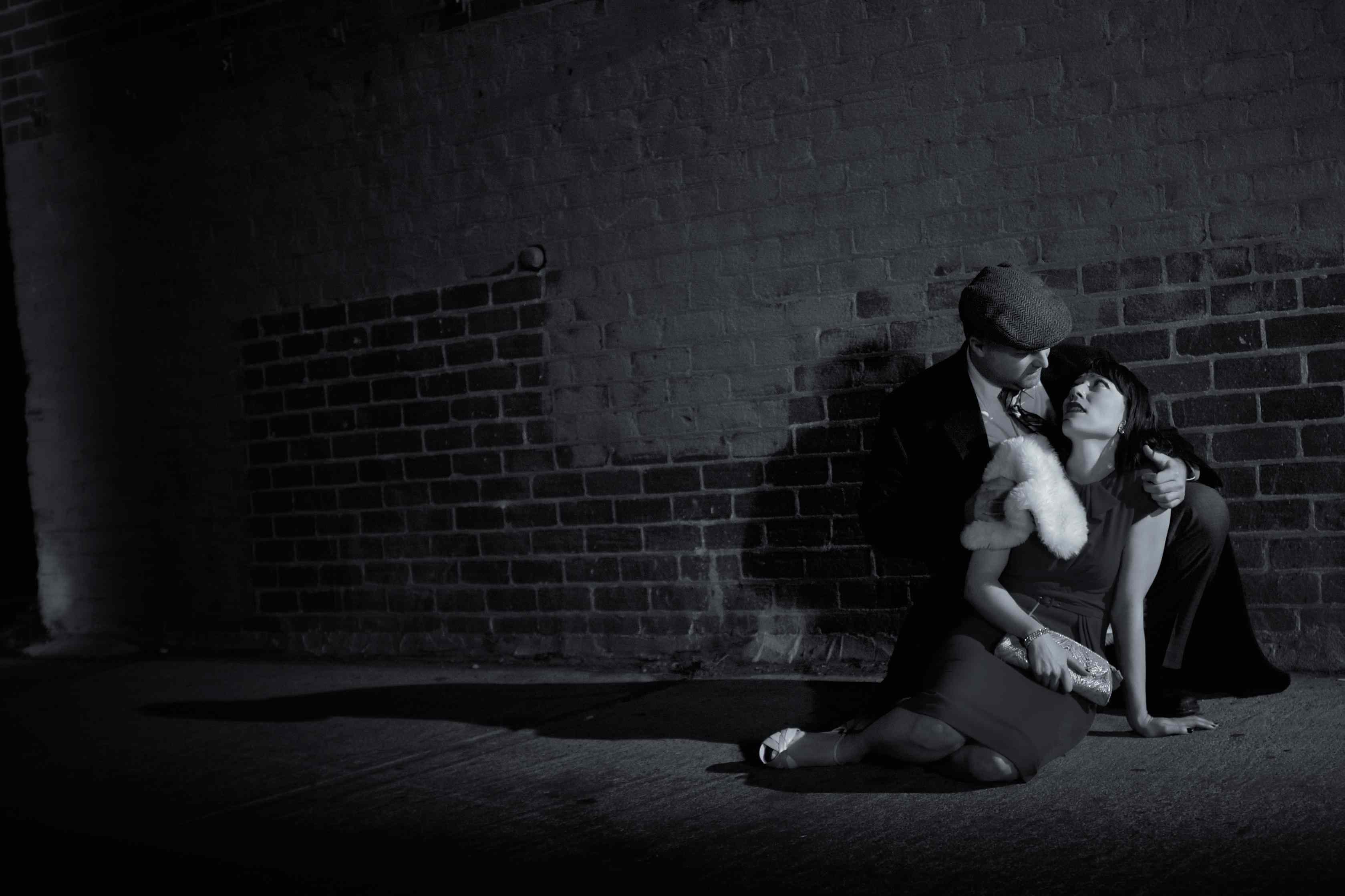
Noir.

SNE010

It was a Saturday morning in early March, and I was helping to run a photo shoot at an Italian restaurant in Burbank. A photo shoot for a play series I was co-producing – a series of film noir-themed one-acts. I had just returned to Los Angeles after spending ten days in the Pacific Northwest on important family business, ten days that culminated in a freezing, cold, bleak weekend in Medford, Oregon, during which we buried my dad.

And now it was back to L.A., back to business as usual. I was already behind – I’d missed the first table read of the plays while sorting through clothing and property at my parents’ house, hadn’t been able to focus on production emails in between taking meetings and organizing funeral arrangements with my sister – so now there wasn’t any time to lose. The photo shoots were a start; black & white character headshots to be used as a marketing tool to promote the show. We’d booked actors in thirty-minute increments and one by one they arrived at the restaurant with their wardrobe and props. Many of the actors were close friends and as they arrived, they hugged me, asked how I was. ‘Fine,’ I said. ‘You know.’

One of the members of our ensemble made a comment, almost off-handedly, about the fact that bad luck seemed to follow me around when I produced this show. ‘Maybe you should stop doing it,’ he said. I flinched, shrugged it off, and kept going.

But in truth, he had a valid point. We were now in the second year of the noir play series, and ever since I’d been working on it, ever since my co-producer – my husband James – and I had developed the concept, bad things had been following me around. In the weeks leading up to year one’s production, our beloved dog succumbed to cancer, and just a few days later, my dad was also diagnosed with the big C, his prognosis terminal.

After dad’s diagnosis, my mother – I think, in a desperate attempt to feel better – booked a trip to L.A. to see the show, took one look at me and promptly fell apart. And when I say fell apart that is a grand understatement. She unraveled before my eyes. She went into an emotional tailspin during which she spent a week holed up in her hotel, too sick to travel, visited frequently by the hotel doctor. I passed the week on high alert, fielding her frantic phone calls, until, finally, she ended up in the emergency room. I kept vigil the entire day, helpless, watching the heart rate monitor as her pulse raced at frightening speed, as she maxed out on anti-nausea meds and still couldn’t stop vomiting, as the doctors were unable to diagnose her with anything other than severe anxiety. They sent her home with a whole slew of Ativan, and the next day she was back in Olympia. The show went on, though my mom never got to see it. And three months later she was dead.

Fast forward to year two of the noir play series, to the aforementioned photo shoot, to March of 2013. My father had just died, succumbing to pancreatic and liver cancer roughly nine months after his stage four diagnosis. Shortly before my mother’s death, my grandmother (my mom’s mom) was diagnosed with Alzheimer’s disease and the shock of my mom’s passing caused her to spiral suddenly and rapidly. She erupted in rage fits and it was no longer safe for her to live at home, so my uncle placed her in a full time care facility. When I visited her the week after my dad died, she barely knew me, though just three months earlier we’d talked on the phone nearly every day, mostly about my mom, about how sad she was, about how she didn’t understand what had happened. Now here she was in a wheelchair, with pink painted fingernails and childish plastic barrettes in her hair, a vacant look in her eyes.

And the show went on. In the space in between my parents’ deaths, in the months where I rarely slept through the night, during the days that every time a number with a 206 or a 360 area code appeared on my cell phone and my heart momentarily arrested (Dad? Are you OK?), I found a play that I fell in love with. It was called Speak No Evil, written by a Chicago-area playwright named Michael Moon, whose work we’d produced in the first year of the series. He had such a fantastic grasp of the noir genre, such a beautiful, lyrical way of writing, I emailed him and asked if he had anything else. And Speak No Evil arrived, a simple, compelling story about a mute street vendor who witnesses a murder, and enlists the help of a down and out private detective to clear his name. I didn’t care what other stories we produced, I wanted Speak to be the centerpiece of the noir festival. In fact, the play touched me so much that it inspired an even greater ambition: to produce it as a film.

And so time went on, filled up with acting rehearsals and directing rehearsals and production duties. It went and went and went and suddenly we were at tech weekend, the weekend that all theatre geeks know as ‘hell,’ because of the long hours in the theatre working out all the stuff that’s less than fun like lighting cues and music cues and scene changes and, well, tech. It was on a Saturday morning in mid-April, the very beginning of tech weekend, that I got the call. My grandfather’s voice on the other line, distant, strained, final, telling me that my grandmother had died. I had known it was coming – she’d been in hospice for weeks – but I didn’t know it would come quite so soon. I didn’t know it would come then. There would be no funeral, just a summer barbecue to celebrate her life, when the weather was better.

So I took the call, and I went to the theatre. And I told no one. Not my friends, not my half-siblings who’d already been through hell with me over our dad. Not even my husband. I kept it to myself and went on with the show. That seems crazy to me now that I did that; that I kept something like that from everyone. But the truth is, I was just tired. Tired of all the tragedy, exhausted from talking about it, tired of re-living the same sad events over and over, of having to manage the reactions and emotions of other people when I told them, tired of the ‘I’m sorry, I have no idea what to say’ look, or worse, the ‘there must be something wrong with you’ look, the look that caused a fellow actor to note that bad things kept happening to me while producing a show revolving around noir – a genre that literally means black – as though I had somehow invited this dark storm cloud to visit me and hang over my head, as though I had unwittingly cursed myself. As though this were all my fault.

I can see now that I kept myself busy to avoid feeling like the world was collapsing around me. I can see now that finding quiet, dark backstage corners to stifle sobs before they became uncontrollable and then going back to work wasn’t normal or healthy. But all I wanted was to do what I loved, to immerse myself in storytelling, to be creative, to find my heart again. All I wanted was to feel normal again. All I wanted was my life back.

So I became an expert. An expert at work, an expert at holding it all together, an expert at being everything for everyone. In a little over a year, I co-produced nine one-act plays, and took on the biggest creative endeavor of my life, Speak No Evil, the movie. While I can admit that the work was an attempt to manage my grief, I remain incredibly proud of the things I accomplished during that horrific year. But I can also see that I took it too far. That, in holding it all together, I covered up uncomfortable truths. I took care of far too many things – and people – that I had no business taking care of. And I never took care of me.

So now it’s another year. And there’s another show. And the show must go on. But this time, it’s going on without me. Because after all that time holding things together, I’m finally falling apart. The thing I never wished for – that grief would catch up with me and knock me sideways – has happened. Without my consent, against my will, it has happened. And while I wish that the grief hadn’t entrenched itself so firmly in my chest, it has nevertheless, found its residence there. I wish this wasn’t the case, but as a beloved teacher of mine once said, ‘so much for wishes.’

This week, thanks to the generosity of a friend, I’ve been passing my days alone in a beautiful home by the sea. A place where I can spend the week writing and reading and taking long walks and lying in bed with the windows open and the ocean waves lulling me to sleep. A place that’s safe and quiet and serene. I know a week isn’t enough time to process and heal from everything I’ve been running from, but it’s a start. Slowing down does not come naturally for me, but life has taught me that sometimes, you have to submit. To give up, and give in. And to have faith that when all the falling apart is over, I’ll be able to piece myself back together – stronger, better – and begin again.

Until next time, friends.
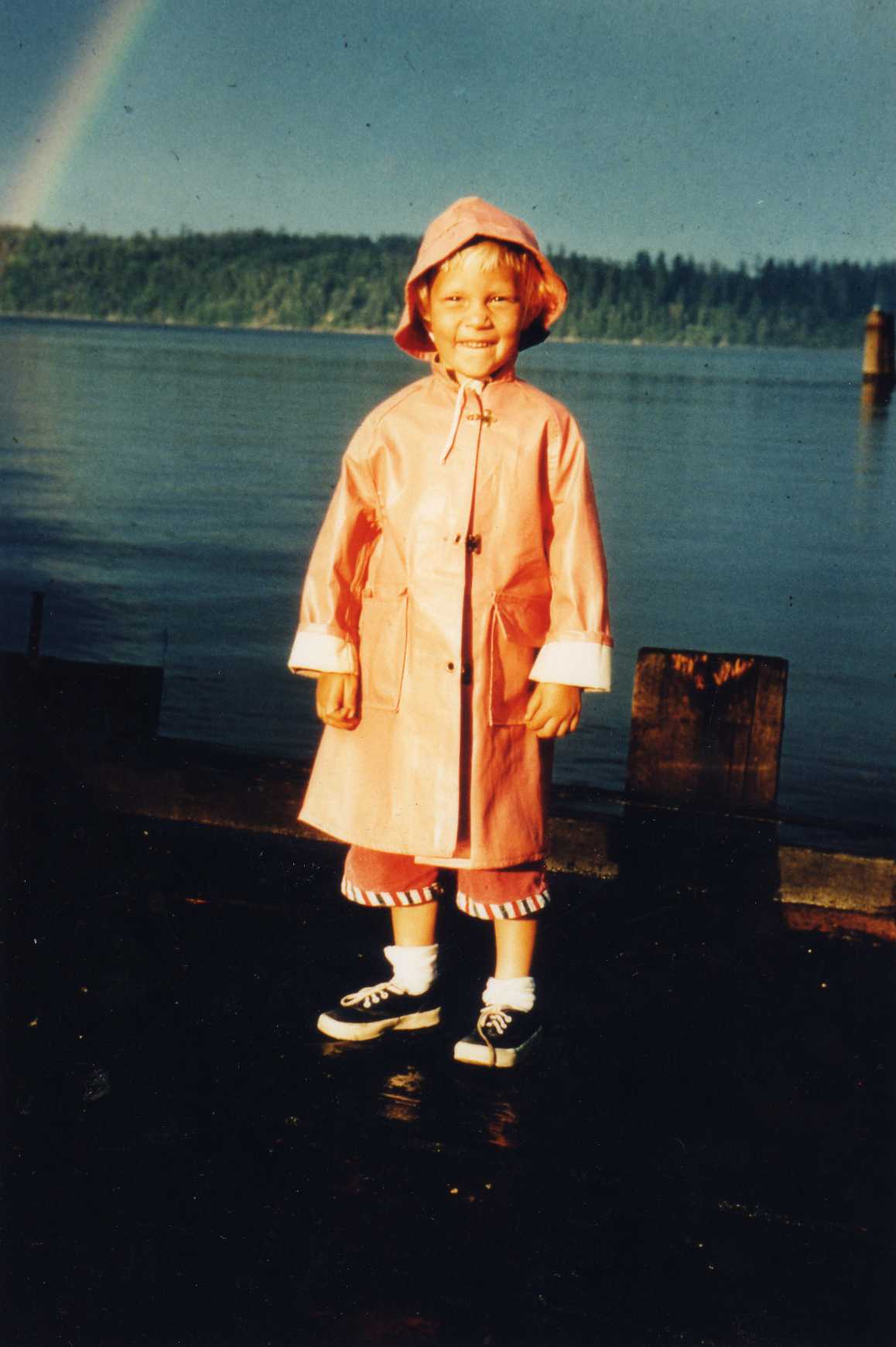
Alley Panorama 2

Better.

Broken Doll B & W

It’s hard to believe it has been two years since the bottom fell out. Two years since I lost my faith in permanence. Two years since I stopped believing that all things that were good would stay good.

Two years (and a handful of days) ago, James and I said goodbye to our beloved Chow mix rescue dog Leo. He was 14 years old, blind, rail thin, his poor doggie body ravaged by cancer. It was heartbreaking to watch him waste away, and even more heartbreaking to make the decision to inject him with the syringe that would induce eternal sleep. Little did I know two years ago that was only the beginning.

A week after that sad day at the vet’s office, an innocent phone call home to wish my Mom a happy birthday – a milestone, her 60th – quickly turned strange. Mom was tense, angry, unfamiliar. She didn’t want to tell me, but I pried it out of her. Dad had cancer. It was aggressive, inoperable, terminal. Dad was going to die.

And from there, it only got worse. Bad news kept coming faster than I could absorb it. The horrifying summer in Olympia where I realized that my Mom, who’d been slipping away, was already gone. Suddenly it seemed that everyone I knew was sick. My Mom, my Dad, my Grandmother, my dear friend Rory, and of course, Leo. One by one, they all left. Died. I started calling this time in my life ‘the vortex,’ referring to the whirlpool that kept sucking me down, down, down, underwater, with no end in sight, with no hope of resurfacing.

But end it did. Finally. People stopped leaving, stopped dying. (I feel compelled to knock on every piece of wood in my house.) For a while, I just surveyed the damage, a witness to it all. Shocked, shaken, yet still standing. For a while, I was paralyzed. I’d always been a writer, but I couldn’t write. I’d always been an actress, but I couldn’t act. Words sounded funny coming out of my mouth. I couldn’t string sentences together. All the creative ways that I’d normally express myself stopped working. I was completely and utterly stuck.

Eventually, I started to get angry. Angry about what had happened, the unfairness of it all. But also, angry about my inability to do anything about it. Elisabeth Kubler-Ross, the psychiatrist whose groundbreaking book On Death and Dying introduced her theory of the five stages of grief, said, ‘Anger surfaces once you are feeling safe enough to know you will probably survive whatever comes.’ I had survived, and as I surveyed what remained of my life, I became angry. I realized I’d been living a life that was smaller than what I wanted, that I wasn’t living up to my potential, that I was making my choices out of fear. And so I started to change.

I could say that life changed me. But I don’t think that’s true. I think what’s actually true is that through painful experience, life held a mirror up to my face, to show me the person that I was supposed to be. Peering into that unyielding looking glass has, at times, been brutal. But it has also been necessary.

Two years after it all started to unravel, the pain is still fresh. Sometimes it’s too intense for words. Sometimes I hate it. But it also drives me. It drives me to write and to create and to work harder than I ever have before. With my faith in permanence gone, the urgency to say it now and do it now and feel it now is unceasing.

Two years later, I could say I’m doing better. And in many ways, that’s true. Living through and dwelling inside the most intense emotions I’ve ever experienced has made me a better writer, a better actor, and a better me. I’m sadder and I’m less sure, true. But I’m also more alive.  I’m more awake.

Two years later, I still try. I still hope. I still dream. I still experience joy. But it’s different now. It’s tougher. But so am I. And so is my resolve. My resolve to never give up.

Two years later, I wonder if I’ll ever truly feel better. And sometimes, I wonder if I’d even want to.

Until next time, friends.
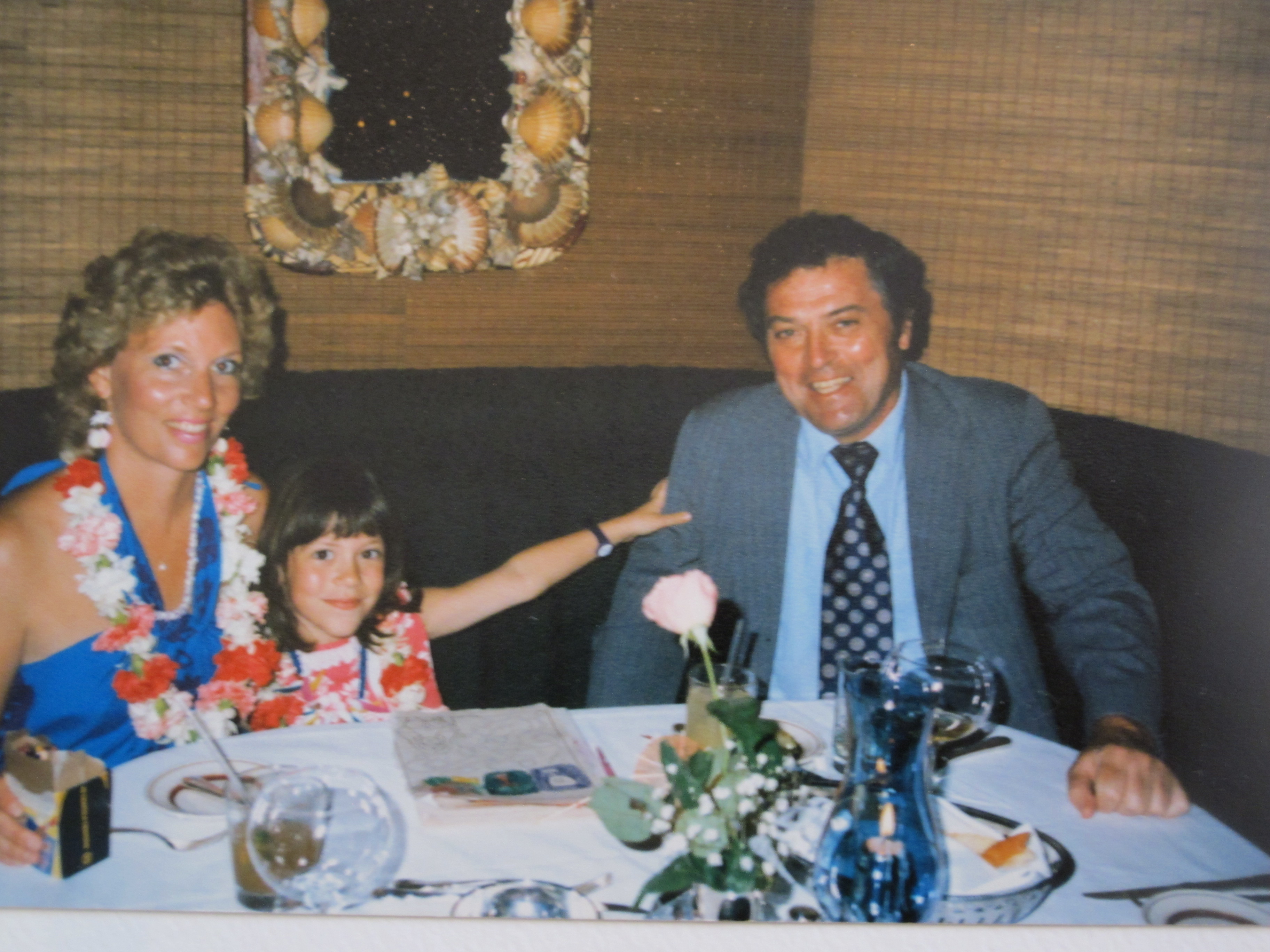
Mother’s Day.

photo 2

This past Sunday was the first Mother’s Day that I actively celebrated since my Mother’s death. It feels weird to say ‘celebrated.’ I certainly didn’t feel like celebrating. But I also felt that it was important not to feel sorry for myself or wallow in my Mom’s absence, but rather to observe the day doing things she would have enjoyed, and to be as happy as possible and as grateful as I could be for all that I still have.

Last year I ignored Mother’s Day altogether – or at least, I tried. It was a pretty loaded and impossible day. Not only was it the first Mother’s Day since my Mom’s passing, it was a mere three months after losing my Dad to cancer, and just a few weeks after my maternal Grandmother succumbed to aggressive Alzheimer’s disease. From the fall of 2012 through the spring of 2013, the hits came hard and fast. So I threw myself into work and felt grateful that when Mother’s Day arrived, I was in the midst of the six week run of a play. We had a performance on Mother’s Day, and that, combined with producing duties, gave me plenty to focus on. I stayed busy, I stayed distracted, and I pretended the ‘holiday’ didn’t exist.

Feeling more proactive and better prepared this year, I made a Mother’s Day plan with Zoe, one of my best girlfriends who had lost her own Mom way too young. We went big. We reserved a table at the fancy pants Ivy at the Shore in Santa Monica – the exact type of place my Mom would have loved. Covered in fragrant florals, it’s a large, bright, breezy space with windows overlooking Ocean Ave. and the Pacific. Everything is overpriced, and obsequious servers in pressed pink shirts and flowery ties abound. Oh so Mother’s Day. Oh so perfect.

Just two days earlier, Zoe had accompanied me to see a friend’s play that was unexpectedly, a sort of emotional primer for the upcoming holiday. The story revolved around a family’s attempts to cope when the matriarch is suddenly afflicted with a debilitating neurological disease. She goes from a vibrant, highly capable and driven career woman to someone rapidly losing control of her speech and body. In one particularly heartbreaking scene, the family’s oldest daughter – who is halfway across the world – places a desperate phone call home on Thanksgiving. She doesn’t want to speak to her grandmother, or father, or sister. Only her Mom. And the Mom, who can barely move or speak, doesn’t think she can do it. But with the grandmother holding the phone to her ear, she manages to stammer through the conversation, finding strength she didn’t know she had to shakily get out the exact words of comfort that her daughter needed to hear.

That scene killed me. And at the end of the play, when Zoe and I both emerged from the theater with red, puffy eyes, I knew it had affected her as much – if not more – than me. Because as much as the fictional circumstances of the play were different than the real events of our lives, there’s something so identifiable about being sick, or sad, or in trouble, and the only person you want to talk to – the first phone call – is to Mom, because you know that no matter what, she’ll be able to make it better. And there’s something so final, so devastating, about no longer being able to make that call.

photo 1

I take comfort in the fact that even though she’s no longer physically here, my Mom is still with me. After all, our parents made us, so how could they not be part of us, inextricably linked? I believe there’s a love there that transcends our physical being, and that’s something that death can’t take away. But I’ll tell you what I miss. I miss the care packages on Valentine’s Day and Easter; care packages that were sent to me long after I was too old to receive them, filled with candy and stickers and silly things. I miss the phone calls on my birthday, when every year without fail, my Mom would sing me a slightly off-key version of Happy Birthday, always ending it by telling me that the day I was born was the happiest day of her life. I used to roll my eyes when she said it, thinking it was so cheesy. Now I’d give anything to hear her say it again. I’d even give anything to have her berate me for not getting enough sleep, or to dismiss a bad mood I’m in by telling me that I’m simply ‘not eating enough protein.’ Isn’t it ironic how all the stuff that used to drive you crazy about a person becomes the stuff you miss desperately once they’re gone?

All things considered, the first Mother’s Day I observed sans Mom was a pretty good one. I shared a lovely and indulgent brunch with one of my dearest friends. The weather could not have been more sunny, warm and Southern California perfect. In the afternoon, I struck the right balance between productivity and relaxation (I’ve always been a work hard, play hard, sort of girl). I was doing great, I really was. And then, leaving the Trader Joe’s parking garage, the friendlier than usual attendant wished me a Happy Mother’s Day, and then– off my face – followed it up quickly with, ‘Are you OK?’ “Yes!” I replied, a little too enthusiastically. He smiled. “I like the flower in your hair,” he said. Ah, bless you, kind stranger, for providing me that small victory. I thanked him and drove off, trying not to cry.

Grief is so funny. It’s rarely what you think will get you – the big stuff – that does it. More often than not, it’s something silly, like the off-handed comment from a well-meaning stranger. Or the restaurant getting your lunch order wrong. Or receiving a piece of news that’s so exciting you can’t wait to pick up the phone and call Mom and then realizing . . . you can’t.

In a way, it’s sort of like every day is Mother’s Day to me since I lost my Mom. I’m never not thinking about her, I’m never not appreciating all the wonderful things she gave me, and I’m never not wishing that she was still here. If you’re lucky enough to still have your Mom, don’t wait for Mother’s Day to hug her, or to send her flowers, or to tell her you love her. Please. Do it for me. Because I really wish that I still could.

Until next time, friends.
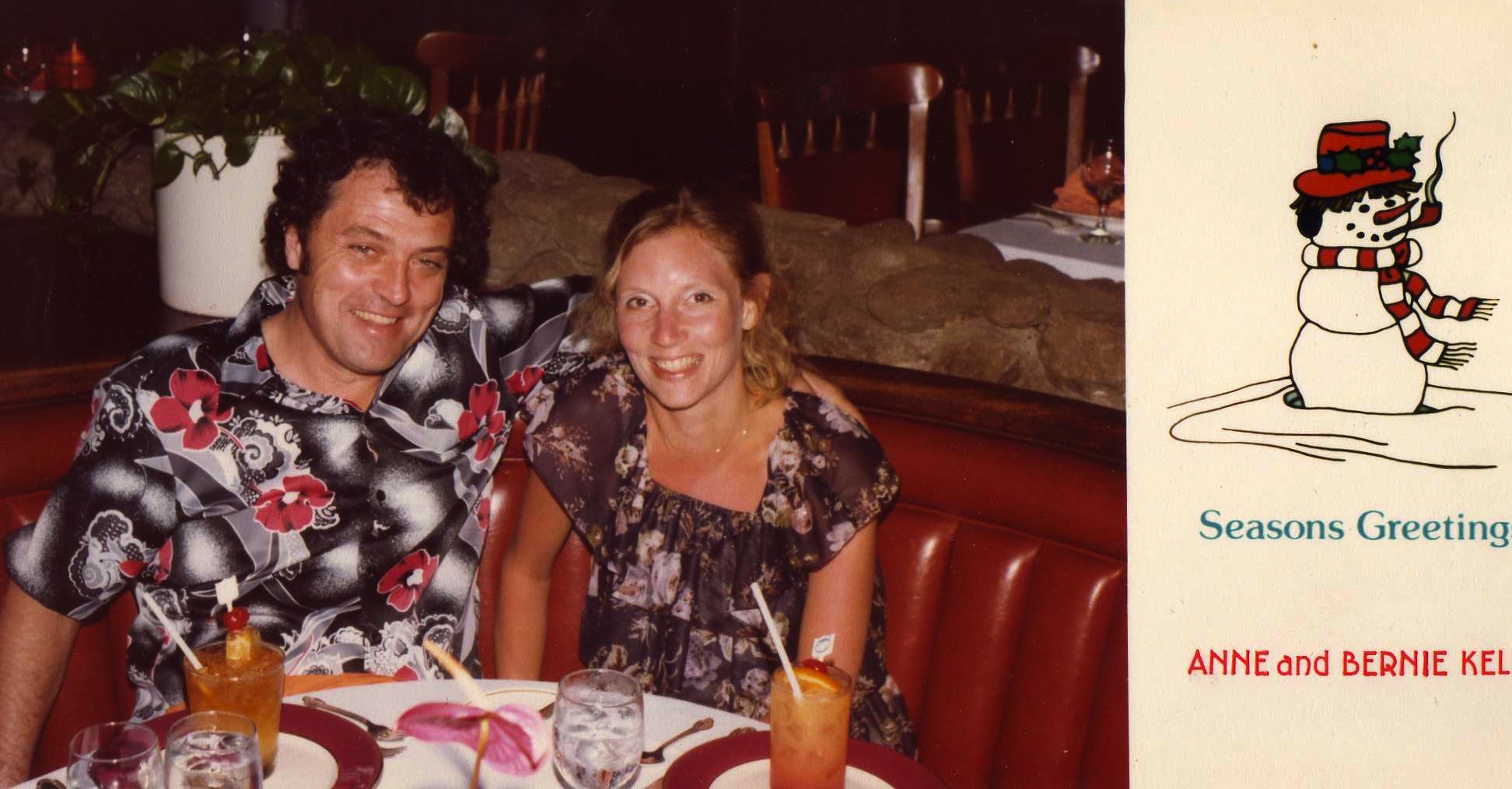
usc grad hug

Faith.

photo-5

The dictionary defines the word faith as “belief that is not based on proof,” and “confidence or trust in a person or thing.” Faith is unscientific. More often than not, it is identified with religion and a belief in God.

My whole life, I’ve been sort of ambivalent about religion. Both of my parents were Catholics, though my Dad was much more devout than my Mom. Mom bore the unfortunate scars of Catholic school-inflicted trauma. She’d frequently recount tales of nuns that were so terrifying – routinely smacking their students with rulers, preaching of fire and brimstone – that she’d pretend to be sick so she wouldn’t have to go to school. Mom lived in fear of those nuns, and though she eventually returned to the church, that fear created a tension between her and Catholicism that stayed with her throughout her life.

So, between a mother that was skittish about religion, and a father who, while a believer, preferred watching sports on Sundays to going to mass, church attendance throughout my youth was sporadic at best, and mostly reserved for holidays like Christmas and Easter. Though I always felt pretty comfortable in the church, as I got older, my liberal politics – particularly my support for gay marriage and a woman’s right to choose – created a disconnect between my beliefs and the Vatican that I couldn’t reconcile. So I mostly stayed away.

As a liberal, I have a lot of friends who are atheists: a belief that I respect. I think it’s actually quite brave to believe that this life is all there is, and when it’s over, that’s it. But to be completely honest, that idea terrifies me. I find comfort in the idea that our souls carry on beyond the lives of our bodies, and that our spirits are so much more than our physical being. If you’ve ever been with someone you loved when the life passed out of them and seen that they simply weren’t there anymore, you know what I’m talking about.

September 29, 2012 was the date of my Mom’s memorial service. It was an informal waterfront gathering in Allyn, WA, on a parcel of land that’s been in my Mom’s family since the late 1950s. It’s a sort of family compound (my Grandfather, Aunt and Uncle all still live there) that we simply call ‘the beach.’ Despite spending the first fifteen years of my life with a permanent residence in Anchorage, Alaska, I essentially grew up at the beach, as did my Mom, and my Uncle Glenn. It was my Mom’s favorite place in the whole world and the only fitting place to hold her service.

That evening, sitting on the deck of my Grandparents’ house starting out at Case Inlet, I was struck by how beautiful everything was. It was an uncharacteristically warm, clear day for late September in the Pacific Northwest. The sound was flat as glass and reflected the heavens like a mirror. An enormous full moon gleamed bright white, hovering over a big-as-life Mt. Rainier. All was so calm and quiet, you could have heard a pin drop. And as I sat and stared out at the sound, for the first time in the weeklong chaos following my Mom’s death, I felt a sense of peace. I knew that she was here, that she was with me.

The skeptic in me immediately chimes in that I wanted to feel her with me, and that, of course, is true. But I simply can’t explain the power of that moment. It was as though the sea and the sky wrapped me up and held me in a warm blanket, and through the tremendous beauty of my surroundings and the almost trance-like calm that came over me, I could feel my Mom whispering to me, “I’m here. I’m O.K., Sar. I’m home.”

But the most powerful exchange I’ve had with my Mother since she passed on happened last Christmas, and it’s something I’ve told almost no one, and certainly not in as great of detail as I’m about to recount here, because it’s so incredibly personal. I was at the beach, and – as usual – staying in a mobile home on a piece of property adjacent to my Grandparents’ beach cabin. The mobile home and the piece of land used to belong to my parents but was willed to me after their deaths. And while I’m grateful for the inheritance, truth be told, I hate that trailer. My Mom inhabited that thing during the darkest period of her life, and the energy it contains is heavy and oppressive and oh so sad. Some joyful day I will raze it to the ground and build a new home in its place. But, I digress.

The trailer is also – until the perfect summer day meets my Uncle and I finding courage enough to scatter them – the temporary home for my Mother’s ashes. Whenever I stay there, I talk to my Mom. Sometimes, I hold the box of ashes in my arms and hug them.

But on this particular day – last Christmas Eve – I had hit a serious wall. After more than a year of being in survival mode, of moving from one crisis to the next, of working so very hard and keeping myself so very busy as a distraction from the weight of all the emotional baggage I’d been carrying, I finally, finally hit zero. I simply couldn’t pretend to be OK anymore. I’d arrived at a place of overwhelming hopelessness and despair. I knew I needed to change, but I didn’t feel strong enough and I didn’t know where or how to begin.

And so I cradled the box containing my Mom’s ashes and I wept. This emotional actress has cried a lot of tears in her life, but I have never, ever, cried like that. Uncontrollably, unceasingly, just this river of emotion. I didn’t ask, I implored. I begged. “Mom,” I sobbed, “I don’t know what to do. I am so scared. Please help me. Please tell me what to do. Please, Mom.” I have never been more humble. I have never been more afraid. And I have never wanted my Mother more.

I don’t know how the universe works. I don’t know if my Mom heard me that night, or if I was just crying to myself. But I do know that in my darkest moment, I asked for help and then help started to arrive. It wasn’t in the form I wanted. It arrived in a way that wasn’t pleasant; help arrived in the form of an unseen hand that grabbed me by the collar and shook me hard and slapped me across the face and screamed, “wake up!” It was a hand that pushed me through pain in order to make it clear that the only way out was through, that in order to live, a part of me had to die. It was gut-wrenching, but I can see now that it was what I needed.

Four months after that dark, dark Christmas Eve, my healing has been dramatic. I still have a steep mountain to climb, but I am more optimistic, more creative, and less afraid. I am making my choices out of hope now, rather than out of fear. I’m learning to trust myself again.

I don’t know exactly where I come down on the God question. But if faith is a belief in something that can’t be seen, then I have it. And time and time again, over the last two years, when I’ve stepped into something having nothing but faith, that faith has been rewarded. I’ve seen and felt too much not to believe that there’s a force out there that’s bigger than me. A force that’s compassionate, a force that wants me, you, us, to be our highest and best selves. I don’t know if that’s God or the universe or magic or what. All I know is what I’ve felt in the deepest reaches of my soul, and in the darkest moments of my heart. That’s my truth. I don’t need it to be anyone else’s, but it’s mine.  And now I’ve shared it with you.

Until next time, friends.
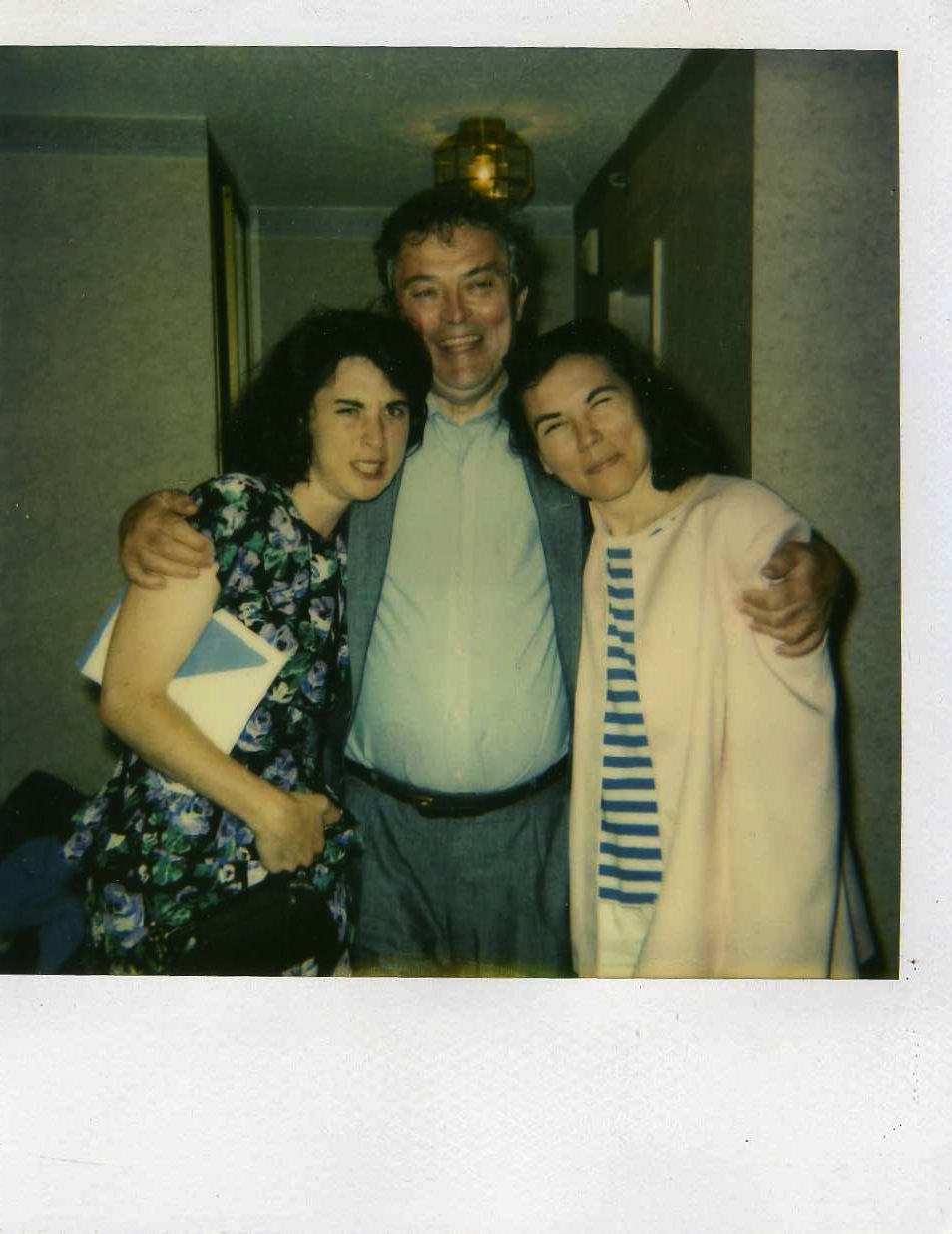
stub039

Dad.

056

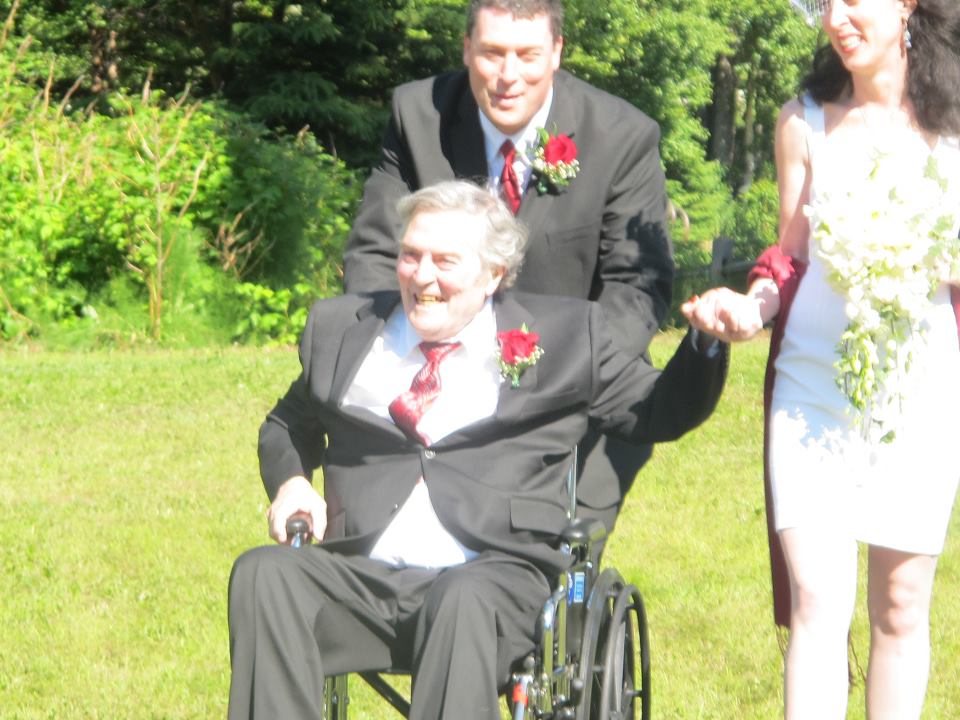
For most of my life, I had a complicated and difficult relationship with my father.  He was a charming and brilliant man, a career-obsessed and highly successful trial lawyer, and a lifelong alcoholic.

My Mom often told me that when she met my Dad, he swept her off her feet.  She was a young, pretty court reporter living in Seattle and Dad, twenty-two years her senior with a legal practice in Anchorage, Alaska, was confident, handsome, and driven.  She’d never met anyone like him before, and he made her feel like she could do anything.  So, undaunted by their age difference and the fact that he had four children in their teens to early twenties from his previous marriage, she married him and moved to Alaska.  A year later, I was born, their only child.

Anchorage was a magical, wonderful place to grow up.  I remember Mom waking me up in the middle of the night to catch a glimpse of the Northern Lights streaking the sky a brilliant emerald green, feeding apples to an enormous moose out of our car window on more than one occasion, ice skating, sledding, and snowball fights in the winter, and long summer nights when it never seemed to get dark and I was allowed to stay up way past my bedtime.

Mom and Dad Hawaii copy

But for my Mom, Anchorage was a dark and depressing place.  My Dad was often away on business, and when he was home, cocktail hour would stretch on for hours, often ending in screaming matches between the two of them.  I wasn’t old enough to understand everything that was going on, but I knew that my Dad was often drunk and that my Mom was sad, and I blamed him for it.

When Dad reluctantly closed his law practice due to his declining health, we moved to Olympia, Washington to be closer to my Mom’s parents.  But retirement wasn’t good for Dad.  The law was the only thing he ever really loved, that and sports  – something we share – and depressed and hobbled by increasingly severe hearing loss (the unfortunate side effect of medication he’d taken to save his life during a childhood illness), he retreated into himself and he drank more than ever.

I got through high school by keeping as busy as I could.  My grades were perfect, I sang in the choir, wrote for the school paper, and stayed out of the house as much as I could.  I almost never invited friends over because I never knew what shape Dad was going to be in.

Marion, Deirdre, Dad copy

When I was accepted to USC, I jumped at the chance to get away.  I’d had enough of the drinking, the depression, my Mom’s tears and the fucking Olympia rain.  The bright lights and the big city were calling.  I moved to Los Angeles, found jobs in the summers so I could stay, and I never looked back.

It’s funny how as you get older, life has a way of knocking you around, shifting your perspective, and making you less rigid and less sure of what you thought you knew.  I had my own hardships – I suffered greatly in my first few years as a young actress trying to make it in L.A.  I was broke, I was depressed, I couldn’t get a break, and with all of my college friends starting ‘real’ careers, I felt so, so alone.

My Mom worried about me and encouraged me to pursue a more stable career.  My Dad never did.  Ever the trial lawyer, he’d engage in a series of probing and uncomfortable questions about my life – something my siblings and I refer to as being ‘put on the witness stand.’  I’d explain to him how hard it was to break into the business, and his response would always be, ‘Well then you’ll just have to work harder.’

Dad and Flower Girl

That was the thing about Dad.  He was a gambler, a risk-taker, and he loved a challenge.  The guy who often said, ‘I’d rather be lucky than good’ (but really, he was both), who put himself through law school by playing poker, who offered up thousands of dollars of his own money taking cases to defend clients who’d been victimized by insurance companies and large corporations, David versus Goliath type cases that no one thought he could win (and win, he did, in sometimes spectacular fashion), this was a man who didn’t believe in quitting.  He was tenacious, he was a fighter, and when he told me that I’d ‘just have to work harder,’ I’ll be damned if he wasn’t always right.

Even before he was diagnosed with the pancreatic cancer that eventually killed him, I knew something was wrong with my Dad.  He lost weight, his skin was sallow.  He was still as mischievous as ever, but he’d lost a little bit of his edge.  The twinkle in his eye faded.

Dad and Max copy

He was nearing 80 years old and becoming frail, and I suddenly realized my Dad wouldn’t be around forever.  I softened my stance.  I came to grips with the fact that it was unfair to blame him for choosing alcohol over his family.  It wasn’t a choice, it was a disease and holding on to my anger about it was only hurting me.  The truth was, he’d never been mean.  Though at times he was maddening, he was kind, generous, and I never doubted that he loved me.  I chose to forgive him, and it made me free.

In her beautiful book The Rules of Inheritance, Claire Bidwell Smith writes about the death of both of her parents, her mother during her teenage years, and her father several years later when she was in her mid-20’s.  Like me, she had a much older father and grew up closer to her Mom.  But in her book, she makes a striking admission and it’s this:  that if she had to lose both of her parents, she was glad that her Mom went first, because otherwise she would never really have gotten to know her father.

It’s difficult for me to admit this, but I feel the same way.  Though my parents’ deaths were only four and a half months apart, and though my Dad was very sick – and often stubborn, maddening, impossible – I cherish those last months I had with him.  We talked on the phone nearly every day.  He told me was lonely, but that he was grateful for his children, that he loved us so very much and that we were getting him through.  We talked about football.  We talked about how much we missed my Mom.

When I visited him in Olympia, he was kind and sweet to me, and so appreciative of little things like when I’d hold his arm to steady him when he was having trouble walking.  During the last Christmas we spent together, cheering the Seahawks on to victory against the hated San Francisco 49ers, Dad turned to me and said, ‘I think we’re good friends now, Sar.’  ‘We are, Dad,’ I agreed.  He grinned.

Dad last christmas

At a reception in his honor following his funeral, one of his lifelong friends read Dad’s favorite poem, If, by Rudyard Kipling.  It’s about living life boldly without fear of what others think of you, and without fear of loss.  It’s how my Dad lived his life.

As much as I adored my mother, I can’t help but feel grateful for all of the gifts I inherited from my father.  A lot of the things I really like about myself are pure Dad.  I’m tenacious, I’m tough, I believe in fighting for the underdog, and –most importantly, and something I’ve leaned on in the last year and a half of my life – I possess the ability to remain cool headed in a crisis, and to laugh in the face of things that make others weep.  It all stems from my Dad’s view of the world:  that life is an adventure not to be taken too seriously, that obstacles are just exciting challenges to be met head on, and that no matter what life throws at you, everything always has a way of working out.

One of the last times I talked to him – before he was too sick to talk – was last year after our beloved Seattle Seahawks suffered a crushing loss to the Atlanta Falcons in the playoffs.  While I was down and depressed, Dad barely seemed discouraged.  ‘Sar, listen,’ he said, his voice full of excitement.  ‘I’ve been watching these guys.  They’re really good.  They’re going to be good for a very long time.  We’ll get ours.’  A couple of weeks ago, when we finally did get ours, I couldn’t help thinking that my irrepressible father had something to do with it.

Dad Marions Wedding

In the same way that I can laugh in the face of things that make other people weep, I don’t think it’s a bummer that my Dad died on Valentine’s Day.  I think he did it on purpose.  Now my siblings and I have a forever reminder of him on a day that’s all about love.  And I think that’s kind of sweet.

So Happy Valentine’s Day, Dad, you charming, insufferable, wonderful, impossible, lovable Irish rascal.  I miss you.  I love you.  And I’m so grateful that I’m your daughter.

P.S. – I’ve pasted Dad’s favorite poem below, if you’d like to read it.  It’s pretty great.

Until next time, friends.
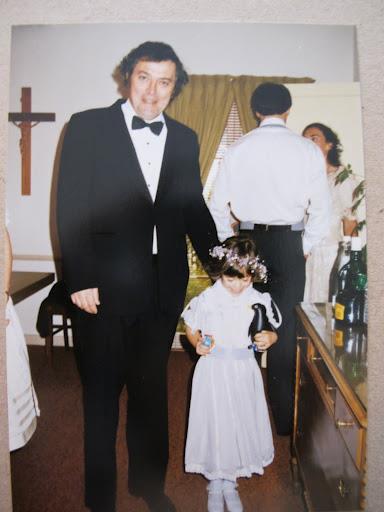
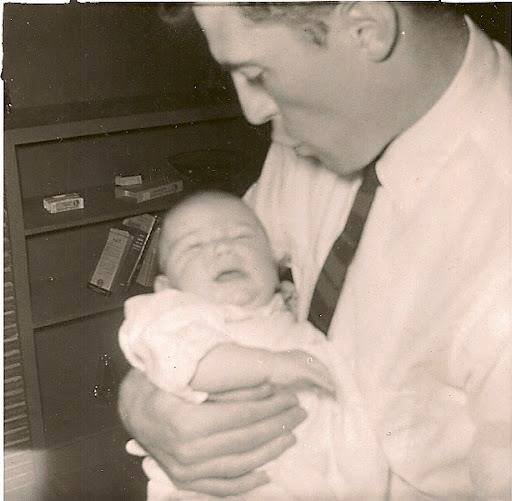
Dad with Baby

If—

BY RUDYARD KIPLING

(‘Brother Square-Toes’—Rewards and Fairies)

If you can keep your head when all about you

Are losing theirs and blaming it on you,

If you can trust yourself when all men doubt you,

But make allowance for their doubting too;

If you can wait and not be tired by waiting,

Or being lied about, don’t deal in lies,

Or being hated, don’t give way to hating,

And yet don’t look too good, nor talk too wise:

If you can dream—and not make dreams your master;

If you can think—and not make thoughts your aim;

If you can meet with Triumph and Disaster

And treat those two impostors just the same;

If you can bear to hear the truth you’ve spoken

Twisted by knaves to make a trap for fools,

Or watch the things you gave your life to, broken,

And stoop and build ’em up with worn-out tools:

If you can make one heap of all your winnings

And risk it on one turn of pitch-and-toss,

And lose, and start again at your beginnings

And never breathe a word about your loss;

If you can force your heart and nerve and sinew

To serve your turn long after they are gone,

And so hold on when there is nothing in you

Except the Will which says to them: ‘Hold on!’

If you can talk with crowds and keep your virtue,

Or walk with Kings—nor lose the common touch,

If neither foes nor loving friends can hurt you,

If all men count with you, but none too much;

If you can fill the unforgiving minute

With sixty seconds’ worth of distance run,

Yours is the Earth and everything that’s in it,

And—which is more—you’ll be a Man, my son!

Why not us?

It’s no secret to anyone who knows me that I’m madly in love with the Seattle Seahawks, and in particular, their superstar quarterback Russell Wilson.  Russell is a gifted athlete, an intelligent student of the game, and no one works harder or spends more time preparing than him.  He’s also a really nice guy.  But what impresses me the most about him is the ice water in his veins.  The guy is cool as a cucumber.  No matter what’s going wrong, no matter how many points his team is behind, he doesn’t get rattled.  He takes it one play at a time, he never gets down or discouraged, and he always believes he can win.

Russell practices visualization.  He imagines every possible play, every possible outcome in a game, and then he envisions how he will react to it.  In his mind, he imagines himself succeeding no matter what the scenario, no matter what the defense gives him.  Over the course of the season, as the Hawks marched toward clinching the NFC West and a playoff berth, there were plenty of doubters, haters and disbelievers out there who said that they could never win a championship.  After all, they never had.  But as someone who was told that he was ‘too short’ to play quarterback, Russell was used to having the odds stacked against him.  And in the face of all the doubters and the disbelievers, he rallied his team with a simple mantra:  “Why Not Us?”

Why not indeed?  I happen to believe that perception is reality.  I believe that the narratives we tell ourselves about who we are and what we’re capable of have a way of coming true.  Like Mr. Wilson, I believe in the power of our minds to affect the outcome of our lives.

I used to believe that tragedy was something that couldn’t touch me, that it was something unfortunate and horrible that happened to other people.  Then life taught me differently.  In less than nine months I witnessed my dear sweet mother lose her mind, spiral into self-destruction and die.  I witnessed my Dad’s rapid descent into the final throws of terminal cancer.  I witnessed my Grandmother’s diagnosis of advanced Alzheimer’s, where one minute she was there, the next she was gone.  And the sudden and far too young death of a close college friend.  In the span of about 9 months, someone I loved dearly was either sick, dead or dying.

I’ve had several months to process and heal from this incredible series of really bad things.  And while I’m better, I’m definitely not OK yet.  I’m still grieving, still processing, and still struggling.  But I’m struggling on the other side of it now.  The big bad wolf blew down my house, and I discovered that it was made of straw.  Now I’m forced to rebuild, except this time, I’m building with bricks.

In the same way that I used to believe that nothing truly bad could happen to me, I also believed that nothing amazing could happen to me either.  Deep down in the bottom of my heart, I never truly believed that I deserved to be full of joy, to design the life I wanted, to live boldly and without fear.  Instead I played by the rules, I did the ‘right’ thing, and I didn’t challenge myself to dream bigger.  I was content and complacent but not really happy.  Not fully alive.

It’s funny how having your heart shredded can shake you up and change your perspective.  Some of the worst things I ever could have imagined in my life have happened to me and I’m still here.  I’m not perfect, I’m struggling through it, but I’m here.  And being compressed by grief has, ironically, made me more open.  More open to try, more open to fail, more willing to risk it all.  Because when you’ve already lost so much, what’s the point of being afraid of losing?

So this is me, taking a page out of my favorite quarterback’s book.  If ‘Why Not Us,’ can bring the first Lombardi Trophy to Seattle in the history of the franchise, it’s a philosophy worth adopting.  I’m flipping the script on what I used to believe, and now I choose to believe that great things are not only in store for me, but that I deserve them.  Why not me?  Why not you?  Why not us?

Why not.

Until next time, friends.
The Lost Year.

It has been a year since I wrote and published my last blog.  A whole year.  Even as I write that, I find it impossible to believe.  Where has the time gone?

This is what it always comes down to – the reason I don’t write.  Or, the reason I do write, get frustrated, and give up:  the ‘where has the time gone?’ question.  Not that it’s hard to be honest about it, but more that it’s hard to be accurate about it; it’s hard to explain things in words because words don’t suffice.

There is so much of this last year that I only vaguely remember – it’s all shadowy and dark and covered in fog.  The year passed in a blur of very sad things.  Devastating phone conversations, funerals, insomnia, nightmares, more funerals, difficult decisions, sifting through personal belongings, trying to make the best of things, trying to figure out the right thing to do, trying to be strong for other people, trying to find the silver lining, trying to learn the hard lessons, trying to get through the holidays, the birthdays, and working, working, working.

After a string of very sad things, it has been five months since the last very sad thing, and I’m starting to believe that maybe I’m done for a while.  Maybe the universe has finally decided to give me a break, so I can stop holding my breath and start to heal, instead of just getting good at going through the motions, at faking it till I make it.

The first very sad thing was the biggest.  If sad things were measured on richter scales, this would have been the 9.0, the earthquake that triggered the aftershocks, the tsunami, the nuclear disaster.  The first very sad thing was the death of my mother, which happened 11 months, three weeks, and six days ago.  Life was far from perfect before the ‘big one’, but it was that particular very sad thing that catapulted me into uncharted territory, and set off the chain of months that I’m calling ‘The Lost Year.’

Amidst the shadows and fog, here’s what I remember from this last, lost year.  I remember an enormous full moon – astrologers called it a monster moon– lighting up the whole sky the night of my mom’s memorial.  I remember how broken my dad looked that day, and how frail he was.  My hair was darker than the last time he saw me, and he was confused and barely recognized me.   I remember visits to Olympia where it never stopped raining, and how bad my parents’ house smelled – like old people and cancer.  I remember alternately worrying about dad, and wanting to strangle him, because he made life so hard.  I remember feeling guilty for wanting to strangle him.  I remember thinking in spite of the terminal cancer diagnosis he was going to live forever, just to torture his children and see how much devotion he could squeeze out of us.  I remember my heart skipping a beat every time the phone rang and ‘Dad’ came up on the caller i.d.  And if it was a 206 or a 360 area code (both Washington) that I didn’t recognize:  immediate panic.  I remember the 11:30 p.m. call from Capital Medical Center – a nurse on the other end – fearing the worst.  ‘Your father’s o.k., Ms. Kelly, but he’s very worried about who’s taking care of his cat.’

I remember other calls too, with my grandmother, my mom’s mom.  How confused she sounded, how sad.  I remember talking to her frequently during my commutes between North Hollywood and Venice.  I remember that she was obsessed with a sewing machine that my mom had borrowed and she wanted it back.  I didn’t know where it was, knew I would probably never find it, and knew it wouldn’t really matter.  I remember the last phone call I had with her, on Thanksgiving Day.  I was in my car, heading out to hike Fryman Canyon.  She asked what I was doing for dinner.  ‘Going to a friend’s place,’ I said.  She thought that sounded nice.  She complained about the rain, and that dinner would be late because my aunt and uncle were preparing it, and they were always, notoriously, late.

Less than three months later, back in Olympia helping my sister go through my parents’ house and handle details surrounding our dad’s funeral, I went to see my grandmother in a nursing home, a place specifically designed to care for Alzheimer’s patients.  I remember thinking how all of the residents looked like children, how my grandmother looked like a child, with barrettes in her hair and painted fingernails.  How she knew me, but not really.  How she asked where I lived and when I replied, ‘Los Angeles,’ she paused, looked me square in the eye, and said, ‘Well, no one will look down on you for that.’  I remember the call I received from my 87-year-old grandfather, on a Saturday in April, when she died.  I was in tech rehearsal for a play and didn’t answer.  His voicemail said simply, ‘Another one’s left us, Sar.’  When I called him back, he said they’d plan a low-key memorial at my grandparents’ beach home on Puget Sound – the same place where my mom’s memorial had been held –  on her birthday in late July.  Said grandpa, ‘it’s too damn cold to do anything now.’

I could keep going.  I could tell you about the worst birthday party I ever had – that I stubbornly insisted upon having – even though two of my best friends were across the country at another close friend’s funeral, a funeral that I felt guilty for not attending, but couldn’t because it was too expensive to get there, and I had a work obligation that I couldn’t get out of, and it was my birthday for godssake and really, really I just couldn’t take one more very sad thing.

I could tell you that smack dab in the middle of The Lost Year, in between all the death and the sadness, that my identity was stolen and I spent four months fighting faulty credit card charges, filing police reports, getting documents notarized, and spending hours on the phone, and that I was almost glad for the distraction because while horribly inconvenient and time-consuming, at least it wasn’t another very sad thing.

But it’s all just too much, isn’t it?  This is why I’ve kept my head down and worked hard and blocked out entire sections of time for the last 360ish days.  Because it’s too much.  I’ve learned to lie because I’ve learned to hate the look in someone’s eye when I actually do decide to tell the truth about the events of the last year.  It’s a look of pity and helplessness, but mostly, a look that says there’s something wrong with me and they’re afraid they’re going to catch it.

I’m not an idiot.  I know what’s gone is gone, and nothing can change that.  I know that like it or not, I’m different.  Too many things have happened to shape me, and change me.  But I do want to feel like I’m in charge of my own life again, that I’m not just a person that bad things happen to.  I want to be happy again, in spite of all the very sad things.  And more than anything, I want to be able to express myself, and to be able to write from my heart, again.

So here it is, after one very long year.  Thanks for reading.

Until next time, friends.

Blog at WordPress.com.