Ghosts.

stub020

Grief experts will tell you that with time, eventually you’ll get to a place where the memory of a lost loved one will make you smile and think of happy times, rather than dwell on the pain of the loss.  How long this takes is, understandably, unique to the situation, and to the person who has suffered the loss.

It has been a year and a half since I lost the most significant person in my life, my Mom, and I’m not there yet.  The passage of time has helped – the nightmares that used to come frequently now occur only once every so often and they’re less wrenching and raw than they used to be, and certain triggers like a photograph or a song or a movie don’t affect me as much as they used to.  But there’s still that ever-present ache that tugs at my insides whenever I think of her.  And I’m never not thinking of her.  I keep myself busy and distracted so that for a time, I can forget.  But, like a shark that has to keep swimming in order to breathe, I have to keep moving, or I will drown.

Unlike other loved ones that I’ve lost, there’s very little peace to be found around my Mom’s death.  She haunts me like a wounded ghost, crying out for my help.  Help that I wasn’t able to give her when she so desperately needed it.  No matter how many people, especially those with intimate knowledge of the situation, tell me that I shouldn’t feel guilty or hold myself responsible for her death, I can’t help but think what if?  She was closer to me than anyone else in the world.  She trusted me; she told me secrets that she never told anyone else, secrets that I, in turn, will never tell.  In many ways, from a very young age, I was often the parent, and she was the child.  She took care of me, but I took care of her too.

caramel apples

But for the last year or so before she died, and in particular, the four months between my Dad’s cancer diagnosis and her death, I didn’t understand her behavior.  It was crazy, it was irrational, and it scared me.  She would send me emails at 3 a.m., rambling on about one nonsensical thing or another, she wouldn’t shower for days, she refused to eat and her body became rail thin, and worst of all, she barely seemed to know who I was.  The most terrifying thing of all was the blank stare, as though she was looking through me, (me, her person) and I didn’t exist.  Then the phone calls came, hysterical.  ‘Mom,’ I said, ‘I think you’re having a nervous breakdown.  I’m worried.  I think you need to talk to a professional.’

I put the resources in her hands but I didn’t make the calls.  I left it up to her, and of course (I can see now), she didn’t and couldn’t do it.  She told me that she had found someone, a psychiatrist, but when I looked up the doctor’s name online and couldn’t find any record of her, Mom said that she was ‘really new,’ to her practice.  I knew she was telling me lies; that she’d made up an imaginary doctor to get me off her back, but what could I do?  What should I have done?

It’s those questions and those relentless what ifs that will drive a person crazy.  I was my Mom’s best friend and she was mine.  She leaned on me so much throughout her life, but when she needed me the most, she pushed me away, and slammed the door in my face.  And even worse, I let her do it.  Was she suffering so much that she didn’t want me to intervene, and she just wanted the pain to be over?  Or did she desperately want my help but was trying to protect me, and she just needed me to push harder and to be tougher and to not take no for an answer?  These are the questions in which my nightmares take root.
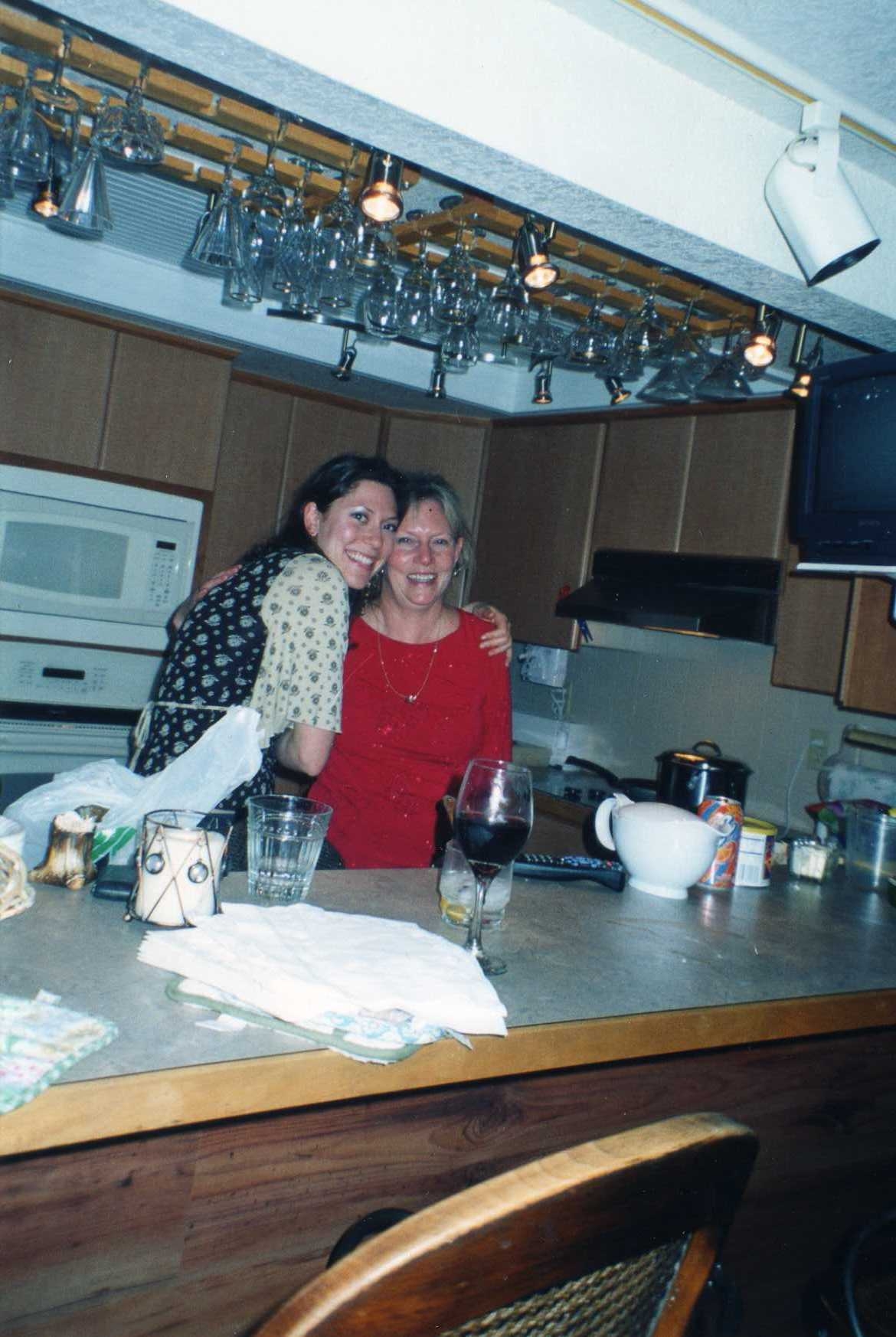
me and mom kitchen

Recently, I was in New Orleans to celebrate my sister Marion’s birthday, and we had our palms and tarot cards read by a lady named Miss Irene.  Miss Irene is 86 years old and has been reading cards since she was 16, a total of 70 years.  She looked at some lines on my palm and told me that I’d lost a lot of people that I loved and that they were now my angels watching over me.  Be skeptical if you want to be – I am – but I’m telling you, this lady was no joke.

I wonder:  when will the ghost that’s haunting me become the angel watching over me?  When will the good memories of my Mom – of which there are so, so many – replace all the pain and the guilt and the terrible, relentless what ifs?  We were so very different in so many ways and yet, we were the same.  No matter how much I’m my own person, for the rest of my life, she’s in me.  I am her and she is me.  There isn’t a moment in the last year and a half that she’s been gone where I haven’t wondered, ‘What would Mom do?’ or ‘What would Mom think about this?’  There are times when I’ve done exactly what she would have wanted, to honor her, and times when I’ve deliberately acted out and done something she would have hated, like a rebellious teenager out to assert my independence.  No matter.  She is always, always top of mind.  Being as kind, as compassionate, and as lovely as she was is my greatest aim, and avoiding her pitfalls is my greatest challenge.

For better or for worse, my Mother – the way she lived and the way she died – is the ghost that I am living with.  Pain aside, maybe it’s not such a bad thing to be haunted.  At least, as a ghost, I won’t forget her.  She is always, always with me.  She is the thing that pushes me to be better.  She is the thing that threatens to destroy me.  She is the thing that I will never stop chasing, and the reason I will never stop striving.  The source of the ever-present ache is this:  no matter what I do, it’s impossible to make a ghost proud of you.  It’s impossible to make a ghost happy.  I know that.  But I can’t, and I won’t, stop trying.

Until next time, friends.
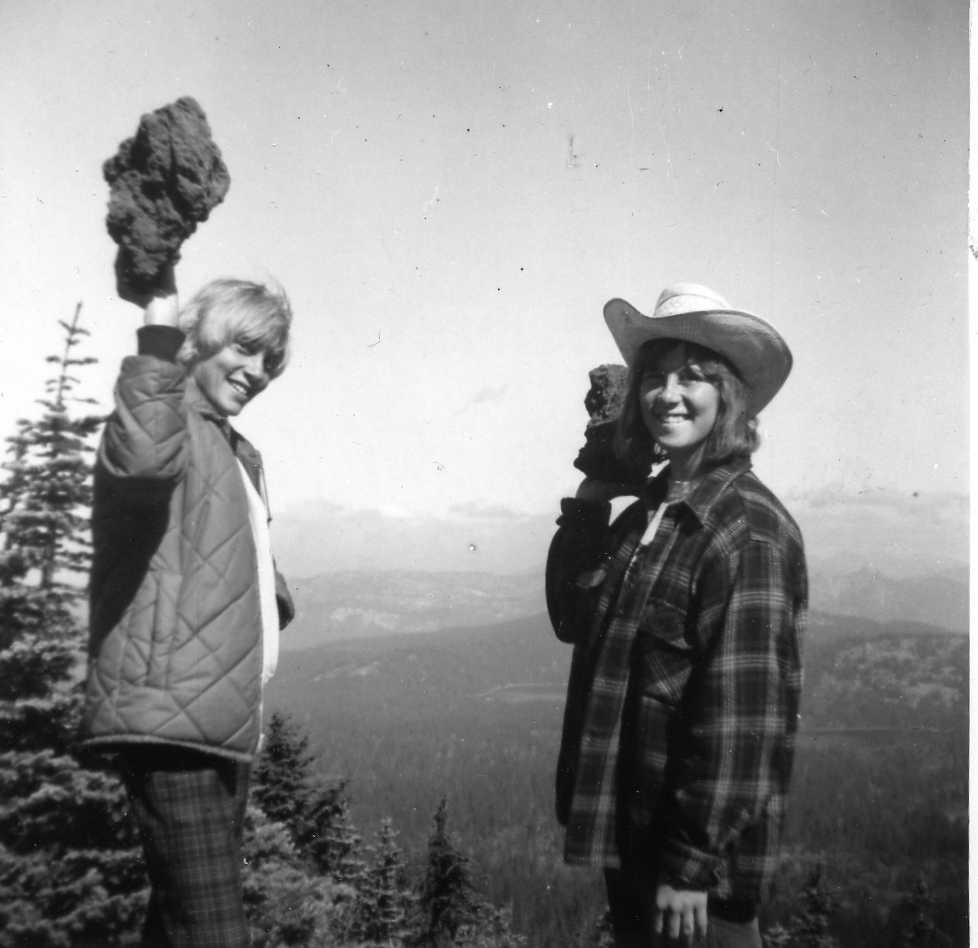
Mom and Eadie

Truth.

DSC_1740-small

How honest is too honest?  For me, that has been the trickiest part about blogging.  Over the last several months I’ve laid a lot of things bare.  I’ve exposed personal things about my life, my family, and the inner workings of my heart that, at times, have made me uncomfortable because they were so honest.  I’ve been worried about hurting other people, and I’ve been worried about hurting myself.  But I’ve also realized that if I’m not honest, I might as well not write.  If it doesn’t matter to me, if it’s not meaningful, then what the hell is the point?  So I find myself back at square one, telling the truth.  The complete, unabashed and sometimes, ugly, truth.

I’m not a nice person.  That’s the truth.  If you talk to anyone who knows me intimately, they’ll tell you two things:  I have a heart the size of Texas and I’m fiercely and loyally devoted to those I love, and I’m also a complete and total bitch.  It’s true.  Casual acquaintances know me as the ‘nice’ girl.  But those who know me better know that I have another side.  A side that’s unforgiving.  A side that’s not afraid to be vicious if you’re standing in the way of something that matters to me.   A side that’s primal, fiercely protective, and about claws-out survival.

I used to shy away from this part of myself.  I used to deny it.  After all, we’re taught to play nice.  We’re taught to obey the rules.  Especially us girls.  What will people think of me if I let my dark and twisted side out to roam free in the civilized world?

My Mom was nice.  She was the nicest person I ever knew.  She literally did not have a mean bone in her body.  And I adored her.  She was my best friend, and my favorite person on this earth.

DSC_1467-small

But she was also the unhappiest person I ever knew.  She loved (no, worshipped) my Dad, but he was a difficult man.  A brilliant, often wonderful man, but difficult as hell man to live with.  She probably should have left him.  At times, she wanted to.  She cried to me about it when I was a little girl, making plans about where we’d go, where we’d start our new life.  But she didn’t leave.  She stayed – even though she was unhappy – because she loved him.  My Mom was like that.  Always doing the right thing, no matter what the personal cost.  Maybe it was the Catholic thing.  Maybe she was afraid of rocking the boat.  Maybe she wasn’t brave.  Maybe all of those things.

My Mom died.  And when I say died, what I mean is she imploded in a spectacular fashion.  She did it all, was everything to everyone, until she couldn’t be anymore.  She couldn’t be anything to anyone, least of all herself, and she self-medicated and retreated into a bottle for relief and it killed her.  It was shocking, it was heartbreaking, and it should have been obvious all along that this could have been the only end to her sad story.  My sweet, kind, miserably unhappy mother, too sensitive for this world and who tried to do too much for too many, in the end, had nothing left for herself.

It’s a strange thing to idolize someone, to love them desperately and completely, to be willing to do anything for them, and yet be absolutely determined not to be like them, come hell or high-water.  From a very young age, I knew I didn’t want to be my Mom.  Her choices terrified me.  They felt like a self-imposed prison that flew in the face of everything I dreamed of:  an unconventional life that was adventurous and free and fun, that embraced art and beauty, a life that took risks, that was creative, spontaneous and inspired.

DSC_1961-small

In the last year and a half, I’ve lost a lot of people that I love.  People who have been been literal giants in my life and crucial to my development as a human being.  Both of my parents.  My only remaining Grandmother.  And a dear friend.  For a long time, all of this death and dying, sadness and loss, left me underwater.  It left me numb.  I didn’t know what to do with myself or where to go.  I felt defeated.  I felt angry.  I felt sad.  And for a long time, I abandoned the one thing I really should have been doing throughout all this, which is to write it all down.  Truthfully.

No more.  I don’t care who doesn’t like it.  I don’t care who doesn’t like me.  I am done, to quote Lanford Wilson, “Telling lies to protect the guilty.”  Telling the truth about my family – with all of their imperfections and frailties – doesn’t mean I don’t love them or miss them or wish that they were still here.  It just means that I want to survive their mistakes.  I want to learn from them.  So that I can be better and stronger and smarter.  And doing that means no more apologizing.  It means embracing the side of myself that’s not so nice.  The side that wants to kick ass.  The side that doesn’t give a damn what you think.  And the side that’s all about telling the truth, no matter how ugly or uncomfortable it can sometimes be.

Until next time, friends.

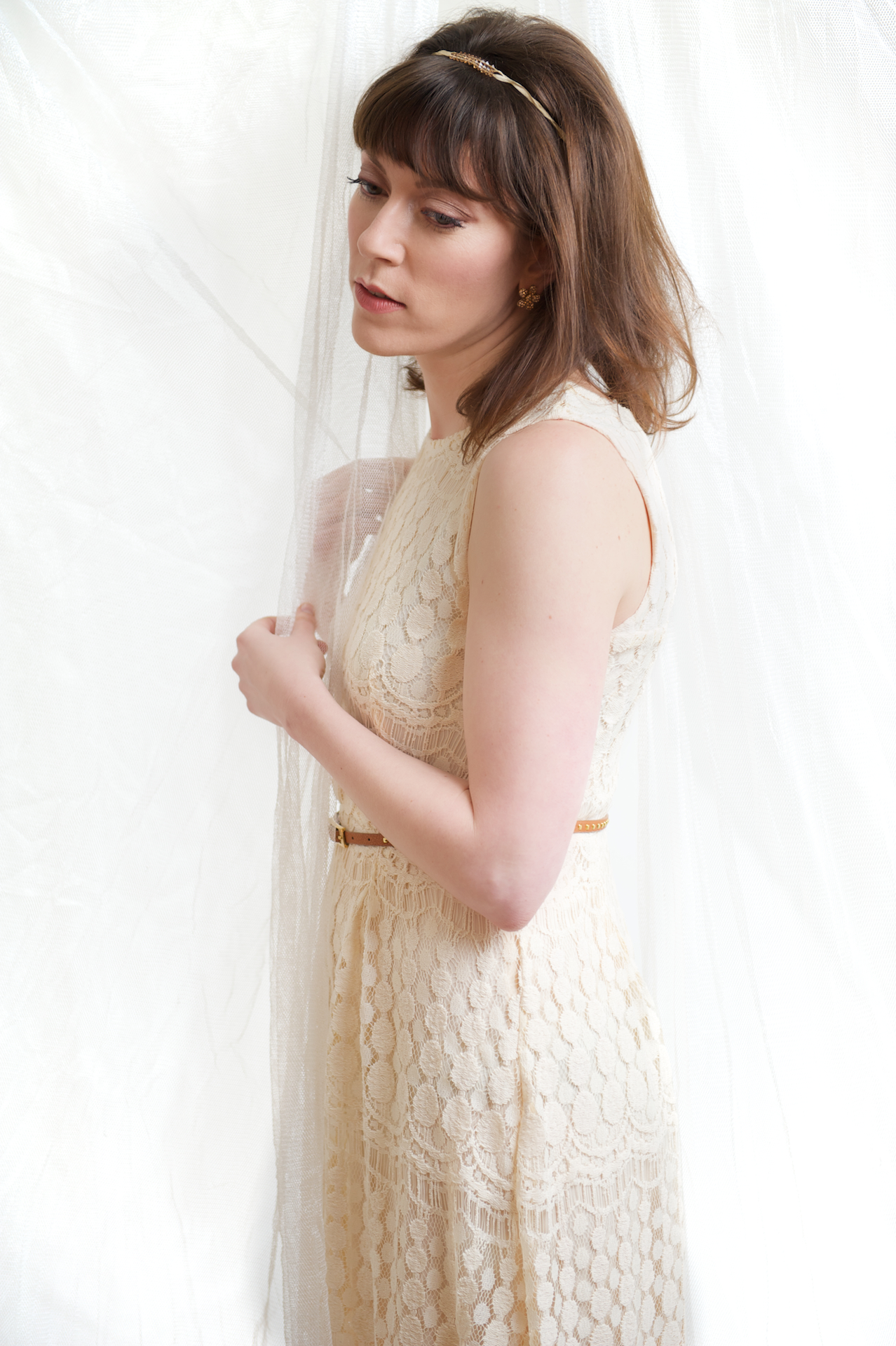
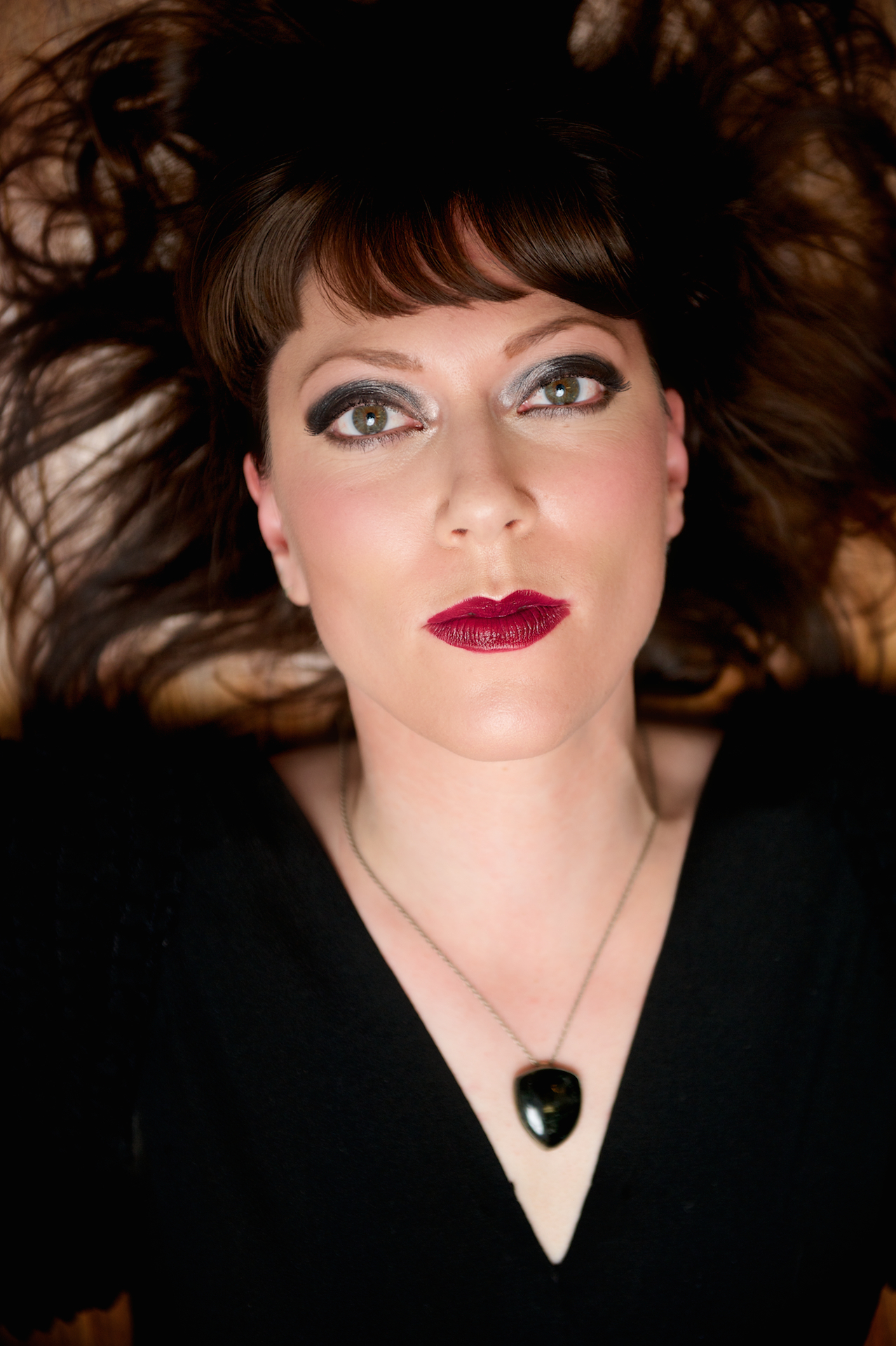
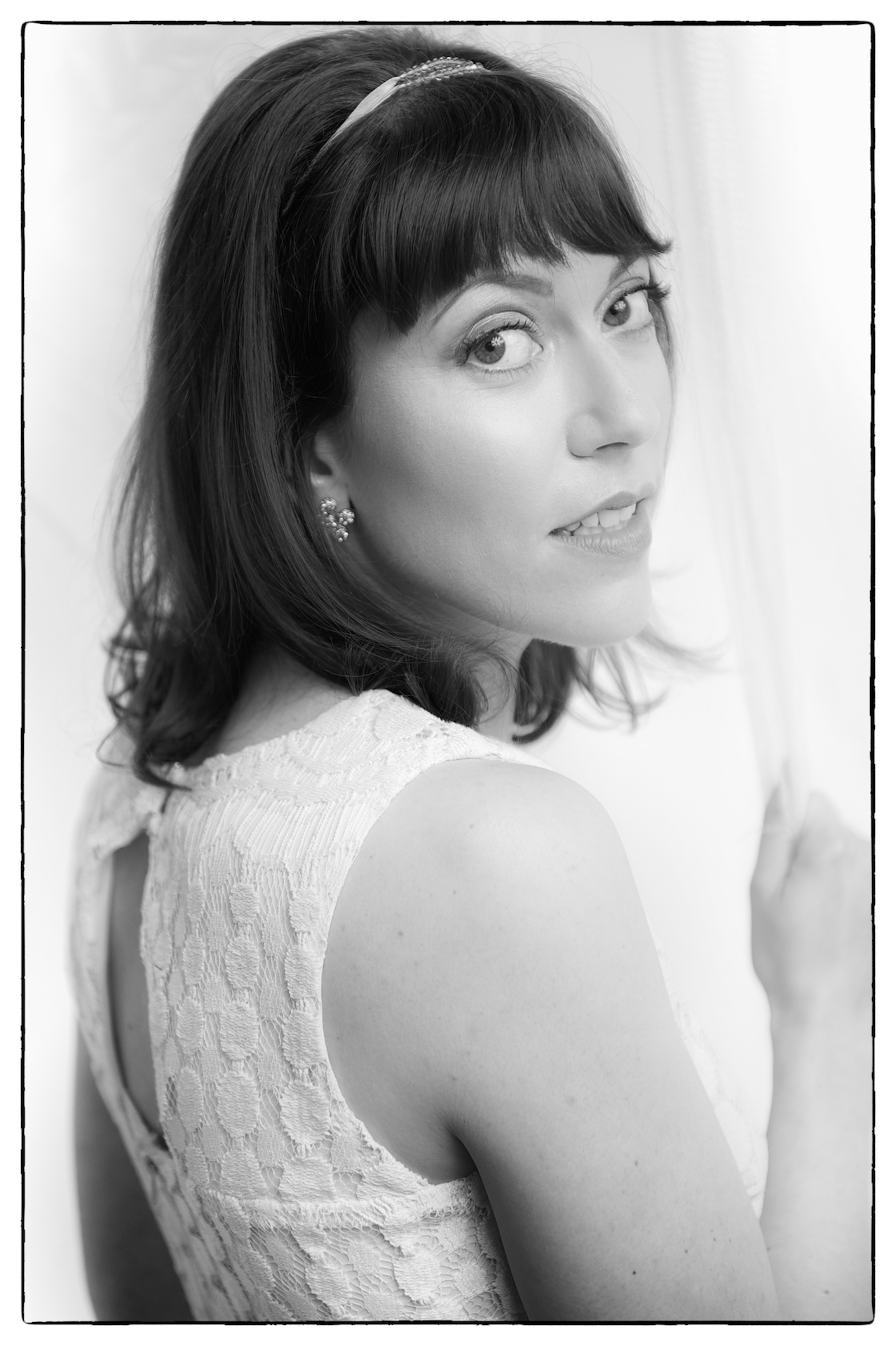
P.S. – Special thanks to Lemon Melon Photography for the kick-ass photos, and to the incomparable Becca Weber for the hair and makeup magic.

DSC_1676-BW-small

Familiar.

It’s funny the little habits that you get used to.  The everyday comforts that make up your daily routine; things you don’t really notice until they’re gone.  The gym is one of those comforts for me.  I’m a person who never stops going – I’m always working, juggling projects, tackling a to-do list that continually rolls over – and exercise is a crucial tool I use to not only stay healthy and feel good about myself, but also to manage stress and to release the tensions that build up in the course of my busy life.

The other day I found myself working out in an unfamiliar gym.  It was weird.  All of the equipment was different and suddenly I didn’t know which settings to put the machines on or how much weight to lift.  I wasted a lot of time trying to figure out what I was doing, all the while trying to look like I knew what I was doing so that some testosterone-fueled meathead didn’t offer to help me.  Ugh.

Wandering around this unfamiliar place, a song I always skip on my iPod (because it’s too damn sad) came on, and suddenly it was a year ago and I was back in Olympia.  After our Dad died, my sister Deirdre and I spent a week camped out in the house he shared with my Mom.  We sorted through old books and music and photos.  We did everything from ordering flowers to placing obituaries in newspapers to picking out gravestones to meeting the lawyer, to booking travel to Medford, Oregon for the memorial, to figuring out how we were going to transport Dad’s ashes to said memorial (that is a story in and of itself), and about a million other little things.  I spent a couple days essentially living in my Mom’s closet, going through piles of clothes and jewelry and beauty products, and her epic collection of Stephanie Johnson bags that I’d given her over the last eight years.

We worked hard and it was sad but it also felt good to work, to do stuff.  We’d collapse each night and wake up with the sun each morning, the to-do list never ending.  We’d talk over coffee first thing in the morning and review the day and write absolutely everything down because our brains were so frazzled with overwhelm from impossibly hard jobs and the utter emotional exhaustion of sorting through a house filled with a lifetime of memories.

After several days of this, I hit a breaking point.  The never-ending freezing February Olympia rain made the thought of running outside unappealing, but I knew I had to exercise or I was going to lose my mind.  So I told Deirdre I was taking a break from the vortex (our term for this weird, disorienting time in our lives and the Olympia house in particular; time disappeared inside the vortex) and getting a guest pass to the local 24 Hour Fitness.

And there I was.  In a gym full of unfamiliar equipment, unfamiliar faces.  My Dad had a membership there and saw a trainer 2-3 times a week until very close to the end of his life.  Dad’s trainer’s name was Dave, an exceptionally wonderful soul who, when he found out that none of Dad’s kids were able to get to Olympia for Thanksgiving, delivered a turkey to his home so that he wouldn’t miss out on his Thanksgiving meal.

I wandered around the gym, wondering what type of exercise Dad could possibly do when he was so sick, wondered at Dave’s patience, wondered if I should ask for him so that I could meet this man who’d been so kind to my father, but also knew if I met him I’d break down instantly and I couldn’t do that because I was barely, barely holding it together.

I wandered around the gym like a zombie, tried and failed at a few machines.  I finally settled on a treadmill because that I knew how to do.  And I ran and ran and ran.  And that song that I always skip came on my iPod, with lyrics about trying your best and not succeeding, about losing something you can’t replace, about learning from mistakes (fuck you, Coldplay) and this time I decided to let it play.  I can only imagine what I must have looked like.  Between the endorphin release of the run, and that stupid song and fighting so hard against the vortex that was sucking me in. Scanning the gym in this unfamiliar place, looking for my missing father (did I somehow think he’d still be there, that I’d find him?), in a town that used to be my home but was so far away from home now.

I don’t know how long I ran.  I was exhausted, I was weeping, I was drenched in sweat, but I couldn’t stop.  I knew that back in the vortex more sad jobs were waiting and I didn’t want any part of them.

There’s a lyric from a new Ingrid Michaelson song that as of late has been running through my head:  I’m a little bit home, but I’m not there yet.  That’s how I felt in the vortex.  That’s how I felt in that 24 Hour Fitness in Olympia.  And that’s how I felt in the unfamiliar gym the other day.  I’m a little bit home, but I’m not there yet.

So I guess I’ll keep running.

Until next time, friends.
February.

Oh February, what a month you’re turning out to be.  I’ve experienced overwhelming joy and crushing loss, sometimes in the same day.  I’ve grieved for my family.  I’ve grieved for my childhood.  I’ve grieved for things I’ve lost which can’t be found again.  I’ve grieved for things I’ve lost that were never really mine.

But I’ve also been touched by kindness and compassion, both by virtual strangers and lifelong friends.  I’ve started learning to ask for help – so hard for me to do – and I’ve felt my heart open up.  I’ve felt how much my close friends love me and how willing they are to step into the void left by my family.  I’ve realized that my friends are my family.  I’ve been caught by the striking beauty of a single moment, and have in turn been bowled over by the heartbreaking wonder that is this precious and too-ephemeral life.

When I was at my lowest, I received an unexpected gift:  my first ever network television audition, for Grey’s Anatomy.  The best part of going in to read those three lines today was being able to walk into the room and not need anything from anyone except to simply be who I am, to sit inside myself, free, and say the words on the page aloud.

Thank you, universe.  I am blessed.  I am grateful.  I am listening.

Until next time, friends.

Dad.

056

For most of my life, I had a complicated and difficult relationship with my father.  He was a charming and brilliant man, a career-obsessed and highly successful trial lawyer, and a lifelong alcoholic.

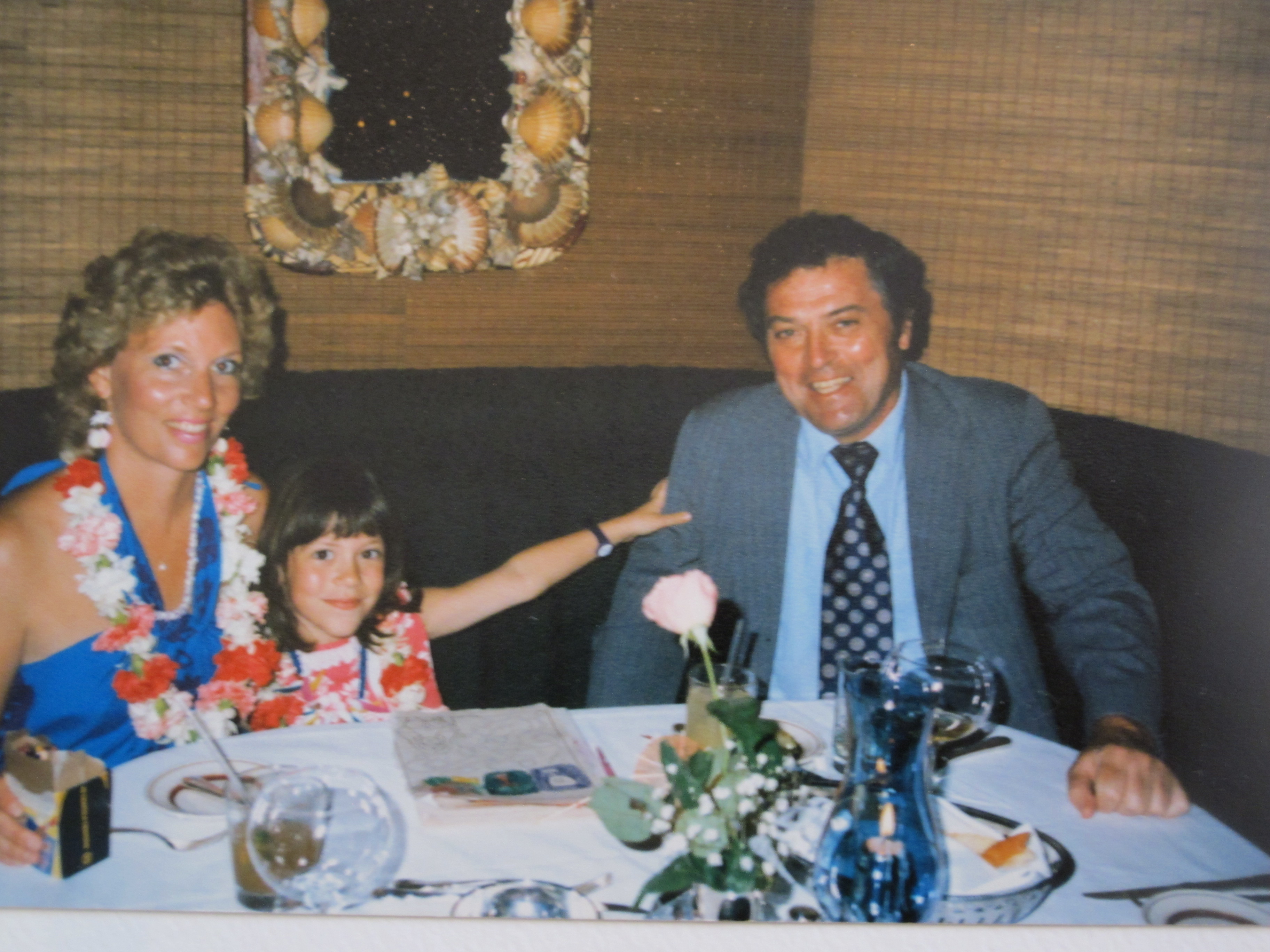
My Mom often told me that when she met my Dad, he swept her off her feet.  She was a young, pretty court reporter living in Seattle and Dad, twenty-two years her senior with a legal practice in Anchorage, Alaska, was confident, handsome, and driven.  She’d never met anyone like him before, and he made her feel like she could do anything.  So, undaunted by their age difference and the fact that he had four children in their teens to early twenties from his previous marriage, she married him and moved to Alaska.  A year later, I was born, their only child.

Anchorage was a magical, wonderful place to grow up.  I remember Mom waking me up in the middle of the night to catch a glimpse of the Northern Lights streaking the sky a brilliant emerald green, feeding apples to an enormous moose out of our car window on more than one occasion, ice skating, sledding, and snowball fights in the winter, and long summer nights when it never seemed to get dark and I was allowed to stay up way past my bedtime.

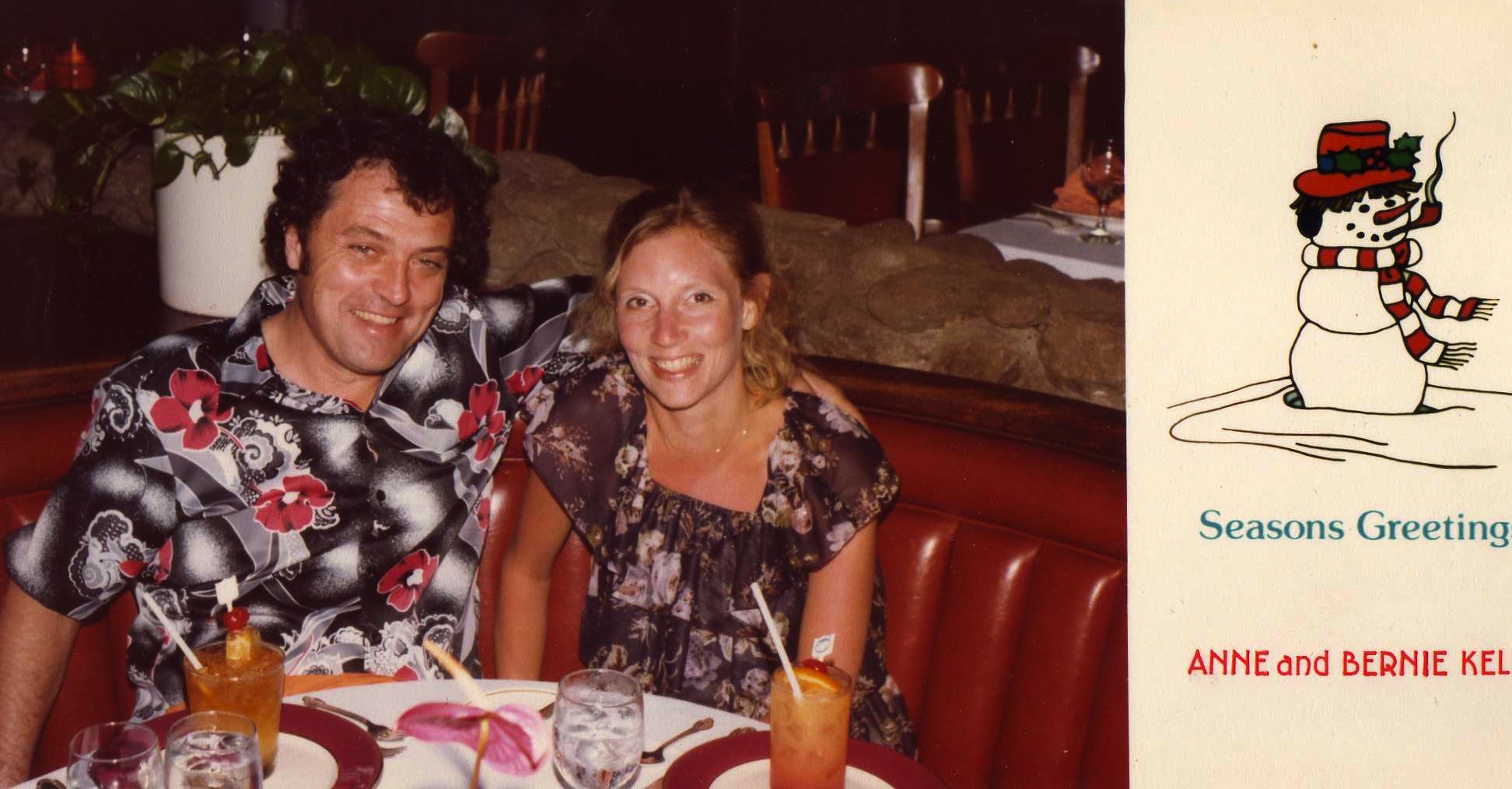
Mom and Dad Hawaii copy

But for my Mom, Anchorage was a dark and depressing place.  My Dad was often away on business, and when he was home, cocktail hour would stretch on for hours, often ending in screaming matches between the two of them.  I wasn’t old enough to understand everything that was going on, but I knew that my Dad was often drunk and that my Mom was sad, and I blamed him for it.

When Dad reluctantly closed his law practice due to his declining health, we moved to Olympia, Washington to be closer to my Mom’s parents.  But retirement wasn’t good for Dad.  The law was the only thing he ever really loved, that and sports  – something we share – and depressed and hobbled by increasingly severe hearing loss (the unfortunate side effect of medication he’d taken to save his life during a childhood illness), he retreated into himself and he drank more than ever.

I got through high school by keeping as busy as I could.  My grades were perfect, I sang in the choir, wrote for the school paper, and stayed out of the house as much as I could.  I almost never invited friends over because I never knew what shape Dad was going to be in.

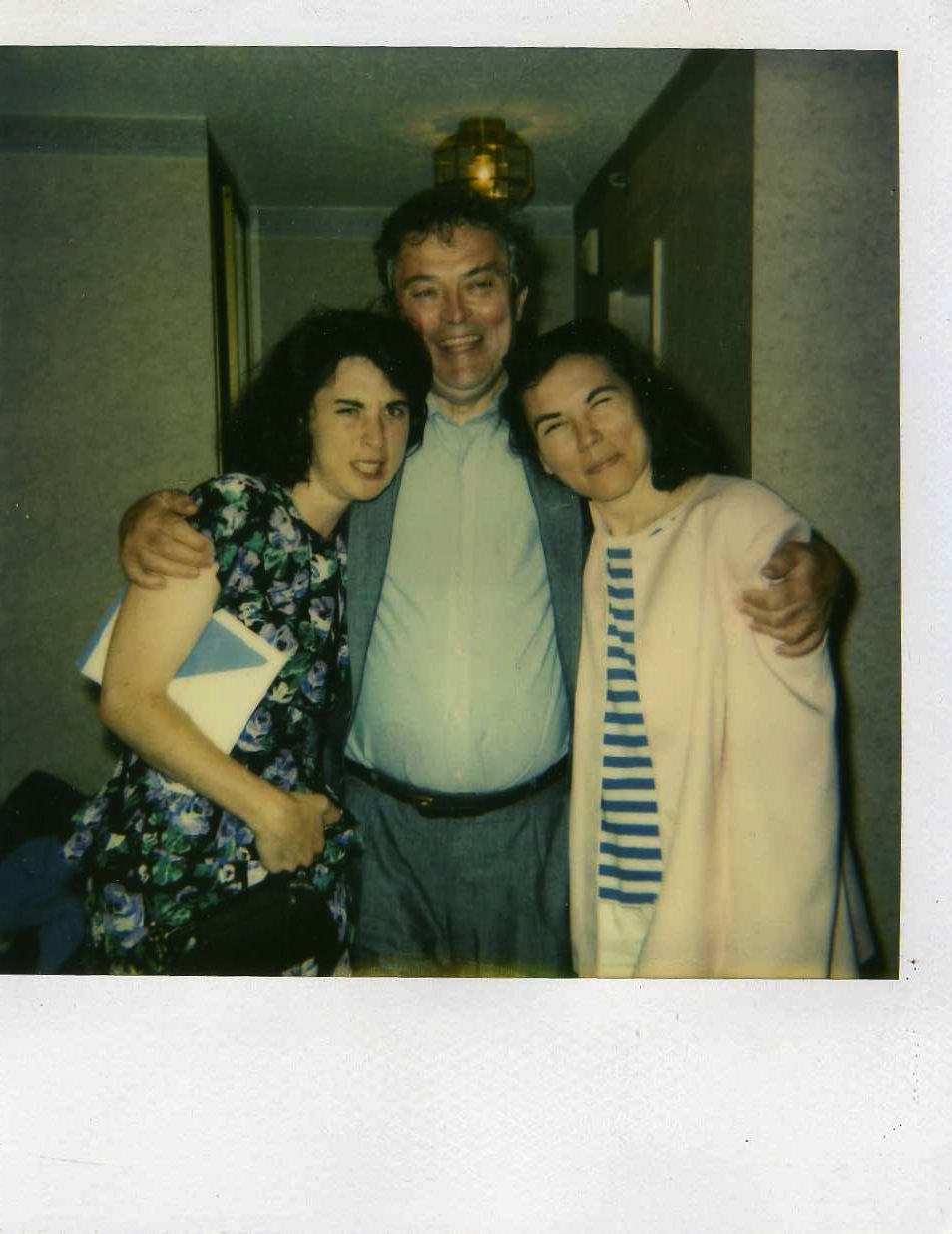
Marion, Deirdre, Dad copy

When I was accepted to USC, I jumped at the chance to get away.  I’d had enough of the drinking, the depression, my Mom’s tears and the fucking Olympia rain.  The bright lights and the big city were calling.  I moved to Los Angeles, found jobs in the summers so I could stay, and I never looked back.

It’s funny how as you get older, life has a way of knocking you around, shifting your perspective, and making you less rigid and less sure of what you thought you knew.  I had my own hardships – I suffered greatly in my first few years as a young actress trying to make it in L.A.  I was broke, I was depressed, I couldn’t get a break, and with all of my college friends starting ‘real’ careers, I felt so, so alone.

My Mom worried about me and encouraged me to pursue a more stable career.  My Dad never did.  Ever the trial lawyer, he’d engage in a series of probing and uncomfortable questions about my life – something my siblings and I refer to as being ‘put on the witness stand.’  I’d explain to him how hard it was to break into the business, and his response would always be, ‘Well then you’ll just have to work harder.’

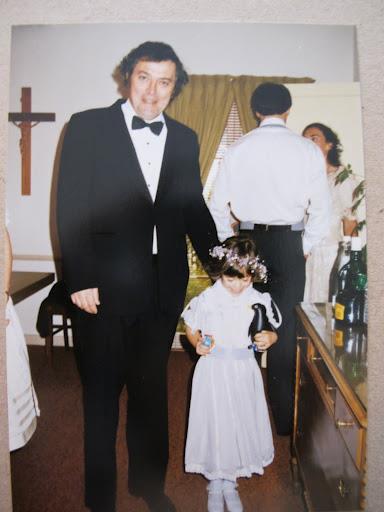
Dad and Flower Girl

That was the thing about Dad.  He was a gambler, a risk-taker, and he loved a challenge.  The guy who often said, ‘I’d rather be lucky than good’ (but really, he was both), who put himself through law school by playing poker, who offered up thousands of dollars of his own money taking cases to defend clients who’d been victimized by insurance companies and large corporations, David versus Goliath type cases that no one thought he could win (and win, he did, in sometimes spectacular fashion), this was a man who didn’t believe in quitting.  He was tenacious, he was a fighter, and when he told me that I’d ‘just have to work harder,’ I’ll be damned if he wasn’t always right.

Even before he was diagnosed with the pancreatic cancer that eventually killed him, I knew something was wrong with my Dad.  He lost weight, his skin was sallow.  He was still as mischievous as ever, but he’d lost a little bit of his edge.  The twinkle in his eye faded.

Dad and Max copy

He was nearing 80 years old and becoming frail, and I suddenly realized my Dad wouldn’t be around forever.  I softened my stance.  I came to grips with the fact that it was unfair to blame him for choosing alcohol over his family.  It wasn’t a choice, it was a disease and holding on to my anger about it was only hurting me.  The truth was, he’d never been mean.  Though at times he was maddening, he was kind, generous, and I never doubted that he loved me.  I chose to forgive him, and it made me free.

In her beautiful book The Rules of Inheritance, Claire Bidwell Smith writes about the death of both of her parents, her mother during her teenage years, and her father several years later when she was in her mid-20’s.  Like me, she had a much older father and grew up closer to her Mom.  But in her book, she makes a striking admission and it’s this:  that if she had to lose both of her parents, she was glad that her Mom went first, because otherwise she would never really have gotten to know her father.

It’s difficult for me to admit this, but I feel the same way.  Though my parents’ deaths were only four and a half months apart, and though my Dad was very sick – and often stubborn, maddening, impossible – I cherish those last months I had with him.  We talked on the phone nearly every day.  He told me was lonely, but that he was grateful for his children, that he loved us so very much and that we were getting him through.  We talked about football.  We talked about how much we missed my Mom.

When I visited him in Olympia, he was kind and sweet to me, and so appreciative of little things like when I’d hold his arm to steady him when he was having trouble walking.  During the last Christmas we spent together, cheering the Seahawks on to victory against the hated San Francisco 49ers, Dad turned to me and said, ‘I think we’re good friends now, Sar.’  ‘We are, Dad,’ I agreed.  He grinned.

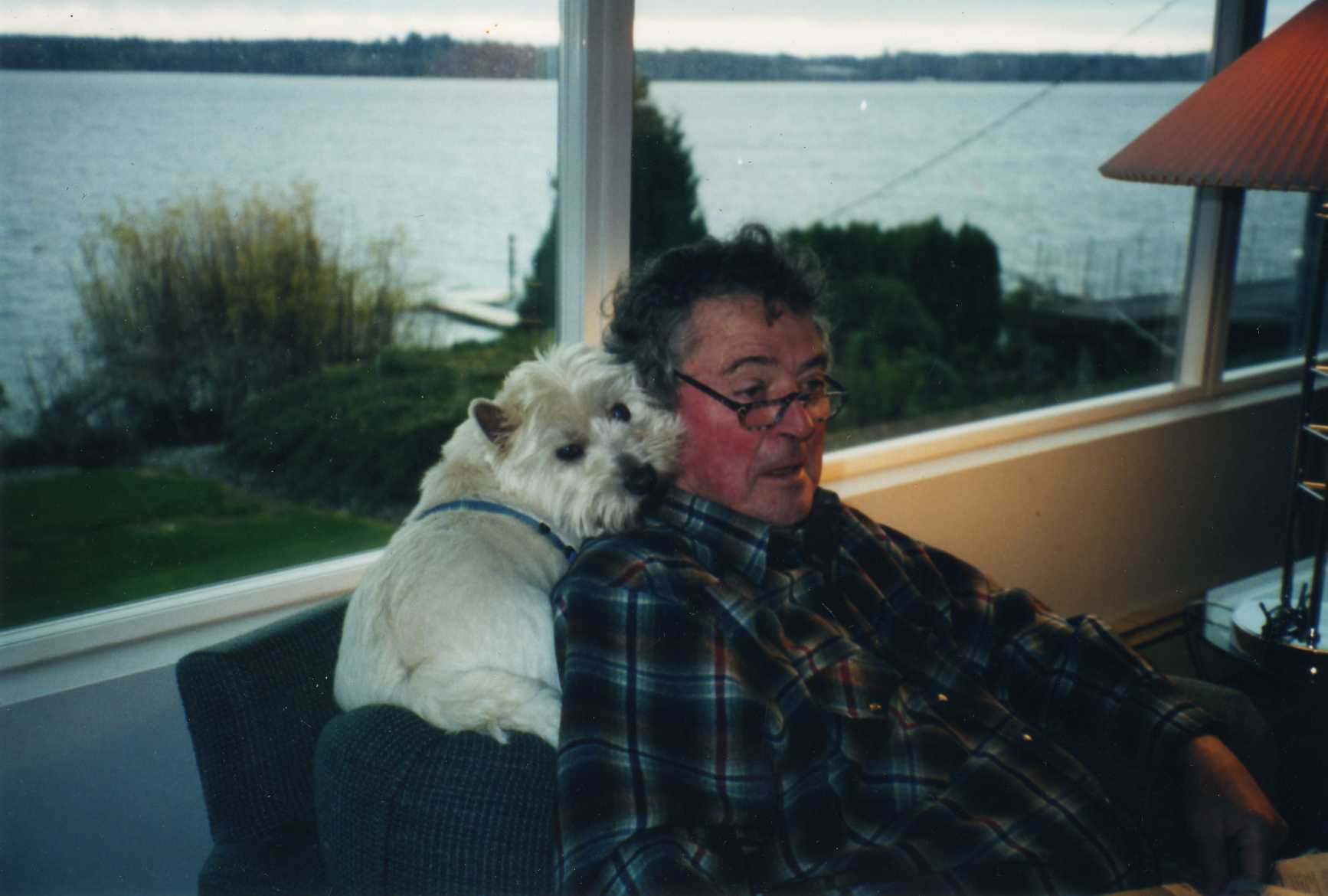
Dad last christmas

At a reception in his honor following his funeral, one of his lifelong friends read Dad’s favorite poem, If, by Rudyard Kipling.  It’s about living life boldly without fear of what others think of you, and without fear of loss.  It’s how my Dad lived his life.

As much as I adored my mother, I can’t help but feel grateful for all of the gifts I inherited from my father.  A lot of the things I really like about myself are pure Dad.  I’m tenacious, I’m tough, I believe in fighting for the underdog, and –most importantly, and something I’ve leaned on in the last year and a half of my life – I possess the ability to remain cool headed in a crisis, and to laugh in the face of things that make others weep.  It all stems from my Dad’s view of the world:  that life is an adventure not to be taken too seriously, that obstacles are just exciting challenges to be met head on, and that no matter what life throws at you, everything always has a way of working out.

One of the last times I talked to him – before he was too sick to talk – was last year after our beloved Seattle Seahawks suffered a crushing loss to the Atlanta Falcons in the playoffs.  While I was down and depressed, Dad barely seemed discouraged.  ‘Sar, listen,’ he said, his voice full of excitement.  ‘I’ve been watching these guys.  They’re really good.  They’re going to be good for a very long time.  We’ll get ours.’  A couple of weeks ago, when we finally did get ours, I couldn’t help thinking that my irrepressible father had something to do with it.

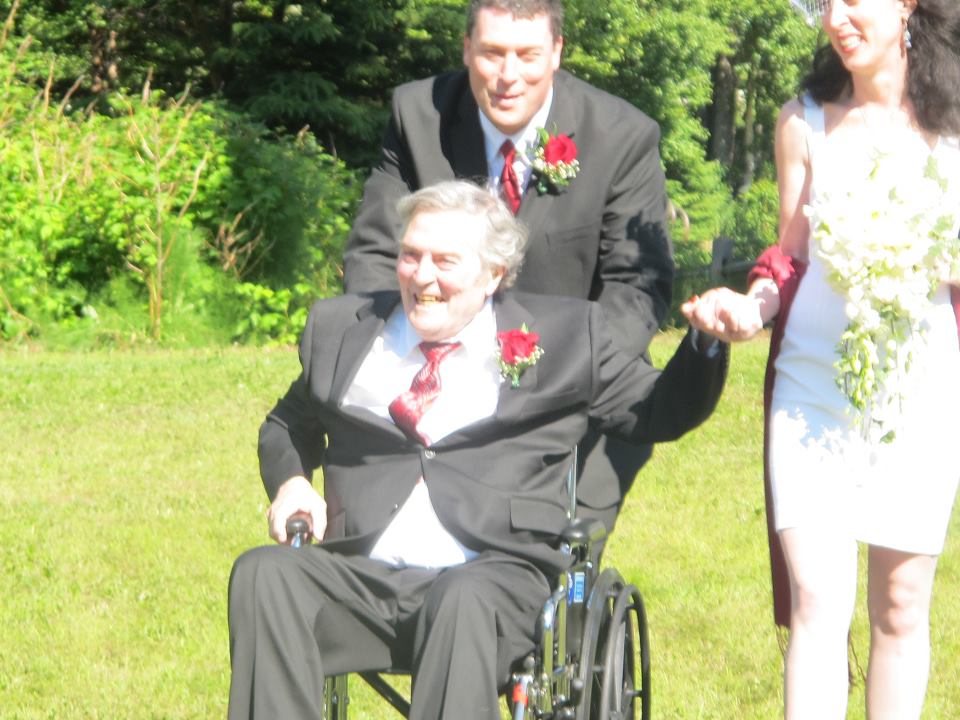
Dad Marions Wedding

In the same way that I can laugh in the face of things that make other people weep, I don’t think it’s a bummer that my Dad died on Valentine’s Day.  I think he did it on purpose.  Now my siblings and I have a forever reminder of him on a day that’s all about love.  And I think that’s kind of sweet.

So Happy Valentine’s Day, Dad, you charming, insufferable, wonderful, impossible, lovable Irish rascal.  I miss you.  I love you.  And I’m so grateful that I’m your daughter.

P.S. – I’ve pasted Dad’s favorite poem below, if you’d like to read it.  It’s pretty great.

Until next time, friends.

Dad with Baby

If—

BY RUDYARD KIPLING

(‘Brother Square-Toes’—Rewards and Fairies)

If you can keep your head when all about you

Are losing theirs and blaming it on you,

If you can trust yourself when all men doubt you,

But make allowance for their doubting too;

If you can wait and not be tired by waiting,

Or being lied about, don’t deal in lies,

Or being hated, don’t give way to hating,

And yet don’t look too good, nor talk too wise:

If you can dream—and not make dreams your master;

If you can think—and not make thoughts your aim;

If you can meet with Triumph and Disaster

And treat those two impostors just the same;

If you can bear to hear the truth you’ve spoken

Twisted by knaves to make a trap for fools,

Or watch the things you gave your life to, broken,

And stoop and build ’em up with worn-out tools:

If you can make one heap of all your winnings

And risk it on one turn of pitch-and-toss,

And lose, and start again at your beginnings

And never breathe a word about your loss;

If you can force your heart and nerve and sinew

To serve your turn long after they are gone,

And so hold on when there is nothing in you

Except the Will which says to them: ‘Hold on!’

If you can talk with crowds and keep your virtue,

Or walk with Kings—nor lose the common touch,

If neither foes nor loving friends can hurt you,

If all men count with you, but none too much;

If you can fill the unforgiving minute

With sixty seconds’ worth of distance run,

Yours is the Earth and everything that’s in it,

And—which is more—you’ll be a Man, my son!

Broken.

I needed to have my heart broken in order to feel alive.  I needed to have my heart broken in order to understand my capacity for love.  I needed to be devastated, destroyed, pushed beyond the brink of what I thought I was capable of, beyond all reason, beyond all hope, to know with certainty that hope was the only thing worth holding on to.

I needed to lose everything – my pride, my love, my mind, every inch of earth upon which I stood to understand that I would do anything – claw and fight and scrape – to rebuild what I had lost into something different, something stronger, something better.

I didn’t want any of this.  Any of it.  I tried desperately to hold on even while the center was caving in all around me.  Even while I could feel the universe laughing in my face at how futile it was to try to hold on, like clinging to bits of string while the great downy quilt was breaking apart into piles of feathers, blowing in the wind into nothing.

There’s a hole inside me now.  It used to be filled up with all the things I thought I knew.  Now it’s just a great cavernous hole.  Nothing will fill it.  I write and I play scenes and I work and I dream while I’m awake and it all helps, but nothing, nothing fills it.  It’s an ever-present ache.  It drives me, it fuels me with fire, it burns my insides.  It hurts, but in a strange way I need it.  It reminds me that I can’t stop, that I can’t go back.  It reminds me of who I am.

If you could see me now, what would you think of me?  Would I scare you?  Would you be proud of me?  Sometimes in my dreams we’re laughing.  We’re warm and safe.  And sometimes you’re in pain and you’re afraid.  I reach out for you but you dissolve and disappear into nothing.  Sometimes I wake up screaming.

I didn’t want any of this.  I often wish that it hadn’t happened.  That I didn’t know what I know.  That life hadn’t slapped me across the face with these incredible, unthinkable truths.

I didn’t want this.  But the sweet irony is that I needed it.  I needed it to forge me and to shape me and to understand just what the hell it is I’m made of.  I am dark and sharp-edged and tough, yet at the same time as fragile as a porcelain doll, one fall away from splintering into shards of glass.  I don’t welcome the break.  But I know now it’s inevitable.  And when it happens I will build myself back up.  Each time a little stronger, but each time a little less.

God, I miss you.  I miss you so much that I can’t think about it too much or breathing becomes impossible. I would give anything to wrap my arms around you and tell you that.  But I can’t.  So I wrap my arms around myself instead and I tell myself that I’m enough.  That I will make it through this.  That the hard fought truths that now reside in the base of my being are truths that you already knew.  That you always knew.  Truths that you wanted to teach me but that I had to learn for myself through fire, through pain, through this incredible longing and ache that will never, ever go away.

I needed to be broken in order to understand the depths of my heart.  I needed to lose everything in order to know how much more I still stand to gain.  I needed to have my faith shaken to the core in order to understand how powerful it is to say, “I believe.”  I needed to have my heart shattered in order to feel alive.  I needed it.  But that doesn’t mean that I like it.

The Lost Year.

It has been a year since I wrote and published my last blog.  A whole year.  Even as I write that, I find it impossible to believe.  Where has the time gone?

This is what it always comes down to – the reason I don’t write.  Or, the reason I do write, get frustrated, and give up:  the ‘where has the time gone?’ question.  Not that it’s hard to be honest about it, but more that it’s hard to be accurate about it; it’s hard to explain things in words because words don’t suffice.

There is so much of this last year that I only vaguely remember – it’s all shadowy and dark and covered in fog.  The year passed in a blur of very sad things.  Devastating phone conversations, funerals, insomnia, nightmares, more funerals, difficult decisions, sifting through personal belongings, trying to make the best of things, trying to figure out the right thing to do, trying to be strong for other people, trying to find the silver lining, trying to learn the hard lessons, trying to get through the holidays, the birthdays, and working, working, working.

After a string of very sad things, it has been five months since the last very sad thing, and I’m starting to believe that maybe I’m done for a while.  Maybe the universe has finally decided to give me a break, so I can stop holding my breath and start to heal, instead of just getting good at going through the motions, at faking it till I make it.

The first very sad thing was the biggest.  If sad things were measured on richter scales, this would have been the 9.0, the earthquake that triggered the aftershocks, the tsunami, the nuclear disaster.  The first very sad thing was the death of my mother, which happened 11 months, three weeks, and six days ago.  Life was far from perfect before the ‘big one’, but it was that particular very sad thing that catapulted me into uncharted territory, and set off the chain of months that I’m calling ‘The Lost Year.’

Amidst the shadows and fog, here’s what I remember from this last, lost year.  I remember an enormous full moon – astrologers called it a monster moon– lighting up the whole sky the night of my mom’s memorial.  I remember how broken my dad looked that day, and how frail he was.  My hair was darker than the last time he saw me, and he was confused and barely recognized me.   I remember visits to Olympia where it never stopped raining, and how bad my parents’ house smelled – like old people and cancer.  I remember alternately worrying about dad, and wanting to strangle him, because he made life so hard.  I remember feeling guilty for wanting to strangle him.  I remember thinking in spite of the terminal cancer diagnosis he was going to live forever, just to torture his children and see how much devotion he could squeeze out of us.  I remember my heart skipping a beat every time the phone rang and ‘Dad’ came up on the caller i.d.  And if it was a 206 or a 360 area code (both Washington) that I didn’t recognize:  immediate panic.  I remember the 11:30 p.m. call from Capital Medical Center – a nurse on the other end – fearing the worst.  ‘Your father’s o.k., Ms. Kelly, but he’s very worried about who’s taking care of his cat.’

I remember other calls too, with my grandmother, my mom’s mom.  How confused she sounded, how sad.  I remember talking to her frequently during my commutes between North Hollywood and Venice.  I remember that she was obsessed with a sewing machine that my mom had borrowed and she wanted it back.  I didn’t know where it was, knew I would probably never find it, and knew it wouldn’t really matter.  I remember the last phone call I had with her, on Thanksgiving Day.  I was in my car, heading out to hike Fryman Canyon.  She asked what I was doing for dinner.  ‘Going to a friend’s place,’ I said.  She thought that sounded nice.  She complained about the rain, and that dinner would be late because my aunt and uncle were preparing it, and they were always, notoriously, late.

Less than three months later, back in Olympia helping my sister go through my parents’ house and handle details surrounding our dad’s funeral, I went to see my grandmother in a nursing home, a place specifically designed to care for Alzheimer’s patients.  I remember thinking how all of the residents looked like children, how my grandmother looked like a child, with barrettes in her hair and painted fingernails.  How she knew me, but not really.  How she asked where I lived and when I replied, ‘Los Angeles,’ she paused, looked me square in the eye, and said, ‘Well, no one will look down on you for that.’  I remember the call I received from my 87-year-old grandfather, on a Saturday in April, when she died.  I was in tech rehearsal for a play and didn’t answer.  His voicemail said simply, ‘Another one’s left us, Sar.’  When I called him back, he said they’d plan a low-key memorial at my grandparents’ beach home on Puget Sound – the same place where my mom’s memorial had been held –  on her birthday in late July.  Said grandpa, ‘it’s too damn cold to do anything now.’

I could keep going.  I could tell you about the worst birthday party I ever had – that I stubbornly insisted upon having – even though two of my best friends were across the country at another close friend’s funeral, a funeral that I felt guilty for not attending, but couldn’t because it was too expensive to get there, and I had a work obligation that I couldn’t get out of, and it was my birthday for godssake and really, really I just couldn’t take one more very sad thing.

I could tell you that smack dab in the middle of The Lost Year, in between all the death and the sadness, that my identity was stolen and I spent four months fighting faulty credit card charges, filing police reports, getting documents notarized, and spending hours on the phone, and that I was almost glad for the distraction because while horribly inconvenient and time-consuming, at least it wasn’t another very sad thing.

But it’s all just too much, isn’t it?  This is why I’ve kept my head down and worked hard and blocked out entire sections of time for the last 360ish days.  Because it’s too much.  I’ve learned to lie because I’ve learned to hate the look in someone’s eye when I actually do decide to tell the truth about the events of the last year.  It’s a look of pity and helplessness, but mostly, a look that says there’s something wrong with me and they’re afraid they’re going to catch it.

I’m not an idiot.  I know what’s gone is gone, and nothing can change that.  I know that like it or not, I’m different.  Too many things have happened to shape me, and change me.  But I do want to feel like I’m in charge of my own life again, that I’m not just a person that bad things happen to.  I want to be happy again, in spite of all the very sad things.  And more than anything, I want to be able to express myself, and to be able to write from my heart, again.

So here it is, after one very long year.  Thanks for reading.

Until next time, friends.
Eleven.

Today, I have a familiar craving for rocky road ice cream.  The same craving I have had every year, on this day, for the last eleven years.  On September 11, 2001 – and the days following – I ate a lot of it.  So did my roommate, Rachel.  We were college students, just beginning our junior year at the University of Southern California, when the planes hit the towers.  We were in shock, depressed, hopeless, and we couldn’t tear ourselves away from the news.  So other than attending the occasional class (which, in the days following 9/11, were really more like group therapy sessions than anything academic), we holed up in our apartment and ate ice cream.

I’m hard-pressed to remember a lot of specifics from that stretch of time 11 years ago.  I remember on the morning of 9/11, I called in sick to my PR internship on the 25th floor of a tower on L.A.’s Miracle Mile – only to find out they sent everyone home anyway for fear that Los Angeles would soon be under attack.  I remember Rachel waking me up, crying, telling me to turn on the news and not to leave the house.  I remember, dizzy with a head cold, turning on the T.V. and thinking I was dreaming.  I remember calling our best friend, Kate, who was on a study abroad program in Australia and desperate to come home.  I remember sleepwalking through my classes, and getting into a fight with my theater professor because I couldn’t bring myself to read plays that I was supposed to.  I remember lighting candles, and buying an American flag from a vendor on a freeway off ramp and putting it on my car.  I remember attending a vigil in front of City Hall in downtown Los Angeles among thousands of other people who were just like us:  helpless, confused, struggling to come to terms with what had happened, but desperate to connect and to find a sense of community in our grief.

My story isn’t like a lot of the stories you hear about September 11th.  It’s not a story of survival or a story of incredible loss.  In a lot of ways, it’s pretty unremarkable.  When 9/11 happened, I was just a girl in the process of becoming a woman, when the world got turned upside down.

In the years since that terrible day, there have been many defining moments that have carved our young millennium and have shaped and shaken my adult life:  the Iraq war; Hurricane Katrina; the global financial meltdown and the Great Recession; the explosion of social media; the Arab Spring; the election of Barack Obama.

But before all of these things, there was 9/11.  An event, that, for all of its horror, also left upon me an indelible impression of the magic that can happen when good comes out of bad, when hope comes out of tragedy.  In the days that followed 9/11, I will never, ever forget the overwhelming sense of community, the sense of national pride, the compassion, the kindness I experienced from complete strangers.  I haven’t seen anything like it before or since in my lifetime, and I fear I never will again.

How is it that we end up here – eleven short years later – so terribly polarized, so contentious, so bitter and full of hate, so unwilling to empathize with each other and unwilling to work together and compromise to solve the problems that our nation faces?  How quickly we forget that we were once all in this together.

Today, as we mark another anniversary of the terrible tragedy of 9/11, I hope, I pray, that we are also reminded of this simple truth:  that life is fragile, that it’s beautiful, and that our worlds can be turned upside down in an instant.  Why not spend the time we have left being a little bit kinder to one another?

And eating plenty of ice cream.

Until next time, friends.
Love.

‘Now I know I’ve got a heart, cause it’s breaking.’

-The Tin Man in The Wizard of Oz

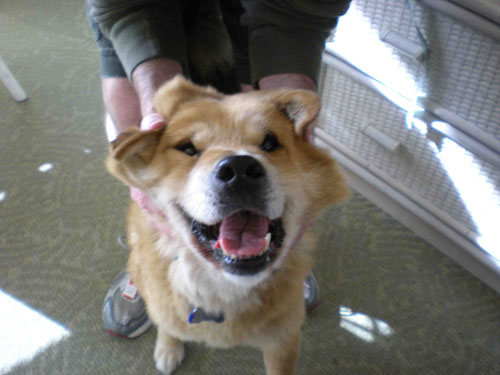
This morning, James and I said goodbye to a beloved member of our family.  Not a flesh and blood human being, but a furry four -legged friend named Leo.  To those who’ve never loved a dog, I think the sorrow we’re experiencing might seem absurd.  ‘He’s just a dog.  What’s the big deal?’

I get it.  As I grow older, I’m confronted more and more with my own mortality, as well as the mortality of those I love.  In the last couple years alone, it has been striking how many dear friends of mine have lost parents and family members.  Loss has been all around me and yet, I’ve remained, luckily, guiltily, unscathed.  When so many bad things are happening to people that I love, who am I to wail about the loss of a pet?

Well. . . let me try to explain.  I grew up around dogs.  From the time I was a toddler, we always had dogs in the house.  I’ve loved every one of them and felt genuine anguish at their passing – whether the culprit was old age or diabetes or a passing motorist.

Without diminishing any of the love I held for my childhood pets, Leo was different.  He was the first dog I, we, ‘owned’ as an adult.  Leo came into our lives by chance, or more likely, fate.  After 2 plus years of dating, James and I took the plunge and moved in together.  We were only a few weeks into our new living arrangement, and it was still, shall we say, a bit tenuous?

We knew we wanted to get a dog, and were contemplating the idea of adopting a rescue Terrier we had just met the previous day.  Enter Leo.  While on our way to Home Depot to shop for a new air conditioner, we pulled off an exit off of the 5 fwy, just as Leo was running up the on ramp of the same exit on to the freeway.

He was a scared stray mutt a hair’s breadth away from being run over by high-speed traffic in front of our eyes.  We tried to grab him, he tried to bite, and then by some miracle, James opened the door to his truck and Leo jumped inside.  We now had a freaked-out, panting dog with eyes glazed over in our car, and no idea what to do next.

We called friends and after getting advice from various animal lovers, elected to take him to East Valley animal shelter.  He had no collar, and upon inspection, no microchip.  He was filthy, abandoned and clearly had been abused.  At 8 years old (the age the shelter presumed he was at the time) and labeled a Chow mix, there was almost zero chance he’d be adopted from a high kill shelter like East Valley.  The shelter gave him even less of a chance when after the 4 day waiting period for the owner to come forward was over, they put him on what’s the called ‘the red list,’ meaning the dog could be euthanized at any time.

James and I were at a crossroads.  We knew we wanted a dog, but we knew nothing about this guy.  We wanted to get a puppy or a younger dog, not an 8 year old.  We didn’t know anything about his history, whether he was aggressive, or whether he had any personality whatsoever.  At our first meeting, he was understandably shell-shocked.  When the shock wore off, what kind of dog could we expect to find?

But we also knew that we couldn’t rescue a dog from near certain death on the freeway, only to have him be euthanized in a shelter.  We debated, we argued, we worried, but in the end we decided to take him home and give it a shot.  We could say that we chose him, but in the end, when he jumped into our car that day, wasn’t he choosing us?

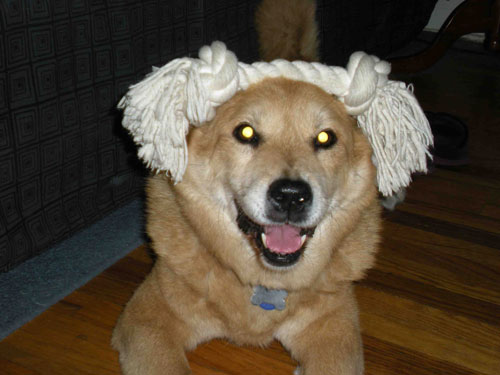
Just over four years later, taking that stray mutt home was one of the best decisions we could have made.  An amber haired fox, we named him Leo because his mane resembled that of a lion, and after he grew out of his initial shyness (he’d been hit, and would cower when we go to pet him and cringed when we touched his ears), he developed a feisty personality to match.

Over the last 4 years, he’s been our constant travel companion, and has road-tripped with us to Lake Tahoe, Palm Springs, Monterey, San Diego, and many points in between, often accompanying us to major events like weddings (o.k. he stayed in the hotel room), including our own wedding last October.

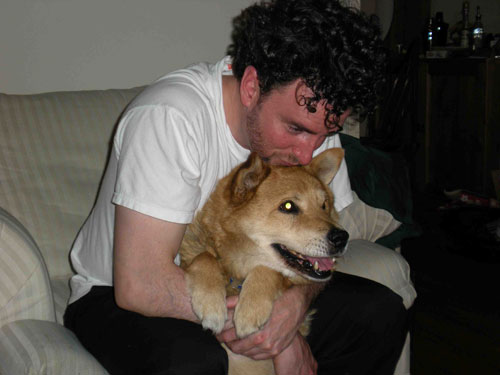
Having Leo in our lives has made us more tolerant, more compassionate, and more patient.  As the 3rd member of our little family, he has improved and strengthened James’ and my relationship, and I daresay, his wandering into our lives by way of a freeway exit ramp ended up making us better people too.  What some people might say is ‘just a dog’ has opened up my heart to a kind of love I’ve never experienced.  Alright – I’m not a parent- and know I can’t and won’t compare the two, but this sweet little guy is at this point in my life, the closest thing I’ve known to a child.

That kind of love is also why, over the last six months, James and I witnessed Leo’s physical decline with an inordinate amount of patience, denial, hope, and ultimately, acceptance.  He went blind, and whittled away to an almost skeleton-like frame.  He developed severe arthritis in his hind legs.  He had breathing trouble, and he needed teeth pulled.

An x-ray last December revealed a growth in his nasal cavity – likely a tumor, but the procedure involved to diagnose that with certainty was both expensive and (more importantly), too aggressive for a dog of his age.  We went through a few vets (who either told us there was nothing they could do, or seemed to be only in it for the money), before we finally found, through the kind referral of one of James’ friends, a sweet man named Dr. Prabhakar at Panorama Pet Hospital in Panorama City.  He told it to us straight – it was likely cancer, and that he was older than we thought, probably about 14 years old at this point.  He advised us that any medical procedure at his age would be too hard on him and wouldn’t be successful anyway.  Better to keep him comfortable and take it day by day and we’d know when the time came.

Which brings us to today.  After fighting, denying, trying everything we could think of, James and I finally arrived at the only decision we could make.  We weren’t ready – we’d never be ready – but Leo was ready.  He told me so two nights ago with a plaintive bark (he never, ever barks) when he struggled and failed to stand up on his own.  A bark that said, ‘help me.’  Coupled with his rapid weight loss and his inability to keep any food down for days on end, we knew that the time we had been dreading had arrived.

If you’re not a dog lover, I don’t expect you to understand what we’re feeling right now.  And that’s o.k.  But I can tell you this:  in the short four years that he went from being an abandoned, scared mutt on the freeway to the love of our lives, Leo opened up our hearts and our minds.  Creatively, he’s the inspiration behind our production company, Punk Monkey (one of his many nicknames), the umbrella under which we’re launching our one-act noir play festival P L.A.Y Noir this summer.

In the end, James and I are different (and better) people because this sweet little red-haired dog wandered into our lives.  Today, we grieve his loss and celebrate his memory.  Rest in peace, Leo Bear.

Until next time, friends.
Blog at WordPress.com.