White Butterflies.

And I want to keep us all alive

And I want to see you with my eyes

But I see you in the fireflies

And how extraordinary . . .

Is that?

– From the song, “Light Me Up” by Ingrid Michaelson

I was sleeping when the call came. Not quite sleeping, but not yet awake either. Drifting in and out of dreams, dreaming of things far off and beautiful, dreaming of a life different than my own.
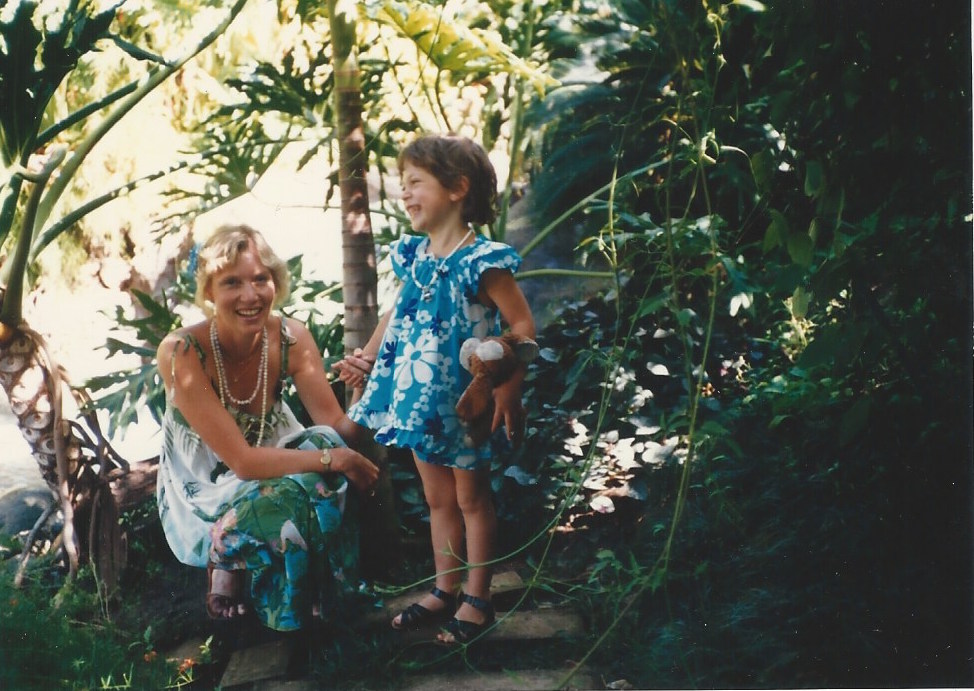
me-and-mama-hawaii-copy

I heard the phone ringing in my dream too, then realized, as one does when a pleasant reverie is interrupted by the nagging insistence of the real world, that this was not actually a dream, but my cell phone, cutting through the sleepy Sunday morning with its persistent staccato. “What in the hell?” I muttered, annoyed at being pulled away from the comfort of my bed and the hazy, lovely world I inhabited there. I stumbled into the next room and found my phone where I’d left it the night before, on top of a chest of drawers.

I listened, confused, to the voicemail from my Aunt Sandy. Why was she calling me? Why was she crying? “Call me back,” she urged, her voice breaking, “Or call your father. It’s an emergency.”

I chose to dial home. It’s a decision I would later live to regret. I heard a click on the other end of the line, the receiver being lifted, strange voices echoing through my parents’ house, someone handing the telephone to my father, who was frail, hard of hearing, ill with cancer. Finally, his low, gravelly voice: “Sar?”

“Dad?” I asked, panic rising in my throat and threatening to choke out the words. “What’s going on?”

“Mom’s dead.”

And everything went black.

me-and-mom-wales

I will probably always mark September 23rd as a sad anniversary. From that dark day in 2012 onward, it will forever be known to me as the day I learned that my mother, Anne Popelka Kelly – my best friend, my first phone call, my most important person – was gone. Her passing was my first real experience with death, and, though there have been many others since, hers remains – for me – the most significant.

There are few things I haven’t tried, in the four years since her death, to assuage a tremendous ocean of grief. I have consulted astrologers and tarot readers. I have purchased – and barely opened – an embarrassing number of self-help books. I have seen therapists. I have tried (and abandoned) nearly every feel-good remedy, every exercise regimen, every diet. I have consumed a revolting amount of whiskey and wine and cigarettes. I have run countless miles in bad shoes on blistered feet.

I don’t think there’s any feeling heavier than guilt, any destination harder to reach than forgiveness. But if I’ve learned anything about grief in these last four years, it’s this: you cannot possibly begin to heal without releasing the first and embracing the second. I was closer to my mother than anyone else in this world, but for the past four years, I have carried a crippling amount of guilt and shame over the fact that I saw her spiraling into a black pit of despair and addiction, and stood by, watching it happen. I knew I was losing her months before she was actually lost, but not knowing what to do, I did nothing.

mom-college-with-flowers-copy

It may seem counterintuitive, but it was actually another experience with death that allowed me to turn the corner on my grief. Last October, I learned that my mother’s father, my sweet Grandpa Gerry, was abruptly, terminally, ill, his doctor giving him a timeline of a mere thirty days left to live. Without thinking, I put everything else on hold and traveled back to Washington State to help with his hospice care.

For the first time in my thirty-five years, I sat with someone as they faced the end of their life, and I felt the power of a love so enormous that all my fears about what would happen to me became secondary to my desire to provide my grandfather with the care and comfort that he needed. If there is such a thing as a “good” death, he had it, and his peaceful passing filled me not only with profound gratitude, but also with an unexpected surge of hope that the world could still be a good and decent place, as well as a fierce determination to not waste any more time punishing myself for a past that had already been written.

By the time I got to that July afternoon, two months ago, sitting across from the psychic medium Fleur in her sun-filled Los Angeles living room, I knew that the weight I had saddled myself with was simply too heavy to carry anymore. And so, when Fleur told me that my mother wanted me to forgive myself, that I couldn’t have altered or changed her death in any way, I chose to believe her. And when she told me that my mother was proud of me, that she was always with me, and that she sent me white butterflies as a sign to let me know that she was thinking of me, I chose to believe that, too. And I’ll tell you something: before that day, I can’t ever remember seeing a white butterfly. But now, I see them all the time. Almost every day.

I’m still sad that I couldn’t save my mother. I probably always will be. But maybe we can’t save anyone. Maybe we can only love them. And forgive them. And forgive ourselves. And maybe, by doing that, we can – to paraphrase the words of my favorite poet, Mary Oliver – save the only life we ever really can: our own.

Until next time, friends.

mom-olympia-copy

Falling or Flying.

There was nothing particularly special about that Wednesday, other than the fact that it was the day that I would drive my Grandfather’s old powder blue Honda CR-V along curving country highways, eventually leading to a bridge, and that I’d drive over that bridge, and I’d cross that body of water, and then, once on the other side, I’d go to a business meeting, followed by a much-anticipated dinner with a dear friend. There was nothing particularly special about the minute or so that I’d spend up high, suspended over water, moving fast. After all, I’d done it dozens and dozens of times before. There was nothing special about it at all, except for the fact that it terrified me, and the night before I was due to make that drive, I couldn’t sleep, and I rose early, well before the sun came up.

Rowboat Sunset

In retrospect, the details of how I crossed that bridge don’t seem all that important. What is important is that I had to do it, and so, I did. I did it even though my palms sweat and my heart raced and my legs were wobbly and strangely on fire. I turned up the song on the radio, and I focused on the exhale and the inhale of my breath, and I thought about how Mount Rainier – standing strong and snowcapped and stunning just out my driver’s side window – felt like an old friend. And before I knew it, I was over that bridge, and I had steered Grandpa’s car from the highway on to the crush of Interstate-5, and I was relieved.

The next day, on the way to meet some friends for lunch, I followed different winding country highways to Olympia, the town where I went to high school, the town where I’d learned to drive, the town where I’d first dreamed my biggest dreams and made the plans that sent me to Los Angeles to pursue them. And this time, I felt better, almost normal, in fact, because the sun was shining and the water was sparkling and I felt happy. And I barely thought about that other time, that December, driving those exact same roads, hurtling through the darkness, Dad next to me, drifting in and out of consciousness, the wind pummeling my mother’s SUV and the rain spitting buckets, so much rain that the windshield wipers couldn’t keep up, and I gripped the steering wheel with everything I had just to keep us on the road, all the while stealing glances at my father, wondering if he was sleeping or dying, saying a silent prayer with every mile marker we passed, because every mile brought us closer to home, even though it wasn’t home any more, not since Mom died, not since Dad got sick.

I came of age driving Washington State’s rural highways, snaking over waterways and crossing bridges and winding through forests, so how could it be that the thing that raised me had now become the thing that frightened me? I suppose that’s the power of post traumatic stress, the way that it can shake you and alter your consciousness, making you feel like a stranger in your own body, making you doubt everything you thought you knew. I’m not a solider. I’ve never served in the military. But I’ve been to war. And I won; or at least I think that I have. But on some days, and in some ways, those battles still rage on.

Puget Sound

I recently told a friend that I didn’t think I’d ever feel safe again. The remark was off the cuff and meant to be a sort of joke, but in truth, I meant it. My whole life, I’ve struggled with anxiety, but I didn’t know how to name it, or how to talk about it. Instead, I tried to control it, to deny it, to tamp it down. And for a while, I was convinced that I had beaten my fears into submission. But then along came a tornado of tragedy, a violent storm of death and loss that quickly and swiftly eviscerated my carefully constructed façade that I was brave and strong and that I had it all together.

The storm taught me that nothing in life is certain, a scary prospect for a control freak like myself. But it also taught me that the only way out is through, and that if I don’t want my fears to control me, I have to surrender to them, to walk into them, and to thank them for being here, for reminding me of what’s important.

I had been staying at the beach for almost a week when something rather strange happened. I was paddling around Case Inlet, soothed by saltwater, utterly tranquil, when not far away, a curious seal popped his head above the water. He stared at me and I stared back at him, and before logic or reason could intervene, I began to swim towards him. Sensing a threat, he dove beneath the surface of the water. But I kept on swimming, and as I did, I made my voice a song and cast it out across the sea. “Hello, Mr. Seal,” I said. “Don’t worry, I won’t hurt you.” And he seemed to understand, because he popped his head above the surface again, and froze there for a minute, just looking at me.

Side View of the Cabin

This went on for several minutes, our water dance, the diving and re-emerging, both of us circling each other, watching, considering, keeping a safe distance but drawing ever closer. I wondered what he made of me, this strange fish in black and white bikini bottoms and ruby red rash guard and faded orange swim fins. And when we were quite close to each other, he dove under again, and as I treaded water, looking for him, I suddenly realized something: I was a long way from shore, and I was alone, and in the murky saltwater, clouded up as it was by sand and seaweed, I wouldn’t be able to see the seal coming, wouldn’t know where he’d emerge next, and if he decided to attack me, or bite me, or pull me under the water, I wouldn’t be able to escape.

And there it was, that fear again, pulsing through my veins like a jolt of ice water. I turned toward the shore and I swam as fast as I could, legs pumping, swim fins slicing though the bay. And several moments later I turned back and I saw my seal again, further away now, but still watching me. He cast one last curious glance my way – a sort of sad farewell – and then turned to swim off in the opposite direction. And in that moment, I knew that he had never meant to hurt me, just like I had never meant to hurt him.

I’m a realist. I know that I’ll never fully be free from the fears that plague my worried mind. On some days, I feel pretty good, like I could do just about anything. And on other days, like the Wednesday when I drove over that bridge, it was all I could do just to get through it. I used to think that soldiering on and suffering in silence was brave. It’s not. It only makes the fear worse. What is brave is being vulnerable enough to talk about the places that scare me, and to run the risk that by telling you that sometimes, when I’m driving my car on the freeway, I feel like I’m moving so fast I won’t be able to stop and I’ll fly through the windshield and hurtle into space, that you’ll think I’m crazy and irrational. And maybe you will. But then again, maybe you won’t. Maybe you’ll read this and think, “Oh my God, I thought I was the only one,” and you’ll realize – as I’m realizing – that none of us are truly ever alone in this strange and beautiful experiment we call life.

Can we ever really know if we’re falling or flying? I’m not sure. But maybe the answer to that question is simple. Maybe it’s the ones who decide to fly – in spite of their fears – that are the ones who do.

Until next time, friends.

Sarah Black and White

The Other Side.

“Have you ever had a reading before?”

“No.”

“Never before?”

“No.”

“That’s exciting.”

“Yeah.”

I try to keep my tone upbeat, but I can hear the nervous tension in my voice as I say those words out loud. Fleur must hear it too, because she offers me a warm, reassuring smile.

“It’s not scary,” she promises. “Let me tell you a little bit about how it works.”

IMG_8035

It’s Monday afternoon, and I’m seated across from her in a large, sun-filled living room. Even though the armchair she has offered me is plush and comfortable, I’m perched on its edge, the uncertainty about what’s to come rendering me unable to sit back or relax. Fleur is young (if I had to guess, I’d place her in her late twenties), and very pretty, with wide blue eyes and a delicate floral sundress to match. Her long twist of wavy golden brown hair is swept off her face and into a side ponytail. Her home is comfortable and decorated in minimalist California chic: no crystal ball, beaded curtains, or creepy talismans in sight. In other words, Fleur – and her home – are about as far away from the Hollywood stereotype of a psychic medium as you can get.

Yes, on the outside, everything looks pretty normal on this quiet Monday afternoon. What’s not normal is the reason I’ve come here: to make contact with the spirits of my dead relatives.

The day before my reading, butterflies swirling in my stomach, I texted a friend who’d seen Fleur a few months earlier. “Any advice?” I asked. What she proposed was simple, yet helpful: record the audio of the session on my iPhone so that I could refer to it later, come up with a list of questions that I wanted to ask, and – for me – the part that proved to be the most difficult: invite the people I wanted to see to show up.

It has been nearly four years since my mother’s death. My dad followed a few months after her, then my grandmother, and then, last fall, my grandfather. And in all that time – with rare, desperate exceptions – I have almost never tried to “talk” to them. I’m not entirely sure why, but I suppose it’s because doing so always made me feel awkward and silly. I never knew where to start, or what to say. But in truth, I think I have been holding back out of fear that it won’t work, that they’re not really out there, and that I’m just some foolish girl, sitting alone in a room, talking to myself.

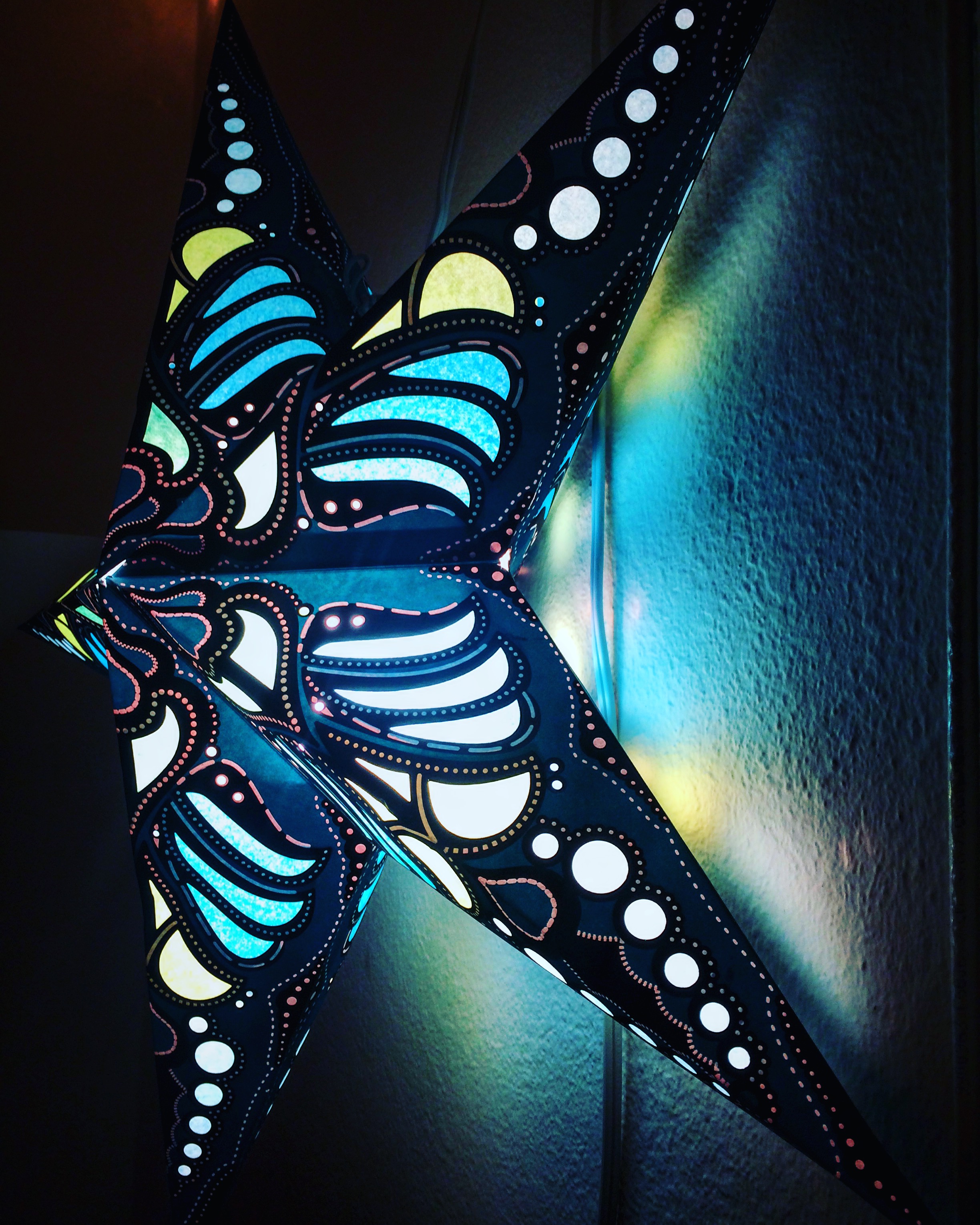
Star Lantern

But the evening before my meeting with Fleur, I decided to try. I waited until it was very late at night, and then, extinguishing all the lights in my apartment, I switched on an ornate Indian lantern in the shape of a star, filling the space with a soft, turquoise glow. Using a wand of Nag Champa incense (my mom’s favorite), I lit a small, scented pillar candle, and, my eyes fixed on its persistent flame, I began to speak. At first, the words came slowly, haltingly. But as I sat in the kitchen, bathed in the lantern’s blue light, I suddenly remembered my parents’ house in Olympia at Christmastime, sitting in front of the tree with my mom, drinking wine in the dark and marveling at how twinkling lights and tinsel could make an ordinary evergreen seem like something made of magic. That feeling of calm and safety, of not needing to be anywhere else but right there, with her, was such a happy memory that I wondered how on earth I could have forgotten it. Tears formed in my eyes, emotion rose in my chest, and the words I hadn’t known how to say came tumbling out.

I don’t know where I stand on the idea of an “afterlife.” I don’t know what happens to people when they die. Fleur believes, as she told me before we began our reading, that the soul doesn’t depart when the physical body does, and that her job as a medium is to simply allow the spirits of those who have “crossed over” to “step forward and make a connection.”

Did that happen during our reading? I can’t say with absolute certainty. The skeptic in me will tell you that there’s plenty of personal information about me and my family readily available on the internet thanks to this blog, and that much of what Fleur conveyed to me during my time with her was rooted in common sense, the type of things that anyone who was grieving would want to hear. But the part of me that’s open to possibility and feels humbled by the mystery of all that we can’t explain can admit to you that there were details that came up during our session that arrested me. Private, painful details about my childhood and the months leading up to my mother’s death that I’ve never written down and that very few people – if any – know about. And I can also tell you that there were many, many moments during our fifty minute session that I sat watching Fleur, her closed eyelids fluttering as she described what she was feeling and seeing, that felt incredibly real to me. Moments like when she described my grandfather and the infectious sense of delight he brought to the world, causing us both to laugh out loud. “He’s really funny!” she beamed. “He is,” I agreed.

Mom and Grandpa

In the end, the thing that I had most been seeking from the session – a sense of peace and healing around my mother’s passing – was exactly what I received. As I sat in Fleur’s living room, she described a “feedback loop” of guilt and shame that I’d been stuck in, blaming myself for her death and reliving the events leading up to it over and over again in my mind, wondering what I could have done differently. “Your Mom wants you to stop doing that,” Fleur told me. “It is very important to her that you know that you could not have altered or changed what happened in any way. It was the path that she chose, and it’s not on you. You were the light of her life.”

When the session was over, not ready to go home and yet not ready to talk to anyone either, I drove to one of my favorite neighborhoods in L.A., Larchmont Village, and wandered the boulevard, losing myself among the hum of humanity in its sidewalk cafes and storefronts. Had my mother really communicated with Fleur, urging me to let my pain and regret go? And in the end, did it really matter? Whether Fleur could really speak with the dead or whether she was simply a kind, highly intuitive person who knew the words I most needed to hear, my heart told me what was true. In spite of her flaws and failings, my mother loved me more than anything and I know she wouldn’t want me to blame myself for her death. She’d want me to remember the parts of her that were about love, and let the rest go. She’d want me to allow myself to move on, and be happy.

It all sounds so simple as I type those words on the page: forgive myself and move on. I know the reality is much more difficult, much more complicated, just like my relationship with my mother was, just like love itself is. And yet – after Monday – I felt lighter somehow. The mere possibility that I might be able to let go of the weight I’ve been carrying these last few years filled me with a kind of hope I haven’t felt in a very long time. It’s the kind of hope that Dorothy must have felt when Glinda informed her, “You’ve always had the power my dear: you just had to learn it for yourself.” And armed with that hard-won knowledge, Dorothy bid farewell to the dear friends who had helped her on her dark and treacherous journey to the Emerald City, she tapped her ruby slippers together three times, and she went home.

Until next time, friends.
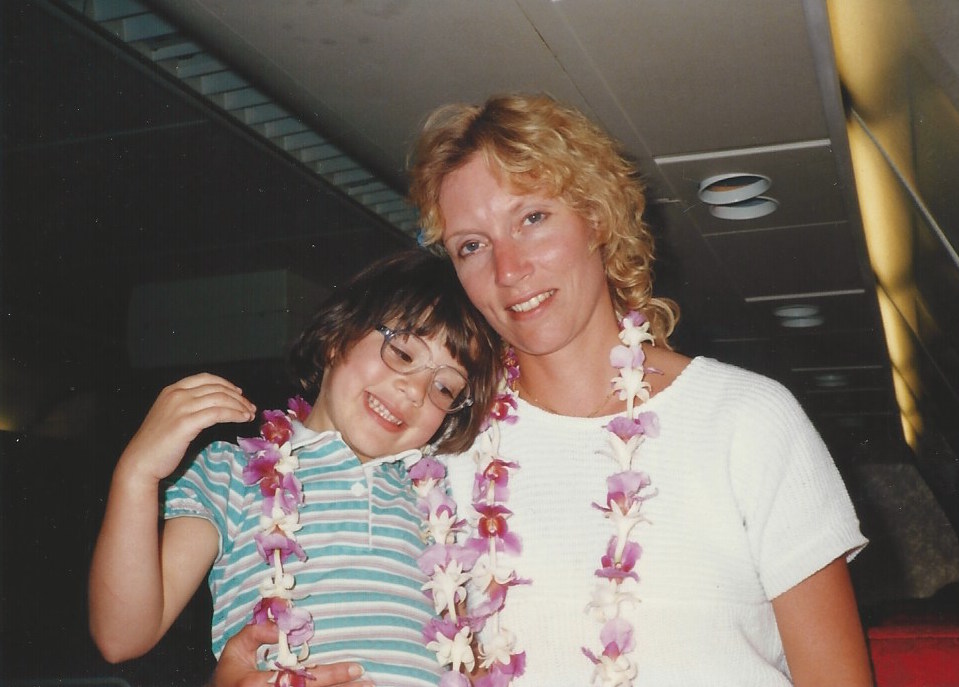
Me and Mom

P.S. * – If you’d like more information about Fleur, or are interested in booking a reading with her, visit: www.mediumfleur.com

I also recommend picking up Claire Bidwell Smith’s beautiful book After This, which contains a chapter about Fleur and is the reason that I discovered her.

*Please note: I received no monetary compensation for this post or for the information contained herein. I simply wanted to share my experience in case, like me, you are seeking peace and healing around the death of a loved one, and are open to exploring the mysteries of all the things we cannot know.

Strong in our broken places.

“Sometimes the people around you won’t understand your journey. They don’t need to. It’s not for them.”

-Unknown

IMG_3546

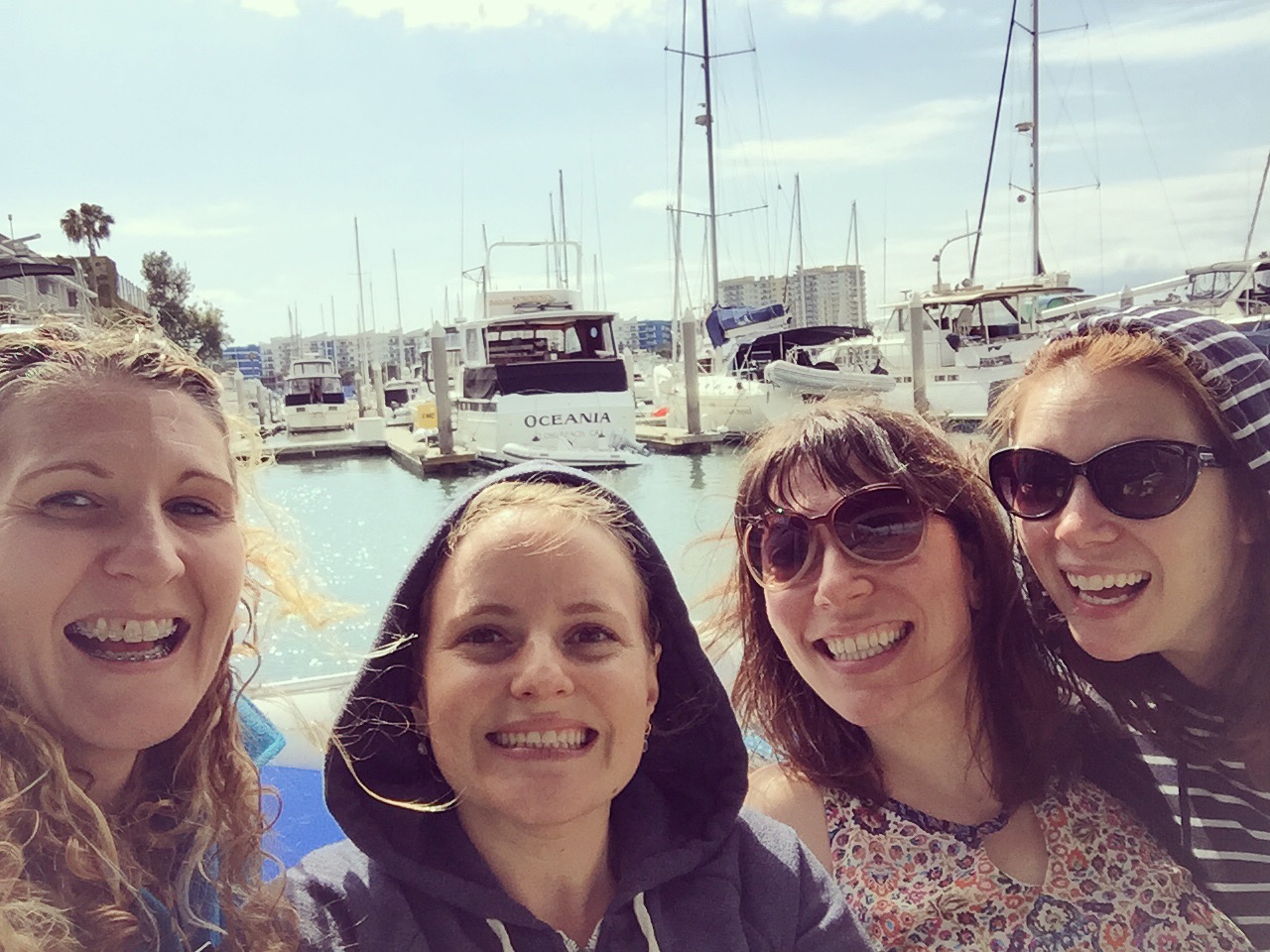
I spent Mother’s Day on a boat. The morning dawned with overcast skies and I was afraid that the marine layer would wrap itself around the coastline and not let go. To my surprise, the sun broke free from the fog’s grasp and by late morning, it was casting gentle rays of light out across the water, creating a perfect spring Southern California Sunday.

We never left the harbor. The boat was borrowed and expensive: a sleek, beautiful vessel complete with two bedrooms, a bathroom and a spacious deck. Far too valuable for any of us to pilot, even if we did know how, which of course, we didn’t. Besides, there was good food to eat and tequila to drink and – most importantly – girl talk to be had underneath that shaded canopy on the sea.

How do you celebrate a holiday when the person that holiday is built around celebrating is no longer with you? How do you continue to embrace gratitude for all that you’ve been given on an occasion that can’t help but remind you of all that you’ve lost? How do you keep moving forward, heart open, even on days when moving forward feels impossible?

I don’t know what works for other people, but here is what has been working for me, as a strategy for dealing with the difficult days: 1.) Surround yourself with your tribe. 2.) Do what feels good. 3.) Don’t apologize.

So this past Mother’s Day, that is exactly what I did. The three friends I shared that boat with are all brilliant, creative, generous, tough as nails, women. They also – like me – carry the scars of having lived on this planet long enough to have had their hearts broken. All of us have been humbled by the difficult days. And yet, it is in those difficult days that we have found our strength, our grace, and our empathy. We are, in the words of Ernest Hemingway, “Strong in our broken places.” These friends – and others like them – are my tribe. And these days, they’re the only people I feel like spending time with.

IMG_3613

One member of that tribe is my friend Sam. Sam is someone that I’m not sure that the old Sarah – the Sarah from before all the bad stuff happened – would have been friends with. Sam is a fiercely talented actress, and she moves through the world with an authority about who she is that the old me would have found intimidating. In truth, I still occasionally do find her intimidating, but mostly, I recognize her as a kindred spirit, someone that, through her own example, has given me permission to be the bolder, braver person that I know I am, deep down inside.

Not long after I met Sam – before we’d become the friends we are now – she invited me to a screening of a short film she co-produced and starred in, called Life Grows On*. It’s a twelve minute movie that follows the cycle of one woman’s life, illustrating how she responds to her own difficult days (and her joyful ones, too) in a way most women can relate to: by changing her hair. It’s a beautiful film, and I cried when I watched it. And I also knew that I wanted to be friends with the person who made it.

For me, these last few years have been a journey toward self-acceptance, of learning to give myself permission to be who I am. I’m not there yet, but I’m a lot further down that road than I used to be. And that is thanks in large part to friends like Sam:  friends who are teaching me that it is in our broken places where often, we are the strongest.

Surround yourself with your tribe. Do what feels good. Don’t apologize.

Until next time, friends.
*P.S. – You can watch Sam’s film Life Grows On by clicking here. I think you’ll be glad you did.

IMG_3633

The month of May.

“Time is the school in which we learn.”

-Joan Didion

Mom Wales

I don’t want to write about my mother. I don’t even really want to think about her, which, of course, I feel immediately guilty for saying out loud. It’s also not true. I do want to think about her, and write about her, I just don’t want those thoughts and words to be sad or painful anymore. I don’t want to be possessed by grief, or by the unanswered questions surrounding her death. I don’t want to pen another depressing Mother’s Day missive, tinged with longing and regret.

But as I think about all the motherless daughters (and sons) out there, facing the onslaught of greeting cards and flowers and an entire industry built around trumpeting “Mom’s special day,” I also feel that it’s important to be honest. I feel that it’s important to say that for some of us, Mother’s Day is just a day we have to endure, a day we need to get through. And there’s nothing shameful or wrong in admitting that.

My mother is everywhere lately. She’s been showing up in my dreams on the regular, uninvited, in places where she normally wouldn’t be, in places that don’t make sense.

They’re not bad dreams, not scary or unpleasant. Most of the time I don’t even remember them; they fade from view as soon as I wake up. I only know that in my subconscious mind, my mom and I have been spending a lot of time together lately.

Maybe it’s because the calendar has flipped to May, which was always her month. The month of Mother’s Day and her birthday, but also the month when spring flowers bloom, after those proverbial April rains that never seem to fall in Los Angeles. My mother was an avid gardener. She loved planting things and watching them grow.

Hawaii Babes

So maybe it is the season. Or maybe it’s just the place I’m at in my life – one of uncertainty and change – that has me craving maternal guidance. There are so many questions I want to ask her, so many things I want to say. There’s something about losing your parents that propels you into adulthood in a way that simply getting older never can. There’s something strangely disorienting about no longer needing to seek permission or approval, of having to own your life choices – both good and bad – because they are yours, alone.

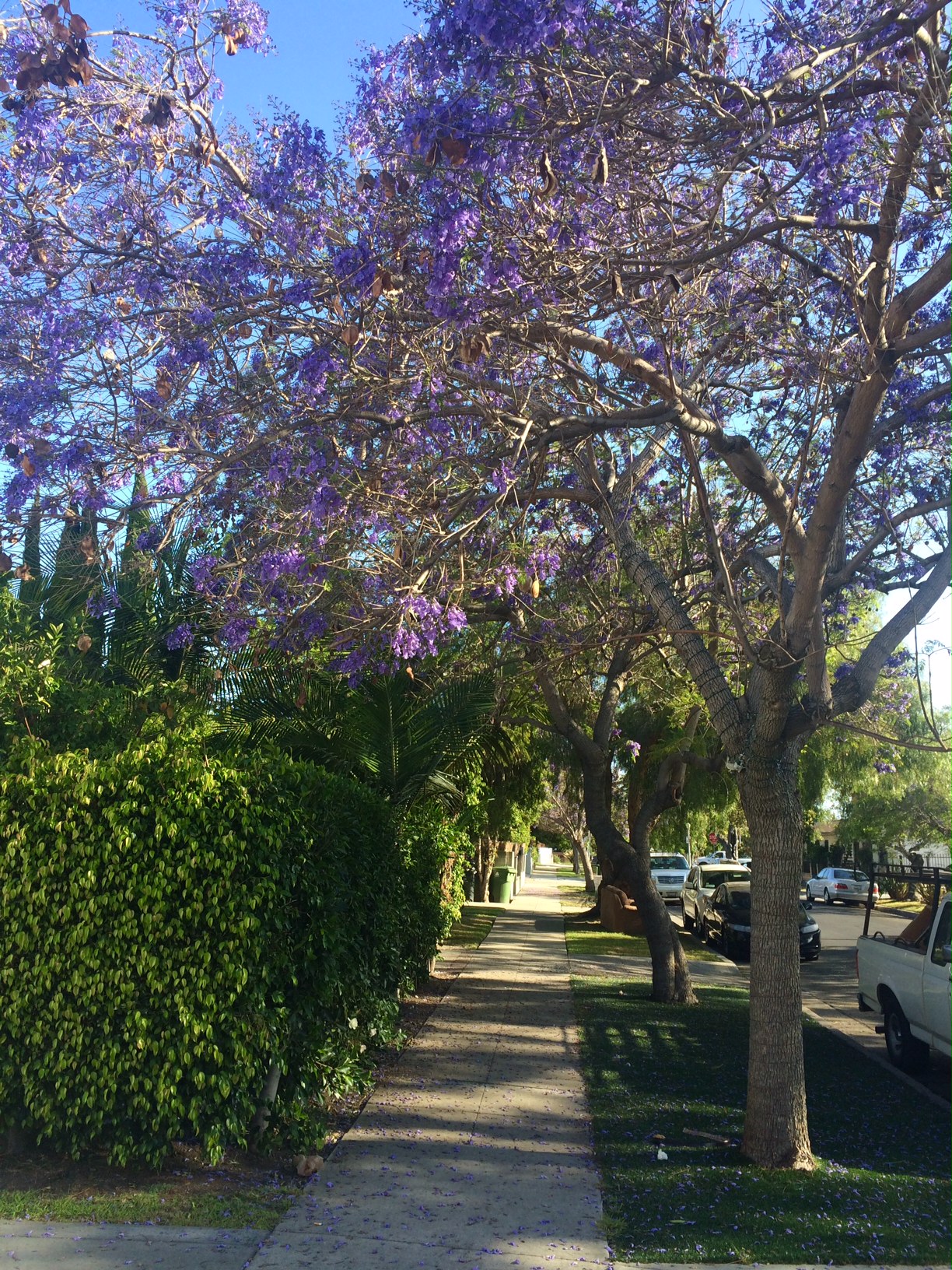
The Jacarandas are blooming in Los Angeles. All over the city, trees burst with purple flowers, blossoms spilling onto the street, leaving a trail of vibrant lavender. I’ve always loved the color of Jacaranda purple, even before I knew Jacarandas were a thing. It was the color of my high school bedroom, and I remember feeling cheerful and happy inside of those walls. Even now, there’s something soothing and dreamy about those bluish violet flowers filling up the sky. Some days, a walk through my neighborhood feels like stepping onto the canvas of an Impressionist painting.

But as pretty as they are, Jacarandas are also a real nuisance. Their flowers float down from the sky in droves, blanketing the streets with purple carcasses. And as they turn brown and die, they leave a sticky, slippery, gelatinous residue on everything they touch. Park your car underneath a shedding Jacaranda tree for more than a few minutes, you begin to hate the things.

I suppose, like everything in life, it’s about perspective. If you look up, the Jacaranda trees are beautiful. Look down, not so much.

I’m trying to keep that in mind as I approach this Mother’s Day. On difficult days, looking up toward the sky doesn’t always come naturally. But when you do – if you can – it’s bound to be more beautiful.

Until next time, friends.

FullSizeRender

The Year of the Monkey.

In truth, I don’t know all that much about Chinese astrology. As a child, I remember being fascinated by the red and gold Chinese restaurant placemats depicting the twelve zodiac animals and detailing the characteristics of each of them. Those placemats taught me that as a December 1980 baby, I am a Monkey: a sign known for its optimism, cleverness, sense of adventure, curiosity, and inclination toward mischief.

IMG_6723

On February 8, we began a new Lunar New Year: the Year of the Fire Monkey. According to the Chinese zodiac, it is not a good thing when you enter a year that corresponds to your sign. In fact, it is usually quite unlucky. This is an assertion that I have chosen to ignore. Given the way 2016 began, can you blame me?

A couple of weeks into the (Western) New Year, my car was vandalized, resulting in thousands of dollars worth of damage and leaving me feeling shaken and scared about the neighborhood I call home. My temporary job as an independent contractor – that began after the company I worked for was sold and moved to another state – was more stressful than I’d anticipated, leaving me tired and frustrated. Inspiration was difficult to come by, and my writing stalled. A persistent feeling of hopelessness started to creep in, threatening to derail my big plans for 2016.

Probably out of sheer stubbornness and my absolute need for things to be better this year than they’d previously been, I pushed forward. I kept writing, even though I didn’t feel like it. I reached out to a friend who’d produced my last play, asking her to come on board, even though I didn’t yet have a script. I renegotiated the terms of my independent contractor job, resulting in an arrangement more favorable to me. And I began the insurance claims process for the damage done to my vehicle.

Little by little, the clouds stared to lift. The original timetable of eight weeks to repair my car turned out to be mere days as the backordered part my mechanic needed became available much sooner than expected. Filing the insurance claim proved to be easier than I’d anticipated (dare I say, it was even pleasant), and within a couple of weeks I received a check covering all of the repair costs beyond my deductible. My friend and previous collaborator agreed to sign on to co-produce and direct my new play, giving my writing an increased sense of urgency and providing the motivation I needed to finish a first draft. And a fun-filled weekend celebrating a dear friend’s birthday in the San Francisco Bay Area lifted my spirits and temporarily curbed my growing wanderlust.

IMG_6697

By the time the Lunar New Year began, I was feeling like my old optimistic Monkey self again. A few days later, my aunt and uncle arrived in L.A. for a visit, booking a hotel on Ocean Avenue in Santa Monica overlooking the pier, Palisades Park, and the Pacific Ocean. Their visit coincided with a rare winter heat wave: clear blue skies free of the smog that so often blankets this city, temperatures in the 80s, the Pacific sparkling like so many sapphires. The three of us hadn’t been together since Grandpa’s death three months earlier, and after the intense, emotionally taxing period of hospice, reveling in the majestic, sun drenched California coastline felt like a miracle.

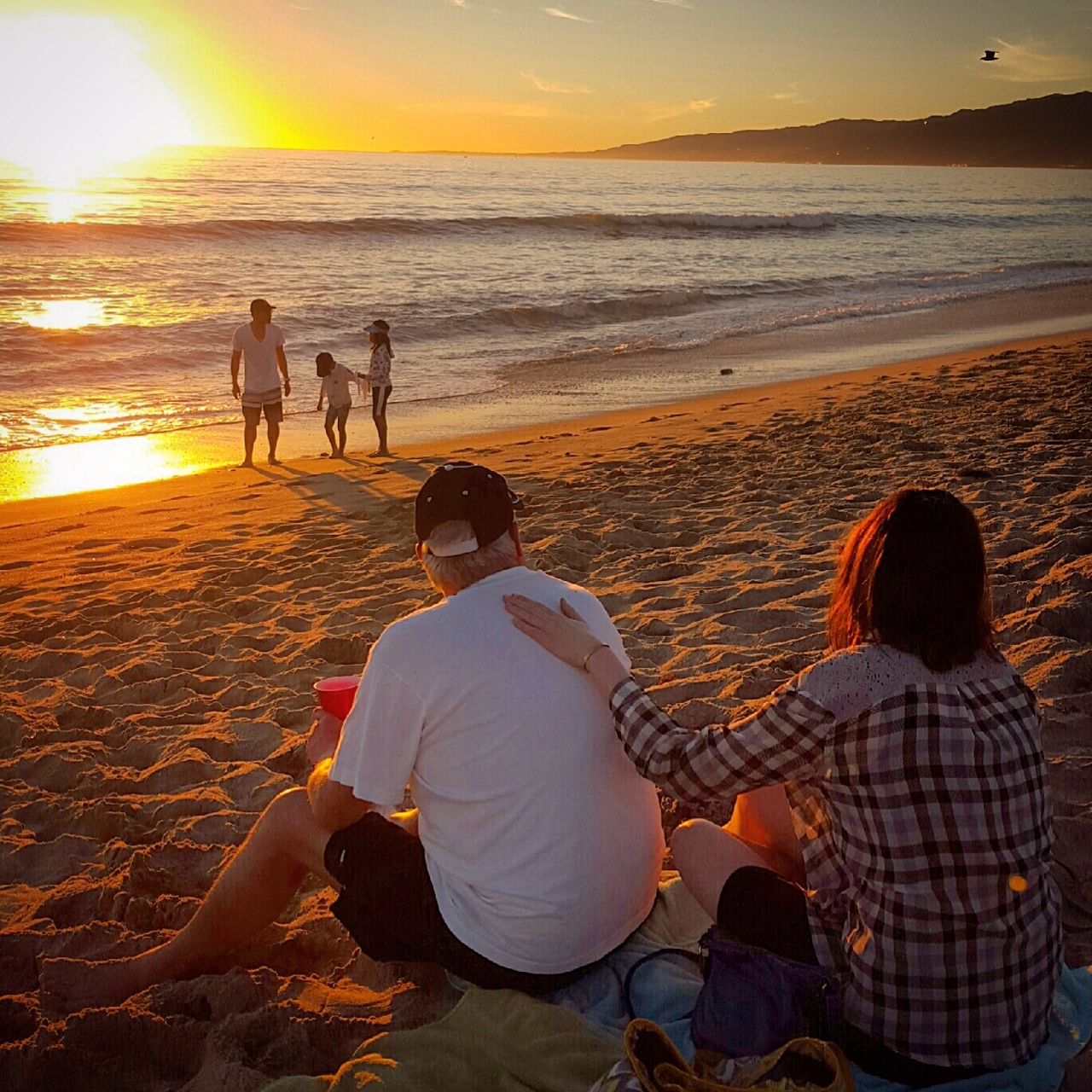
On President’s Day, armed with towels, a water canteen filled with fancy French champagne, and red Solo cups, the three of us marched north through Palisades Park, away from the throng of tourists. At Montana Ave., we descended steep wooden stairs, crossed the bridge over Pacific Coast Highway, and landed on Santa Monica Beach, sinking our toes into the warm sand. We waded in the ocean, the foamy waves lapping at our feet, and then settled into the sand. We filled our cups with fizzy liquid, raised them in a toast to Grandpa, and then turned our eyes toward the fiery orange sun slipping low on the horizon and fell silent.

I captioned a photo from that day, taken by my aunt of my uncle and I looking into the sunset, my hand resting upon his shoulder, with a quote from a letter that my grandfather wrote to me more than a decade ago: The beach never changes, ‘tis only we who change. Those words recalled a different time, and Grandpa was referring to a different beach, yet they still hold true.

I have changed. We all have. Given everything that has happened over these last three years, it would have been impossible not to. And while I have no idea what the future holds, little by little, I am learning to let go of my obsessive need to control it. Maybe this Monkey Year will be lucky. And maybe, as the Chinese zodiac asserts, it won’t be.  But two weeks in, I have decided that whatever happens, I will greet it with the same indefatigable spirit of my zodiac sign: with curiosity, with optimism, and with an unwavering sense of adventure.

Onward.

Until next time, friends.
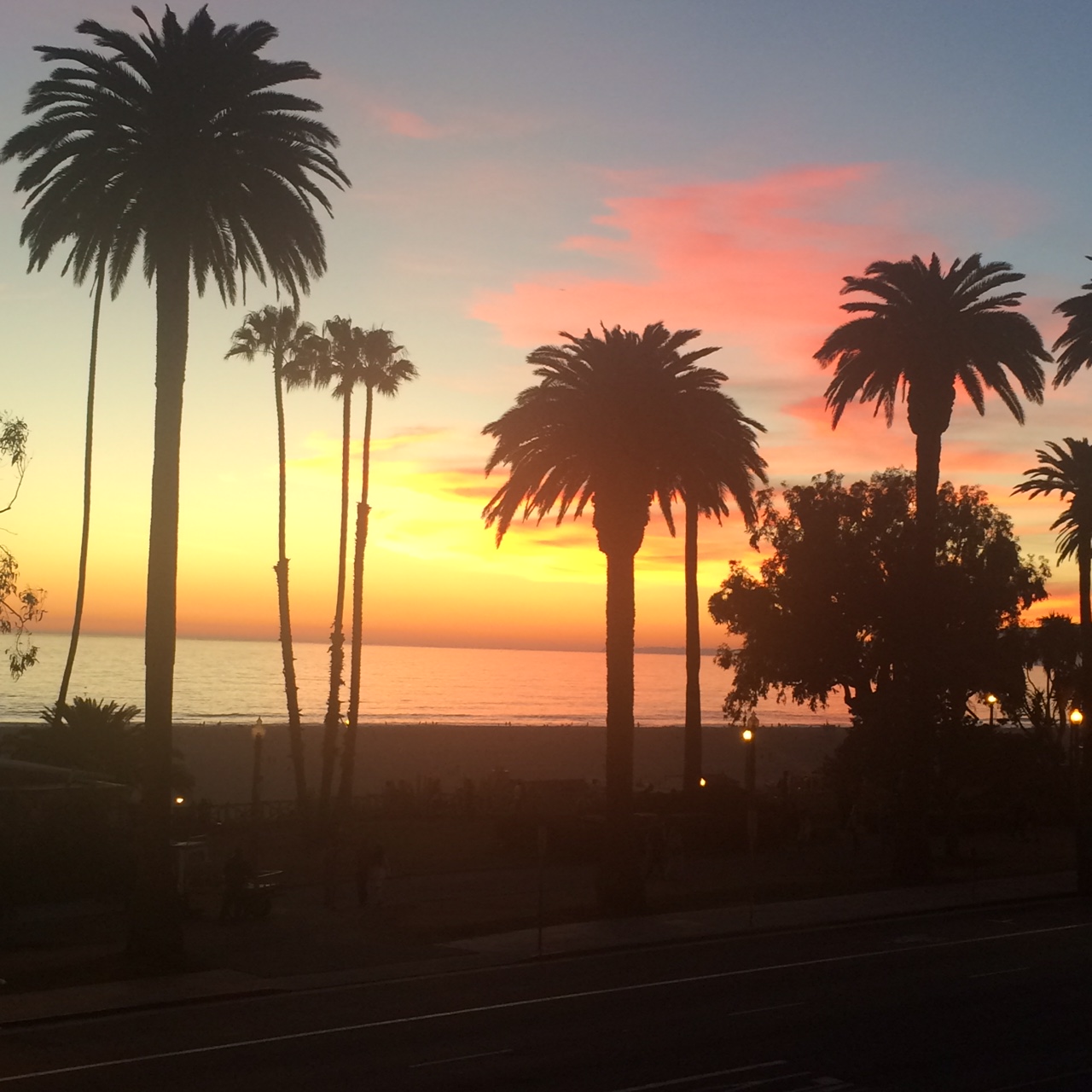
IMG_6737

The Great Unknown.

A long December and there’s reason to believe/

Maybe this year will be better than the last/

I can’t remember the last thing that you said as you were leavin’/

Now the days go by so fast.

– Counting Crows

IMG_6165

I’m not very good at New Year’s resolutions. Oh sure, I make them. I make them every year, without fail. I’m just not very good at keeping them.

I approach every New Year with renewed enthusiasm, determined that this year will be the year that all of my dreams come true. But anyone who’s ever abandoned their resolve before the close of January will likely agree: it’s one thing to make grand promises in a happy, hopeful champagne haze as the clock strikes midnight, and quite another to do the hard work of goal setting, holding yourself accountable, and meeting the necessary self-imposed deadlines on the way to achieving personal growth.

But this January, I stand on the precipice of a very different year. It’s a year where change is inevitable. A year that has challenged me to live differently. A year that has proposed a dare.

Shortly after my grandfather died, I returned to Los Angeles to discover that the small company I’ve worked at for the last 11 years – essentially my entire adult life – had been sold. There was a new job waiting for me in another state. But not just any state:  it was the state where I was born, where members of my family lived, and where I’d been thinking about moving back to. Surely this was the universe giving me a sign, right?

Well, maybe not. The closer I looked at the job and the ways my life would change if I accepted it, the more the sinking feeling in the pit of my stomach grew. While a piece of my heart would always reside in the Pacific Northwest, it was actually all of the time I had recently spent there seeing my grandfather through hospice that opened my eyes to how much I still love my life in L.A. True, Los Angeles can be a harsh and difficult place to live, but it’s also a place of tremendous energy and excitement. It has been my home for fifteen years, and in that time I have built a solid community of amazing friends and gifted creative collaborators. I had been seriously considering leaving L.A., but after my grandfather died, I realized that I wasn’t ready to. There was still too much left undone – opportunities unexplored, projects unfinished – for me to walk away now. If I left before I felt ready, I knew I’d be filled with regret.

IMG_0751

Still, staying in L.A. meant no job, and stability had always been important to me. In contrast to my old position with the small company – where I’d sacrificed pay increases for the ability to work from home, maintain a flexible schedule, and have a tremendous amount of autonomy – this new company was much bigger, and much more corporate. It was a grown-up job. I’d be an integral part of their marketing team, with the ability to climb the corporate ladder and build an impressive resume. This job was a sure thing.

But once I got really quiet and listened to my inner voice, I realized that there is no such thing as a “sure” thing. Here’s what I believe instead: we trick ourselves into investing in “safe” choices and manufacturing the illusion of security to distract ourselves from the terrifying truth that everything goes away. Even us. Anyone who has ever received that phone call, or that diagnosis or that pink slip knows that the foundation upon which we build our lives is fragile, and it only takes a sudden, unexpected gust of wind to send everything tumbling down.

I never thought that, at thirty-five, both of my parents would be dead, and my grandparents, too. I never thought that I’d get married, and that it wouldn’t work out. I never thought that the company I had worked at since I was twenty-three would leave the state, taking my job with it.

But all of those things happened. I wasn’t ready for any of them, but they happened all the same.

IMG_2251

My father was a serious risk taker. I wish I was more like him. In truth, I’m kind of a chicken. Not Dad. He preferred to put it all out on the line and roll the dice. Sometimes, he lost, and he lost big. But he also won, and his winnings made him tremendously successful. It is because of that success and the money that resulted from it that I realized something else: I don’t have to settle for a life I don’t want to live.

A few days before Christmas, I turned down the “safe” job to stay in L.A. For the first time in my life, I’m going to see what it means to not work in service of someone else, but instead to invest in building my dreams and the higher vision of my life. It is a choice that terrifies me, but it is the only choice that I could make. Here’s something else that I believe: my fear is less about running out of the money my parents left me and more about the fact that taking accountability for my life means that there’s no one else to blame if it all goes wrong.

So here I go. This New Year, I am plunging into the great unknown. I am filled with gratitude for the gift my parents have given me, and filled with fear that I’ll screw it up. But my gratitude is bigger than the fear. So is my determination. And so is the quiet, unwavering voice inside of me telling me that this is the right thing to do.

It’s been a long December and there’s reason to believe/

Maybe this year will be better than the last/

I can’t remember all the times I tried to tell myself/

To hold on to these moments as they pass/

And it’s one more day up in the canyon/

And it’s one more night in Hollywood/

It’s been so long since I’ve seen the ocean . . . I guess I should.

Until next time, friends

IMG_2209


Thirty-five.

On December 2nd, I marked a milestone birthday: thirty-five. Perhaps it’s fitting then, that this entry also signifies another milestone: my 100th post on Extra Dry Martini.

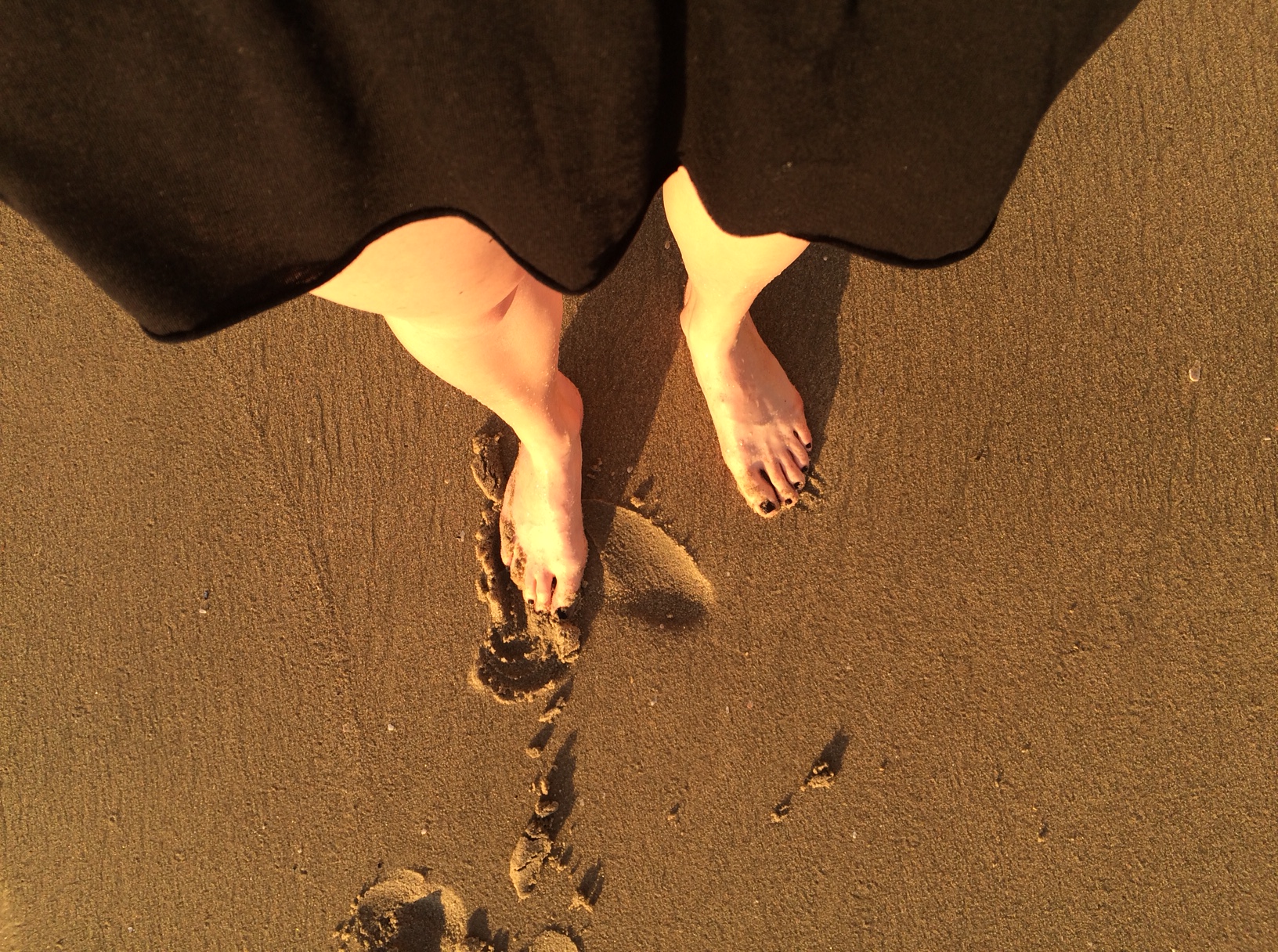
Bare Feet

Normally, I love birthdays (both my own and other people’s), but this one felt less celebratory and more like staring down the barrel of a gun. Thirty-five? Shouldn’t I have it all figured out by now? Shouldn’t I own a home, have a family, be navigating the ladder of success on my way toward building a lucrative career? Numbers don’t lie, and based on my age, there’s no denying that I am officially a grown up. So why aren’t I acting like one?

Though these (judgmental) thoughts danced across my brain, the truth is, when the day arrived, I was too exhausted to be as hard on myself as my inner critic demanded. I was fresh off the recent experience of seeing my beloved grandfather through hospice (which I documented here, here and here), and after spending the better part of a month camped out in a small town in rainy Washington state, I returned to Los Angeles only to be confronted with another piece of life-shaking news. While I’m not ready to share this latest development publicly (I will, probably in my next post), suffice it to say I find myself at a significant crossroads, with two very different paths to choose from. Whichever decision I make means big change, and the only way for me to know which road to follow is to look within my own heart and ask myself what I want.

Hotel Palms

The Friday after my birthday, I did what I often do when I’m feeling lost: I went to the ocean. I packed a journal, my birthday cards, a tattered copy of Anne Morrow Lindbergh’s A Gift from the Sea, and drove south. Needing to decompress from an intensely emotional couple of months, I decided to spoil myself and reserved an oceanfront hotel room at the stunning Surf & Sand Resort in Laguna Beach, CA.

I expected the resort to be luxurious, but the property exceeded my every expectation. Upon checking in, I was greeted by an expansive guest room appointed in crisp whites and soft sandy neutrals, a bottle of sparkling water chilling on ice, an artfully arranged fruit and cheese platter, and a handwritten note of welcome from the hotel staff. I opened the white shutter balcony doors to a breath-halting view of the sunset over the Pacific. I cracked open a bottle of birthday wine, collapsed onto the enormous King Size bed, and fell asleep to the sound of waves crashing outside.

It took a full twenty-four hours for my tired brain to stop racing, and to allow my internal rhythms to slow down and mimic the pace of the ocean. I went for long walks along Pacific Coast Highway, enjoyed delicious meals, and savored the sight of the sun slipping below the horizon, streaking the topaz sky with tangerine fire.

Waves

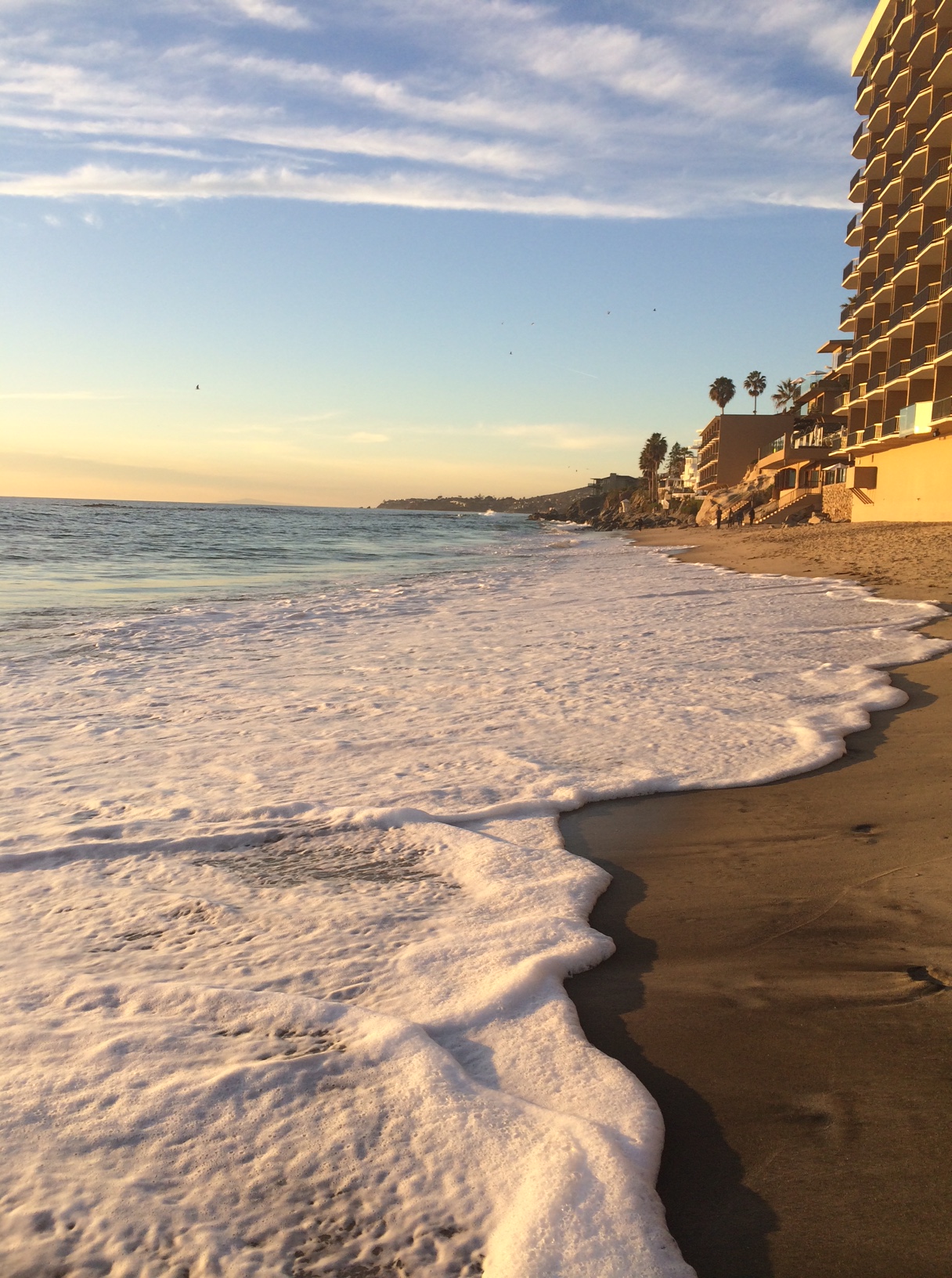
On my last day in Laguna, I lounged in the afternoon sun and swam lazy laps in the warm saltwater pool. An hour before sunset, I made my way down to the beach. Running in and out of the surf, I laughed as the tide quickly receded then rushed back, swallowing my bare feet with a force as the not-quite-cold foamy white waves tickled my toes.

My whole life, the ocean has always held a certain mysterious allure. In the presence of its seemingly infinite expanse I am small, but not in a way that renders me insignificant. Instead, my tiny-ness thrills me, reminding me that my problems are a mere droplet compared to such a mighty sea. As the roar of the surf matches the drumbeat of my own heart, I know that I am part of the earth – all of it – and my connectedness to such great beauty makes me feel both awestruck and safe.

The first four years of my thirtieth decade brought challenges I never thought I’d face. Not this young, not this soon. These years have brought death and unimaginable heartbreak and a loneliness I feared I’d never find the bottom of. But they also brought strength, and resilience, and gratitude, and a deeper knowledge of love than I’ve ever known. I am often sad and fragile, but I am also wise, and tenacious, and alive.

Palms and Sea

A few days after my thirty-fifth birthday, I stared out at the Pacific, wondering how I could go on, now that the four people who had most shaped my life were no longer here. As I thought about them, images of other people appeared in my mind – both family and friends – who had stepped in to fill the void in the absence of those four. A cherished bunch who had laughed and cried with me, who had embraced me with kindness, who had counseled me through hardship, who had held me up when I feared I would collapse. And in that moment of quiet reflection, I knew unquestionably not only that I could go on, but that I would.

When I left Laguna, a piece of my heart stayed behind. I vowed to return after questions had been answered, decisions had been made, and challenges were met, head on. As Anne Morrow Lindbergh wrote in that well-worn book I carried along with me on my journey: “Patience – Faith – Openness, is what the sea has to teach. Simplicity – Solitude – Intermittency . . . But there are other beaches to explore. There are more shells to find. This is only the beginning.”

Until next time, friends.
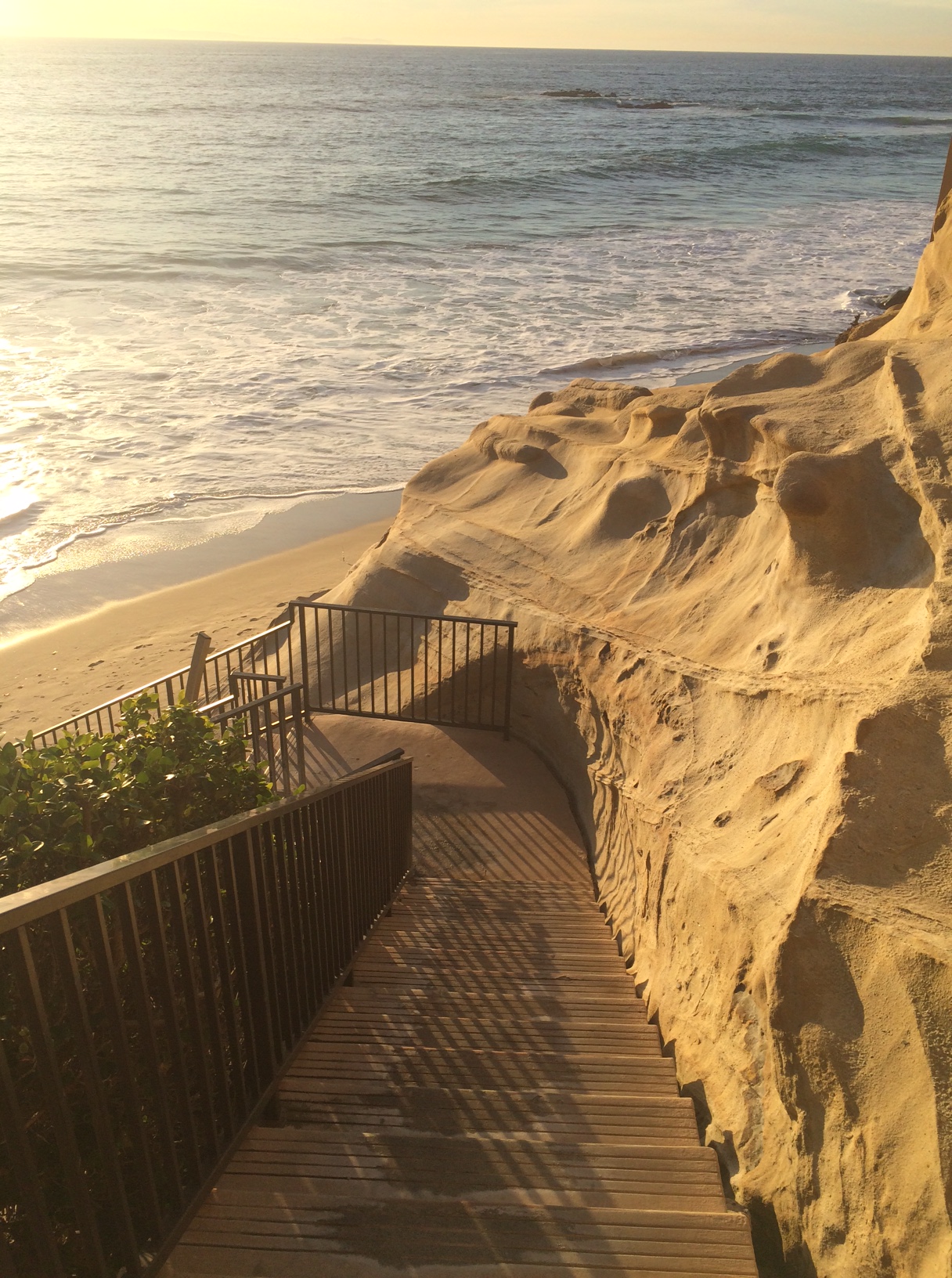
Stairs

Gerry.

Come fly with me, let’s fly, let’s fly away

If you can use some exotic booze

There’s a bar in far Bombay

Come fly with me, let’s fly, let’s fly away

The tide is high on the morning of Halloween. So high, that the magic rock is hidden from view. “Where is it?” someone asks. “Underwater,” I say.

Grandma and Grandpa

As we reminisce about Grandpa’s daily swims in Case Inlet – the way he circled that tall, narrow, granite rock formation as though it were his prey, his snorkel mask strapped on, swim fins slicing through the water – I realize I don’t know the answer to the most basic of questions: “Why is the rock magic?”

No one seems to know. Finally, the only reply that makes sense: “Because Grandpa said it was.”

My grandfather, Gerald James Popelka (or “Gerry,” to those who knew him), lived a whole half century before I met him. There are so many things about his life that I don’t know, but what is clear to me as we gather on this Halloween morning, a group of twenty or so family and close friends, the hospice chaplain, and a Vietnam veteran who will honor Grandpa for his service as a Navy court reporter during World War II and the Korean War, is this: it was more than just a rock that he made magic, it was this whole place, this handful of acres tucked away on western Washington’s Case Inlet, a place that has been known to my family for the last five and a half decades simply as “the beach.”

The beach isn’t special simply because of its picturesque setting on a saltwater bay framed by tall banks of evergreen trees, Mt. Rainier towering above, keeping watch over us all. It’s special because over so many years, during all those summers spent boating and swimming, digging clams on the rocky beach, building great big bonfires, roasting S’mores and telling stories under the stars, this place has always been infused with the same spirit of delight with which my Grandfather undertook everything he did. As my Uncle Glenn said during closing remarks at Grandpa’s Navy blessing, looking around at the place, at all of us: “All of this is because of you, Dad.”

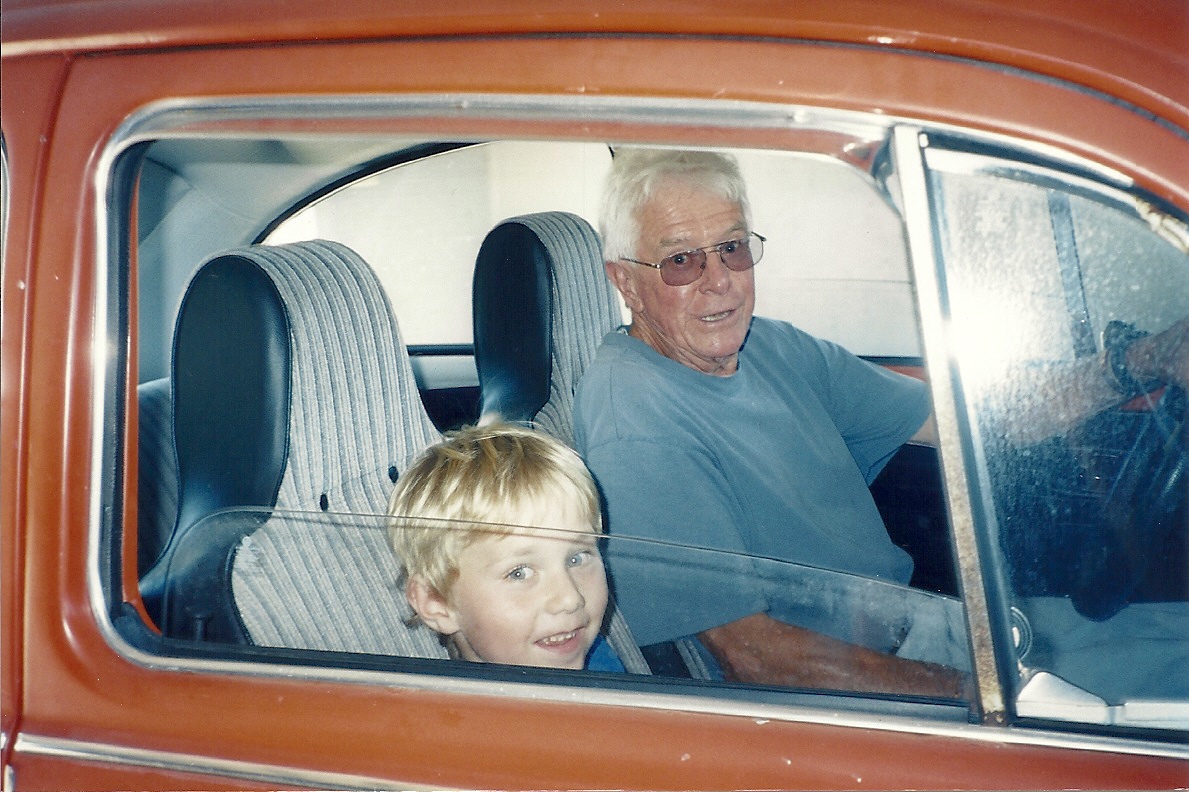
July 2005 Joyride

My Grandpa Gerry was a spirited Bohemian whose sense of humor and zest for life were utterly infectious. He was a lover of the lexicon, honing his skills by working daily crossword puzzles and ever ready to stump some poor unsuspecting victim with an impossible-to-figure-out vocabulary word. He was a practical joker, often following up a witty wisecrack with a mischievous twinkle in his eye. The bold striped t-shirts he favored matched his perfect shock of thick white hair and his larger than life personality.

Grandpa was tremendous fun to be around, but above all else, he was kind. To me, he was a bright light that illuminated the dark corners of an often sad and lonely childhood. He was the one person with whom I never fought, never exchanged a harsh word. In fact, I can’t remember him ever saying an unkind word about anyone.

On October 12th, I received word that Grandpa – at 89 years old – was terminally ill. After a recent series of what can only be described as traumatic experiences with death – my mother, my father, my grandmother – this sudden turn of events felt unnecessarily cruel. After so much loss, how could I possibly be expected to say goodbye to my beloved grandfather too? It wasn’t fair. I needed more time.

Hospice prepared us for the worst, telling us that given Grandpa’s failing liver, intense pain, nausea and heavy bleeding were all likely to happen “near the end.” As the social worker cautioned, “People hope their loved ones will pass away quietly in their sleep, but that rarely happens. Dying is usually quite an active process.”

Sarah Grandpa Black and White

I wasn’t ready, but I went to the beach anyway. For sixteen days, Grandpa and I sat together. We looked at old photos and reminisced. We shared secret jokes, poking fun at those who weren’t in on them. We counted the Canada geese that glided serenely across Case Inlet and congregated on a neighbor’s lawn.

But after sixteen days, without a dramatic change in Grandpa’s health, I headed back to Los Angeles with a plan to return in two weeks. It was only four days later that I got the call: Grandpa was weak, bedridden, and asking for me. Back to the beach I went.

I arrived on a Tuesday night. Friends and family were gathered in Grandpa’s room, and outside, the wind howled and rain poured. Grandpa drifted in and out of sleep, but he opened his eyes long enough to look at me and squeeze my hand. He tried to speak and couldn’t, but I told him that it was OK. I already knew.

I awoke the next morning, Veteran’s Day, to the sun streaming through my window, the clear blue skies and calm winds an unexpected gift after such a long and miserable night. Grandpa was sleeping peacefully, so I took a break to do some work. Around lunchtime, Glenn informed me he’d just gone to see Grandpa and told him that my mother was waiting for him to start cocktail hour. “Don’t be late,” he said.

FullSizeRender[1]

Now this next part will sound like I’ve made it up, because it’s the type of Hollywood ending a writer like me would invent, but I swear on everything that I am that it’s exactly what happened. I took my laptop to Grandpa’s room, and as my Aunt Sandy searched through his decades’ old collection of compact discs, I pulled up an iTunes playlist of standards. I tried a few oldies before I settled on a Sinatra classic. I sat next to his bed and turned up the volume:

Come fly with me, let’s float down to Peru

In llama land there’s a one-man band

And he’ll toot his flute for you

Come fly with me, let’s take off in the blue

Grandpa’s breathing slowed considerably and halted for several beats in between breaths. This was different, and we knew it. We called Glenn, who appeared in the doorway of Grandpa’s room somewhere around here:

Once I get you up there where the air is rarified

We’ll just glide, starry-eyed

Once I get you up there I’ll be holding you so near

You may hear angels cheer ’cause we’re together

Before Sinatra had finished singing, my grandfather quietly, gently, drew his last breath. As we hovered around his bed in a sort of reverent silence, waiting, knowing, yet not quite ready to speak the words out loud, I imagined Grandpa sitting with my Mom in the cozy living room of their old West Seattle house on Beach Drive, sipping martinis, enjoying the view of Puget Sound, Ol’ Blue Eyes softly crooning in the background.

FullSizeRender[3]

I inherited my love of language from my grandfather. And I believe that a wordsmith like him would understand better than most that there are times when words simply aren’t enough. After all, how could I possibly explain to you that after all of my fear surrounding what would happen when my grandfather died, that what actually did happen was so beautiful that it somehow made all the other deaths a little easier to bear? How could I express to you the depth of my gratitude for an exit so gentle that it helped restore my faith that sometimes, good things do happen to good people? And most importantly, how could I possibly capture in words the essence of a man who meant so much to so many, so that you could know him as I knew him, love him as I loved him?

I can’t. Words are not enough. I can only tell you that my grandfather, Gerald James Popelka, was the best man I ever knew.

And he made us all believe that a rock was magic, just by saying it was so.

Weather-wise it’s such a lovely day

You just say the words and we’ll beat the birds

Down to Acapulco Bay

It’s perfect for a flying honeymoon, they say

Come fly with me, let’s fly, let’s fly away

 Until next time, friends.
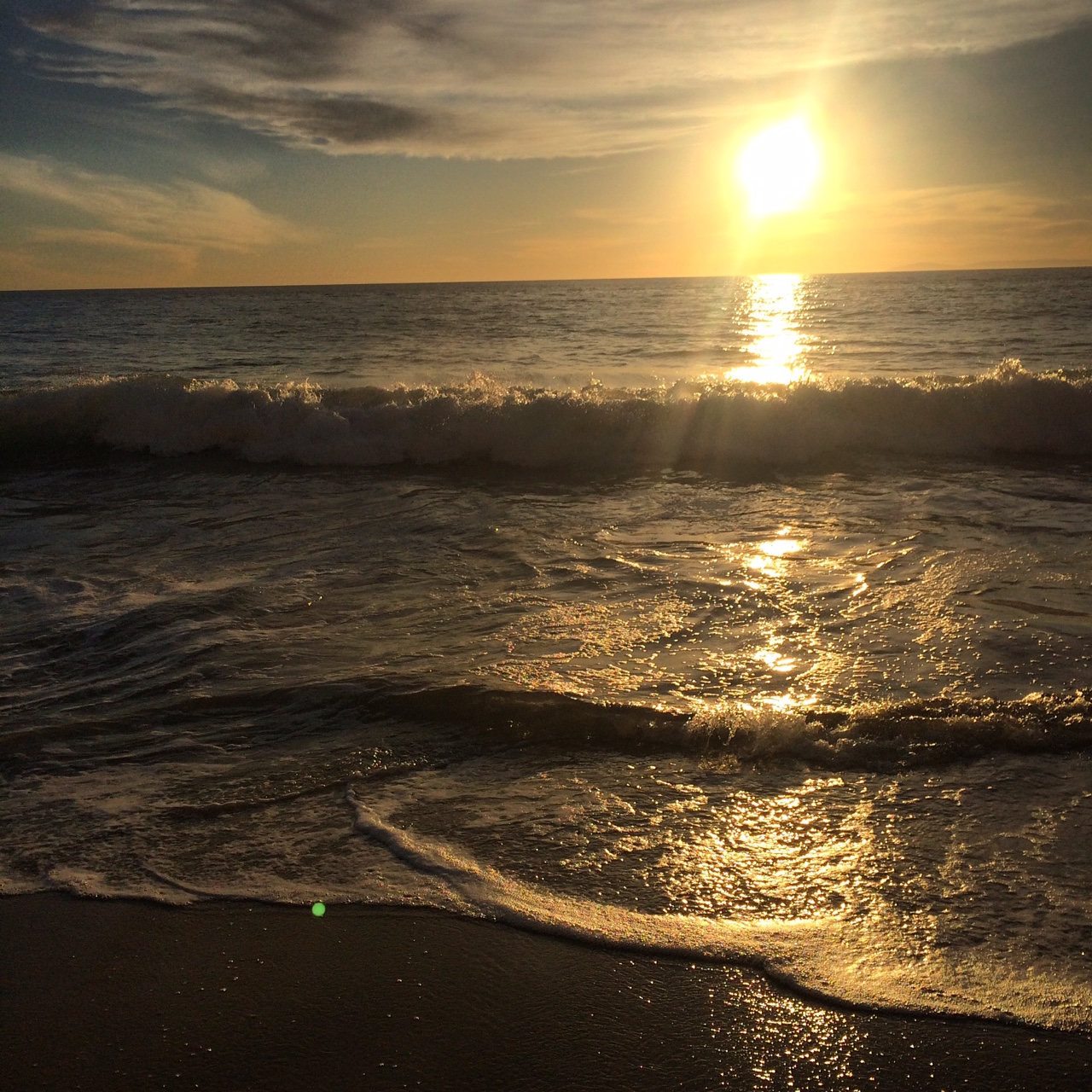
FullSizeRender[2]


Limbo.

Grandpa sits in his usual spot in the living room, staring out the picture window at the placid, silvery surface of Case Inlet, framed by evergreens that have turned an early November shade of amber. His yellow-tinged eyes reflect the vacant gaze of someone who’s looking but not seeing. “What are you thinking about?” I ask, patting him on the shoulder. I expect his typical response: “Nothing.” Instead, he intones softly, “I’m thinking about how quickly the time has gone.”

I’ve been at the beach for fifteen days, though of course, that’s not the measure of time that Grandpa is referring to. This evening, barring a catastrophe, I will leave, and board a plane headed back to Los Angeles. It is staggering to me that my time here has passed so swiftly, and yet, has contained so much within its rapidly elapsing days. I feel as though I’ve been moving in slow motion for weeks, traveling from joy to despair to fear in the space of a single hour, sometimes in a single minute. There is always another hospice appointment, another phone call, another email, another problem, another difficult conversation. And in between it all, I’ve been working, straddling two worlds – here and there – with the aid of an unreliable Wi-Fi connection.

I’ve never been very good at living in the moment, but these last couple weeks, the moment is all I’ve had. It’s no wonder my sense of time is so screwy, with Grandpa’s feeling borrowed and mine suspended. What a strange sort of limbo it is to sit with someone you love as they face the end of their life. The question that looms before us is when? It is the question he asks of everyone: his caregivers, the hospice nurses, the chaplain, the social worker, and of course, his family. It is the question that no one has the answer to, least of all me.

IMG_5702

I am prepared for what’s coming in a way that I wasn’t able to be with either of my parents, and for that I am grateful. I am grateful for all of the time I’ve been able to spend with him. But after fifteen days, there is little for me to do but wait.

Twenty-four-hour care is in place; contingency plans have been made. And the look Grandpa now sees reflected back in my eyes is one of someone who’s watching his every move, searching his face for signs of what’s to come. I can’t do this any longer. I can no longer sit around this rain-soaked place – beautiful as it is – waiting for my 89-year-old Grandfather to die.

I feel selfish for craving a way out, for craving warmth and palm trees and cheap, delicious Mexican food, and a hike in the hills and the sight of the Pacific and a desperately needed session with my therapist, but I do. I crave all of these things. I even crave the to-do list that awaits me upon my return, because it represents routine, and the opportunity to pretend, for a little while, that everything is normal.

So back I will go, for now. My return to the beach is already booked, but every ticket is refundable, every plan changeable. This type of freedom, it turns out, is expensive. But it’s the price you pay when you’re in limbo. When you’re left with nothing to do but wait.

photo 1


Blog at WordPress.com.