Stare Mesto.

It’s Saturday in Prague. It’s also Valentine’s Day, a day which marks the two year anniversary of the death of my father. But I don’t think that’s particularly sad. Not the fact that Dad died, which, of course, is sad, but the fact that he died on Valentine’s Day. I think the date of his death is symbolic of the love he had for his children, and of the fact that he passed peacefully and quickly, in his sleep, after a battle with cancer. I think the fact that his death was as quiet and as gentle as it was when it could have gone so differently was a gift – from him, from God, from the universe, from fate, from whatever force it is that was working its cosmic magic. I consider his love a gift, his life a gift, and the peace we made before he died the ultimate gift.

IMG_3478

But I didn’t set out to write a post about my father (I did that more eloquently last year, here), only to acknowledge that today, as I pass another day in this mysteriously beautiful city, so far away from home in the middle of a stark, cold European winter, I have been thinking about him. And I have been thinking about love.

Ever since they died, I have been trying to strike a balance between the parts of my mother and father that are contained within me, of which there are a great deal. Sometimes I feel their echoes in my worst behaviors. But often, I recall the good in them and I aim my aspirations in that same direction.

Dad was adventurous, bold. I think he’d be proud of me for taking this trip to a far off, foreign place all by myself. For unapologetically shrugging off the curious glances when I sit down to a meal or sip espresso while journaling in a café or drink cognac in the hotel bar, alone. Leave it to other people to cling to the security of another body. I don’t mind being on my own, and during my travels, I have found that I am, in fact, quite good company.

IMG_3510

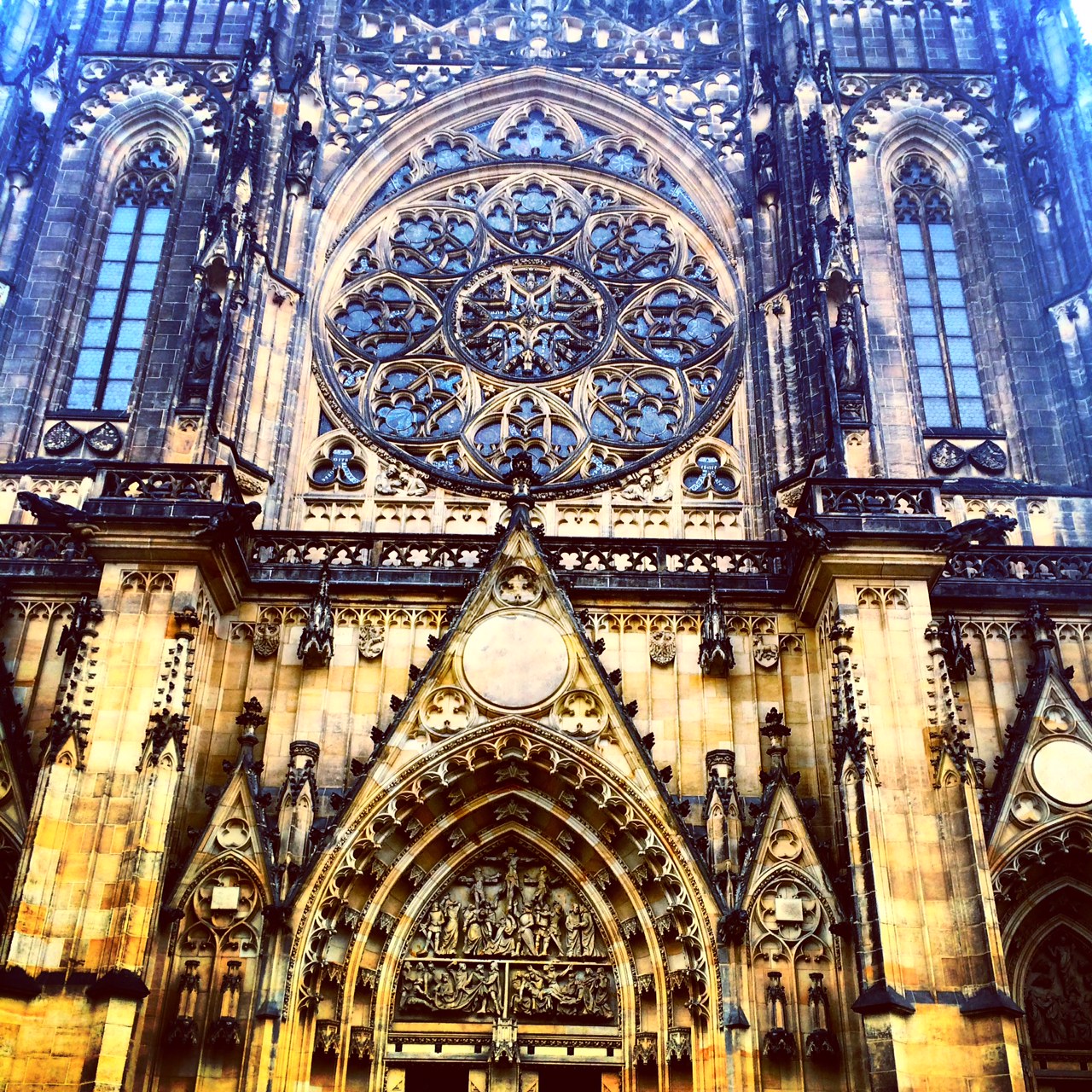
I think Dad would be proud of my hotel choice, as well. Dad always liked to go big, and my hotel does not disappoint. It’s a sleek, modern, five star European beauty located in Stare Mesto – Old Town – within striking distance of the main square, the Vltava River and the Charles Bridge and just down the hill from Mala Strana (“Little Quarter”), a steep hill leading up toward Prague Castle and breathtaking views of the city seen from on high.

My hotel is central and yet, it’s removed from the madness at the end of a quiet street – Parizska (“Paris”), aptly named for the posh luxury boutiques that populate it; brands like Cartier and Porsche Design and Dolce and Gabbana and Escada and Tod’s of London and the like.
IMG_3509

I couldn’t believe in my wildest dreams that I could afford such a hotel, with its spectacular gym and spa – no joke, it rivals some of the gyms I’ve seen in L.A. with its aerobics garden, weight room, cardio room, stretching room, enormous glass roofed swimming pool, sauna, luxurious showers and spa treatment rooms – its rooftop restaurant, cozy lounge bar, buffet breakfast overlooking the Vltava River, its opulent guest rooms with spacious marble-tiled bathrooms, Tempur-Pedic mattresses, customized pillow menu (you can choose from six different styles, adjusted to your comfort), and satellite television with channels in six different languages. Oh yeah, and there’s the breathtaking view of the gothic buildings in Old Town Square as seen from out the window of my 7th floor room, courtesy of an upgrade from the handsome hotel desk manager. Simply because I told him this was my first visit to Praha.

This is definitely the fanciest hotel I have ever stayed in, but because the dollar is strong right now, especially against the Czech Crown (Korun), and it’s the middle of winter and bitterly cold, and I got a cheaper rate for staying six nights, I am actually paying less per night for a five star hotel in a European capital than I have spent to rent a room in a Best Western. Ridiculous. And wonderful. And anyway, who cares that it’s freezing outside? I never want to leave the confines of this glamorous hotel, with its well-heeled, fur-swathed, international clientele.

IMG_3497

But leave the hotel I have, to explore this gothic city, to climb the hills, to wander the cobblestone streets, to gape at elegant centuries-old buildings with cheerful watercolor facades. I came here with no plan as to how I would spend my time, which is pure my mother and so very unlike me. When mom traveled, she hated to be rushed or kept to an agenda, preferring instead to laze about her hotel room for hours. This behavior drove me – the compulsive planner – insane, but mom could care less about cramming in touristy, sightsee-y things. She just wanted to pick out a few specific activities that she knew she would enjoy and spend the remainder of the time resting, enjoying lengthy meals, and beating to the tune of her own drummer.

Which is exactly what I’m doing in Praha. Who cares that I traveled thousands of miles to be here? This is my trip and I am spending it exactly how I want. Which includes a fair amount of wandering, a fair amount of writing in cafes, a fair amount of lengthy meals, a fair amount of enjoying my lavish hotel, and just a little – but not so much – of the really touristy stuff.
IMG_3491

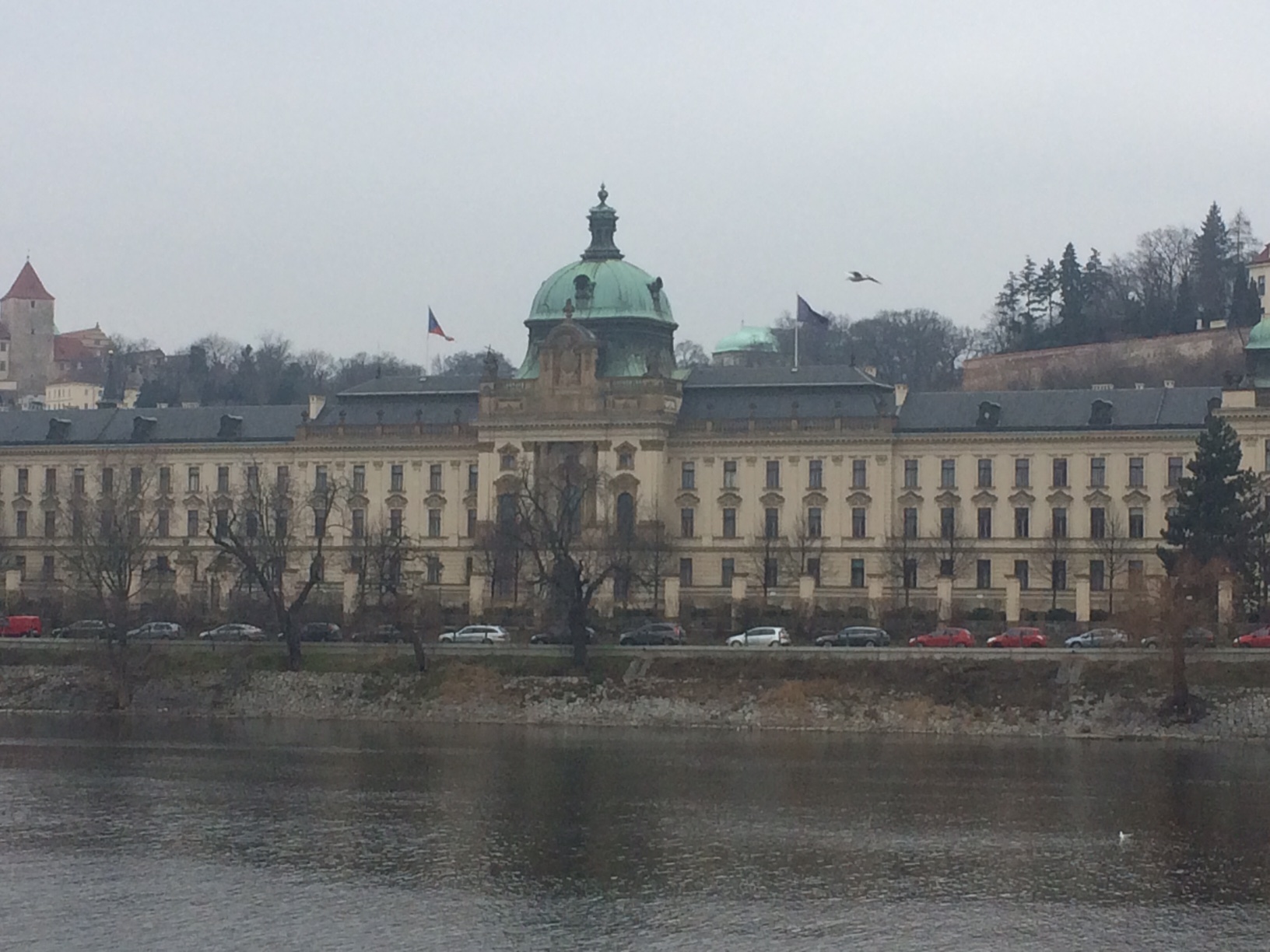
I’ve been here for three days, and for me, the jury’s still out on Praha. It is unquestionably beautiful, quite unlike any other city I’ve seen in my life. But it’s a dark beauty, with an unshakeable heaviness to it. There’s something formidable and slightly ominous that pervades through the steep hills and the narrow cobblestone streets and the hearty, heavy food, and the quietly dignified people and the gothic spires that extend into the wintry grey sky.

When I first decided to come here – inspired by my Grandpa Popelka’s Czech heritage – I had certain ideas about what this trip, what this place, would be like. It turns out that Prague, like all things in life, is very different than the picture I had in my mind of what it would be. But also as in life, it’s quite curious what we find when we don’t go looking for it. Like the fact that within this cold, dark, place, I have found a surprising amount of light. Both within my heart, and within my writing. Curious, indeed.

So thank you, Praha. Here’s to 2 ½ more days of embracing your mysterious beauty. Here’s to one more day after that in London, here’s to the long journey home to Los Angeles, and here’s to the even longer journey of finding a more permanent home, when I’m done with all the wandering.

Until next time, friends.

FullSizeRender


Things my mother never did, part two.

I dreamt about my mother last night.  It was the first time I’d dreamt about her in awhile, at least that I remember.  I used to dream of her often after she died.  They were horrible, wrenching dreams.  Dreams in which she cried out to me to help her, but in which, one way or another, I was never able to.  Inevitably, I woke from these dreams sweating, sobbing, sometimes crying out.  And like my mother, unable to be helped.

Scan 142120026-2

Last night’s dream was different.  My mother and I were alone in a vacant old house.  She was as rail thin as I remember her the last time I saw her, six weeks before she died.  Her eyes had the same vacant, staring look, like black holes peering into the distance.  I pleaded with her to eat something, but she just shook her head no.  And then I noticed something strange:  my mother had in her possession a large black satchel full of food.  She had refused to eat anything, no matter how much I pleaded with her, yet she was hoarding food, stockpiling it.  To what end?

I woke to a still dark apartment in the early morning hours and I sat, frozen in my bed, utterly stunned by the sharp clarity with which I remembered every detail of my dream.  A phrase popped into my head:  “There was nothing you could do.”  And then another:  “It wasn’t your fault.”  Both phrases circled through my brain over and over until I became dizzy and I wept, hoping they were true.

Scan 142500001-2

I don’t know why my mother appeared to my subconscious mind in such a strange fashion after so long of an absence.  It may have something to do with the fact that as I write this, I’m sitting in the international terminal at LAX, waiting to board a flight that will take me the furthest away from home I’ve been for the longest among of time I’ve been away since my mother died, the prospect of which has me both exhilarated and terrified.  Or it may have something to do with the fact that since WordPress republished my blog post Things My Mother Never Did two weeks ago, I’ve heard from hundreds of people all over the world in countless heartfelt messages.  Messages of encouragement, of heartbreak, of hope, of loss, of dysfunction and love, all revolving around the most fundamental, yet often, the most anguishing relationship out there:  that of parent and child.  And over and over again, throughout all of the messages and the reblogs, the overwhelming theme has been this:  “Thank you for writing this.  I thought I was the only one.”

How can it be that there are so many of us, yet we still feel so desperately alone?  Well, let me be the first to tell you, friends, you are not alone.  As scary as it is for me to tell my dark family secrets, I will continue to do so.  Because the only way out is through, and for me, through is a road paved with honesty.

My mother was the love of my life.  I’m still angry with her.  I’m still racked with guilt that I couldn’t save her.  And I’m not running from either one of these truths.  But, as I embark on this journey, the first big scary adventure of my new life – the life dedicated to all the Things My Mother Never Did – I hope that for all of you out there who have so lovingly and kindly reached out to me, I hope that I can offer you some inspiration about forging a path back to acceptance and love, a path forged straight through forgiveness.  A path in which you are the architect of your own life.

Thank you to everyone who wrote me.  You have no idea how grateful I am.

Here I go!

Until next time, friends.

x

Sarah

Main blog photo chrome filter


On depression, and empathy.

Matthew: What are you working on?

Cory: Actually, I’m working on a book about the depression.

Matthew: So, you have an interest in historical material?

Cory: My depression. I’m writing a book about my depression.

Matthew: I see.

Cory: It’s an epic.

From the play, Private Eyes, by Steven Dietz

IMG_1435

I have an embarrassing admission to make. For most of my life, I didn’t believe that depression was a real, legitimate thing. Don’t get me wrong, I have always known that it exists, but as someone, who, for the most part, always found it pretty easy to be happy, I took it for granted that other people could do the same. I dismissed those who were frequently sad – including my own mother – as negative, or simply not trying hard enough. Like most people, I would get an occasional case of the blues – the result of a tough day or receiving some bad news – but I found that if I just went for a run, or watched a funny movie, or played some upbeat music, I could chase away the doldrums pretty easily. This too shall pass.  Because it always did.

And then, in an instant, everything changed. My dad got sick. My mom went crazy. They both died. On the heels of my mother’s death, my maternal grandmother was diagnosed with advanced Alzheimer’s disease. Suddenly, she too, was gone. And in the midst of it all, a close friend from college dropped dead in the gym of his apartment building, less than two weeks after his 31st birthday. A life full of promise cut abruptly short. Just like that.

All of this happened in the space of less than a year. For a while, I was in shock, moving from one tragedy to the next. But eventually, I was forced to confront the person left standing: me. A series of impossible events held a mirror up to my own life and what it reflected back was soul-searing. I was lost, unfulfilled, unhappy, but it was worse than that: I had given up. Given up on my dreams, given up on the idea that I deserved to be happy, given up on the person I had always wanted to be. I didn’t recognize myself anymore, and it was terrifying. Confronted with the choice of change or die, I chose to change. And that’s when things got really scary.

I suddenly found myself alone, trying to build a new life from scratch, with no idea what to do or how to start. I was 33, feeling utterly adrift while everyone around me seemed to have their lives figured out – relationships, kids, fulfilling careers.

And that’s when the sadness shifted into something more: the big D. Depression. For the first time in my life, it was no longer easy to get out of bed. I found social events with even the closest of friends exhausting, and anything that involved meeting strangers nearly unthinkable. My everyday worries and anxieties became worse; an above average fear of heights turned crippling. My motivation to tackle even the most basic of tasks was utterly nonexistent. I (once again) took up smoking, and continued to smoke even though it made me feel sick, taking some sort of perverse pleasure in how destructive it was. I hated myself.

IMG_1312

But I also found something else in my spiral into sadness, something that I didn’t expect: empathy. As a former ‘ happy girl,’ I never understood the monumental effort it could take someone with depression just to get dressed, to leave the house, to plaster on a smile, to make the requisite small talk that fills life’s daily interactions. But now I did. I understood all too well.

I’m pretty sure that depressed people – or at least this depressed person – don’t want to be depressed. If given the chance, they’d prefer to be joyful rather than sorrowful, prefer to find it easy to be with people rather than difficult, prefer to be up, rather than down. Who wouldn’t?

But the thing I never understood until I started wrestling with my own depression was that in the face of all of my friends’ well-meaning advice about focusing on the positive, about choosing to be happy, about the fact that our thoughts make our worlds, for some people, the pursuit of happiness is a constant, ongoing battle. I am tough, and relentlessly stubborn. I don’t give up easily, and throughout this dark period I’ve fought. I’ve worked really damn hard: forcing myself to be social when I didn’t feel like it, exercising regularly, practicing gratitude, joining organizations, going on trips, getting involved in my community, and doing all the things you’re supposed to do to shift your outlook. But the key words here are hard and work. I never could have imagined that a simple quest to feel lighter could be so damn heavy. That the most basic tasks could spend me as though I’d just run miles through beach sand. That sometimes in spite of my best efforts, there wouldn’t be one single solitary thing that would make any of it better.

But here’s the flip side of sitting with this darkness, of living in it, of trying to learn from it: gratitude. I’m grateful for what my struggle has taught me. Being incapable of walking through this phase of my life as anything other than a broken person has stripped away all pretense and artifice. It has attracted people into my life that the old me never would have met, and it has caused me to chase new, different experiences, things the old me never would have done. In my battle to get better, I’ve met some truly beautiful souls – both in person and online through writing this blog – that have known profound pain, pain deeper than anything I’ve experienced. And like me, they too, are doing the best they can.

We all have our particular prejudices, our long-held beliefs, our wealth of experiences that form the framework through which we view the world. Sometimes – as in my case – they can cause us to be too judgmental toward other people, to feel self righteous about their choices. Human beings are naturally curious and though we want to understand each other, sometimes we don’t, we can’t. What the last couple of years have taught me is that there is always more to the story than meets the eye, that no one has it easy, and that, while some of us are better at dealing with hardship, none of us are left unscathed by the joys and sorrows that make up this beautiful, difficult, complicated life.

As a former happy girl currently engaged in the battle to get better, I have learned patience, gained self-awareness, and discovered the true value of gratitude. But empathy, above all, is the gift that my depression has given me.

Until next time, friends.

IMG_1719

Rory.

Today would have been your thirty-third birthday.

My favorite memory of celebrating your birthday has to be your twenty-first: when Vim drove our small group to Las Vegas on a Tuesday night. Kate (my roommate) thought we were crazy for making the trip. We had no hotel, no plan, other than to arrive at midnight, to celebrate as long as we could stay up, and then drive back to L.A. in the morning. “You’re going to die!” Kate warned. But we didn’t die. We drove into Vegas just before 12 a.m., the sight of neon casino lights beckoning, causing us to chant, “Vegas. Vegas. Vegas!”

1930846_560881217383_6131_n

I don’t remember which casino we hit first, but I do remember the bartender. She checked your ID, looked at her watch and chuckled. You were just twenty-one. Shots for everyone. What a great night (morning). One of those crazy adventures that you never forget.

I’ve wanted to write something about you for some time now, to dedicate something on this blog that was just for you, something more than just a brief mention, a blip on the radar screen during a bad couple of years. I’ve struggled to find the words. Not because I didn’t know what to say. I’ve no doubt I could fill up many pages with stories – stories of the USC days, of that infamous apartment, the Inglewood Palace, of everything that came after.

stub044

There are two reasons it took me so long to write about you. The first is anger. I’m angry that you’re gone because it seems so damned unfair, because you were so young, so full of promise, such a gift to this world. The second reason is guilt. I feel guilty because – sandwiched as it was in between losing my mom and dad – your loss was sort of lost to me, just one more impossible thing in a series of impossible things that I didn’t know how to deal with. I don’t think I ever fully processed or absorbed your death, almost – in a way – pretending like it didn’t happen. And you deserved better than that.

Rory, as long as I knew you, you carried a certain darkness within you. The funniest and most charming people often do. But the thing that I’m not sure you’re aware of is how happy you made people. How much fun you were. How many lives you made better by being a part of them. Some of the best memories of my twenties have you in them. Like the time you helped me move out of my apartment driving a rented U-Haul with a cracked roof through the streets of L.A. Or attending one of your band with the ever-changing name’s many shows, Natalie and I playing groupie. Or the time I hosted an Easter egg hunt for grown-ups and you competed fiercely for (and won) the ridiculous prize: a purple, fuzzy stuffed Easter bunny purse that you named after our friend Vim.

IMG_0093 copy

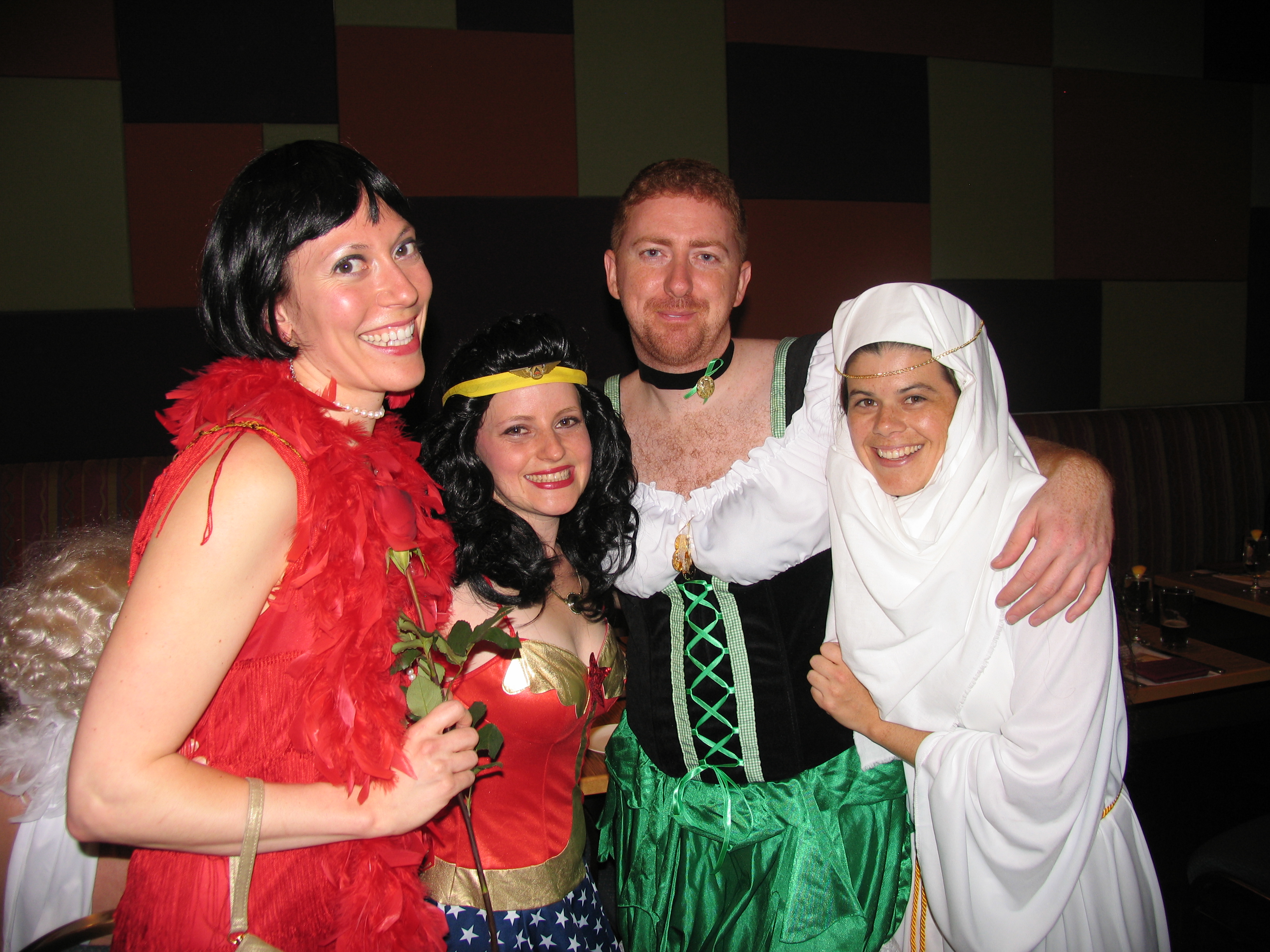
But out of all the good memories I have of you, it’s one of the more recent ones that stands out. It was at my rehearsal dinner and you, ever the good sport, interpreted the Halloween costume dress-up theme in your own special way, showing up as an Irish St. Pauli Girl, complete with short skirt, stockings and padded boobs. Though you didn’t know many of the guests, your outfit broke the ice and you charmed everyone with your humor and wit. Especially my mom. After she went to bed, you told me how much my mother reminded you of your own, how both of our moms were so proud of us, how they “loved the hell out of us.” I never could have known what a generous gift you gave me with those words, how often I’d return to them like a life raft just a short time later, after my mother died.

The funny thing about death is that it teaches you how you want to live. So, here are some specific ways I want to live, as inspired by you: I want to live without fear of being ridiculous, to embrace my wacky side and have fun, to hell with what other people think. I want to thumb my nose at the “rules,” especially when the rules are dumb or silly or a waste of time (a story you told about scheduling fake meetings with a friend so you could reserve time away from your boring corporate job comes to mind.) And I want to live without being ashamed of my (sometimes) crappy taste in music, because every time I blast some terrible pop song on the radio and sing at the top of my lungs, I imagine you, my heavy metal-loving friend, rolling your eyes in mock disgust, because you can’t believe I actually like that song. This, coming from the guy who once (I know, we’re not supposed to talk about it) recorded a pseudo-autobiographical rap song called ‘Ginga Ninja.’

Oh Rory. You were such a bright light. You were so damned funny. You were the smartest guy in the room. And you were a really, really good friend.

Happy Birthday, my friend. I miss you.

1934465_541096995962_1396437_n

The things my mother gave me.

Scan 142120032

Today makes two years. It was two years ago today, on September 23rd, that I received the worst phone call of my life. It was Sunday morning and I was still in bed, my phone in the other room. I heard it ringing, distant, the musical jingle breaking through the quiet September morning. I rolled over slowly, a sense of unease already stirring in the pit of my stomach. It was too early; who could be calling? Not that early, true, but early for a Sunday. The first football game hadn’t started yet. On Fox, Terry, Howie, Jimmy and the gang were still making their predictions about which teams would win, still letting fantasy owners know which probable and questionable players were active.

I lifted myself up out of bed, crossed the room, and picked up my phone. I retrieved the voicemail, a tearful message from my Aunt Sandy, my Mom’s brother’s wife, telling me it was an emergency, telling me to call her, or my Dad, at home. I called Dad. I should have called her.

I think about that moment – that decision about who to call – often. I wish I could go back and redo it. My Aunt would have been gentler, would have been kinder when delivering the news. But it was my Dad that I wanted to talk to. My Dad, hard of hearing, elderly, gravely ill with stage four pancreatic and liver cancer. My Dad, who was incapable of softening the blow. ‘Mom’s dead,’ he said, across the line, distant, emotionless. The bottom fell out.

And so they began. Two years that would shake and stretch and shape me. Two years that would threaten to shatter me. Two years during which – at times – I struggled and fought and kicked and screamed and rebelled against circumstance, insisting upon being OK by the sheer force of my will. And two years during which – at other times – I gave in. Two years during which I almost gave up. Two years that carved a hole in my family, that carved a whole in my sense of who I thought I was.

Today, as I stand on the other side of those twenty-four months, scanning the distance between then and now, thinking about what and who I’ve lost, and what – ironically – I’ve also gained, there’s one image that’s burned in my mind.

10525590_10203354589998704_100421518368571484_n

The image I can’t escape is of the last time I saw my mother. She is standing in the driveway of my parents’ house in Olympia. Rail thin, slightly disheveled, though she had pulled it together quite significantly from her collapse of a few days prior. Pulled it together for me, I suppose. We’ve just hugged goodbye, and after providing her with a list of caretaker referrals to help with Dad, after securing a promise from her that she’ll find a counselor, that she’ll talk to someone, I board the airport shuttle. As I turn to wave goodbye one last time, there’s a look on her face that I don’t think I’ve ever seen: it’s soft, yet sorrowful, with an intensity that’s completely unfamiliar, an intensity that’s very unlike my one-hundred-miles-from-intense mother.

I’ve thought about that moment many times over the last two years. I’ve wondered if she knew then that she was dying. I’ve wondered if she knew that this would be the last time she’d see me, her only child. I’ve wondered if the reason the look was so unfamiliar, if the reason she held me in her gaze so intently, was because she knew this was it, and she was trying to memorize my face. I’ve wondered if, in that moment, she was trying to memorize my face for all eternity.

There are so many gifts that my mother gave me; she was generous to a fault. There were cherished treasures that she bestowed upon me while she was still alive, and equally valuable gifts that I could never have anticipated receiving after she was gone. In addition to the ruby and emerald rings, the gold pieces from her jewelry box, the vintage wardrobe gems like two pairs of knee high Finnish leather boots, a Chloe scarf, a pink hand-beaded Leslie Fay cocktail dress, there are other, less tangible, things I take with me. Lessons about the person I want to be, based on who she was, and who she wasn’t. There are qualities I strive to emulate – her kindness, her compassion, her generosity, her sweetness. There are things I’ll never achieve. I’ll never be as good of a chef as she was, never master her green thumb in the garden. And I’m definitely not as nice as my mother was, not as giving, not as yielding. I’m more stubborn, more argumentative, more selfish.

stub021

But many of the qualities that I admired about my mother also let her down. I can see now that she never took time for herself, never set boundaries, couldn’t say no to the demands of others, even when they were outrageous. I can see how people took advantage of her, and how she let them. I can see how she absorbed every harsh word, internalized every worry, how insecure and how fragile she was. I can see how she burned out, how she couldn’t ask for help, even when she desperately needed it.

People who knew us both tell me that we’re alike, my mother and I. We have the same smile, the same laugh, the same mischievous sense of humor. We look alike and we even sort of talk alike. I’m grateful for all of it. But (I’m sorry, Mom), I’m also grateful for the ways that we’re not alike. I’m grateful that I’m able to set boundaries in order to protect myself, in ways that you couldn’t. I’m grateful that I’m strong enough to say no when something isn’t right for me. And I grateful that, though, like you, I’m strangely resistant to asking for help when I need it, I’m beginning to overcome that. I’m starting to ask. And I’m learning that when I ask, help tends to arrive, and it really does, well, help.

So on days like today – which are often – when I’m missing my Mom so badly that it threatens to overwhelm me, I try to hold on to what I know is true: my mother loved me, she wanted my happiness above all else, and she wouldn’t want me to use something like her not being here as an excuse to give up. She would want me to keep going. She would want me to be strong in ways that she couldn’t. She would want me to embrace my life.

Today marks two years since I lost the most important person in my life. Before I know it, it may be ten, twenty. But what time, what death, what grief can never wipe away are all the beautiful, generous gifts that my mother gave me. And on this day, two years hence, I pledge this gift to you, Mom: I promise to never stop pushing. I promise to take nothing for granted. I promise to be happy in every way that I can. And I promise to do all of these things, even when it’s hard. Even on days like today. Especially on days like today.

Thank you, Mom. I love you. I’m so grateful for everything you gave me.

Until next time, friends.

Scan 142500001-2

Tennis.

I spent a lot of time this past Labor Day weekend glued to television coverage of the US Open. For as long as I can remember, I’ve always found something soothing about the game of tennis. The rhythm of a long rally, the squeaking noise the shoes make as players scuffle across the court, the sotto voce commentary. But the main reason I can’t let a major tournament pass by without at least tuning in is because of my mother.

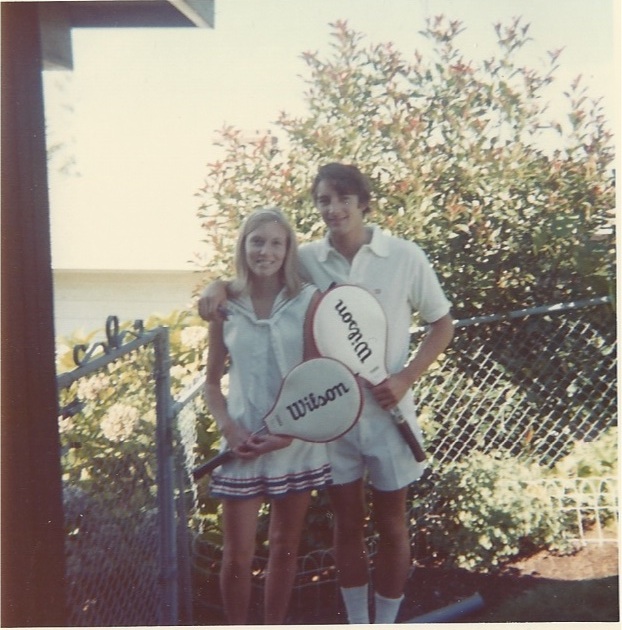
My mom played tennis throughout high school and college, and in her day, she was superb. Though I never got to witness her play when she was at the height of her game, I’ve heard the stories. I’ve seen the trophies and awards she won, listened with rapt attention to the tale of the legendary match where she and her female doubles partner outplayed – and beat – the boys.

We are not Helpless we are women

Throughout my life, I was keenly aware that mom’s biggest regret was the fact that she didn’t pursue a pro career. She certainly wanted to, and from everything I understand, she was good enough to at least give it a shot. But her parents – both successful court reporters – were adamant that she choose a more conventional life, and they pushed her to attend law school. Mom didn’t push back, at least, not hard enough. She went. And she failed out – or dropped out, I was never sure – after her first year at Gonzaga. Mom ended up following in her parents’ footsteps and becoming a court reporter too. Her career was short-lived (she worked just a few years before marrying my dad and moving to Alaska, where she managed his law firm), and I’m not sure that she ever enjoyed it. She suffered from severe anxiety throughout much of her life, and she once confessed to me that she’d get so nervous about the pressure of the job that she’d often throw up before showing up for work.

The reminder of her unfulfilled dream was a constant companion throughout my childhood. It was present when we rose early on weekend mornings to watch breakfast at Wimbledon, present in her obsession with Chris Evert (her favorite player), present in the infamous screaming match she got into with my grandmother during a holiday dinner we hosted at my parents’ house in Olympia, during which years of my mom’s suppressed rage boiled to the surface and the only thing that kept my grandmother from storming out of the house was the ice storm swirling outside, making the roads impassable.

And it was especially present in the fact that my mom was constantly signing me up for tennis lessons, whether I wanted them or not. I was a good kid. Quiet, shy, polite, I earned straight A’s in school and generally didn’t rock the boat. I was my mom’s only child, and a tremendous source of pride for her. I felt the weight of that pride from an early age, and, not wanting to screw it up, I towed the line, and for the most part, stayed out of trouble.

Mom Tennis

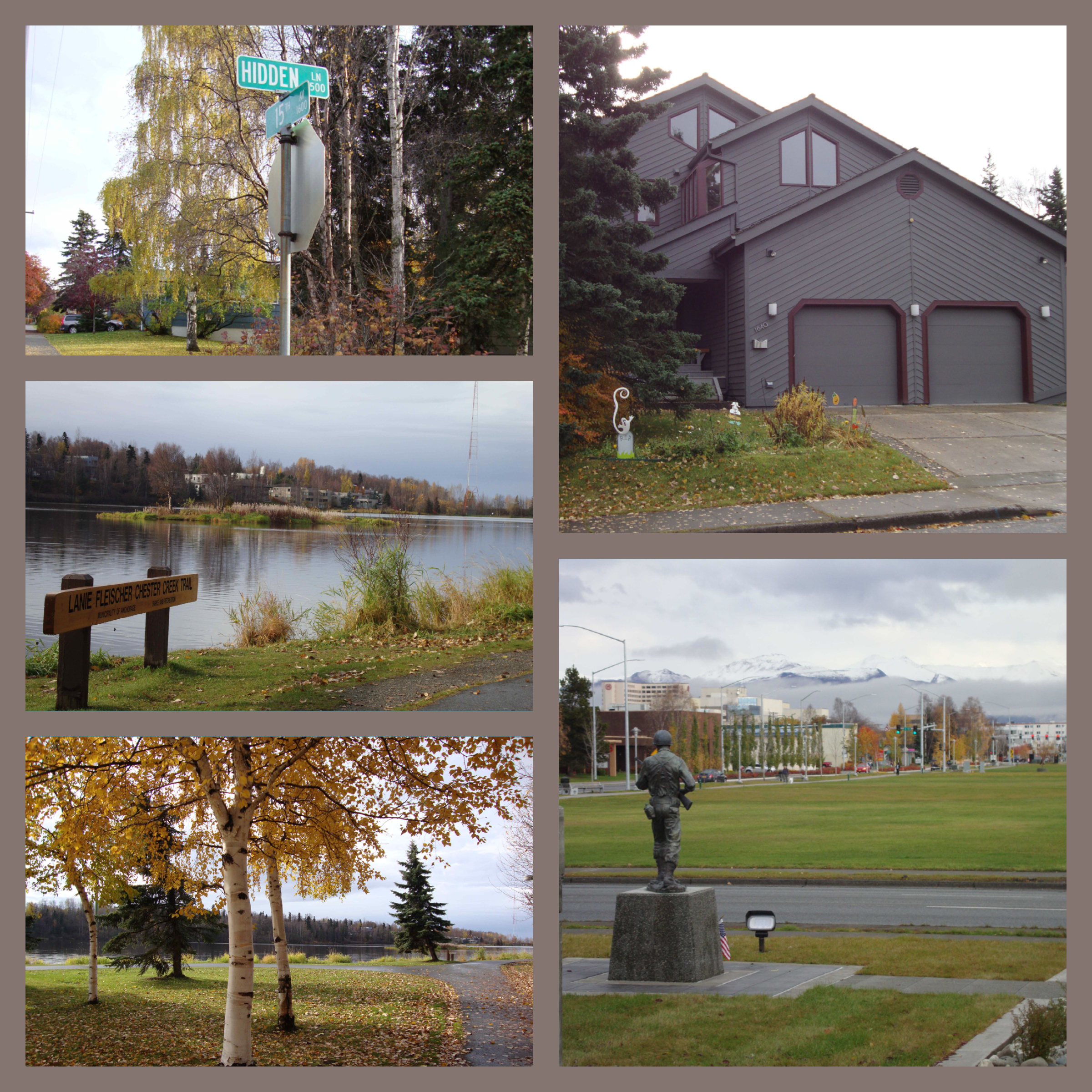
A rare exception was one summer in Anchorage, when my tennis instructor called our house, concerned, because I hadn’t been showing up for my lessons. I was 11 or 12, old enough to walk by myself from our house on Hidden Lane to the tennis courts at a downtown recreational area called the Park Strip, and bratty enough to decide that I’d rather blow off my lessons in favor of killing time at Fifth Avenue Mall with my friends.

Busted, I confessed to my mom what I’d been doing. I felt my face flush with hot shame as I admitted lying to her, telling her that my lessons were going well when I was really hanging out at the food court with my buddies. I prepared for the storm of her anger – after all, I deserved it – but it didn’t come. Mom didn’t yell. It was much worse than that. She looked sad – almost as though she might cry – and so, so disappointed in me. It was as though by rejecting the sport that she loved so much in such a cavalier, spoiled, pre-teen way, I had destroyed her dream all over again. I had let my mom down. And it felt awful.

She never signed me up for tennis lessons again. I went on to dabble in various other sports – volleyball, softball, track and field – but I never got really good at any of them. In my heart of hearts, I was a nerd, a bookworm who loved making up stories, who loved poetry and art, who sang in the choir, who read Shakespeare and imagined myself a regal, corseted, high-born lady in Elizabethan England.

I don’t think my mom ever fully understood my decision to pursue a career in the arts. She didn’t feel the goose bumps I felt when sitting in a darkened movie theater, didn’t know the rush I experienced from standing on a stage in front of a live audience. She certainly didn’t understand the draw of Los Angeles, with its urban sprawl, and smog and traffic and crowds.

My mom and I were very different people with very different dreams. But I think the fact that she lived with the regret of giving up on hers also made her so fiercely protective of mine. Time and time again, she defended my choices to family members and friends who didn’t understand what the hell I was doing. She offered financial support when I struggled, which was often. She sent me flowers on every opening night. And when she did travel to Los Angeles to see me stand up on a stage and tell stories, she was so very proud. And she made sure everyone knew it. Especially me.

Mom frosting cake

I’ve spent the last two years overwhelmed by grief. First, in denial of it, pushing myself to ignore it, throwing myself into work, pretending it didn’t exist. Later, paralyzed by it, unable to make important decisions, unable to move forward with my life. Finally, lately, I’ve been succumbing to it, allowing it to wash over me, to consume me.

But it has only been very recently that I’ve begun to get angry. Angry for letting circumstances that are out of my control dictate my fate. Angry for acting like a victim, for feeling sorry for myself, for sleeping too much, for whining too much, for indulging in my vices too much. And mostly, angry for abandoning my fighting spirit.

Watching the US Open this past weekend made me miss my mom something fierce. But it also made me feel closer to her than I have in a long time. It made me pay attention to her ever-present voice in my ear, telling me to be as brave as she knows I can be, to stop moping, to get off the couch and to fight for my life. Watching the US Open made me remember that the greatest gift my mom ever gave me was her unwavering belief in me. It reminded me that the worst thing I can do – like that summer when I ditched my tennis lessons – is to let her down.

Sometimes it takes something as innocuous as a tennis tournament to remind us that our dreams are fragile, precious, ephemeral things, and if we don’t grab onto them, they can disappear. Many people don’t get to live their dreams, either because they’re afraid to, or because life throws obstacles in their way that they don’t think they can surmount.

I am one of the lucky ones. Despite circumstance, despite pain and trauma, despite grief, I have everything I need to live the life I want, and the only person standing in the way of that is me. And though my dreams might look different than they did when I was 18, that’s OK. Because I’m different, too. The thing that hasn’t changed – that has never changed – is my desire to stand on a stage, or on a set, or behind a camera, or in front of a computer, and tell stories. Stories that entertain, that inspire, stories that have the power to heal.

Thank you, mom, for reminding me how precious my dreams are. I promise that every day, I will continue to fight for them. I promise that I will never give up. I promise to do it for you, and most importantly, I promise to do it for me.

Until next time, friends.

Curtain

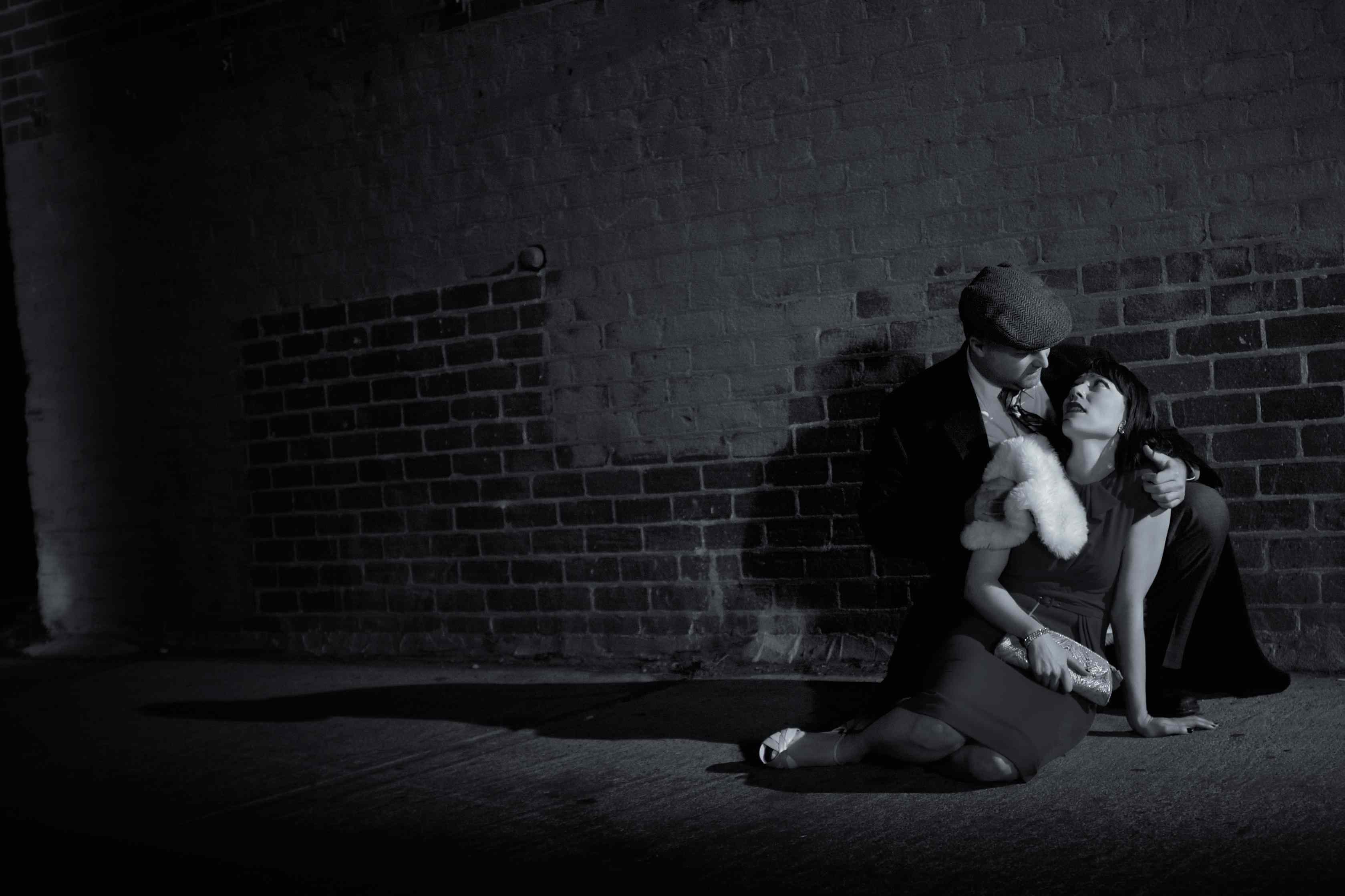
Noir.

SNE010

It was a Saturday morning in early March, and I was helping to run a photo shoot at an Italian restaurant in Burbank. A photo shoot for a play series I was co-producing – a series of film noir-themed one-acts. I had just returned to Los Angeles after spending ten days in the Pacific Northwest on important family business, ten days that culminated in a freezing, cold, bleak weekend in Medford, Oregon, during which we buried my dad.

And now it was back to L.A., back to business as usual. I was already behind – I’d missed the first table read of the plays while sorting through clothing and property at my parents’ house, hadn’t been able to focus on production emails in between taking meetings and organizing funeral arrangements with my sister – so now there wasn’t any time to lose. The photo shoots were a start; black & white character headshots to be used as a marketing tool to promote the show. We’d booked actors in thirty-minute increments and one by one they arrived at the restaurant with their wardrobe and props. Many of the actors were close friends and as they arrived, they hugged me, asked how I was. ‘Fine,’ I said. ‘You know.’

One of the members of our ensemble made a comment, almost off-handedly, about the fact that bad luck seemed to follow me around when I produced this show. ‘Maybe you should stop doing it,’ he said. I flinched, shrugged it off, and kept going.

But in truth, he had a valid point. We were now in the second year of the noir play series, and ever since I’d been working on it, ever since my co-producer – my husband James – and I had developed the concept, bad things had been following me around. In the weeks leading up to year one’s production, our beloved dog succumbed to cancer, and just a few days later, my dad was also diagnosed with the big C, his prognosis terminal.

After dad’s diagnosis, my mother – I think, in a desperate attempt to feel better – booked a trip to L.A. to see the show, took one look at me and promptly fell apart. And when I say fell apart that is a grand understatement. She unraveled before my eyes. She went into an emotional tailspin during which she spent a week holed up in her hotel, too sick to travel, visited frequently by the hotel doctor. I passed the week on high alert, fielding her frantic phone calls, until, finally, she ended up in the emergency room. I kept vigil the entire day, helpless, watching the heart rate monitor as her pulse raced at frightening speed, as she maxed out on anti-nausea meds and still couldn’t stop vomiting, as the doctors were unable to diagnose her with anything other than severe anxiety. They sent her home with a whole slew of Ativan, and the next day she was back in Olympia. The show went on, though my mom never got to see it. And three months later she was dead.

Fast forward to year two of the noir play series, to the aforementioned photo shoot, to March of 2013. My father had just died, succumbing to pancreatic and liver cancer roughly nine months after his stage four diagnosis. Shortly before my mother’s death, my grandmother (my mom’s mom) was diagnosed with Alzheimer’s disease and the shock of my mom’s passing caused her to spiral suddenly and rapidly. She erupted in rage fits and it was no longer safe for her to live at home, so my uncle placed her in a full time care facility. When I visited her the week after my dad died, she barely knew me, though just three months earlier we’d talked on the phone nearly every day, mostly about my mom, about how sad she was, about how she didn’t understand what had happened. Now here she was in a wheelchair, with pink painted fingernails and childish plastic barrettes in her hair, a vacant look in her eyes.

And the show went on. In the space in between my parents’ deaths, in the months where I rarely slept through the night, during the days that every time a number with a 206 or a 360 area code appeared on my cell phone and my heart momentarily arrested (Dad? Are you OK?), I found a play that I fell in love with. It was called Speak No Evil, written by a Chicago-area playwright named Michael Moon, whose work we’d produced in the first year of the series. He had such a fantastic grasp of the noir genre, such a beautiful, lyrical way of writing, I emailed him and asked if he had anything else. And Speak No Evil arrived, a simple, compelling story about a mute street vendor who witnesses a murder, and enlists the help of a down and out private detective to clear his name. I didn’t care what other stories we produced, I wanted Speak to be the centerpiece of the noir festival. In fact, the play touched me so much that it inspired an even greater ambition: to produce it as a film.

And so time went on, filled up with acting rehearsals and directing rehearsals and production duties. It went and went and went and suddenly we were at tech weekend, the weekend that all theatre geeks know as ‘hell,’ because of the long hours in the theatre working out all the stuff that’s less than fun like lighting cues and music cues and scene changes and, well, tech. It was on a Saturday morning in mid-April, the very beginning of tech weekend, that I got the call. My grandfather’s voice on the other line, distant, strained, final, telling me that my grandmother had died. I had known it was coming – she’d been in hospice for weeks – but I didn’t know it would come quite so soon. I didn’t know it would come then. There would be no funeral, just a summer barbecue to celebrate her life, when the weather was better.

So I took the call, and I went to the theatre. And I told no one. Not my friends, not my half-siblings who’d already been through hell with me over our dad. Not even my husband. I kept it to myself and went on with the show. That seems crazy to me now that I did that; that I kept something like that from everyone. But the truth is, I was just tired. Tired of all the tragedy, exhausted from talking about it, tired of re-living the same sad events over and over, of having to manage the reactions and emotions of other people when I told them, tired of the ‘I’m sorry, I have no idea what to say’ look, or worse, the ‘there must be something wrong with you’ look, the look that caused a fellow actor to note that bad things kept happening to me while producing a show revolving around noir – a genre that literally means black – as though I had somehow invited this dark storm cloud to visit me and hang over my head, as though I had unwittingly cursed myself. As though this were all my fault.

I can see now that I kept myself busy to avoid feeling like the world was collapsing around me. I can see now that finding quiet, dark backstage corners to stifle sobs before they became uncontrollable and then going back to work wasn’t normal or healthy. But all I wanted was to do what I loved, to immerse myself in storytelling, to be creative, to find my heart again. All I wanted was to feel normal again. All I wanted was my life back.

So I became an expert. An expert at work, an expert at holding it all together, an expert at being everything for everyone. In a little over a year, I co-produced nine one-act plays, and took on the biggest creative endeavor of my life, Speak No Evil, the movie. While I can admit that the work was an attempt to manage my grief, I remain incredibly proud of the things I accomplished during that horrific year. But I can also see that I took it too far. That, in holding it all together, I covered up uncomfortable truths. I took care of far too many things – and people – that I had no business taking care of. And I never took care of me.

So now it’s another year. And there’s another show. And the show must go on. But this time, it’s going on without me. Because after all that time holding things together, I’m finally falling apart. The thing I never wished for – that grief would catch up with me and knock me sideways – has happened. Without my consent, against my will, it has happened. And while I wish that the grief hadn’t entrenched itself so firmly in my chest, it has nevertheless, found its residence there. I wish this wasn’t the case, but as a beloved teacher of mine once said, ‘so much for wishes.’

This week, thanks to the generosity of a friend, I’ve been passing my days alone in a beautiful home by the sea. A place where I can spend the week writing and reading and taking long walks and lying in bed with the windows open and the ocean waves lulling me to sleep. A place that’s safe and quiet and serene. I know a week isn’t enough time to process and heal from everything I’ve been running from, but it’s a start. Slowing down does not come naturally for me, but life has taught me that sometimes, you have to submit. To give up, and give in. And to have faith that when all the falling apart is over, I’ll be able to piece myself back together – stronger, better – and begin again.

Until next time, friends.

Alley Panorama 2

The same people with different faces.

Ever since I’ve been changing, ever since I stopped abiding by ‘the rules,’ ever since I’ve been less of whatever it was that I used to be, I keep meeting the same people with different faces, over and over and over again.

I would give anything to encounter someone who’s less predictable, less exactly-what-I-expected, less rule-bound and polite and politic. I’m exhausted by people who say the right thing and do the right thing, are nice enough and kind enough but only just enough, just enough to not really be anything.

Just enough is no longer enough. Not for me. Just enough is cold, impersonal, indifferent. Just enough feels like slowly dying.

I want to know who you are. I want to know what you believe in, what – and who – you are willing to stand behind. I want to know about the one thing that gets you out of bed in the morning, the thing that you’d be willing to risk it all for. I want to know what makes your heart beat, what stops your breath, the things you dream about when you’re awake. And yes, I even want to know your flaws, your struggles, your weakest points. Just don’t ask me to fix them.

Life is happening all around us, and I don’t have any more time for people who are not on fire for their lives. Where are the ones who greet the day with enthusiasm, bursting with passion for what’s next? Where are the ones who don’t rely on words alone – because they know that words are nothing but a false promise if not met by action?

Please be different. Please listen, please be aware, please be present. Please be willing to be wrong, to challenge what’s expected, to voice your opinion proudly, even if it means making enemies. Please embrace magic and wonder, please be engaged, be fascinated, please give a damn about something bigger than yourself. Please be alive. Be alive. Be alive.

Please don’t just tolerate me, or tell me ‘good job,’ or (the worst) ‘I’m sorry.’ Please inspire me, provoke me, even, but please, please, please make me feel something. Make me feel something, and I promise you, I’ll do the same.

Whatever you do, please just don’t be more of those same people with different faces. The ones who are everything to everyone and nothing to no one. Please be something more than that, I am begging you.

I am aching for the world to wake up.

Home.

Alaska Collage

“The ache for home lives in all of us, the safe place where we can go as we are and not be questioned.” -Maya Angelou

I want to go home. The problem is, I’m not sure where that is. It’s not Olympia any more, not since my parents died and we sold their house and I packed up my high school bedroom with its lavender walls and blue plastic glow in the dark stars on the ceiling. It’s not Anchorage, where I spent my first fourteen years making happy childhood memories amid snowball fights and sledding and ice skating on Chester Creek. And despite taking up residence for nearly fifteen years in Los Angeles, it’s not really L.A. either.

I’ve been thinking a lot about the concept of home lately, what it is, what it means, how I define it. Is it where we’re from, where we grew up? Is it where our family is? Is it where we feel the warmest and safest? Or is it simply where we live now?

I haven’t felt at home in a while. The last two years of my life have been an intense period during which everything familiar has been ripped away, some of it by circumstance, some of it by my own design.

I have a new home now. It’s still a handful of miles from the ocean but that doesn’t keep it from feeling like the sea. It’s bright and airy with lots of natural light, beautifully landscaped grounds and a patio large enough to do yoga on, a patio that’s begging to be populated by plants. I’ve decorated it in a way that’s very Sarah – furniture made from light-colored wood and textiles in every shade of blue imaginable: teal, turquoise, navy, cerulean, aquamarine. It’s serene and lovely here, and a sense of calm pervades. I feel grounded in this place, and yet I can’t settle in. I can’t shake the feeling that my charming little cottage is a stopgap on the way to somewhere else, some destination yet unknown or undecided.

My whole life, I’ve always gravitated toward the water. Whether it was Cook Inlet in Anchorage or Puget Sound in Olympia or the Pacific Ocean, being near a body of water – something expansive – has always made me feel secure, like I’m not stuck. As though, through a waterway, I’m connected to the rest of the world and if I need to, I can stage a quick getaway. I’m not sure where this feeling comes from, only that I’ve always had it.

PNW Collage

Given that, I suppose it’s not surprising that upon moving to L.A., I fell in love with Santa Monica. I’d go to the ocean as often as I could, taking long walks through Palisades Park, daydreaming with my headphones on. One building in particular captured my imagination immediately, a gorgeous Spanish style manse on Ocean Avenue called El Tovar by the Sea. I’d imagine that when I’d finally made it big, I would buy the penthouse suite and sweeping views of the Pacific would be the backdrop to the glamorous and exciting life that I’d lead there.

It’s funny how your dreams evolve as you get older. While I still love visiting Santa Monica – breathing in the sea air, taking long walks in the park – I don’t want to live there anymore. Not even if someone handed me that penthouse suite on a silver platter. It’s not that I no longer daydream, but the hard won wisdom that’s come with age and the certainty that nothing is guaranteed has caused my dreams to shift and become less pie in the sky, more grounded in the real and the familiar. There’s something about El Tovar by the Sea, about Santa Monica, about Los Angeles in general that has become too sterile, too perfect, too high atop a pedestal, too held at a distance.

These days when I meditate on the idea of home, I think about where I fit in, where I’m allowed to be myself, where people ‘get’ me. I think about what’s most important: the best place to pursue career success, or the place with the greatest opportunities to grab happiness? And is it possible that those two things can intersect, that they can coexist in one space?

I used to think that there was only one path, only one place, for me. I used to be pretty dogmatic about it. But now I wonder if that’s true. Maybe in the words of Joseph Campbell, it’s time to let go of the life I’ve planned in order to have the one that’s waiting for me. Maybe I can have everything I want, but maybe the road to get there is different than I thought. Maybe it’s simpler, easier, more connected to my past. Maybe, like Dorothy, happiness has always been in my own backyard.

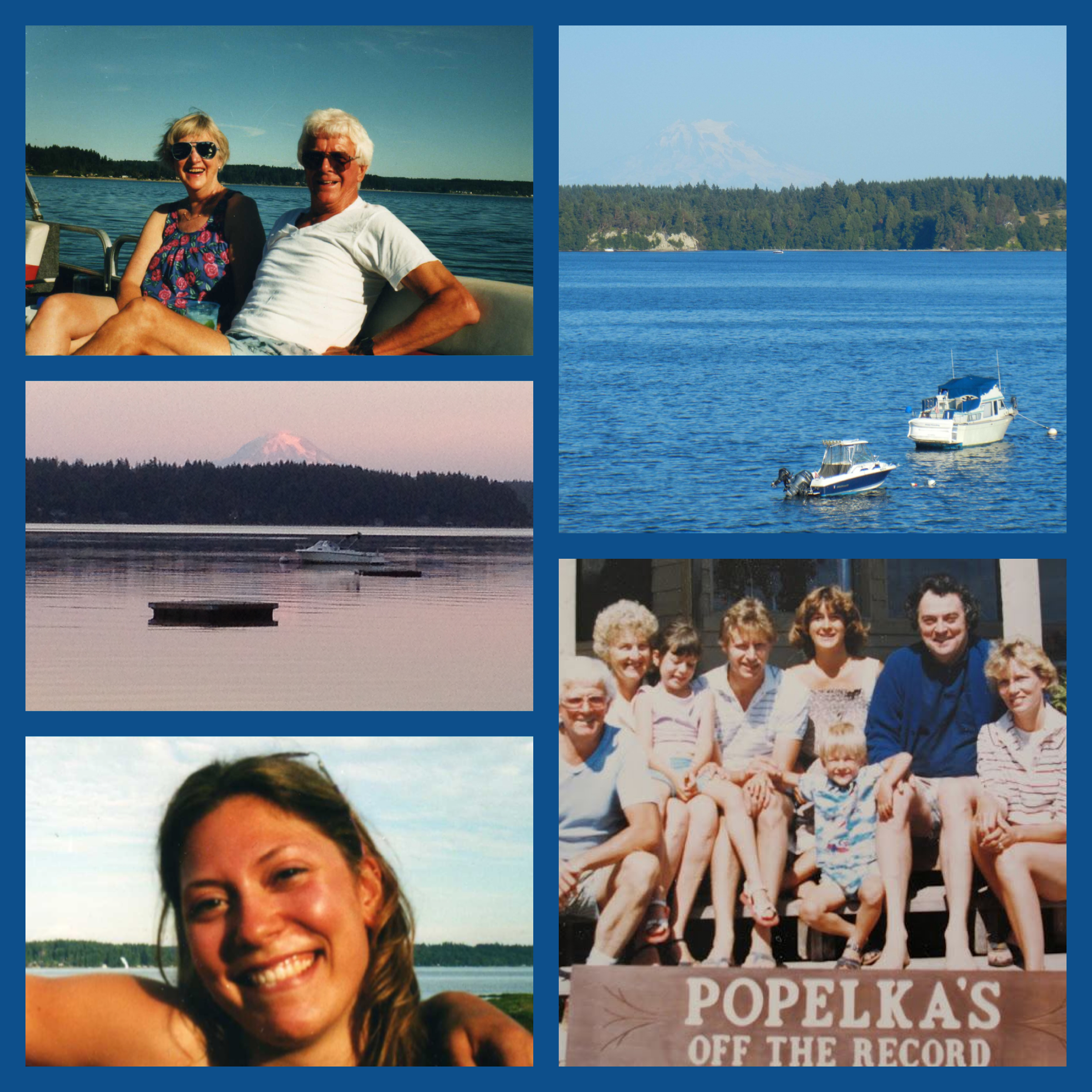
If home is where the heart is, then tomorrow I’m heading home. I’m spending ten days in the Pacific Northwest, dividing time between a waterfront parcel of land on Grapeview Loop Road in Allyn, WA – known affectionately as ‘the beach’ – and Vancouver, B.C. The former is as idyllic as its name implies. It’s the place I came of age, spending every summer swimming in Case Inlet, beachcombing and building bonfires under the stars. The latter is where my big sister lives with her family, and it’s the place that has consistently been my favorite destination for fun and laughter, a picturesque urban center with an international flavor that never ceases to inspire me. The bridge between these two places is Seattle, the city where I was born, the city where my Mom spent many happy days and that she loved so much, the city that I spent many happy days in with her, the city that always makes me feel so connected to her. On my way from point A to point B, I’ll swing through the Emerald City for a quick stay over, just to say hello. It would be impossible not to.

There’s this song I recently discovered – ‘Coming Home,’ by Storyman, an indie band from Ireland. One of the lyrics is stuck in my brain, perpetually on repeat: ‘home is where your heart meets mine.’ It’s simple, and it rings true. But which home? And whose heart?

I haven’t quite figured that out yet. And so, I’ll keep looking.

Until next time, friends.
LA Collage

Father’s Day.

King Salmon copy

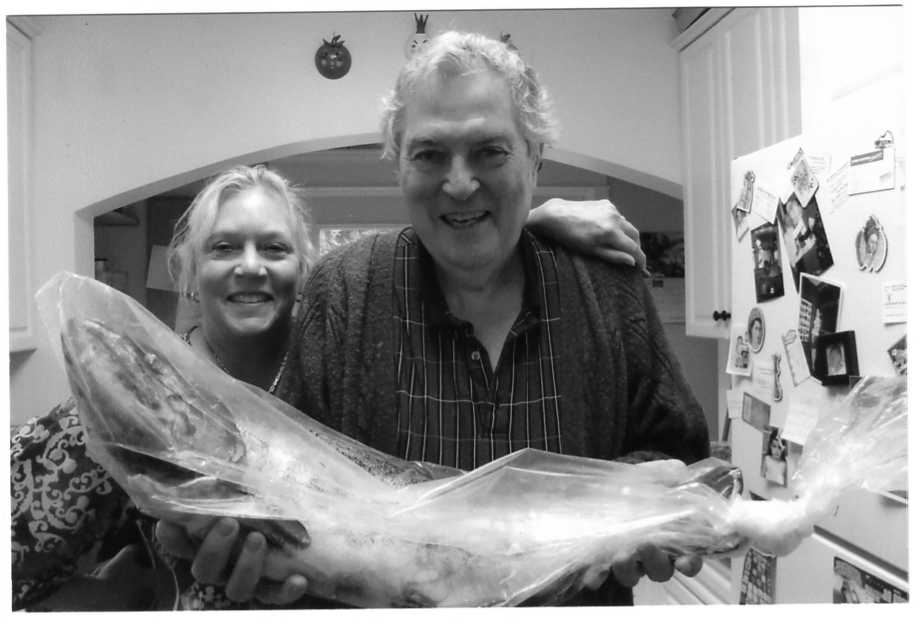
Father’s Day has never been a holiday that I’ve gotten super mushy about. Throughout most of my life, my relationship with my Dad has been layered, challenging, complicated. (Everything you’d want to know about our relationship can be read on my blog titled, Dad.) While my Mom was always the emotional center of my life, my Dad was more like a loving antagonist, egging me on from the sidelines. Year after year, the task of choosing a Father’s Day card was a formidable challenge. So much of the cheesy, cookie cutter sentiment simply didn’t fit.

As I got older, and Dad got frail (and ultimately, sick), I started to see him differently, and I began to appreciate qualities that I couldn’t as a young girl. I started to realize that the reason Dad antagonized me so much and was so brilliant at pushing my buttons was actually because we were way more alike than I cared to admit.

Now that my Dad is no longer here, I remain grateful for every quality – both positive and negative – that I inherited from him. I learned so much from him, mostly from the way that he lived his life. In honor of Father’s Day, here are the most important life lessons I take away from my Dad:

Dad, D, Nora and I

Life is a gamble. As much as we’d like to believe that we can control the outcome of events, the reality is we have no control. Life throws what it will at us, and more often than not, we have to make the best decision we can with the information that we have at the time, and forge ahead. Risk is part of being a human being, so you might as well embrace it. And if the worst thing that could happen happens – you risk it all and lose everything – you must rebuild. If you can do that, and come out on the other side of it, you’ll not only learn what you’re made of, but you’ll also realize that worrying about things you can’t control is a terrible waste of time.

Risk taking is good, but some risks are just stupid. As a personal injury lawyer, one of Dad’s favorite phrases was, ‘That’s an accident waiting to happen.’ There’s a reason I’ve never been in a helicopter or a racecar: because they’re both death traps. For all those thrill seekers out there, more power to you. Skydive or bungee jump or race fast cars to your heart’s content. But any activity where my odds of dying increase exponentially is not one you’ll catch me doing. I’d rather take my risks in other ways, like creative ones.

Keep your sense of humor, even when it gets dark. Especially when it gets dark. No matter how grim things got, Dad always found a way to laugh. When I was little, I used to be a bit horrified at Dad’s macabre sense of humor and his ability to find the funny in stuff that really shouldn’t be funny. Years later, my ability to laugh through cancer, through death, through just about anything, has kept me sane through some trying times. If you can keep your sense of humor throughout the darkest of the dark, odds are, you’ll always be OK.

Dad and Nora Cat in the Hat

Stick to your guns. If you believe in something with all of your heart, then stand up for it, and don’t flinch. You may end up making enemies, but at least you’ll be able to look at yourself in the mirror. This doesn’t mean being dogmatic, unyielding, or unwilling to listen to the other side. It does mean to thine own self be true. Nobody respects a flip flopper.

Sports are life, and who you root for says a lot about you. I watched Dad suffer for years as a devoted Portland Trailblazers fan, a Seattle Seahawks fan, and a Boston Red Sox fan. I saw Dad’s loyalty rewarded when the Sox finally broke Babe Ruth’s curse. I saw my own rewarded last February when the Seahawks finally won the Super Bowl. Sure, it feels good to root for a team that wins, but it feels even better after hanging with that team through years and years of losing and knowing you were there through it all. It can be demoralizing to support a team that loses year after year (the Seattle Mariners, anyone?), but for the loyal fan, hope really does spring eternal. Dad taught me to have no patience or respect for fair weather fans, or fair weather people. And on that note: when in doubt, always, always root for the underdog.

Whether you think you can, or think you can’t, you’re right. Dad moved through life with an air of confidence, and an unwavering belief that no matter what, things would work out in his favor. And you know what? He was almost always right. Now, whenever someone tells me something can’t be done, I can’t wait to set out proving them wrong. Even if it’s something as simple as getting a table at a popular restaurant that won’t take reservations. If you believe you can do it and act accordingly, more often than not, you’ll win. Attitude plus perseverance is a powerful combination.

Mom and Dad at M's law school grad copy

Eloquence is important. If you want to sway someone to your cause, make them feel something. Dad loved to quote Shakespeare and recite poetry, often to the point of sappiness. No matter. He knew how to affect people, and how to move them. He also understood this: if you don’t believe it, then nobody else will either.

Life is a great adventure, or nothing at all. So many people spend their lives being afraid, playing it safe, living a life that’s smaller than what’s in their hearts. Why? We’re all going to end up in the ground or scattered to the wind anyway. There is so much in this world that’s thrilling, that’s beautiful, that’s worth savoring. Grab it while you can. Dad lived with a sort of big picture perspective and a zest for life that is more rare than it should be. And I’m pretty sure he went to his eternal rest with no regrets. He many not have been the perfect man, or the perfect father, and he probably made a few enemies throughout his life. But he also understood that ‘you can’t win ‘em all.’ Stop working so hard to get other people to like you. They will or they won’t, and what other people think of you is really none of your business anyway. To thine own self be true.

Happy Father’s Day, Dad. Thanks for all that you taught me.

Until next time, friends

Young Dad

Blog at WordPress.com.