Better.

Broken Doll B & W

It’s hard to believe it has been two years since the bottom fell out. Two years since I lost my faith in permanence. Two years since I stopped believing that all things that were good would stay good.

Two years (and a handful of days) ago, James and I said goodbye to our beloved Chow mix rescue dog Leo. He was 14 years old, blind, rail thin, his poor doggie body ravaged by cancer. It was heartbreaking to watch him waste away, and even more heartbreaking to make the decision to inject him with the syringe that would induce eternal sleep. Little did I know two years ago that was only the beginning.

A week after that sad day at the vet’s office, an innocent phone call home to wish my Mom a happy birthday – a milestone, her 60th – quickly turned strange. Mom was tense, angry, unfamiliar. She didn’t want to tell me, but I pried it out of her. Dad had cancer. It was aggressive, inoperable, terminal. Dad was going to die.

And from there, it only got worse. Bad news kept coming faster than I could absorb it. The horrifying summer in Olympia where I realized that my Mom, who’d been slipping away, was already gone. Suddenly it seemed that everyone I knew was sick. My Mom, my Dad, my Grandmother, my dear friend Rory, and of course, Leo. One by one, they all left. Died. I started calling this time in my life ‘the vortex,’ referring to the whirlpool that kept sucking me down, down, down, underwater, with no end in sight, with no hope of resurfacing.

But end it did. Finally. People stopped leaving, stopped dying. (I feel compelled to knock on every piece of wood in my house.) For a while, I just surveyed the damage, a witness to it all. Shocked, shaken, yet still standing. For a while, I was paralyzed. I’d always been a writer, but I couldn’t write. I’d always been an actress, but I couldn’t act. Words sounded funny coming out of my mouth. I couldn’t string sentences together. All the creative ways that I’d normally express myself stopped working. I was completely and utterly stuck.

Eventually, I started to get angry. Angry about what had happened, the unfairness of it all. But also, angry about my inability to do anything about it. Elisabeth Kubler-Ross, the psychiatrist whose groundbreaking book On Death and Dying introduced her theory of the five stages of grief, said, ‘Anger surfaces once you are feeling safe enough to know you will probably survive whatever comes.’ I had survived, and as I surveyed what remained of my life, I became angry. I realized I’d been living a life that was smaller than what I wanted, that I wasn’t living up to my potential, that I was making my choices out of fear. And so I started to change.

I could say that life changed me. But I don’t think that’s true. I think what’s actually true is that through painful experience, life held a mirror up to my face, to show me the person that I was supposed to be. Peering into that unyielding looking glass has, at times, been brutal. But it has also been necessary.

Two years after it all started to unravel, the pain is still fresh. Sometimes it’s too intense for words. Sometimes I hate it. But it also drives me. It drives me to write and to create and to work harder than I ever have before. With my faith in permanence gone, the urgency to say it now and do it now and feel it now is unceasing.

Two years later, I could say I’m doing better. And in many ways, that’s true. Living through and dwelling inside the most intense emotions I’ve ever experienced has made me a better writer, a better actor, and a better me. I’m sadder and I’m less sure, true. But I’m also more alive.  I’m more awake.

Two years later, I still try. I still hope. I still dream. I still experience joy. But it’s different now. It’s tougher. But so am I. And so is my resolve. My resolve to never give up.

Two years later, I wonder if I’ll ever truly feel better. And sometimes, I wonder if I’d even want to.

Until next time, friends.

Mother’s Day.

photo 2

This past Sunday was the first Mother’s Day that I actively celebrated since my Mother’s death. It feels weird to say ‘celebrated.’ I certainly didn’t feel like celebrating. But I also felt that it was important not to feel sorry for myself or wallow in my Mom’s absence, but rather to observe the day doing things she would have enjoyed, and to be as happy as possible and as grateful as I could be for all that I still have.

Last year I ignored Mother’s Day altogether – or at least, I tried. It was a pretty loaded and impossible day. Not only was it the first Mother’s Day since my Mom’s passing, it was a mere three months after losing my Dad to cancer, and just a few weeks after my maternal Grandmother succumbed to aggressive Alzheimer’s disease. From the fall of 2012 through the spring of 2013, the hits came hard and fast. So I threw myself into work and felt grateful that when Mother’s Day arrived, I was in the midst of the six week run of a play. We had a performance on Mother’s Day, and that, combined with producing duties, gave me plenty to focus on. I stayed busy, I stayed distracted, and I pretended the ‘holiday’ didn’t exist.

Feeling more proactive and better prepared this year, I made a Mother’s Day plan with Zoe, one of my best girlfriends who had lost her own Mom way too young. We went big. We reserved a table at the fancy pants Ivy at the Shore in Santa Monica – the exact type of place my Mom would have loved. Covered in fragrant florals, it’s a large, bright, breezy space with windows overlooking Ocean Ave. and the Pacific. Everything is overpriced, and obsequious servers in pressed pink shirts and flowery ties abound. Oh so Mother’s Day. Oh so perfect.

Just two days earlier, Zoe had accompanied me to see a friend’s play that was unexpectedly, a sort of emotional primer for the upcoming holiday. The story revolved around a family’s attempts to cope when the matriarch is suddenly afflicted with a debilitating neurological disease. She goes from a vibrant, highly capable and driven career woman to someone rapidly losing control of her speech and body. In one particularly heartbreaking scene, the family’s oldest daughter – who is halfway across the world – places a desperate phone call home on Thanksgiving. She doesn’t want to speak to her grandmother, or father, or sister. Only her Mom. And the Mom, who can barely move or speak, doesn’t think she can do it. But with the grandmother holding the phone to her ear, she manages to stammer through the conversation, finding strength she didn’t know she had to shakily get out the exact words of comfort that her daughter needed to hear.

That scene killed me. And at the end of the play, when Zoe and I both emerged from the theater with red, puffy eyes, I knew it had affected her as much – if not more – than me. Because as much as the fictional circumstances of the play were different than the real events of our lives, there’s something so identifiable about being sick, or sad, or in trouble, and the only person you want to talk to – the first phone call – is to Mom, because you know that no matter what, she’ll be able to make it better. And there’s something so final, so devastating, about no longer being able to make that call.

photo 1

I take comfort in the fact that even though she’s no longer physically here, my Mom is still with me. After all, our parents made us, so how could they not be part of us, inextricably linked? I believe there’s a love there that transcends our physical being, and that’s something that death can’t take away. But I’ll tell you what I miss. I miss the care packages on Valentine’s Day and Easter; care packages that were sent to me long after I was too old to receive them, filled with candy and stickers and silly things. I miss the phone calls on my birthday, when every year without fail, my Mom would sing me a slightly off-key version of Happy Birthday, always ending it by telling me that the day I was born was the happiest day of her life. I used to roll my eyes when she said it, thinking it was so cheesy. Now I’d give anything to hear her say it again. I’d even give anything to have her berate me for not getting enough sleep, or to dismiss a bad mood I’m in by telling me that I’m simply ‘not eating enough protein.’ Isn’t it ironic how all the stuff that used to drive you crazy about a person becomes the stuff you miss desperately once they’re gone?

All things considered, the first Mother’s Day I observed sans Mom was a pretty good one. I shared a lovely and indulgent brunch with one of my dearest friends. The weather could not have been more sunny, warm and Southern California perfect. In the afternoon, I struck the right balance between productivity and relaxation (I’ve always been a work hard, play hard, sort of girl). I was doing great, I really was. And then, leaving the Trader Joe’s parking garage, the friendlier than usual attendant wished me a Happy Mother’s Day, and then– off my face – followed it up quickly with, ‘Are you OK?’ “Yes!” I replied, a little too enthusiastically. He smiled. “I like the flower in your hair,” he said. Ah, bless you, kind stranger, for providing me that small victory. I thanked him and drove off, trying not to cry.

Grief is so funny. It’s rarely what you think will get you – the big stuff – that does it. More often than not, it’s something silly, like the off-handed comment from a well-meaning stranger. Or the restaurant getting your lunch order wrong. Or receiving a piece of news that’s so exciting you can’t wait to pick up the phone and call Mom and then realizing . . . you can’t.

In a way, it’s sort of like every day is Mother’s Day to me since I lost my Mom. I’m never not thinking about her, I’m never not appreciating all the wonderful things she gave me, and I’m never not wishing that she was still here. If you’re lucky enough to still have your Mom, don’t wait for Mother’s Day to hug her, or to send her flowers, or to tell her you love her. Please. Do it for me. Because I really wish that I still could.

Until next time, friends.

usc grad hug

U2.

You’re on the road

But you’ve got no destination

You’re in the mud

In the maze of her imagination

You love this town

Even if that doesn’t ring true

You’ve been all over

And it’s been all over you

It’s a beautiful day

Don’t let it get away

261849_2001079259854_280837_n

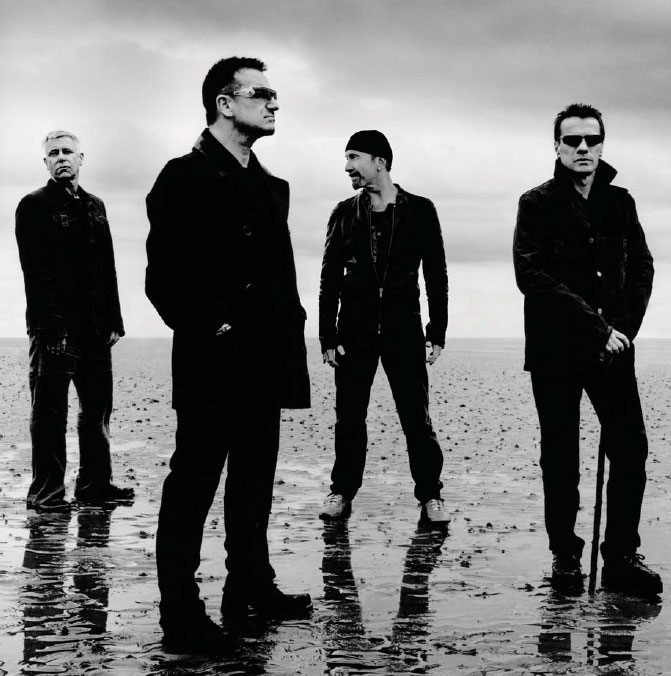
As an ‘80s baby who came of age in the 90’s, I’ve never known life without the music of U2. And I’m OK with that. A lifelong fan of the band – especially their magnetic front man, Bono – their songs are forever entwined with countless formative moments in my life. Whether it was the history teacher that used Sunday, Bloody Sunday to teach us about ‘the troubles,’ in Northern Ireland, the awkwardly sweet high school slow dance to With or Without You, the hostel café in Berlin where strangers from different parts of the world became friends while singing an acoustic version of Running to Stand Still, or driving around the neighborhoods of USC in my friend Ryan’s Volkswagen Jetta, belting the lyrics to Beautiful Day out of the car windows – just because we could – their songs are forever linked to my happy and hopeful past.

And while I’ve been to numerous U2 concerts over the years – each one its own spellbinding– almost spiritual – experience, there is one U2-related event in my life that has eclipsed all the others. It was the time I worked at the Grammy Awards and met Bono – if only for a nanosecond – backstage.

During my sophomore year of college, I interned for an entertainment PR firm in Beverly Hills that shared an office building with the event company in charge of producing the Grammy Awards. The Grammy producer became friendly with my boss, and asked if any of her interns wanted to work the awards ceremony, their main job being to escort the talent through the various backstage pressrooms. Umm, yes. Yes, I did.

This was 2001 – the year that U2 was nominated for a whole slew of awards for their album All That You Can’t Leave Behind, and in particular, their single Beautiful Day. I knew there would be a ton of security around the band, I knew they’d be hard to get to, but I also knew that this was my chance. I was going to meet them, or at least, Bono, if it was the last thing I did.

The week of the Grammys came. At a volunteer orientation, I let the powers that be know what a huge fan I was. Unfortunately, a high profile band like U2 already had ‘people’ to take them through the pressrooms. But, U2 would be doing a sound check at Staples Center the day before the awards ceremony. Would I like to attend that? Oh.My.God. YES.

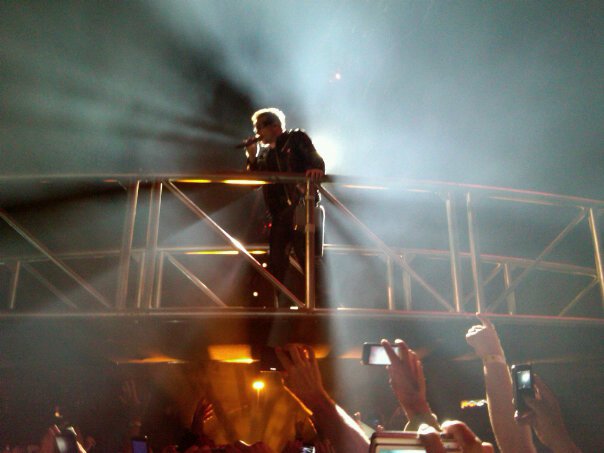
I’ll never forget walking into that stripped down, empty arena, press pass swinging around my neck, my roommate Kate in tow, both of our eyes wide as saucers as Bono, short in stature but big as life, took the stage and started cracking jokes with the band and the crew. No big deal, just business as usual. The band played Beautiful Day a couple times to make sure everything sounded alright. It did. I could have died right then, one of only a handful of people witnessing a private U2 concert. All in all – it probably only lasted about twenty minutes. But it. Was. Magic.

u2-in-concert

The actual Grammy ceremony and the nanosecond in which I met Bono, wished him congratulations and shook his hand when the band came backstage after winning the Record of the Year award for Beautiful Day was so impactful that I wrote a performance piece about it. It was a ten-minute monologue that I performed as part of a solo performance workshop during my senior year at USC. I called the piece Moxie, in which I recounted the night of the Grammy Awards through two dueling characters: Sarah (me) and Moxie, my braver, bolder, sassier alter ego who, rather than stammering like some idiot groupie, would have ever so coolly finagled an invite to the after party, hung out with the band, and become Bono’s bestie for life.

Thirteen years after that magical Grammy week, I still battle with the duality that I wrote about in Moxie. There’s the person that I show the world, and there’s the person that I know that I am, deep down inside. Though the disconnect between the two is shrinking as I get older and more confident, my ongoing struggle continues to be to challenge myself to be braver, to take more risks, and to live life on a larger scale. Essentially, to be more like Moxie.

Tomorrow – May 10th – is Bono’s 54th birthday (and perhaps coincidentally – or not – it is also the birthday of my friend and sound check buddy, Kate). So, in tribute to one of my musical idols and to a band that I’ve loved my whole life, I want to publicly say thank you. Thank you for the music. Thank you for providing the soundtrack that has helped shaped my life. Thank you for reminding me that even if I Still Haven’t Found What I’m Looking For, that’s OK. And thank you for the following lyric from that award-winning song; a song that’s all about keeping the faith in the face of despair, that no matter how bad things may seem, we are blessed with so much beauty all around us. A song that whenever I’m feeling a bit down, I return to:

See the world in green and blue


See China right in front of you


See the canyons broken by cloud


See the tuna fleets clearing the sea out

See the Bedouin fires at night


See the oil fields at first light


And see the bird with a leaf in her mouth


After the flood all the colors came out


It was a beautiful day


Don’t let it get away


Beautiful day

Touch me


Take me to that other place


Reach me


I know I’m not a hopeless case

What you don’t have you don’t need it now


What you don’t know you can feel it somehow


What you don’t have you don’t need it now


It was a beautiful day

Until next time, friends.

u211

Faith.

photo-5

The dictionary defines the word faith as “belief that is not based on proof,” and “confidence or trust in a person or thing.” Faith is unscientific. More often than not, it is identified with religion and a belief in God.

My whole life, I’ve been sort of ambivalent about religion. Both of my parents were Catholics, though my Dad was much more devout than my Mom. Mom bore the unfortunate scars of Catholic school-inflicted trauma. She’d frequently recount tales of nuns that were so terrifying – routinely smacking their students with rulers, preaching of fire and brimstone – that she’d pretend to be sick so she wouldn’t have to go to school. Mom lived in fear of those nuns, and though she eventually returned to the church, that fear created a tension between her and Catholicism that stayed with her throughout her life.

So, between a mother that was skittish about religion, and a father who, while a believer, preferred watching sports on Sundays to going to mass, church attendance throughout my youth was sporadic at best, and mostly reserved for holidays like Christmas and Easter. Though I always felt pretty comfortable in the church, as I got older, my liberal politics – particularly my support for gay marriage and a woman’s right to choose – created a disconnect between my beliefs and the Vatican that I couldn’t reconcile. So I mostly stayed away.

As a liberal, I have a lot of friends who are atheists: a belief that I respect. I think it’s actually quite brave to believe that this life is all there is, and when it’s over, that’s it. But to be completely honest, that idea terrifies me. I find comfort in the idea that our souls carry on beyond the lives of our bodies, and that our spirits are so much more than our physical being. If you’ve ever been with someone you loved when the life passed out of them and seen that they simply weren’t there anymore, you know what I’m talking about.

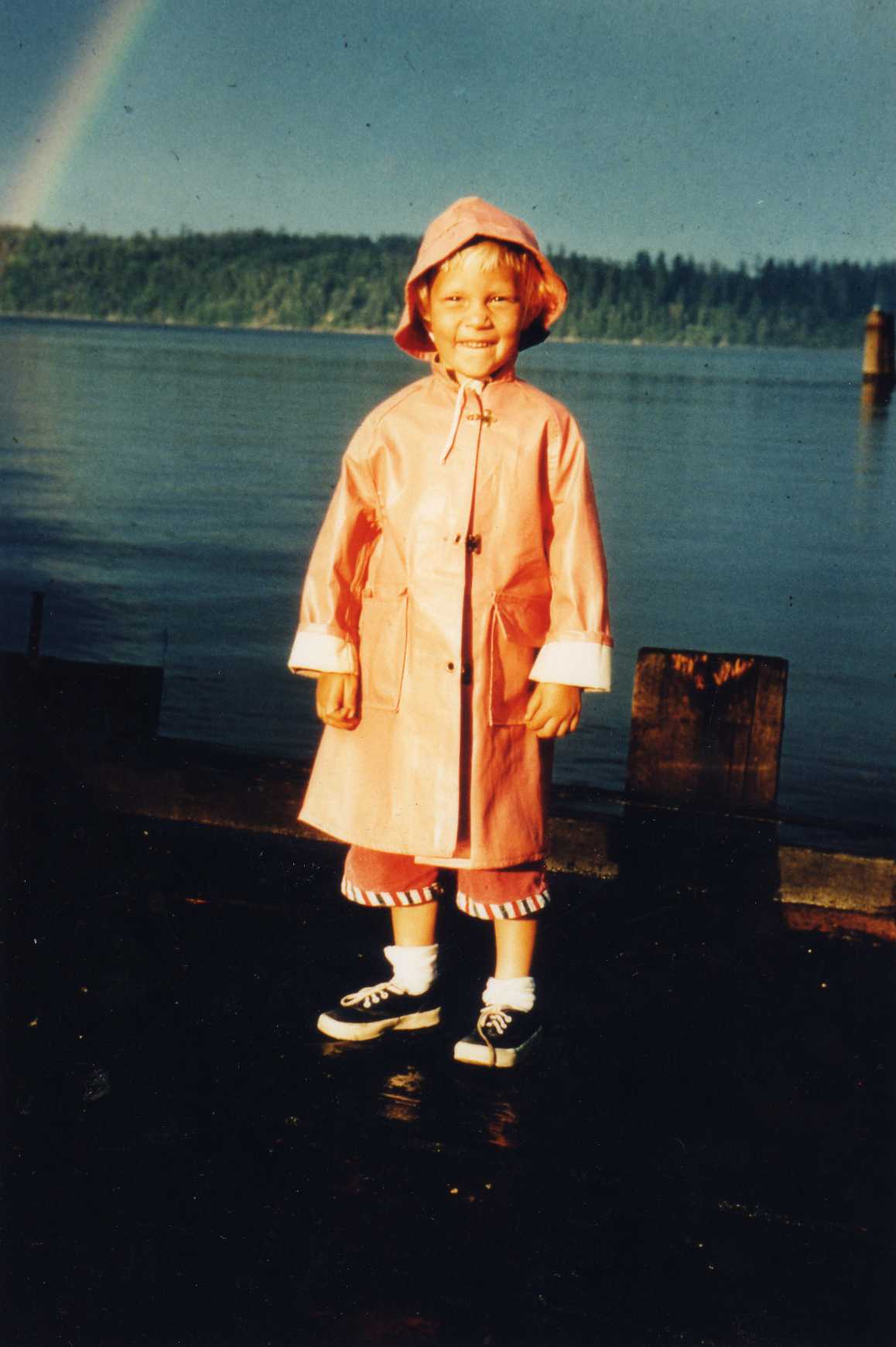
September 29, 2012 was the date of my Mom’s memorial service. It was an informal waterfront gathering in Allyn, WA, on a parcel of land that’s been in my Mom’s family since the late 1950s. It’s a sort of family compound (my Grandfather, Aunt and Uncle all still live there) that we simply call ‘the beach.’ Despite spending the first fifteen years of my life with a permanent residence in Anchorage, Alaska, I essentially grew up at the beach, as did my Mom, and my Uncle Glenn. It was my Mom’s favorite place in the whole world and the only fitting place to hold her service.

That evening, sitting on the deck of my Grandparents’ house starting out at Case Inlet, I was struck by how beautiful everything was. It was an uncharacteristically warm, clear day for late September in the Pacific Northwest. The sound was flat as glass and reflected the heavens like a mirror. An enormous full moon gleamed bright white, hovering over a big-as-life Mt. Rainier. All was so calm and quiet, you could have heard a pin drop. And as I sat and stared out at the sound, for the first time in the weeklong chaos following my Mom’s death, I felt a sense of peace. I knew that she was here, that she was with me.

The skeptic in me immediately chimes in that I wanted to feel her with me, and that, of course, is true. But I simply can’t explain the power of that moment. It was as though the sea and the sky wrapped me up and held me in a warm blanket, and through the tremendous beauty of my surroundings and the almost trance-like calm that came over me, I could feel my Mom whispering to me, “I’m here. I’m O.K., Sar. I’m home.”

But the most powerful exchange I’ve had with my Mother since she passed on happened last Christmas, and it’s something I’ve told almost no one, and certainly not in as great of detail as I’m about to recount here, because it’s so incredibly personal. I was at the beach, and – as usual – staying in a mobile home on a piece of property adjacent to my Grandparents’ beach cabin. The mobile home and the piece of land used to belong to my parents but was willed to me after their deaths. And while I’m grateful for the inheritance, truth be told, I hate that trailer. My Mom inhabited that thing during the darkest period of her life, and the energy it contains is heavy and oppressive and oh so sad. Some joyful day I will raze it to the ground and build a new home in its place. But, I digress.

The trailer is also – until the perfect summer day meets my Uncle and I finding courage enough to scatter them – the temporary home for my Mother’s ashes. Whenever I stay there, I talk to my Mom. Sometimes, I hold the box of ashes in my arms and hug them.

But on this particular day – last Christmas Eve – I had hit a serious wall. After more than a year of being in survival mode, of moving from one crisis to the next, of working so very hard and keeping myself so very busy as a distraction from the weight of all the emotional baggage I’d been carrying, I finally, finally hit zero. I simply couldn’t pretend to be OK anymore. I’d arrived at a place of overwhelming hopelessness and despair. I knew I needed to change, but I didn’t feel strong enough and I didn’t know where or how to begin.

And so I cradled the box containing my Mom’s ashes and I wept. This emotional actress has cried a lot of tears in her life, but I have never, ever, cried like that. Uncontrollably, unceasingly, just this river of emotion. I didn’t ask, I implored. I begged. “Mom,” I sobbed, “I don’t know what to do. I am so scared. Please help me. Please tell me what to do. Please, Mom.” I have never been more humble. I have never been more afraid. And I have never wanted my Mother more.

I don’t know how the universe works. I don’t know if my Mom heard me that night, or if I was just crying to myself. But I do know that in my darkest moment, I asked for help and then help started to arrive. It wasn’t in the form I wanted. It arrived in a way that wasn’t pleasant; help arrived in the form of an unseen hand that grabbed me by the collar and shook me hard and slapped me across the face and screamed, “wake up!” It was a hand that pushed me through pain in order to make it clear that the only way out was through, that in order to live, a part of me had to die. It was gut-wrenching, but I can see now that it was what I needed.

Four months after that dark, dark Christmas Eve, my healing has been dramatic. I still have a steep mountain to climb, but I am more optimistic, more creative, and less afraid. I am making my choices out of hope now, rather than out of fear. I’m learning to trust myself again.

I don’t know exactly where I come down on the God question. But if faith is a belief in something that can’t be seen, then I have it. And time and time again, over the last two years, when I’ve stepped into something having nothing but faith, that faith has been rewarded. I’ve seen and felt too much not to believe that there’s a force out there that’s bigger than me. A force that’s compassionate, a force that wants me, you, us, to be our highest and best selves. I don’t know if that’s God or the universe or magic or what. All I know is what I’ve felt in the deepest reaches of my soul, and in the darkest moments of my heart. That’s my truth. I don’t need it to be anyone else’s, but it’s mine.  And now I’ve shared it with you.

Until next time, friends.

stub039

The price.

For the last several months I’ve been meditating on a big idea. A vast, multi-faceted idea. An idea that can be approached from different sides and attacked from numerous angles. An idea that for me, as an artist and as a creative being, is on par with questions like ‘What is the meaning of life?’ ‘What’s my higher purpose?’ and ‘Why are we all here?’

I don’t think I can tackle the question weighing on my mind in one post. It’s too big. It will probably become a recurring theme in my work (echoes of it appear in my blog, Broken), or in a series of posts. I’m not sure yet.

But, to begin. What I’ve been puzzling over is this: in order to create great art, is suffering a necessary, and in fact, inevitable, part of the process?

Our history is rife with visionary creators who harbored broken souls. Tennessee Williams, Vincent Van Gogh, Sylvia Plath. More recently, Heath Ledger, Phillip Seymour Hoffman. The talented and tortured musicians who are members of that infamous 27 club: Jimi, Janis, Jim, Kurt, Amy.

There’s no doubt that among the gifted and the sensitive, there’s a proclivity toward addiction and self-destruction. But why? Don’t mistake me; I’m not suggesting that in order to be a great artist (or even a mediocre one), alcoholism, drug abuse, depression, even suicidal tendencies, are a prerequisite. If anything, this toxic and destructive behavior produces inertia that stands in the way of the creative process. But the idea that I keep coming back to is this: as artists, we suffer more than the rest of people. We feel things more exquisitely. In order to be visionary, we must be honest to the point that it’s painful. We must be willing to expose our most private, secret parts, our deepest vulnerabilities, and the darkest parts of our hearts. We must walk into the full range of human emotions open and unguarded.   And for that, we pay a hefty price.

I have a uniquely personal experience with the idea that the act of creation produces suffering, and it’s the reason I’ve been meditating on it at such great length. Over the last year and a half, I’ve lost three of the most important people in my life in dramatic fashion. And I lost not only their physical presence, but also something much deeper and more profound. Through their deaths, I’ve been faced with hard truths about my family that I didn’t want to know. Truths that have shaken and shattered my foundation and left me questioning everything I thought I knew: my childhood, my relationships, my history, and my very identity.

But here’s the gift. When I finally, recently, landed at zero, I became more creative. My writing got better. Ideas started clicking, and synapses started firing in a way they never had before. I found myself suddenly harnessing an authority that I’d never owned before; an authority that I’m not only compelled to share with others, but an authority that I have to share in order to survive. I know this like I know the color of my eyes or the place that I was born.

All human beings suffer. It’s inevitable. We make terrible, tragic mistakes. We experience great pain. We love deeply and we lose profoundly. Most people don’t walk into these emotions willingly. They avoid them because they’re painful, and only experience them as the inevitable by-product of being alive. But as artists, we wade into the most intense human experiences willfully, and with abandon. We welcome the pain, the joy, the agony and the ecstasy. We say bring it on. We want to feel everything. But sometimes we feel too much. Enter booze, drugs, sex, crazy, destructive behavior, in order to numb the pain. And that’s when we get into trouble.

Speaking from personal experience, it’s incredibly difficult to put my heart on the line and my grief on display in such a vulnerable way without becoming a little fucked up and unhealthy about it in the process. The intense feelings I’ve been wading into and moving through have made me feel closer to Tennessee and to Sylvia and to Vincent and to Kurt. I understand them better. My gift and my curse is that the hole in my heart is only filled through sharing my very personal story with the world. And yet to sit in those feelings without letting them swallow me whole is the great challenge that I’m still trying to sort out. The powerful conundrum that we face as artists is that our very lives depend on telling our stories – honestly, openly, nakedly, no holds barred – and yet the act of doing so is so dangerous to our psyches that it threatens our survival. It is the ultimate Catch 22, the tightrope we must all walk.

And so, my fellow poets, beautiful dreamers, dear friends, brave and broken souls, I invite you to join me in meditation on this question: how do we do what we must do, what we were born and put on this earth to do, without allowing it to destroy us?

It’s an open dialogue, if you’d like to have it.

Until next time, friends.

Bye bye, BlackBerry.

photoI have officially entered the ranks of people living in 2014:  a week ago, I bought my first iPhone.  As much as I love the conveniences that my sparkling new 5s has afforded me, it was not easy for me to part ways with my dinosaur of a smart phone.  Call me sentimental, call me stubborn, call me touch screen averse – all true.  I will admit to being slightly irrational for holding on to it for so long, but damn it, I loved that phone.

I got my BlackBerry Tour just over 4 years ago (4 years!  That phone was indestructible. I am convinced that it could have survived a nuclear holocaust).  Purchased at a Sprint store in Tacoma, Washington, it was a birthday present from my Mom and my first ever smart phone.  My plan came with a generous Boeing discount, because, in the words of the friendly (Yes, friendly!  Because everyone is friendly in the Pacific Northwest) Sprint employee, ‘everyone here knows someone who works for Boeing.’

It may be pretentious and kind of weird to personify a phone, but over the last four plus years that BlackBerry was as reliable as any of my besties.  It traveled with me to London, Paris, Chicago, New Orleans, Phoenix, Amsterdam (to name a few), and all over the Pacific Northwest from Vancouver to Seattle to Olympia to Medford, Oregon with stops in between.  It was a vital tool in coordinating both creative endeavors (co-producing several plays, as well as my first film) and crisis management (planning details of my parents’ memorial services, fighting a bad case of identify theft, troubleshooting an insurance nightmare after a rental car break-in in Chicago).  Through it all, my phone was there, and with it, the ability to send lighting fast emails and text messages on my beloved keypad.

The truth is, I’m still a bit of an analog girl living in a digital world.  I love the smell of books and I’d rather hold one in my hand than read it on a Kindle.  I find sublime happiness in flipping through a glossy magazine.  And I’m convinced I do my best writing pen to paper, rather than fingers to keyboard.

Maybe it’s for these reasons that I resisted upgrading the technology of my phone.  Maybe (definitely) there’s a great deal of sentimental value attached to that pocket computer given who gave it to me and where it came from.  Maybe after all we’ve been through together, BlackBerry, it’s just hard to quit you.

But like all good things, this too had to come to an end.  For years, my phone was the little engine that could.  But when the battery started to go and I had to be plugged into a charger for any conversation lasting longer than 3 minutes, I knew it was time to say goodbye.

So bye bye, BlackBerry.  Bye bye generous Boeing discount, keypad and the beloved ‘ding’ you made whenever I received a text message.  Hello Instagram, super fast internet, convenience, and (gulp) a real cell phone bill.  You may be gone, old friend, but you’ll never, never be forgotten.

Until next time, friends.

Ghosts.

stub020

Grief experts will tell you that with time, eventually you’ll get to a place where the memory of a lost loved one will make you smile and think of happy times, rather than dwell on the pain of the loss.  How long this takes is, understandably, unique to the situation, and to the person who has suffered the loss.

It has been a year and a half since I lost the most significant person in my life, my Mom, and I’m not there yet.  The passage of time has helped – the nightmares that used to come frequently now occur only once every so often and they’re less wrenching and raw than they used to be, and certain triggers like a photograph or a song or a movie don’t affect me as much as they used to.  But there’s still that ever-present ache that tugs at my insides whenever I think of her.  And I’m never not thinking of her.  I keep myself busy and distracted so that for a time, I can forget.  But, like a shark that has to keep swimming in order to breathe, I have to keep moving, or I will drown.

Unlike other loved ones that I’ve lost, there’s very little peace to be found around my Mom’s death.  She haunts me like a wounded ghost, crying out for my help.  Help that I wasn’t able to give her when she so desperately needed it.  No matter how many people, especially those with intimate knowledge of the situation, tell me that I shouldn’t feel guilty or hold myself responsible for her death, I can’t help but think what if?  She was closer to me than anyone else in the world.  She trusted me; she told me secrets that she never told anyone else, secrets that I, in turn, will never tell.  In many ways, from a very young age, I was often the parent, and she was the child.  She took care of me, but I took care of her too.

caramel apples

But for the last year or so before she died, and in particular, the four months between my Dad’s cancer diagnosis and her death, I didn’t understand her behavior.  It was crazy, it was irrational, and it scared me.  She would send me emails at 3 a.m., rambling on about one nonsensical thing or another, she wouldn’t shower for days, she refused to eat and her body became rail thin, and worst of all, she barely seemed to know who I was.  The most terrifying thing of all was the blank stare, as though she was looking through me, (me, her person) and I didn’t exist.  Then the phone calls came, hysterical.  ‘Mom,’ I said, ‘I think you’re having a nervous breakdown.  I’m worried.  I think you need to talk to a professional.’

I put the resources in her hands but I didn’t make the calls.  I left it up to her, and of course (I can see now), she didn’t and couldn’t do it.  She told me that she had found someone, a psychiatrist, but when I looked up the doctor’s name online and couldn’t find any record of her, Mom said that she was ‘really new,’ to her practice.  I knew she was telling me lies; that she’d made up an imaginary doctor to get me off her back, but what could I do?  What should I have done?

It’s those questions and those relentless what ifs that will drive a person crazy.  I was my Mom’s best friend and she was mine.  She leaned on me so much throughout her life, but when she needed me the most, she pushed me away, and slammed the door in my face.  And even worse, I let her do it.  Was she suffering so much that she didn’t want me to intervene, and she just wanted the pain to be over?  Or did she desperately want my help but was trying to protect me, and she just needed me to push harder and to be tougher and to not take no for an answer?  These are the questions in which my nightmares take root.

me and mom kitchen

Recently, I was in New Orleans to celebrate my sister Marion’s birthday, and we had our palms and tarot cards read by a lady named Miss Irene.  Miss Irene is 86 years old and has been reading cards since she was 16, a total of 70 years.  She looked at some lines on my palm and told me that I’d lost a lot of people that I loved and that they were now my angels watching over me.  Be skeptical if you want to be – I am – but I’m telling you, this lady was no joke.

I wonder:  when will the ghost that’s haunting me become the angel watching over me?  When will the good memories of my Mom – of which there are so, so many – replace all the pain and the guilt and the terrible, relentless what ifs?  We were so very different in so many ways and yet, we were the same.  No matter how much I’m my own person, for the rest of my life, she’s in me.  I am her and she is me.  There isn’t a moment in the last year and a half that she’s been gone where I haven’t wondered, ‘What would Mom do?’ or ‘What would Mom think about this?’  There are times when I’ve done exactly what she would have wanted, to honor her, and times when I’ve deliberately acted out and done something she would have hated, like a rebellious teenager out to assert my independence.  No matter.  She is always, always top of mind.  Being as kind, as compassionate, and as lovely as she was is my greatest aim, and avoiding her pitfalls is my greatest challenge.

For better or for worse, my Mother – the way she lived and the way she died – is the ghost that I am living with.  Pain aside, maybe it’s not such a bad thing to be haunted.  At least, as a ghost, I won’t forget her.  She is always, always with me.  She is the thing that pushes me to be better.  She is the thing that threatens to destroy me.  She is the thing that I will never stop chasing, and the reason I will never stop striving.  The source of the ever-present ache is this:  no matter what I do, it’s impossible to make a ghost proud of you.  It’s impossible to make a ghost happy.  I know that.  But I can’t, and I won’t, stop trying.

Until next time, friends.

Mom and Eadie

Familiar.

It’s funny the little habits that you get used to.  The everyday comforts that make up your daily routine; things you don’t really notice until they’re gone.  The gym is one of those comforts for me.  I’m a person who never stops going – I’m always working, juggling projects, tackling a to-do list that continually rolls over – and exercise is a crucial tool I use to not only stay healthy and feel good about myself, but also to manage stress and to release the tensions that build up in the course of my busy life.

The other day I found myself working out in an unfamiliar gym.  It was weird.  All of the equipment was different and suddenly I didn’t know which settings to put the machines on or how much weight to lift.  I wasted a lot of time trying to figure out what I was doing, all the while trying to look like I knew what I was doing so that some testosterone-fueled meathead didn’t offer to help me.  Ugh.

Wandering around this unfamiliar place, a song I always skip on my iPod (because it’s too damn sad) came on, and suddenly it was a year ago and I was back in Olympia.  After our Dad died, my sister Deirdre and I spent a week camped out in the house he shared with my Mom.  We sorted through old books and music and photos.  We did everything from ordering flowers to placing obituaries in newspapers to picking out gravestones to meeting the lawyer, to booking travel to Medford, Oregon for the memorial, to figuring out how we were going to transport Dad’s ashes to said memorial (that is a story in and of itself), and about a million other little things.  I spent a couple days essentially living in my Mom’s closet, going through piles of clothes and jewelry and beauty products, and her epic collection of Stephanie Johnson bags that I’d given her over the last eight years.

We worked hard and it was sad but it also felt good to work, to do stuff.  We’d collapse each night and wake up with the sun each morning, the to-do list never ending.  We’d talk over coffee first thing in the morning and review the day and write absolutely everything down because our brains were so frazzled with overwhelm from impossibly hard jobs and the utter emotional exhaustion of sorting through a house filled with a lifetime of memories.

After several days of this, I hit a breaking point.  The never-ending freezing February Olympia rain made the thought of running outside unappealing, but I knew I had to exercise or I was going to lose my mind.  So I told Deirdre I was taking a break from the vortex (our term for this weird, disorienting time in our lives and the Olympia house in particular; time disappeared inside the vortex) and getting a guest pass to the local 24 Hour Fitness.

And there I was.  In a gym full of unfamiliar equipment, unfamiliar faces.  My Dad had a membership there and saw a trainer 2-3 times a week until very close to the end of his life.  Dad’s trainer’s name was Dave, an exceptionally wonderful soul who, when he found out that none of Dad’s kids were able to get to Olympia for Thanksgiving, delivered a turkey to his home so that he wouldn’t miss out on his Thanksgiving meal.

I wandered around the gym, wondering what type of exercise Dad could possibly do when he was so sick, wondered at Dave’s patience, wondered if I should ask for him so that I could meet this man who’d been so kind to my father, but also knew if I met him I’d break down instantly and I couldn’t do that because I was barely, barely holding it together.

I wandered around the gym like a zombie, tried and failed at a few machines.  I finally settled on a treadmill because that I knew how to do.  And I ran and ran and ran.  And that song that I always skip came on my iPod, with lyrics about trying your best and not succeeding, about losing something you can’t replace, about learning from mistakes (fuck you, Coldplay) and this time I decided to let it play.  I can only imagine what I must have looked like.  Between the endorphin release of the run, and that stupid song and fighting so hard against the vortex that was sucking me in. Scanning the gym in this unfamiliar place, looking for my missing father (did I somehow think he’d still be there, that I’d find him?), in a town that used to be my home but was so far away from home now.

I don’t know how long I ran.  I was exhausted, I was weeping, I was drenched in sweat, but I couldn’t stop.  I knew that back in the vortex more sad jobs were waiting and I didn’t want any part of them.

There’s a lyric from a new Ingrid Michaelson song that as of late has been running through my head:  I’m a little bit home, but I’m not there yet.  That’s how I felt in the vortex.  That’s how I felt in that 24 Hour Fitness in Olympia.  And that’s how I felt in the unfamiliar gym the other day.  I’m a little bit home, but I’m not there yet.

So I guess I’ll keep running.

Until next time, friends.

February.

Oh February, what a month you’re turning out to be.  I’ve experienced overwhelming joy and crushing loss, sometimes in the same day.  I’ve grieved for my family.  I’ve grieved for my childhood.  I’ve grieved for things I’ve lost which can’t be found again.  I’ve grieved for things I’ve lost that were never really mine.

But I’ve also been touched by kindness and compassion, both by virtual strangers and lifelong friends.  I’ve started learning to ask for help – so hard for me to do – and I’ve felt my heart open up.  I’ve felt how much my close friends love me and how willing they are to step into the void left by my family.  I’ve realized that my friends are my family.  I’ve been caught by the striking beauty of a single moment, and have in turn been bowled over by the heartbreaking wonder that is this precious and too-ephemeral life.

When I was at my lowest, I received an unexpected gift:  my first ever network television audition, for Grey’s Anatomy.  The best part of going in to read those three lines today was being able to walk into the room and not need anything from anyone except to simply be who I am, to sit inside myself, free, and say the words on the page aloud.

Thank you, universe.  I am blessed.  I am grateful.  I am listening.

Until next time, friends.

Dad.

056

For most of my life, I had a complicated and difficult relationship with my father.  He was a charming and brilliant man, a career-obsessed and highly successful trial lawyer, and a lifelong alcoholic.

My Mom often told me that when she met my Dad, he swept her off her feet.  She was a young, pretty court reporter living in Seattle and Dad, twenty-two years her senior with a legal practice in Anchorage, Alaska, was confident, handsome, and driven.  She’d never met anyone like him before, and he made her feel like she could do anything.  So, undaunted by their age difference and the fact that he had four children in their teens to early twenties from his previous marriage, she married him and moved to Alaska.  A year later, I was born, their only child.

Anchorage was a magical, wonderful place to grow up.  I remember Mom waking me up in the middle of the night to catch a glimpse of the Northern Lights streaking the sky a brilliant emerald green, feeding apples to an enormous moose out of our car window on more than one occasion, ice skating, sledding, and snowball fights in the winter, and long summer nights when it never seemed to get dark and I was allowed to stay up way past my bedtime.

Mom and Dad Hawaii copy

But for my Mom, Anchorage was a dark and depressing place.  My Dad was often away on business, and when he was home, cocktail hour would stretch on for hours, often ending in screaming matches between the two of them.  I wasn’t old enough to understand everything that was going on, but I knew that my Dad was often drunk and that my Mom was sad, and I blamed him for it.

When Dad reluctantly closed his law practice due to his declining health, we moved to Olympia, Washington to be closer to my Mom’s parents.  But retirement wasn’t good for Dad.  The law was the only thing he ever really loved, that and sports  – something we share – and depressed and hobbled by increasingly severe hearing loss (the unfortunate side effect of medication he’d taken to save his life during a childhood illness), he retreated into himself and he drank more than ever.

I got through high school by keeping as busy as I could.  My grades were perfect, I sang in the choir, wrote for the school paper, and stayed out of the house as much as I could.  I almost never invited friends over because I never knew what shape Dad was going to be in.

Marion, Deirdre, Dad copy

When I was accepted to USC, I jumped at the chance to get away.  I’d had enough of the drinking, the depression, my Mom’s tears and the fucking Olympia rain.  The bright lights and the big city were calling.  I moved to Los Angeles, found jobs in the summers so I could stay, and I never looked back.

It’s funny how as you get older, life has a way of knocking you around, shifting your perspective, and making you less rigid and less sure of what you thought you knew.  I had my own hardships – I suffered greatly in my first few years as a young actress trying to make it in L.A.  I was broke, I was depressed, I couldn’t get a break, and with all of my college friends starting ‘real’ careers, I felt so, so alone.

My Mom worried about me and encouraged me to pursue a more stable career.  My Dad never did.  Ever the trial lawyer, he’d engage in a series of probing and uncomfortable questions about my life – something my siblings and I refer to as being ‘put on the witness stand.’  I’d explain to him how hard it was to break into the business, and his response would always be, ‘Well then you’ll just have to work harder.’
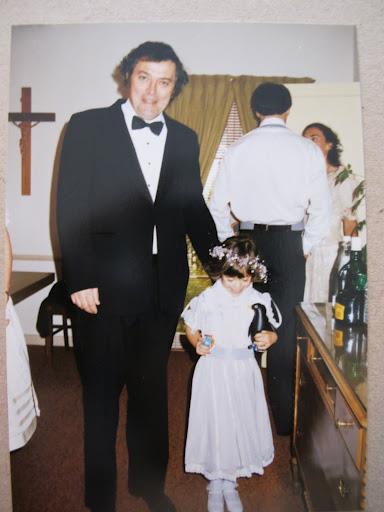
Dad and Flower Girl

That was the thing about Dad.  He was a gambler, a risk-taker, and he loved a challenge.  The guy who often said, ‘I’d rather be lucky than good’ (but really, he was both), who put himself through law school by playing poker, who offered up thousands of dollars of his own money taking cases to defend clients who’d been victimized by insurance companies and large corporations, David versus Goliath type cases that no one thought he could win (and win, he did, in sometimes spectacular fashion), this was a man who didn’t believe in quitting.  He was tenacious, he was a fighter, and when he told me that I’d ‘just have to work harder,’ I’ll be damned if he wasn’t always right.

Even before he was diagnosed with the pancreatic cancer that eventually killed him, I knew something was wrong with my Dad.  He lost weight, his skin was sallow.  He was still as mischievous as ever, but he’d lost a little bit of his edge.  The twinkle in his eye faded.
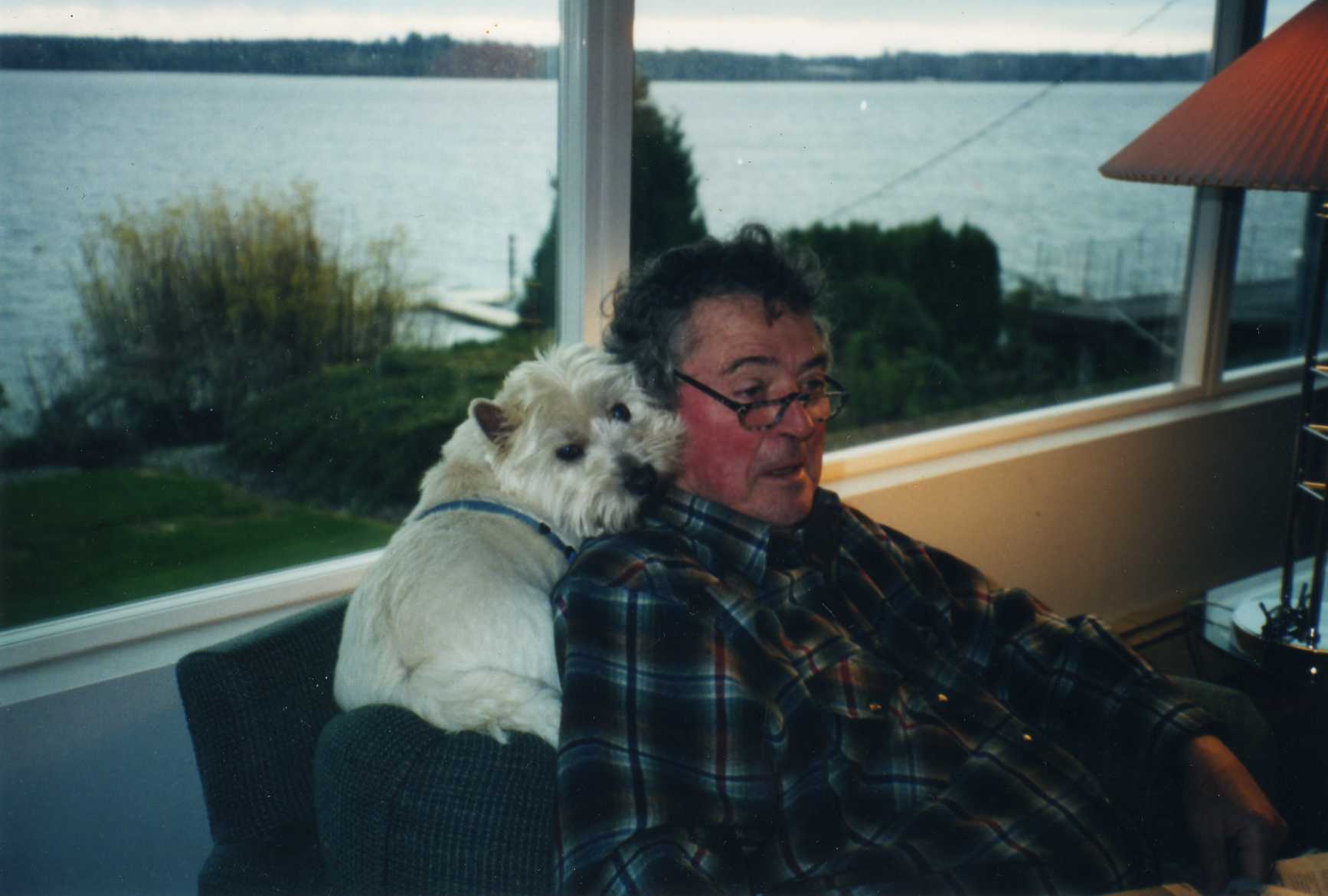
Dad and Max copy

He was nearing 80 years old and becoming frail, and I suddenly realized my Dad wouldn’t be around forever.  I softened my stance.  I came to grips with the fact that it was unfair to blame him for choosing alcohol over his family.  It wasn’t a choice, it was a disease and holding on to my anger about it was only hurting me.  The truth was, he’d never been mean.  Though at times he was maddening, he was kind, generous, and I never doubted that he loved me.  I chose to forgive him, and it made me free.

In her beautiful book The Rules of Inheritance, Claire Bidwell Smith writes about the death of both of her parents, her mother during her teenage years, and her father several years later when she was in her mid-20’s.  Like me, she had a much older father and grew up closer to her Mom.  But in her book, she makes a striking admission and it’s this:  that if she had to lose both of her parents, she was glad that her Mom went first, because otherwise she would never really have gotten to know her father.

It’s difficult for me to admit this, but I feel the same way.  Though my parents’ deaths were only four and a half months apart, and though my Dad was very sick – and often stubborn, maddening, impossible – I cherish those last months I had with him.  We talked on the phone nearly every day.  He told me was lonely, but that he was grateful for his children, that he loved us so very much and that we were getting him through.  We talked about football.  We talked about how much we missed my Mom.

When I visited him in Olympia, he was kind and sweet to me, and so appreciative of little things like when I’d hold his arm to steady him when he was having trouble walking.  During the last Christmas we spent together, cheering the Seahawks on to victory against the hated San Francisco 49ers, Dad turned to me and said, ‘I think we’re good friends now, Sar.’  ‘We are, Dad,’ I agreed.  He grinned.
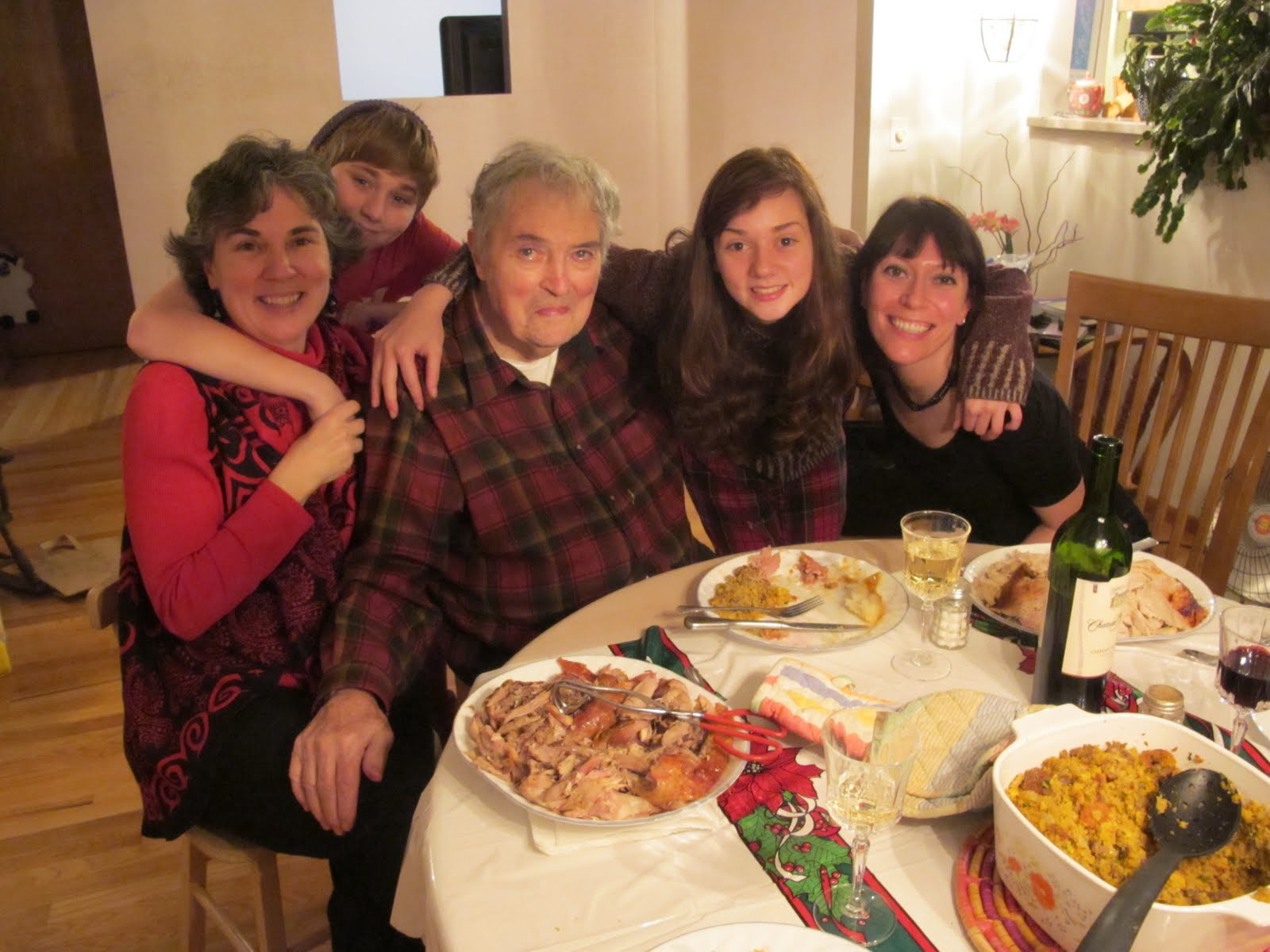
Dad last christmas

At a reception in his honor following his funeral, one of his lifelong friends read Dad’s favorite poem, If, by Rudyard Kipling.  It’s about living life boldly without fear of what others think of you, and without fear of loss.  It’s how my Dad lived his life.

As much as I adored my mother, I can’t help but feel grateful for all of the gifts I inherited from my father.  A lot of the things I really like about myself are pure Dad.  I’m tenacious, I’m tough, I believe in fighting for the underdog, and –most importantly, and something I’ve leaned on in the last year and a half of my life – I possess the ability to remain cool headed in a crisis, and to laugh in the face of things that make others weep.  It all stems from my Dad’s view of the world:  that life is an adventure not to be taken too seriously, that obstacles are just exciting challenges to be met head on, and that no matter what life throws at you, everything always has a way of working out.

One of the last times I talked to him – before he was too sick to talk – was last year after our beloved Seattle Seahawks suffered a crushing loss to the Atlanta Falcons in the playoffs.  While I was down and depressed, Dad barely seemed discouraged.  ‘Sar, listen,’ he said, his voice full of excitement.  ‘I’ve been watching these guys.  They’re really good.  They’re going to be good for a very long time.  We’ll get ours.’  A couple of weeks ago, when we finally did get ours, I couldn’t help thinking that my irrepressible father had something to do with it.
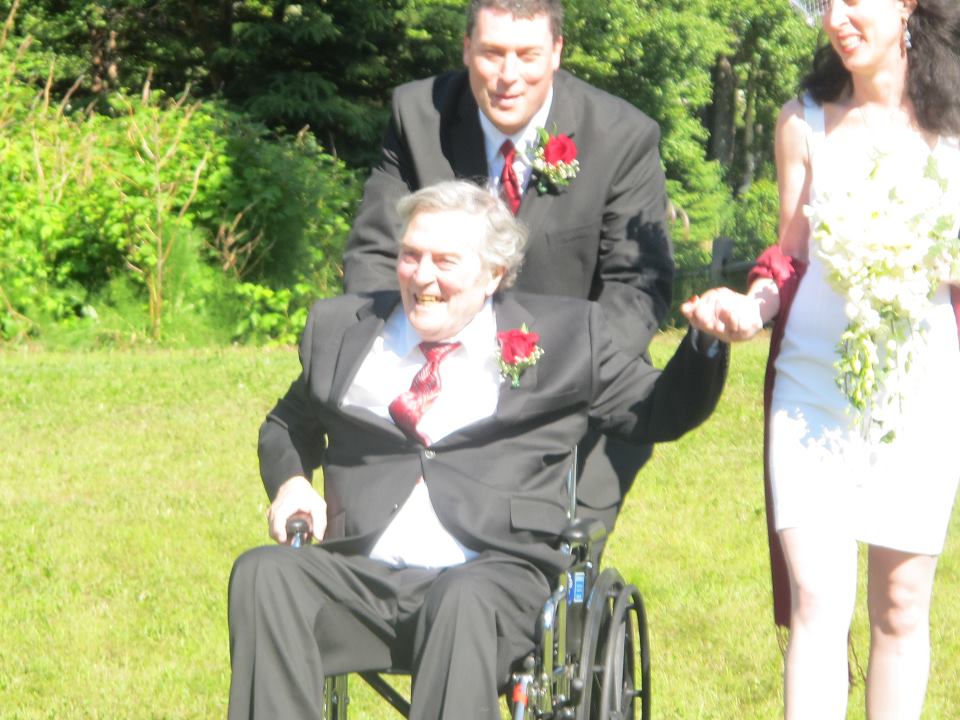
Dad Marions Wedding

In the same way that I can laugh in the face of things that make other people weep, I don’t think it’s a bummer that my Dad died on Valentine’s Day.  I think he did it on purpose.  Now my siblings and I have a forever reminder of him on a day that’s all about love.  And I think that’s kind of sweet.

So Happy Valentine’s Day, Dad, you charming, insufferable, wonderful, impossible, lovable Irish rascal.  I miss you.  I love you.  And I’m so grateful that I’m your daughter.

P.S. – I’ve pasted Dad’s favorite poem below, if you’d like to read it.  It’s pretty great.

Until next time, friends.
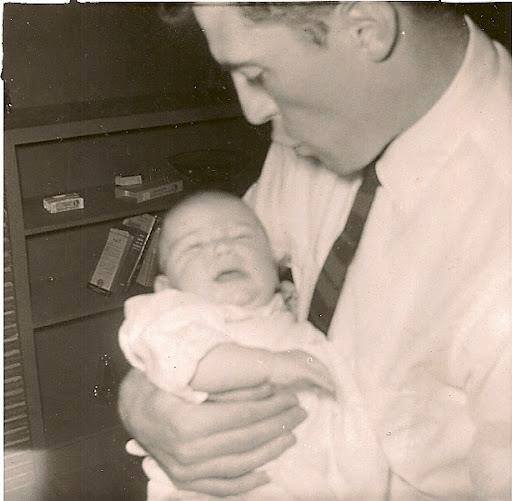
Dad with Baby

If—

BY RUDYARD KIPLING

(‘Brother Square-Toes’—Rewards and Fairies)

If you can keep your head when all about you

Are losing theirs and blaming it on you,

If you can trust yourself when all men doubt you,

But make allowance for their doubting too;

If you can wait and not be tired by waiting,

Or being lied about, don’t deal in lies,

Or being hated, don’t give way to hating,

And yet don’t look too good, nor talk too wise:

If you can dream—and not make dreams your master;

If you can think—and not make thoughts your aim;

If you can meet with Triumph and Disaster

And treat those two impostors just the same;

If you can bear to hear the truth you’ve spoken

Twisted by knaves to make a trap for fools,

Or watch the things you gave your life to, broken,

And stoop and build ’em up with worn-out tools:

If you can make one heap of all your winnings

And risk it on one turn of pitch-and-toss,

And lose, and start again at your beginnings

And never breathe a word about your loss;

If you can force your heart and nerve and sinew

To serve your turn long after they are gone,

And so hold on when there is nothing in you

Except the Will which says to them: ‘Hold on!’

If you can talk with crowds and keep your virtue,

Or walk with Kings—nor lose the common touch,

If neither foes nor loving friends can hurt you,

If all men count with you, but none too much;

If you can fill the unforgiving minute

With sixty seconds’ worth of distance run,

Yours is the Earth and everything that’s in it,

And—which is more—you’ll be a Man, my son!
Blog at WordPress.com.