Mile End.

The train was late leaving Montreal’s Gare Centrale. I stood near the front of the line, talking to a middle aged couple from Boulder, Colorado, as we watched our departure time tick later and later on the neon screen above our heads. They were taking the train to Schenectady, renting a car, and driving to meet their daughter in New Haven. She used to live in New York, they told me, but the stress of the city became too much and began to affect her health. As soon as she arrived in Connecticut, she felt better. “New York is a wonderful town,” said the man, whose name was Pete. “But it can be a lot.” “I’m still new there,” I told him. “I guess time will tell.”
It was Canadian Thanksgiving – “Action de Grâces’’ in Montreal – and after four days away, I was eager to begin the eleven-hour journey back to Penn Station. The trip had gone too quickly, as trips tend to do, but my “Things to do in New York” list was long, and I was ready to get started on it.

I had been in New York just three weeks when I boarded the Montreal-bound Amtrak train, and it still didn’t feel like I lived there yet. The three weeks had gone quickly, consumed with the business of settling in: buying household items and assembling furniture, shopping trips to Bed, Bath and Beyond and Fairway Market, sending “I’m here,” emails to friends and acquaintances, unpacking boxes shipped from L.A., navigating my new neighborhood.

The urge to get away swelled within me from the moment I’d arrived in the city, a common occurrence when the here and now threatens to overwhelm me. I had wanted to visit Montreal for years, ever since my niece Nora began studying art at its Concordia University, and the $150 round trip train ticket with its scenic route through the Hudson River Valley and the Adirondacks was too good to pass up. Plus, Nora’s punk band “Dish Pit” had a show that weekend, at a joint called Bar Le Ritz. How could I miss that?
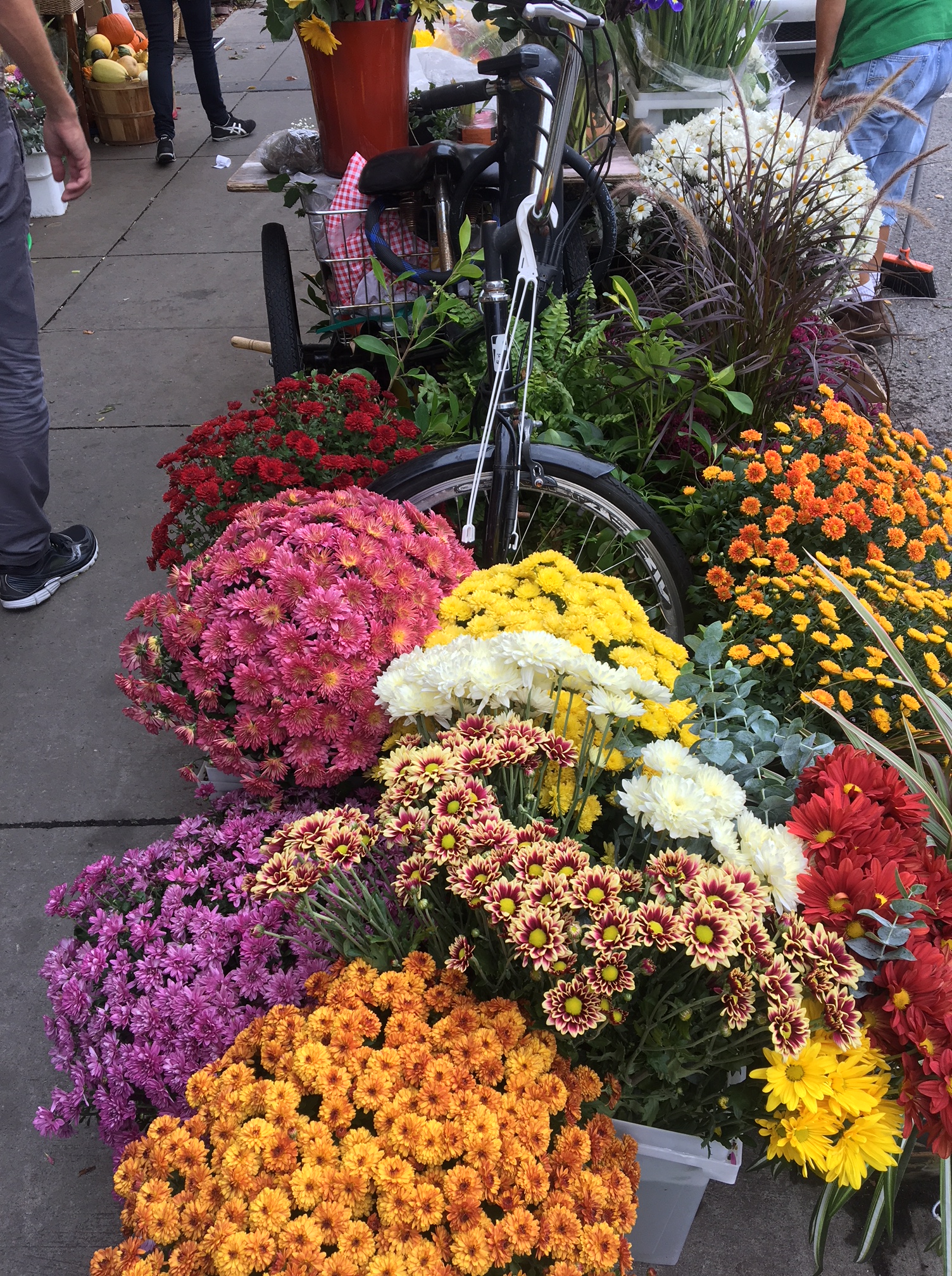
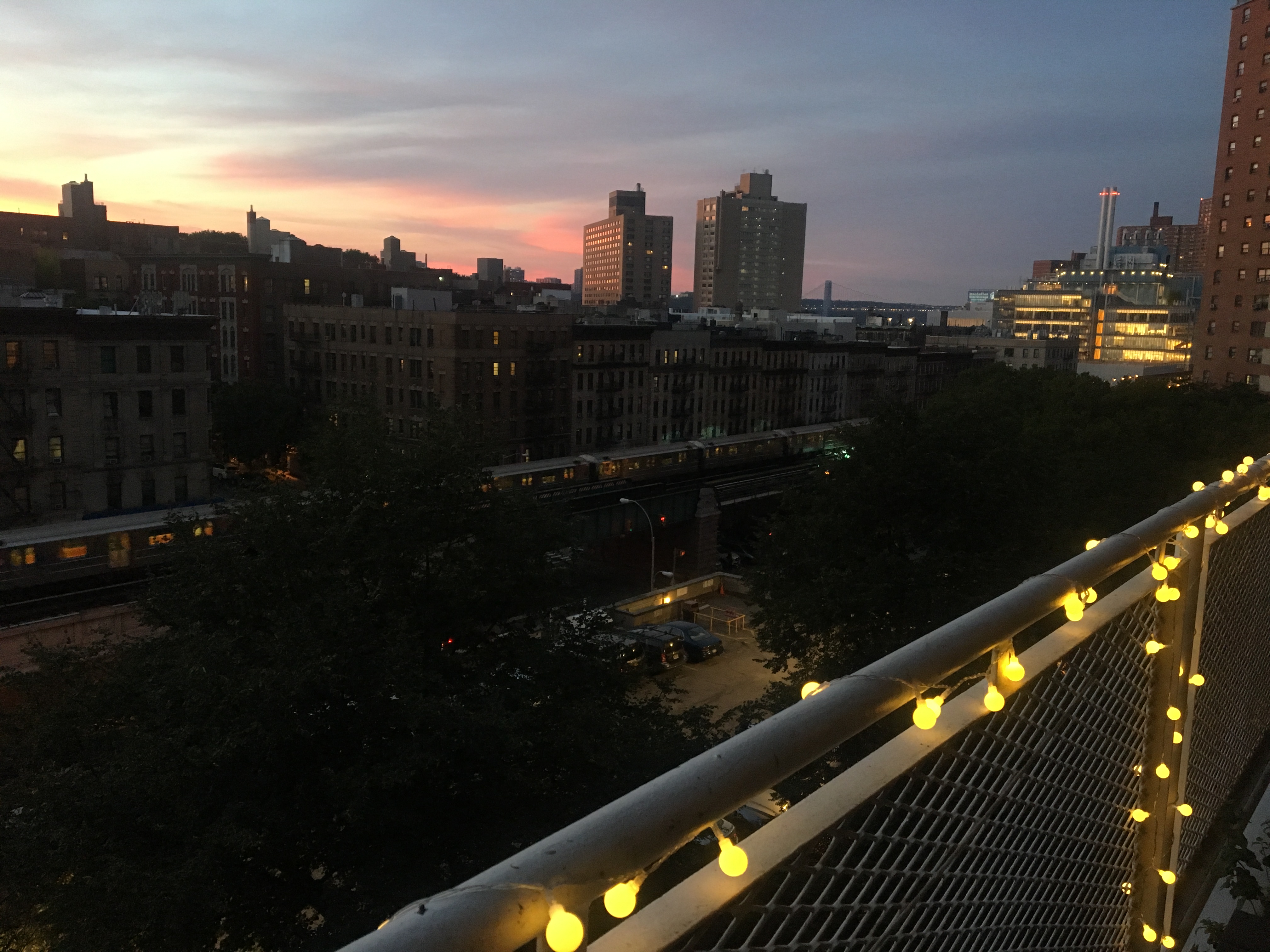
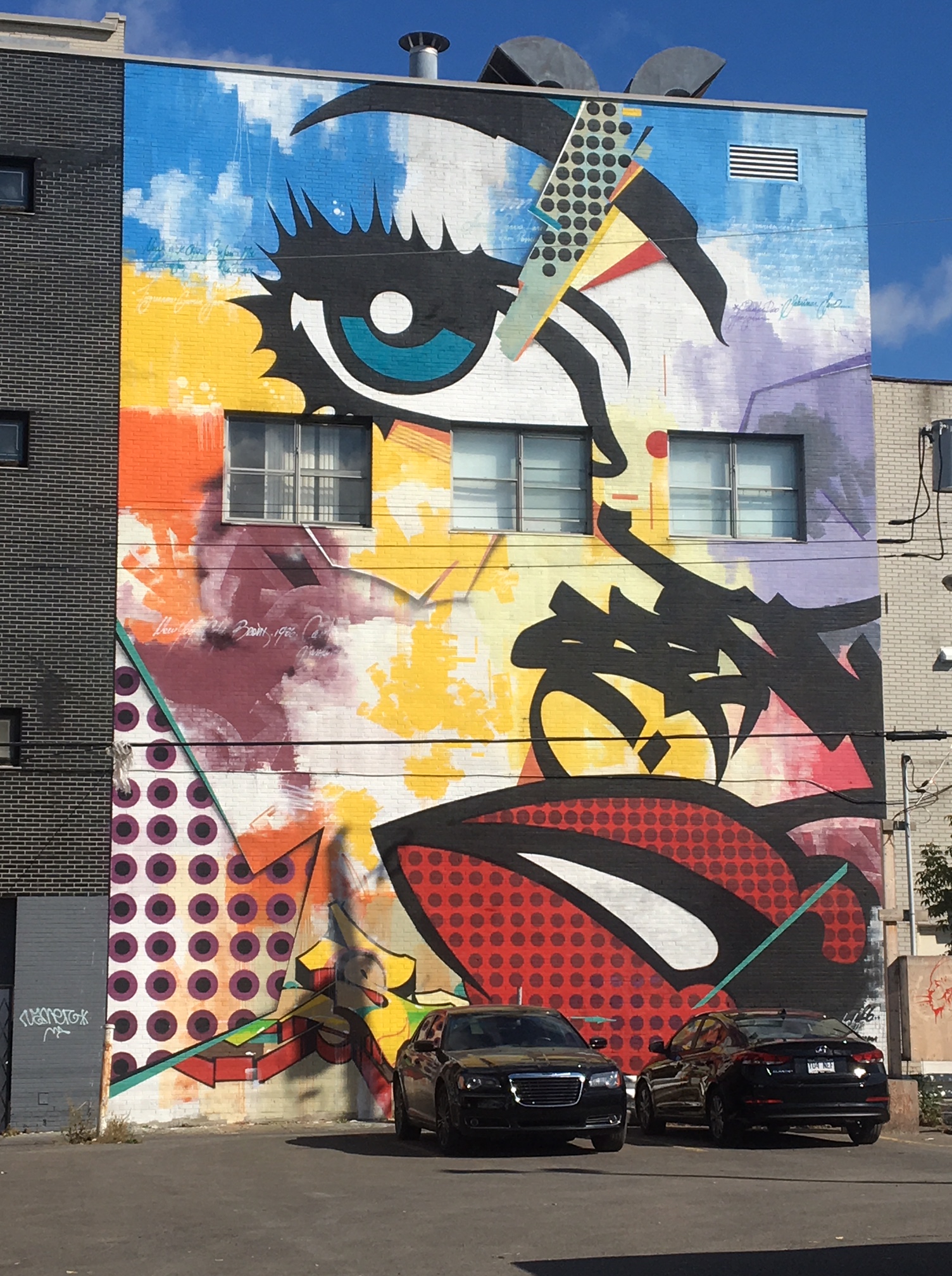
I booked an Airbnb in Little Italy, on the border of the Montreal neighborhood Nora told me was her favorite: Mile End. I could immediately see why. Vibrant street art, hip cafes and bars, trendy boutiques and vintage shops. It was an artists’ haven, full of color and life and youthful enthusiasm.

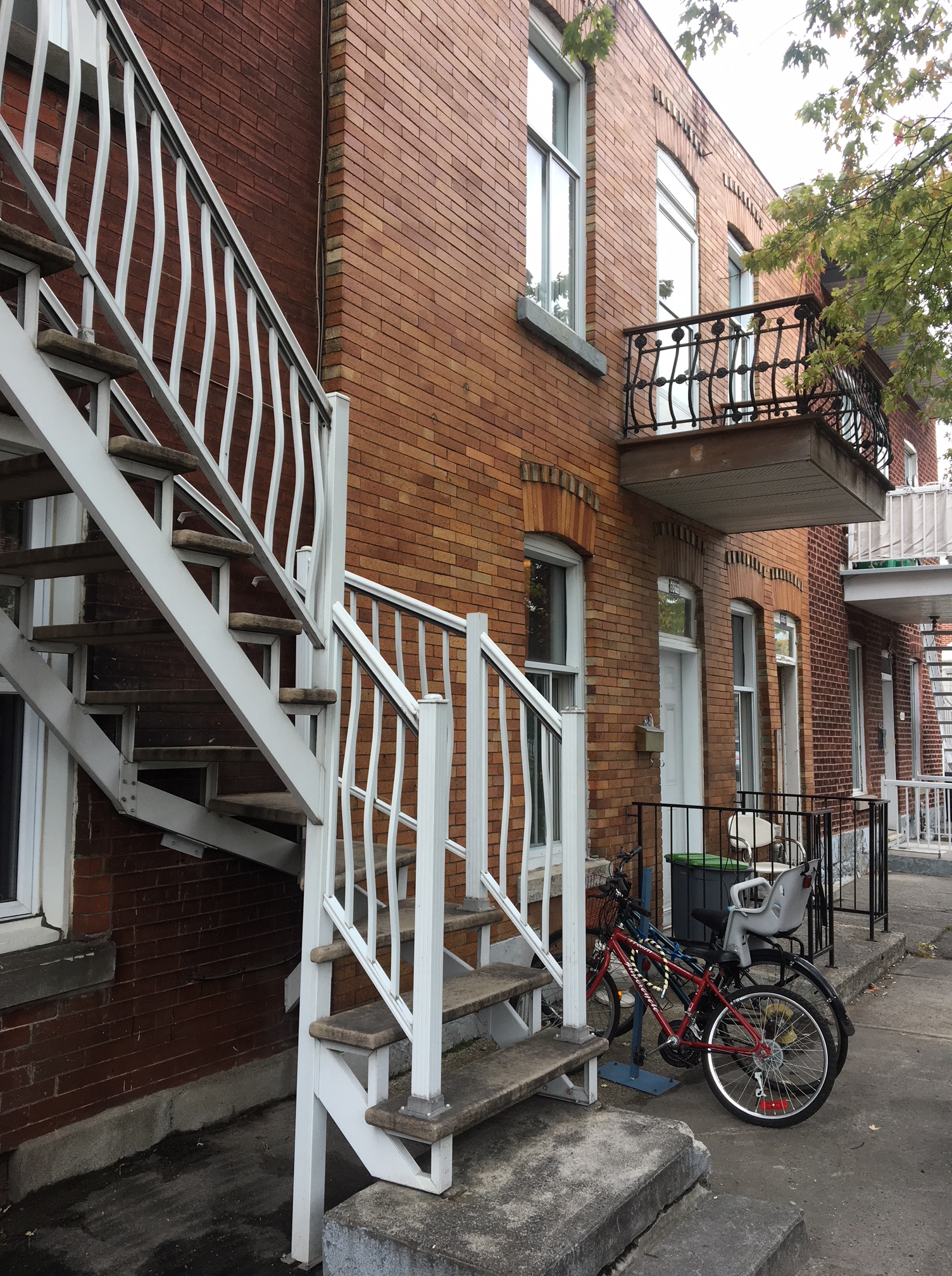
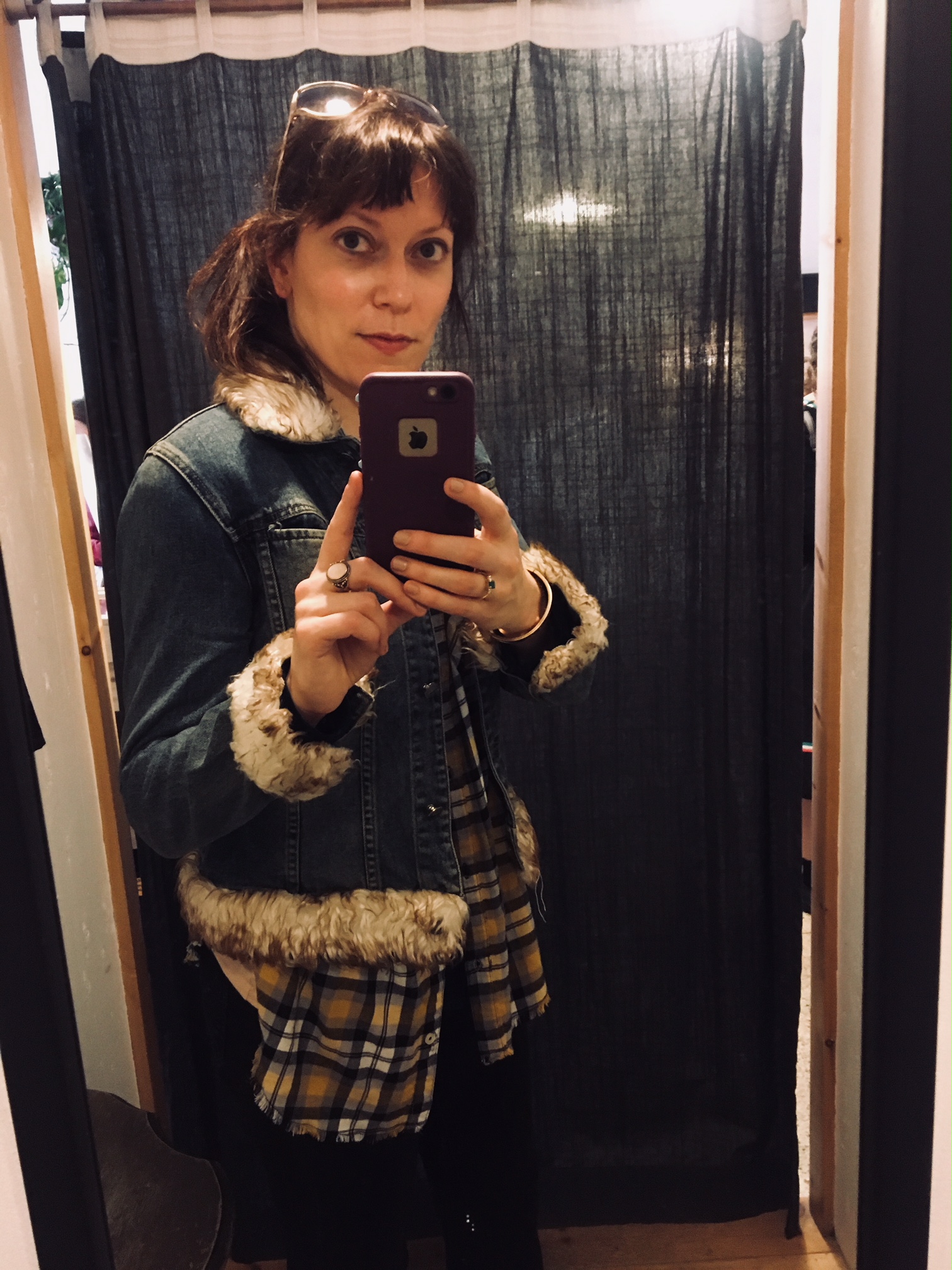
I explored much of the city on foot, canvas bag containing a notebook, umbrella and ear buds slung over my shoulder. I walked from Petite Italie through Mile End, into Plateau and then downtown. I sampled bagels at the famous St.-Viateur bagel shop, tried on delicate lace dresses at a boutique on Boulevard Saint-Laurent, ordered meals in broken French, and bought a faux fur trimmed denim jacket at the hipster hotspot Annex Vintage. I caught up with Nora over dinner, met her school friends – and was wowed by her guitar-playing skills – at Bar Le Ritz, and traded stories about love and life as we wandered around Chinatown searching for a rare and expensive monkey oolong tea.
As much as I love to travel, my favorite thing about going away is how different home looks when seen from the perspective of another place. And New York had not been home for very long. In fact, it was the first time I answered the question “Where are you from?” with “New York,” an answer that still felt strange and foreign rolling off the tongue. And it was the first time, when asked by a customs agent what I did for a living, I said, “I’m a writer,” which didn’t feel strange at all. It also wasn’t technically true. Technically, I was unemployed, and was living off my savings, money I’d inherited from my parents and my grandfather’s life insurance policy. But that was far too complicated (and potentially problematic) to explain to border patrol. And besides, I had begun to learn the lesson that if I said a thing enough times, I would start to believe it, and then I would find a way to make it true. After all, that was how I ended up in New York in the first place. I simply told enough people I was moving there, until eventually, I had no choice but to go.
It had only been four days since I’d made the trip north to Montreal, but in those four days the fall colors had already intensified. Alongside golden amber leaves were branches dressed in accents of ruby red and flaming orange. I paused from scribbling in my journal to intermittently rest my head against the window of the southbound train and watch with tired eyes as October rain fell across the changing landscape. I pulled out my pocket planner, filled with its inspirational quotes, crossed out and rewritten plans, and counted the days: thirty-eight. There were exactly thirty-eight days until my flight to Heathrow, where I’d meet one of my dearest friends and we’d continue our journey on to Venice, Florence, Rome, Positano and Sorrento to celebrate her birthday. Thirty-eight days. Just over five weeks. Five weeks, during which I would write and work and enjoy the fall in New York City. Five weeks, and then I’d be off on another adventure.

But for now, I was ready to go back to New York.

I was ready to go home.

Until next time, friends.
Burning the boats.

Dear friends,

This essay was originally published on the blog Bottle + Heels, but, as I thought it might have interest to readers of Extra Dry Martini, I’m re-sharing it below. Tomorrow, I’ll travel by train through the Hudson River Valley and the Adirondack Mountains to Montreal. It’s a long journey, but I look forward to watching the changing fall colors from outside my window, and some quiet time to write. I’ll report back upon my return.

Until next time,

Sarah

It was blazing hot on the late August day when I left Los Angeles. It didn’t help that – rather than pack them – I had worn my favorite knee-high leather boots, and was transporting three heavy suitcases. High in the hills above L.A., I made the left turn off Sepulveda Boulevard, rounded the corner, and pulled my silver Prius into the driveway of my friend Vim’s parents’ house. I called a Lyft bound for LAX, unloaded my bags, backed my car onto the street and parked it alongside the curb, then sealed both sets of my car keys into an envelope and slipped it inside the white mailbox at the end of the driveway.

Two days later, in the tiny western Washington town of Allyn, from the living room of the beach-front home that used to belong to my grandparents, I called my insurance company to inform them that I would no longer be needing my policy. And what should have been a mundane conversation quickly evolved into something more. Before I knew it, I was pouring out my life story to Donna from Texas, the customer service agent on the other end of the line. Was I sure that I wouldn’t be needing a new policy? Yes, I was sure. I wasn’t getting a new car. I no longer needed one, because I was moving to New York. No, I didn’t need renter’s insurance, at least, not yet, because I didn’t yet know where I was going to live. Was I moving for a job? No, I didn’t have one of those, either. I was planning to produce a play that I wrote, but beyond that, I had no idea what I was going to do. I had simply decided to go, and that was that.

There’s a famous story about Hernán Cortés’ 1519 conquest of Mexico. Vastly outnumbered and facing seemingly insurmountable odds – every previous attempt to colonize the Yucatan Peninsula in the last 600 years had failed – Cortés gave his men an order: “Burn the boats.” Destroying their ships meant that if they faced defeat, they would have no exit strategy, no way to retreat and save their lives. There were only two options: win or die. Guess what? They won.

Today, the phrase “burn the boats” has come to represent a decision from which there is no going back. It means taking a bold, decisive action. It means that “Plan B” is no longer an option.

I am a meticulous planner and “burning the boats,” is far from comfortable for me. It’s scary to cut ties with the past and take a leap of faith into an uncertain future. But it’s liberating, too. For the last few months, as I’ve sold, given away or thrown out most of my belongings, I have felt lighter, as though I have been shedding old skin, and paring down to my essential elements.

More than once these last few years, I have experienced the feeling of the rug being pulled out from under me. I had job security until the company I worked at for eleven years was sold. I had parents until one terminal cancer diagnosis and one earth-shattering Sunday morning phone call.

And what I have learned through those experiences is this: nothing is guaranteed. And nothing – not the good stuff or the bad – lasts forever. Life is a constant swirl of change, and if we don’t adapt and change with it, we’ll get left behind. It would have felt safe and comfortable to stay in L.A., in my rent-controlled apartment, with my wonderful neighbors, and loving community of long-time friends. But that safety was an illusion, and my comfort came at the price of personal and creative growth.

I was scared to move to New York, and daunted at the prospect of reestablishing myself in a new city. But what I feared more than anything was regret. I didn’t want to spend my life on the sidelines, talking about the things I was going to do but never doing them.

A few days after the phone call to my insurance company, I received another call: I had a place to live. The dream apartment a friend put me up for had come through, and my new landlord was expecting me in mid-September.

And so, from the stretch of rocky beach where I had spent every childhood summer, and where I had steadily, deliberately, burned each and every last one of my metaphorical boats, I purchased a one-way plane ticket.

And I didn’t look back.

The salt and the sea.

It was well after 11 p.m. when we made the left turn on to Grapeview Loop Road from Washington State’s Highway Three. The drive in had been quiet; the late hour meant that the rural highways we traveled were sparsely populated, and our rental car pressed quickly forward into the inky black night, following winding roads over waterways too dark to see.

“Wow,” came the response when we arrived at the beach. Even in darkness, my friends could tell that the place was special. I gave them a brief tour and then began to unpack, tired from the long day and hoping to head straight to bed. But as they climbed the spiral staircase to the loft and stood out on the upstairs balcony, transfixed by the smell of saltwater and the sound of the sea, I realized I had underestimated the ability this place still had to stagger first-time visitors.

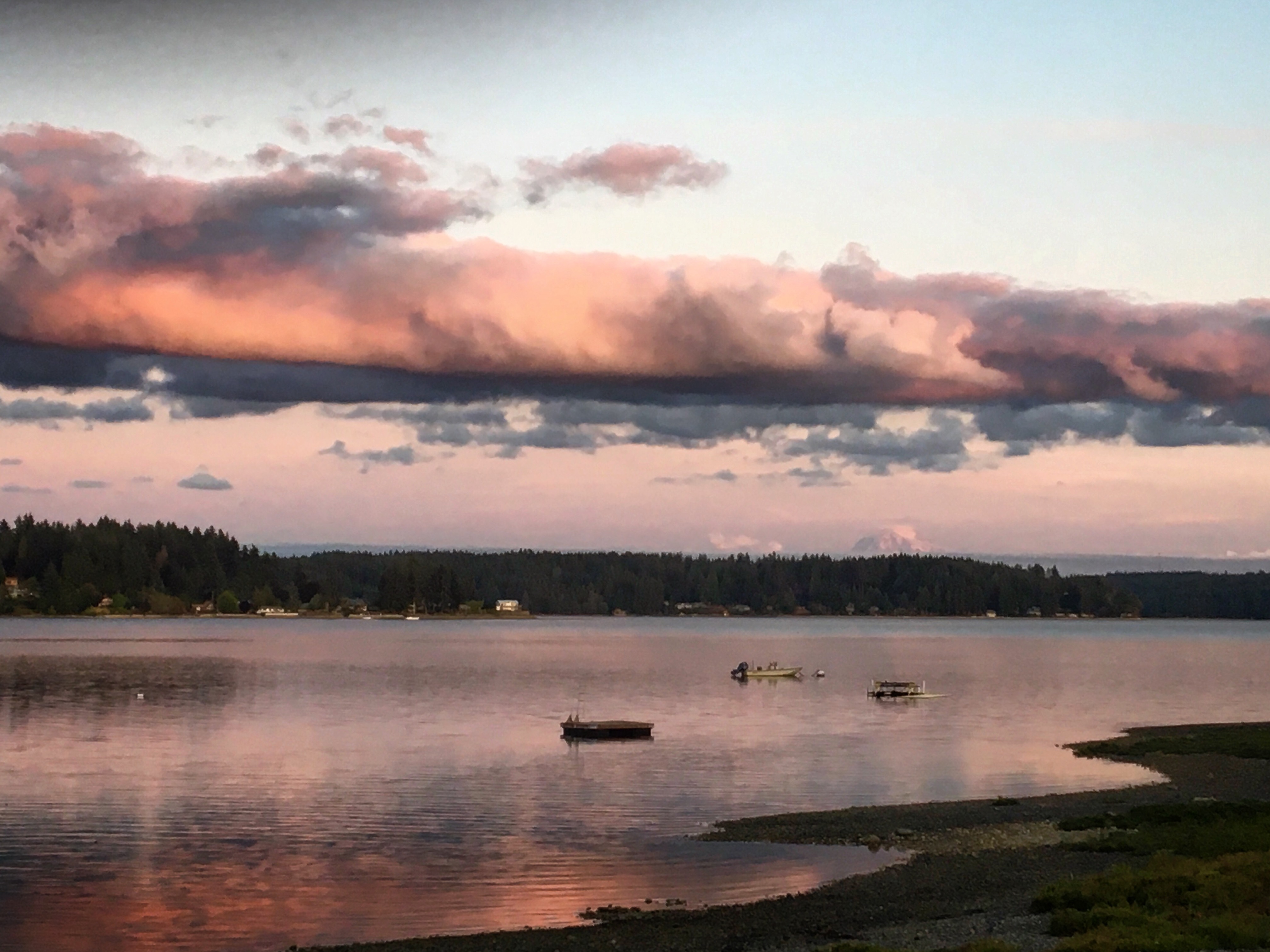
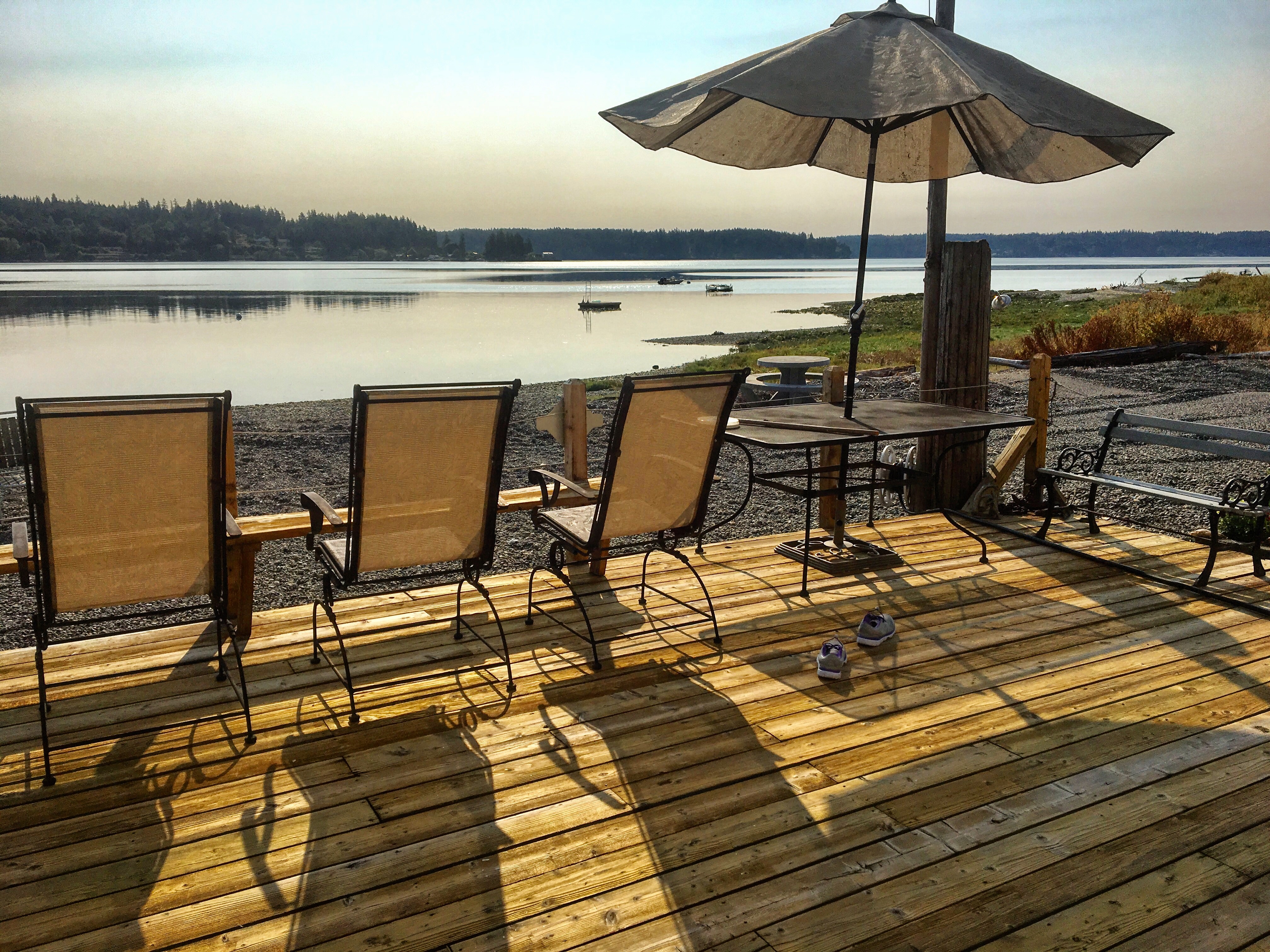
It continued all weekend: my re-initiation to the beach. After spending so much of my life there, I had grown accustomed to the densely-forested walk along the loop road, the silver, flat-as-a-mirror inlet with its fluctuating tides, the fresh air, the ever-present Mt. Rainier, standing snowcapped over a great bank of evergreen trees. I had forgotten that not everyone spends their summers digging clams at low tide, or building bonfires on the beach, or watching playful seals hunt for food just outside of their front door. I suppose it isn’t normal to pick wild blackberries in the woods on the walk to Treasure Island, or to admire the sailboats docked in Fair Harbor Marina, while tracing a map of the inland waterways of Puget Sound.

The truth is, the beach still has the power to amaze me. Every summer, when I make the left turn from Grapeview Loop Road on to the property that my Grandfather bought in 1959, the sight of Case Inlet stretching out across the landscape still levels me. But along with that feeling of awe comes something else: grief. Every advancing summer takes me further away from the carefree days of childhood, serving as a reminder of how much has changed, how much has gone. Of all the places I’ve traveled, the beach is the place I love the most, but it is also a repository for some of my darkest and most painful memories. I wish it wasn’t so, but I can’t help it: every time I return there, so do the flood of images of happier times, and of loved ones lost.

We planned a Saturday morning boat ride, and though the day dawned cold and cloudy, we pressed forward anyway, undeterred. As we bundled up into flannels and fleeces, my friend Vim spotted an unusual sight from just outside the living room window: a dorsal fin. We gathered on the deck, the four of us passing around two sets of binoculars, and I saw something I had never witnessed in all my summers on Case Inlet: Orca whales. They were hundreds of miles from the ocean, swimming very close to shore, and seemingly in no hurry to reach their destination. As the trio – two babies and their mother – traveled slowly south, spouting water and occasionally breaking the surface, I felt a lump rise in my throat. This moment, amidst all that was familiar, was entirely new.

In the end, I couldn’t have imagined a better way to spend my last few days before moving to New York than by sharing the place I grew up with some of my closest friends. I have come to accept the fact that there will always be sad memories contained along the rocky shores of Case Inlet. I can no more extract them from that place than I can the salt from the sea. But there are happy memories, too. Plenty of them, and even more so after this past weekend. After our boat ride, a group of friends and family gathered for a potluck lunch at my Grandfather’s house, and I thought about how he would have loved to hear the sound of laughter reverberating off the deck and out into the late summer afternoon. I thought about how the sight of those Orca whales proved one thing: despite all that’s happened, I haven’t lost my capacity for wonder. I think I just needed to see this old place again, but this time, through new eyes.

Until next time, friends.

September.

The first sunrise of September was a subtle affair. While still lovely, with brushstrokes of tangerine and topaz painted across a watercolor sky, the dawn was decidedly gentler than the ferocious fuchsia that – just a few days prior – had set the heavens aflame with a vibrancy bordering on violence. Summer was not yet gone, and the rising mercury proved it, but the golden glow that backlit Mt. Rainier and spread its warmth across the sea was a harbinger of the rapidly approaching season. Soon, it would be fall.

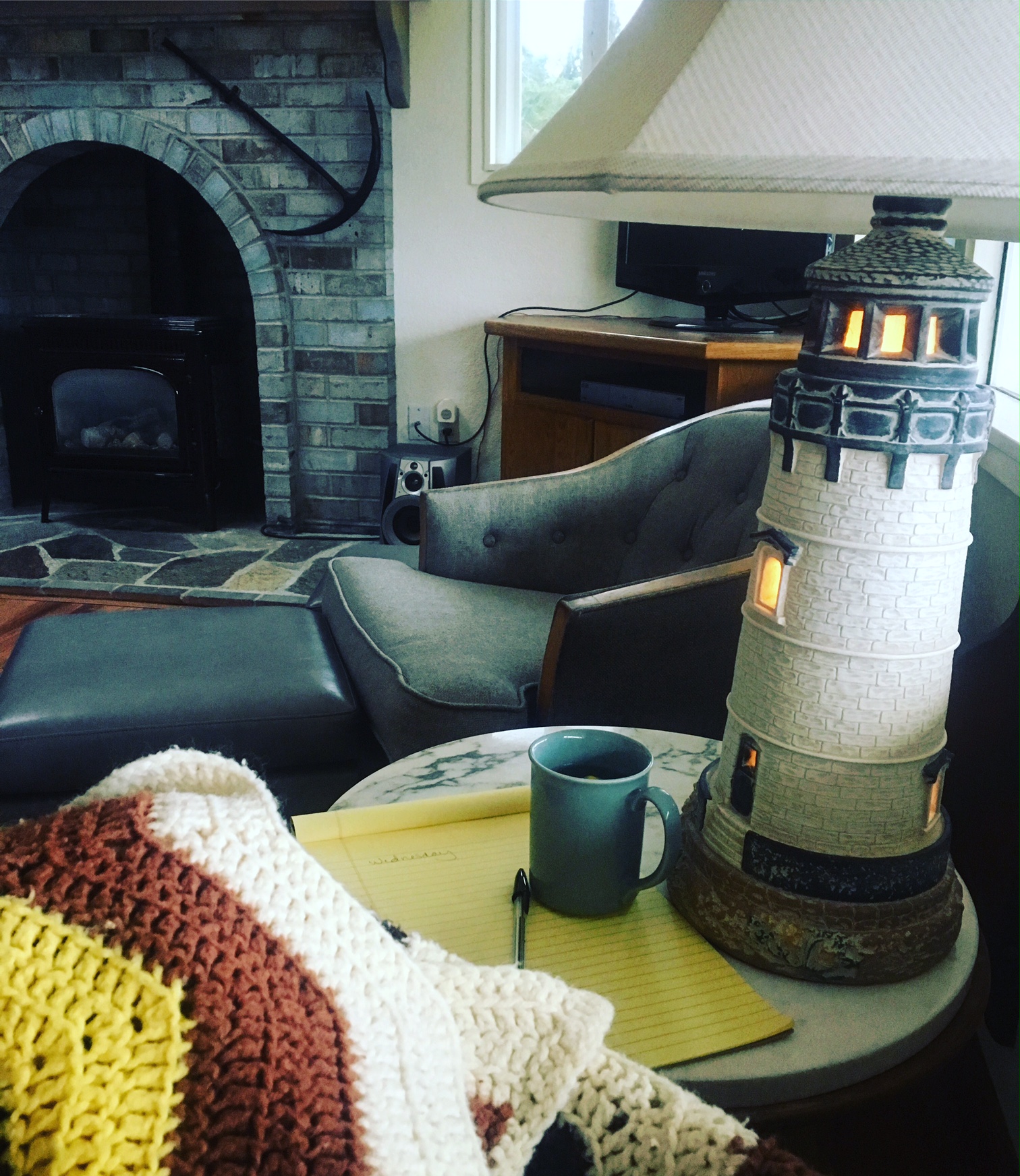
Still wearing my pajamas, wrapped in my Grandmother’s timeworn yellow afghan, I watched the changing colors move across the sky until I decided it was time to stumble out onto the rocky beach and capture them. Once back inside, I brewed coffee – strong and dark – and sat down with my yellow legal pad to scribble out my morning routine: three longhand pages.

It was the sixth morning I’d awoken in the house on Case Inlet, and the third I’d risen before daybreak. I had arrived on a sweltering Saturday evening in late August: tired, sweaty, and carrying the heavy weight of a month full of farewells. I had spent the first few days moving slowly through the house that used to belong to my Grandparents, half-heartedly working on a seemingly insurmountable to-do list, and fighting the fatigue I felt settling into my bones.

But this morning was different, and I knew it. The last few days I had been too comfortable. Lazy, even. Now an urgency arose within me, one that I felt in my body as much as I saw reflected in the sky. It was time to shake off the doldrums, and get to work.

I started a load of laundry, then sat down at the dining room table by the window. Looking over my list, I decided to start with the most dreaded items first. Before I began, I penned myself a note of encouragement:

The space between here and the life you want is filled with all the things you’re putting off. . .  

In truth, there was no hurry to leave the beach. My deadlines were my own, entirely self-imposed. As a bridge between one big, chaotic city and another, as a place to rest, regroup, and plan a cross country move, there was no better location. And there was something reassuring about being here: a place so familiar, among people who shared my history.

No, the need to go was a purely psychological one. Because as soon as the calendar turned to September, a date that may as well have been circled in scarlet stared out at me from the page. September 23rd. It was on that day, five years ago, that I received the worst phone call of my life: my mother was dead. Now I was here – in her favorite place – looking out at the inlet where three summers earlier we had climbed into a little tin boat, went out to sea, and scattered her ashes. And as I sat by a picture window, watching the receding tide, I made a promise: I would not mark the anniversary of her death here. I would be in New York, having already begun my new life in a new city. I would honor my mother’s memory the best way I knew how: by not ending up like her. I would not defer my dreams to a tomorrow that would never come, would not spend my life wandering down a rabbit hole of regret.

After the emails had been sent and the phone calls had been placed, I waited for high tide, put on a swimsuit and walked down to the water’s edge. Case Inlet was colder than I remembered, but then again, it had been a year since I’d last dipped my toes in that saltwater. There was only one thing to do. I threw myself into the bay, absorbing the shock of bracing cold. But as I paddled through the water, my Grandmother’s faded orange swim fins emerging and submerging with each stroke, my body slowly began to adjust. And I was OK.

I would always be OK.

Until next time, friends.

Los Angeles.

I’m so tired, but I can’t sleep

Standing on the edge of something much too deep

It’s funny how we feel so much but cannot say a word

We are screaming inside but can’t be heard

 And I will remember you

Will you remember me?

Don’t let your life pass you by

Weep not for the memories.


On an early morning in the summer of 1999, a yellow school bus pulled into the parking lot of Capital High School in Olympia, Washington. I sat near the back, resting my head against the seat, softly singing the lyrics to a bittersweet Sarah McLachlan song. My head was light – the result of a sleepless night spent in Seattle, celebrating the Class of ‘99 and our newly-earned diplomas – but my heart was heavy. Graduation meant that in less than two months, I’d be leaving home to attend college in Los Angeles, a city I’d visited only once and where I knew no one. The thought of chasing my Hollywood dreams thrilled me, but I was scared too, possessed of the vague but certain knowledge that soon, everything in my life was going to change.

I waited until it was safe. As soon as I was sure that the solar eclipse that had been making its way eastward across the United States had passed over Los Angeles, I got into my car. As I merged on to that familiar stretch of the 405 freeway, I thought about that eighteen-year-old girl, half a life away, who was only just beginning her story. How could she have known how it would all unfold?

My mother watched from the third-floor window of the Radisson Hotel as – sirens blaring, strobe lights pulsating – fire trucks charged down Figueroa Street. Turning to me, face drawn with concern, fear in her aquamarine eyes, she asked earnestly:

“Sar, are you sure you want to go to school here?”

I was sure. From the minute I set foot onto USC’s University Park Campus I knew that I belonged there. Its proximity to the infamous “South Central” neighborhood of Los Angeles, the seemingly never ending parade of emergency vehicles exiting the nearby fire station, the metal bars encasing every apartment and store window. . . none of those things deterred me. In fact, they only strengthened my resolve. A girl who split her childhood between Anchorage, Alaska and small towns in the Pacific Northwest should have been a fish out of water in such a gritty, urban place. But I wasn’t. I was home.

Nearly eighteen years later, that exact same feeling settled in my chest, but this time, in a different place. Walking along Sixth Avenue in New York’s West Village, my eyes found the Freedom Tower, a beacon of steel blue standing strong and stoic in the distance, and something that can best be described as hope swelled within me. Home, cried a familiar voice, sure and steady. I listened.

I checked in to the Surf and Sand Hotel just after two p.m., changed into a bikini, and headed straight for the beach. Later, sandy and sleepy, I sat beneath a large white umbrella, stared out at the Pacific, and wrote. After an early dinner of cheap tacos and expensive wine, I headed back to the beach and waded into the ocean just in time to watch a blazing sun sink below the horizon, spreading coral and tangerine across a tranquil sky. Once it was dark, I opened up two old notebooks that I’d brought along for the journey and re-read their contents. I barely recognized the person who had written them, and so, I carefully shredded their pages and deposited them into a hotel garbage can.

As I crawled beneath white sheets, a feeling of calm settled over me. What a difference from the last time I came here, I thought. It had been December of 2015, a few days after my thirty-fifth birthday, a few weeks after my grandfather died and I had returned to L.A. from a month-long stay in tiny Allyn, Washington to oversee his hospice care, only to find that the company I had worked at for eleven years had been sold, and I had a decision to make: relocate to Seattle and take a job with the new company, or stay in L.A. and face an uncertain future. I chose to stay in L.A. I chose to trust the steady, sure voice that told me I would be OK. I have never regretted that decision.

Eighteen years after moving to Los Angeles and making it my home, it is impossible to describe how it feels to leave it. When I arrived here in the late summer of 1999, I was a girl on the edge of becoming a woman. A girl who thought she knew so much, but who had no idea how innocent she truly was. I had never been in love. I had never traveled to the Eastern United States to sink my toes into an Atlantic beach, let alone crossed that vast ocean to visit (and live in) the continent on the other side. I didn’t know that terrorists could fly airplanes into tall buildings. I didn’t know what it would feel like to hold the hand of someone I loved as they died.

What would I tell that girl now, all these years later, as I prepare to once again begin my life anew? I would tell her a great many things, but mostly I would tell her that she is allowed to make her own choices. She is allowed to let two conflicting emotions reside in her body at the same time. She is allowed to love a place and leave it, and she is allowed to love people and leave them, too. She is allowed to be both brave and afraid, allowed to be both as fragile as a paper doll and the owner of the fiercest heart imaginable. She is allowed to write her own story, without knowing how it’s going to end.

When I moved to Los Angeles, I never could have imagined how much this city would change me, how much it would shape me, how much it would open up my life. Somewhere among the boulevards and the beaches, among the wannabes and the celebrities, I found myself. I made lifelong friends. And I grew up.

Moving here was the right thing. I knew it, and I did it. And now, eighteen years later – as hard as it may be – I also know that it is the right thing to leave.

Until next time, friends.
Blog at WordPress.com.