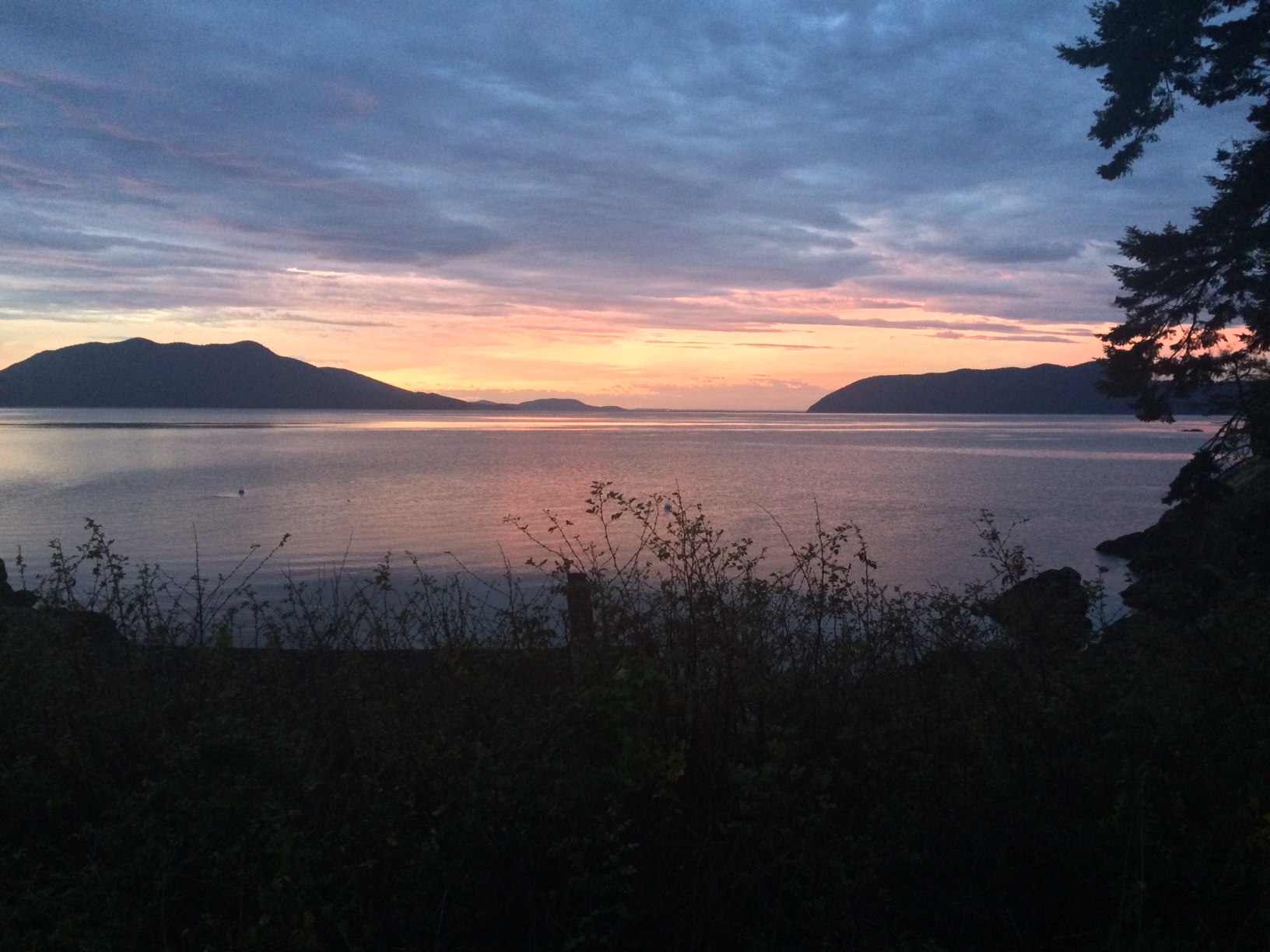
Here.

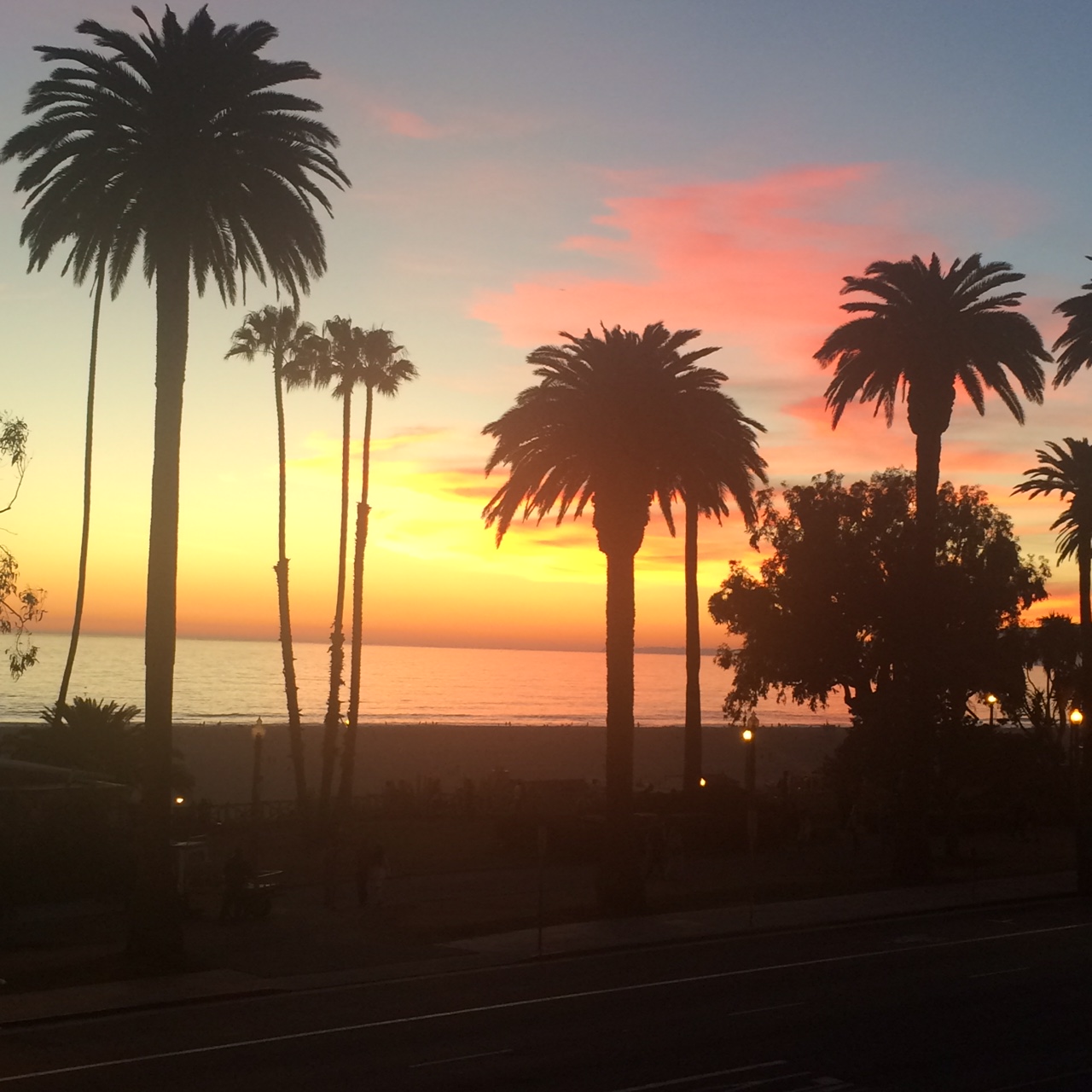
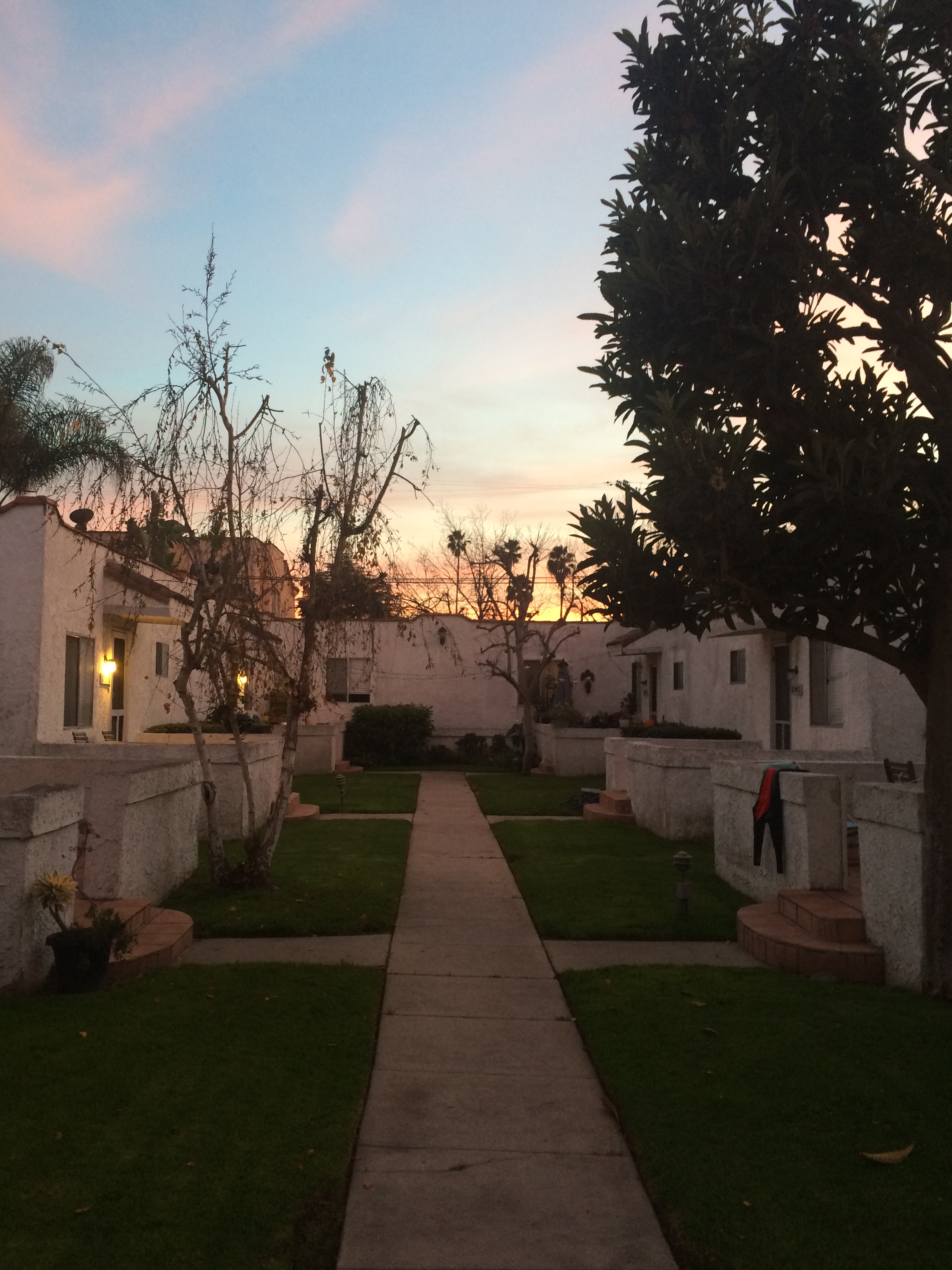
As I so often do while driving in Los Angeles, I use my Waze app to navigate through city traffic, winding my way from ABC Prospect Studios in Franklin Hills back to my home near Culver City. I head west on Beverly Blvd., following the instructions from the posh British voice Waze identifies as “Natalie.” I’m sleepy, having risen before the sunrise for an early call time, and to be honest, a bit preoccupied. But as I turn left onto Van Ness, I’m suddenly struck by the expansive palm tree-lined boulevard – substantially wider than your average L.A. street – the stately homes, and most especially, the immaculate gardens, bursting with vibrant roses in full, fragrant bloom. I don’t think. I pull over and park.

FullSizeRender[1]

I wander around for a few minutes, taking it in, feeling slightly guilty about my aimless meandering. I need to get home; I have things to do. I need to check on actor submissions for the casting notice I posted for my play, War Stories. Tomorrow is also my last official day of work, and I still have plenty of emails to send and loose ends to tie up. This interlude to – literally – stop and smell the roses is poorly timed.

But I have a thing for roses. They remind me of my childhood, of my grandfather’s meticulously tended garden in West Seattle.  But it’s more than that.  There’s something about the flower that has always felt optimistic to me.  Maybe it’s the fact that there are so many different varietals, each uniquely designed to thrive in a particular environment.  I like the idea that regardless of weather – heat, cold, whatever – there is a type of rose best suited to that climate.  Roses are versatile, adaptable.  Roses continue to bloom.

There are only six weeks left until the opening night of War Stories at Hollywood Fringe Festival. As I write that sentence, I feel my chest tighten. There is so much to do. We’ve only just found our cast, and now the race is on to rehearse, stage, market, tech, and handle all of the logistics. We have six weeks to go from here to brilliant.

And yet, this will also be the first time I’ve tackled the tremendous job of producing theater without, at the same time, holding down a full time job. So while there is a lot to do, I will have more time than I’ve ever had in which to do it. But I think the part that’s really bothering me is this: between all the rehearsals and production meetings and networking events, I don’t have any windows of time to hop on a plane and get out of town. I can’t leave. And while there will be lots of work to do in the coming weeks, there will also be lots of downtime. Empty spaces in my days to think and sit with myself and sort out the enormous “what do I want to do with my life?” question. Which is exactly the point, exactly why I wanted this free time in the first place. Isn’t it?

FullSizeRender

I am keenly aware of that fact that the space I occupy is rarified. I live in a sprawling city full of possibility that I suddenly, sans day job, have plenty of time to explore. I know interesting, creative, soulful people. I have a backlog of rain-checked coffee and lunch and happy hour dates that I can finally make good on. There are conversations to be had, brains to be picked, dreams to be shared. It’s exciting, I know this. But I also know that in order to embrace this current moment in my life, I have to stop tying myself up in knots over all of my stupid fears and insecurities. I have to get out of my own way.

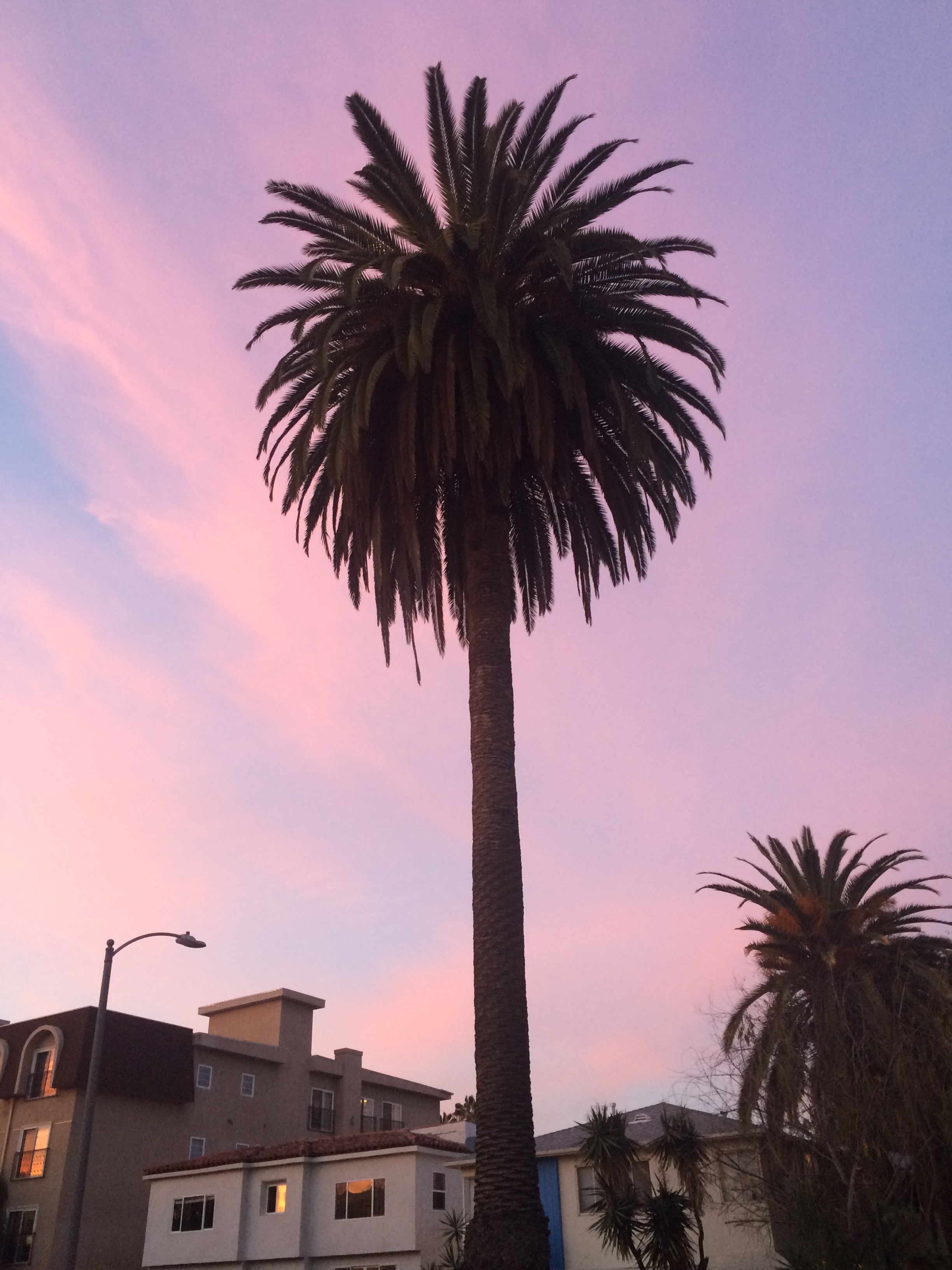
The day after my drive down Van Ness, I sit on my patio, sipping a glass of wine and scribbling notes for this blog. It’s Friday evening, and I’m toasting the end of one (eleven year long) chapter and the beginning of the next one. As I write in my journal, laying my anxieties out onto the page, the sun slips low behind my favorite palm tree. It’s remarkably quiet for a Friday evening on a busy street in the heart of Los Angeles. And then it happens: a red mustang convertible turns onto my street, top down, speakers blaring. Frank Sinatra’s “Fly Me to the Moon,” echoes out into the night, and I start to laugh in spite of myself. The song is an unlikely, anachronistic choice for 2016 and yet, it’s perfectly timed. Because you see, in addition to roses, I also have a thing for Sinatra. And so, I decide to take it as a sign. A sign not to worry so much about what the future holds. A sign that the future will take care of itself. A sign that tempted as I am to keep running, that right here, right now, is exactly where I’m supposed to be.

Until next time, friends.
IMG_7266

Wanderlust.

“Why don’t more people live on Maui?”

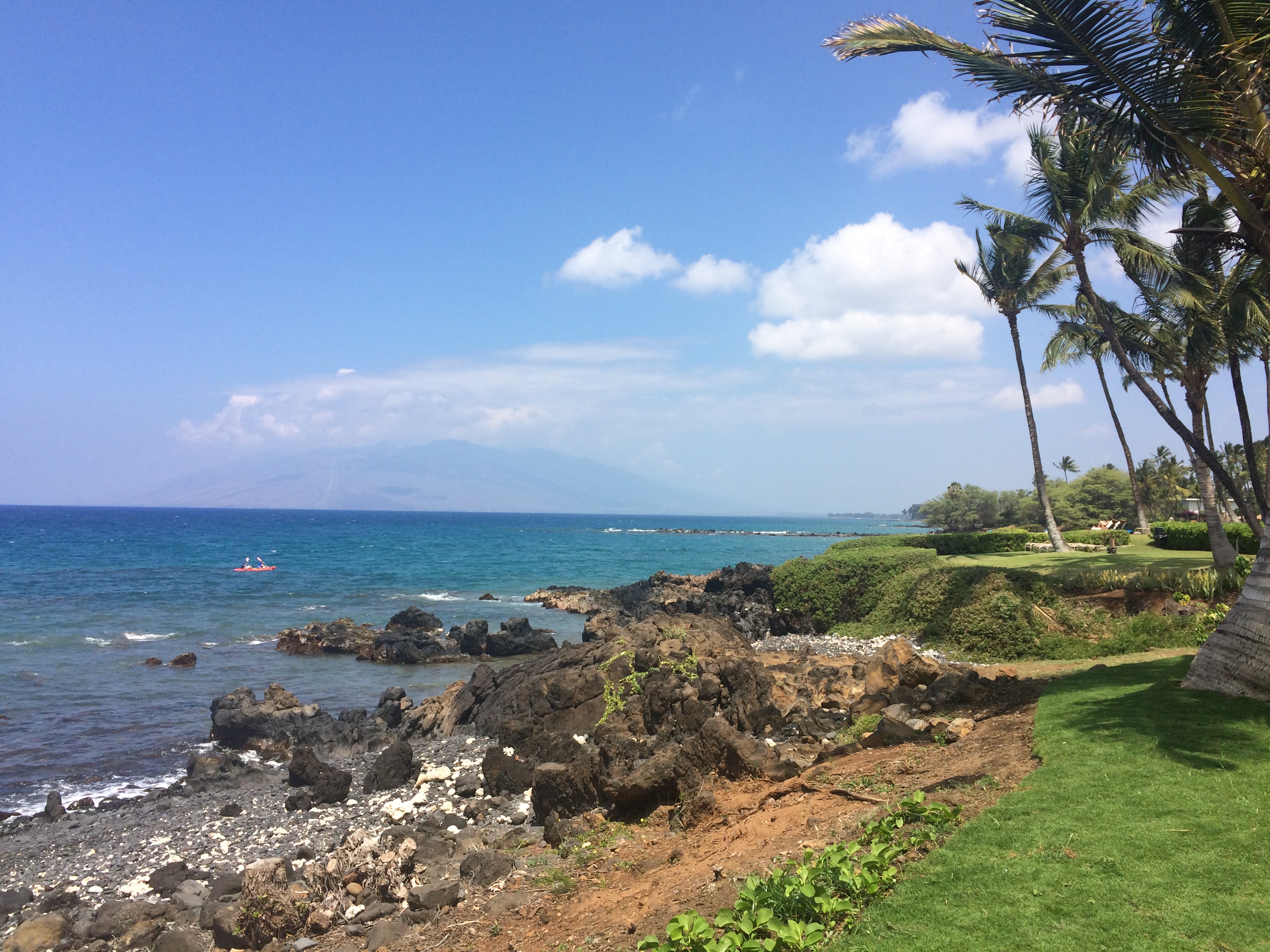
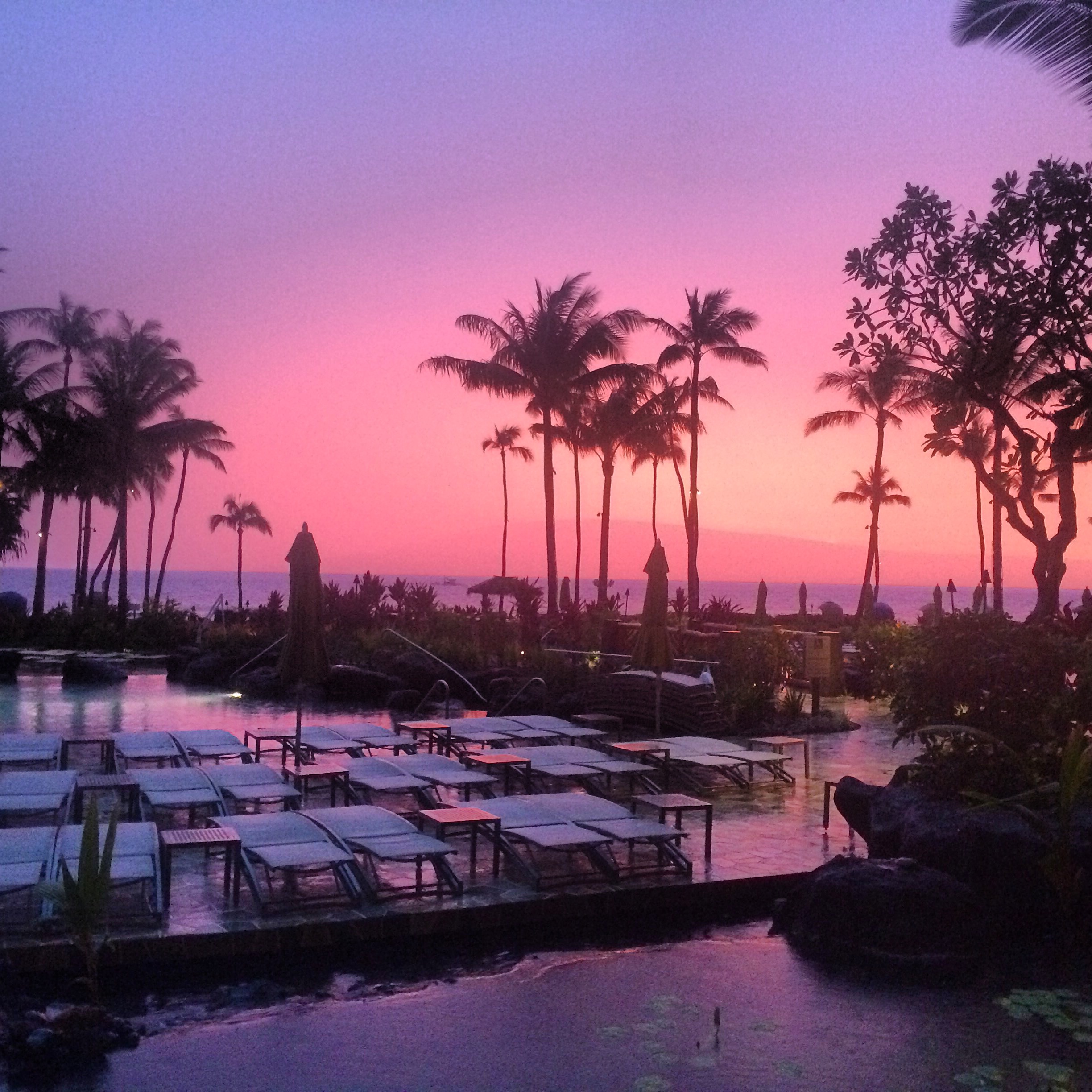
My brother-in-law poses this question to my sister and I as we sit, sipping Mai Tais, on the patio of an oceanfront bar in Kihei. Our faces pointed toward the Pacific, we admire the soft sandy beach, the sunlight glinting on topaz water, the crisscrossing cluster of palm trees extending into a clear blue sky that’s increasingly tinged with fuchsia and tangerine as the late afternoon presses on toward sunset. In the distance, someone spots a Humpback whale and restaurant patrons crane their necks to catch a glimpse of a tail fin or a water spout.

FullSizeRender[2]

“I mean, think about it,” he continues. “Look at all these tourists. Why don’t more of them say to themselves: This is beautiful. This is paradise. I should find a way to live here.”

We throw around some ideas. Hawaii is too expensive. Not enough jobs. Island fever. Paradise, while great for a vacation, is a little too perfect for everyday life.

Do we actually believe that, the “paradise is too perfect,” part? Do we think we should only be granted brief, idyllic respites from our otherwise stressful and crazy-making lives?  Do we secretly harbor the belief that it’s simply too self-indulgent to seek out a life of bliss? Or is the root of this belief a bit more complex? Could it be that we fear that if we actually do it – take the leap, uproot our lives, and relocate to a tropical paradise – we’ll realize that problems happen to people in “paradise” just as often as they happen to people everywhere else? After all, paradise is where we come to escape reality, not to live it, and if we make paradise home, where will we escape to then?

IMG_7066

Escapism has been my thing for a while now. I’ve always loved to travel, but never more so than these last few difficult years, when hopping on a plane to somewhere – anywhere – consistently holds more appeal than the here and now. While I think it’s too reductive to classify a searching wanderer like myself as someone who’s simply “running away,” there is some truth in it. I look toward each new voyage with hopeful eyes, wondering if this trip will be the trip: the magic cure-all that changes everything. Of course, it never quite works out that way.

My sojourn on Maui was no different. Don’t get me wrong: I am grateful for both the time I spent there, and for the suitcase full of memories I returned with. The island was stunning, the weather warm, the vegetation lush, the food scrumptious, the ocean soothing, the time spent with family happy. But in the spirit of the old “wherever you go, there you are,” cliché, real life intervened. I had work on my mind, with the deadline to finish the second draft of my play War Stories looming large. The family dynamic – never free from complication – was especially complicated on this trip. And whether it was jet lag or anxiety or some mixture of both, I couldn’t sleep, spending several nights awake for hours on end, leaving me tired and short-tempered the next day. Wherever you go, there you are.

I’m about to embark upon an interesting experiment, one I’m not sure if I’m ready for. My contract job is all but over, and then the future is mine, to make of it what I will. A prospect that is both exhilarating and terrifying. I’ve been craving this type of free, unstructured time for so long, craving it the way I crave my next vacation, but I can’t help but worry that, like my recent trip to Maui – like every trip, really – it can’t possibly live up to the hype.

IMG_7133

The immediate future will be busy. In June, I’m producing War Stories at Hollywood Fringe Festival, and the spring will be filled with rewrites, rehearsals, production meetings, marketing, mixers, and (hopefully) an abundance of creativity and fun.

But beyond that? I don’t really know. I have lots of ideas but nothing – and I mean nothing – is set in stone. For a meticulous planner, this is uncharted territory: a future where everything is uncertain, everything transitional, everything in the wind.

Which also leaves me at a loss as to how I should end this blog post. Normally, I’d try to wrap it up with something that provides a sense of closure, something that circles back to how I began the piece, something that ties it all together in a neat, tidy bow. But I can’t do that this time, because life isn’t like that. Not right now. It’s not conducive to neat, tidy endings. It’s fluid and changeable and open-ended.

But I suppose that’s the beauty of it. I suppose that – right now – is the point.

Until next time, friends.

 FullSizeRender[1]


Imaginary Lives.

I’ve got a job for you.

I’m sorry?

I just heard you say that the company you work for was sold. I’m looking for people and I can’t hire ‘em fast enough. Starting pay is 90K a year.

Wow. What’s the job?

Easiest money you’ll ever make. Just sitting behind a desk.

Yeah, but doing what?

Setting appointments. Making calls. Basic admin stuff. You’d be working for me and my team.

And what do you do?

I sell machine parts. Essentially, I’m a mechanic.

Oh. I don’t think that’s the right fit for me. I’m a creative: a writer, a marketer, and a brand strategist. I’m really looking for a job in a creative field. But thank you anyway.

I don’t think you heard me. The starting pay is 90K a year.

It’s not about the money.

Bullshit. It’s always about the money.

Not for me. But thank you.

IMG_6838 

I’m sitting in the lobby of my hotel in Kent, WA, sipping a glass of Cabernet. The awkward conversation (err, confrontation) that is currently unfolding is a perfect example of why I wanted to avoid this hotel-sponsored “Wine and Cheese” night. But after a long workday, the complimentary glass of red mere steps from my hotel room proves too difficult to resist. So here I am, trying to politely brush aside the attention of a strange man who’s sloshed on free booze and – worse – impervious to social cues.

The “conversation” quickly devolves, largely due to my refusal to acquiesce to his worldview that money makes the world go round. He takes personal affront to the fact that I have no interest in the job he’s trying to sell me, and within minutes, he has resorted to cursing and name-calling. Thankfully, it’s not long before he stomps out of the lobby in a huff, but not before delivering his final assessment: “If you’re just a snob that wants to write about eyeliner, there’s nothing I can do for you!” I laugh, in spite of myself. You’re right, dude. There’s nothing you can do for me.

My week in Kent has been a strange one. I’ve been working as an independent contractor, helping train employees of the medium-size company that bought the small Los Angeles-based accessories brand where I have worked for many years. Not only is the town of Kent itself odd – an industrial district populated by block after block of sprawling warehouses in the shadow of Seattle’s Sea-Tac airport – but the situation is odd, too. For a week, I’m immersed in a corporate culture completely alien to me – taking meetings, interfacing with all types of people and personalities (many of whom are suspicious of me and are not particularly friendly to the foreigner in their midst), and navigating office politics – all the while knowing that my immersion is temporary; that my normal life has simply been put on hold for a few days while I try on this very different life and see how it fits.

FullSizeRender

During the week, I find myself daydreaming both about what my life would have been like had I accepted a job in Kent, and what my life will be like once this temporary independent contractor position is over. It brings to mind one of my favorite exercises from Julia Cameron’s seminal book on creativity, The Artist’s Way, called “Imaginary Lives.” Here’ s a synopsis of the exercise, excerpted from the book:

If you had five other lives to lead, what would you do in each of them? I would be a pilot, a cowhand, a physicist, a psychic, a monk . . . Whatever occurs to you, jot it down.

The point of these lives is to have fun in them – more fun than you might be having in this one. Look over your list and select one. Then do it this week. For instance, if you put down country singer, can you pick a guitar? If you dream of being a cowhand, what about some horseback riding?

The question I am asked over and over again when people find out that my job is ending is, “What are you going to do next?” And what they actually mean is this: “Have you found another job yet?” When I reply that I’m not actually looking for a job, that instead, I’ve decided to take some time off, they are baffled. They usually manage: “That’s great – good for you!” But their faces tell a different story: one of confusion, skepticism and – often – envy.

IMG_6890

Of course, “time off,” doesn’t mean lying on the couch binge-watching Netflix or spending every day at the beach. For me, it means taking all the time and energy and creativity that I have invested in working for someone else and instead, channeling that effort into exploring my passions and building a life that I had previously only dreamed of. It means investing more time in this blog and on my writing in general. It means producing a brand new play (that I’m still writing) this summer at Hollywood Fringe Festival. And it means allowing myself the time and space to breathe deeply, to reflect on the hard lessons of the last few years, and perhaps, to try on some of the imaginary lives on my list and see how they fit.

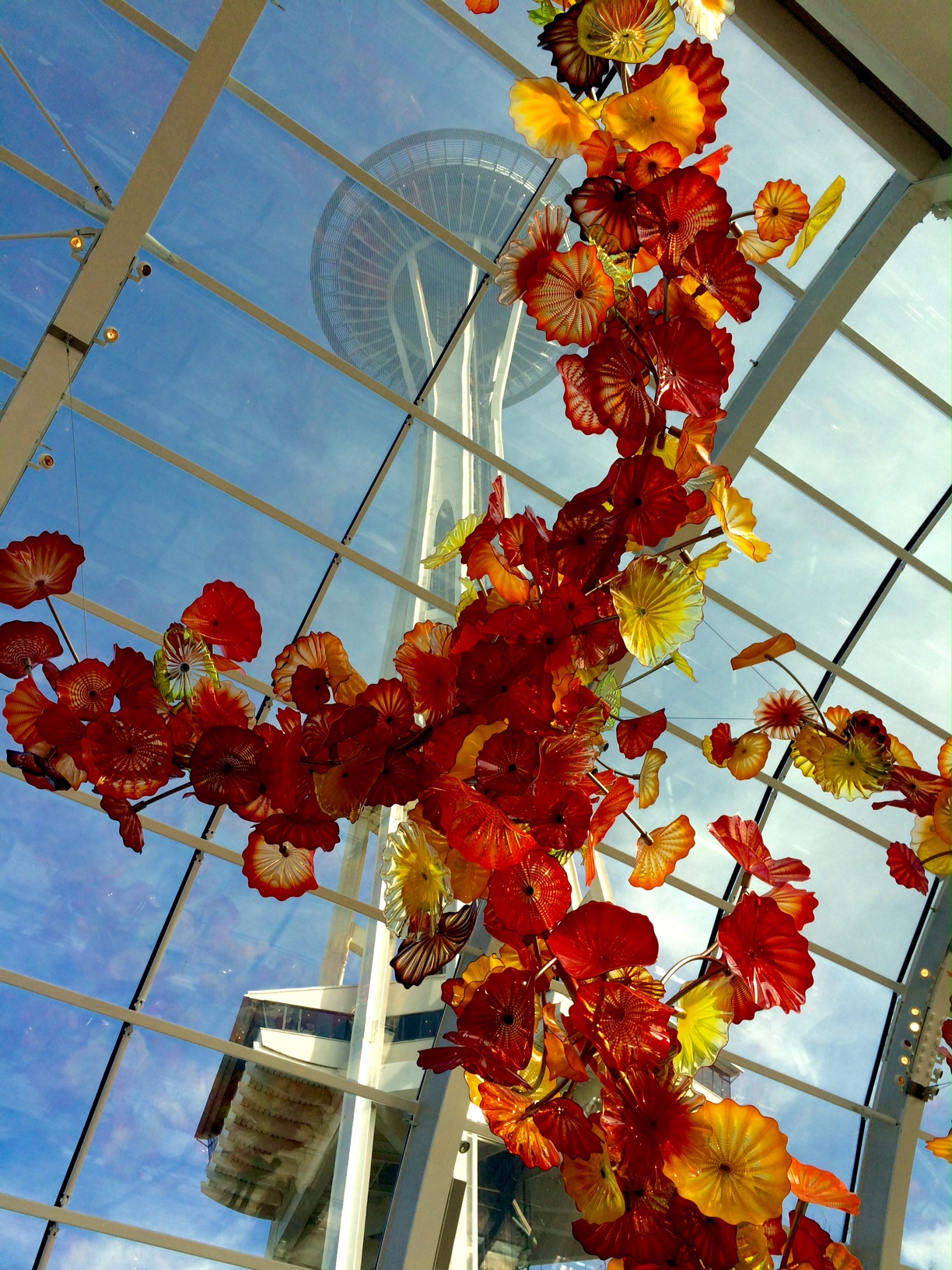
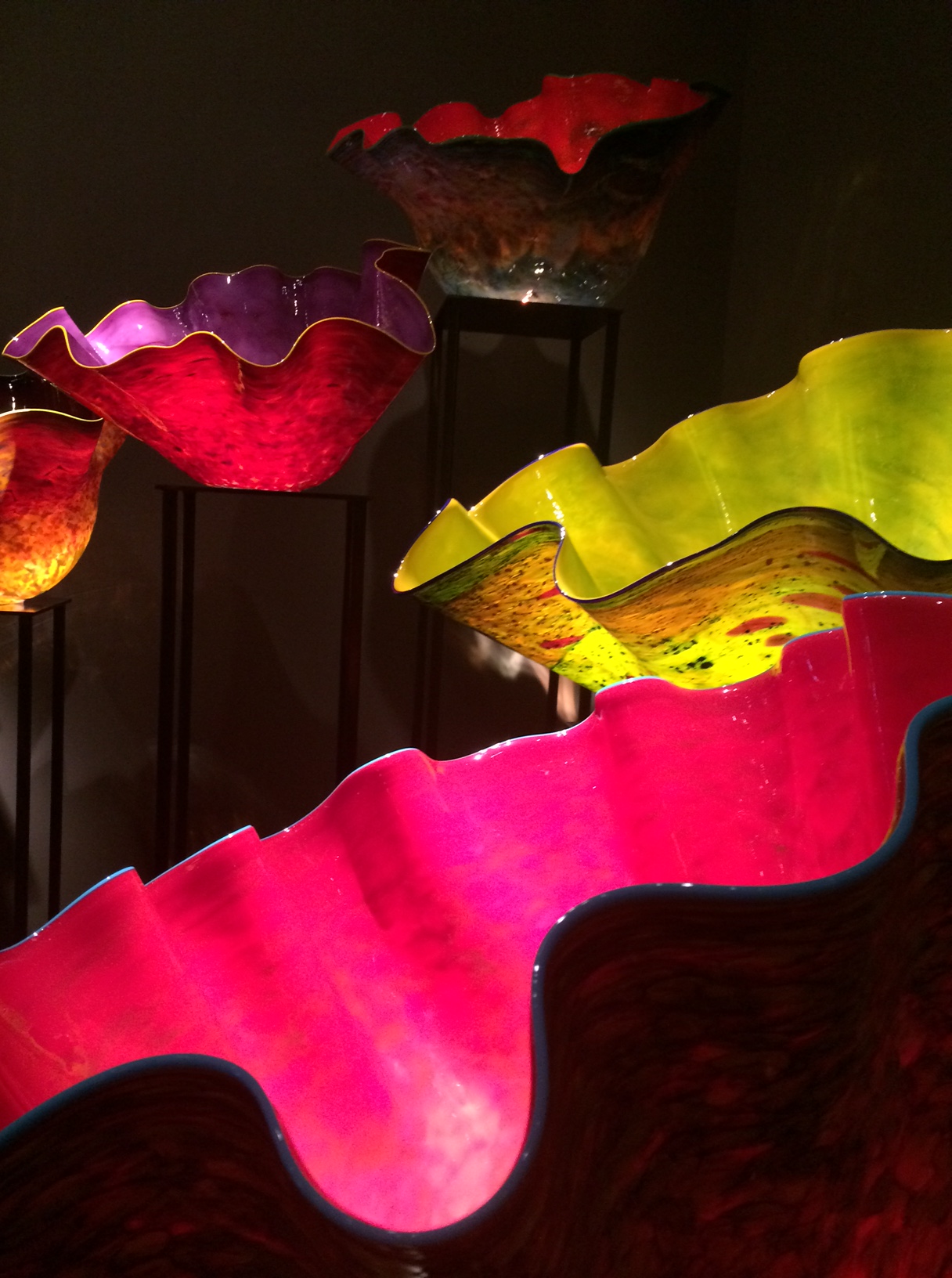
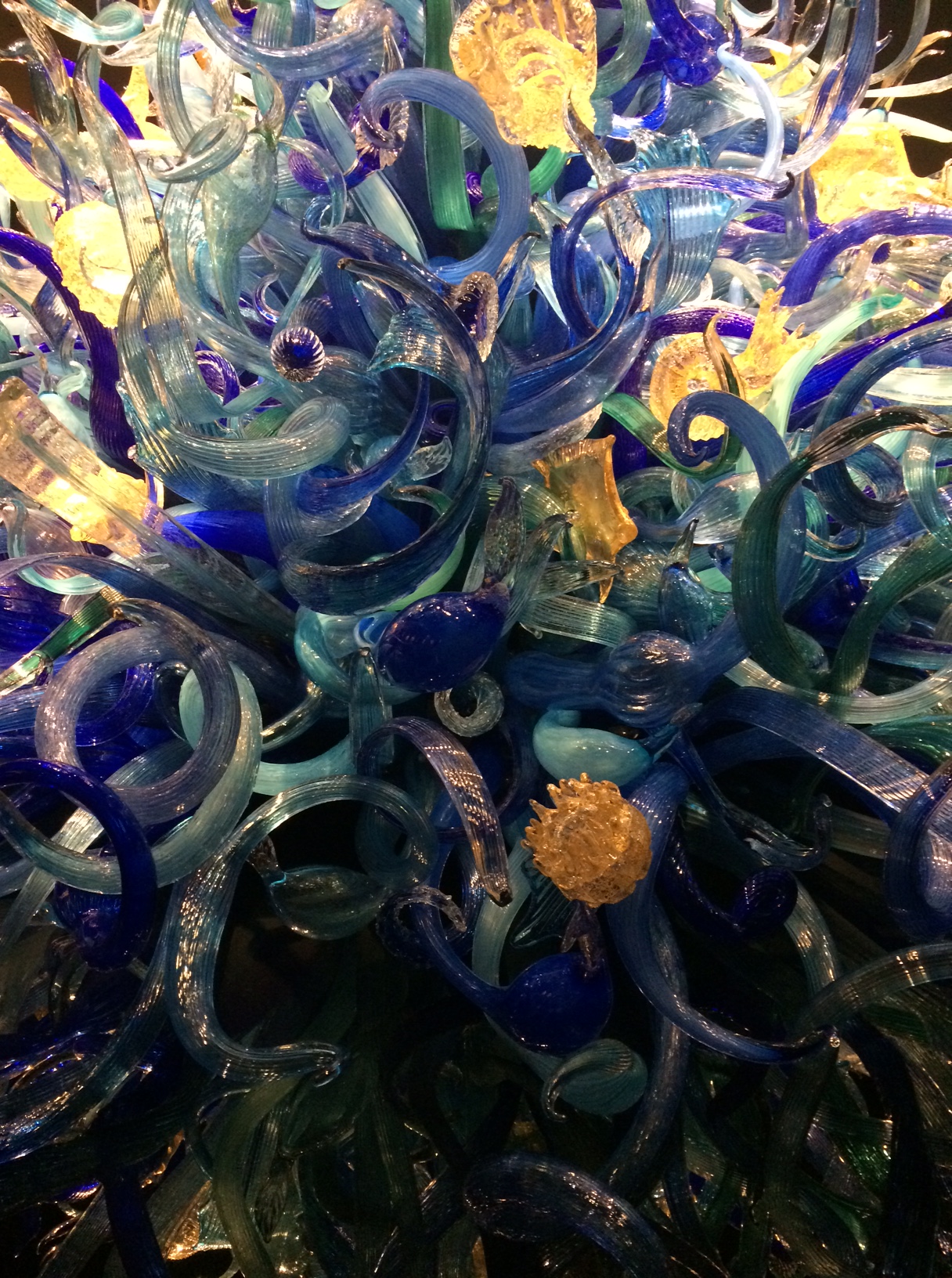
At the end of my week in Kent, I tagged on an extra day in Seattle with no agenda other than to relax and explore. I took a long walk through the city and ended up at the Space Needle, buying a ticket to a museum I’ve wanted to visit since it opened: Chihuly Garden and Glass. The museum and accompanying gardens are not very big, but I lingered there for hours, immersing myself in the color and detail of every piece. Later, while flipping through a catalogue in the museum’s café, I was struck by this quote from the artist:

I discovered my first collection of beach glass on the shores of Puget Sound when I was four or five years old.

I’ve never stopped collecting since.

As a Pacific Northwest kid, I’ve collected my fair share of colorful beach glass. But as I read that quote, I realized that over the course of my life, the things that I’ve been collecting more than anything else are stories. Stories both real and imagined, both my own and other people’s. And now, as I prepare to move forward on to this next, more exploratory phase of my life, stories are the things I’ll continue to collect. They’re what I’ll continue to figure out how to bring forth into the world. And they’re what will inform my next steps, including any of those so-called “imaginary” lives I might decide to try on.

Until next time, friends.

IMG_6929

The Year of the Monkey.

In truth, I don’t know all that much about Chinese astrology. As a child, I remember being fascinated by the red and gold Chinese restaurant placemats depicting the twelve zodiac animals and detailing the characteristics of each of them. Those placemats taught me that as a December 1980 baby, I am a Monkey: a sign known for its optimism, cleverness, sense of adventure, curiosity, and inclination toward mischief.

IMG_6723

On February 8, we began a new Lunar New Year: the Year of the Fire Monkey. According to the Chinese zodiac, it is not a good thing when you enter a year that corresponds to your sign. In fact, it is usually quite unlucky. This is an assertion that I have chosen to ignore. Given the way 2016 began, can you blame me?

A couple of weeks into the (Western) New Year, my car was vandalized, resulting in thousands of dollars worth of damage and leaving me feeling shaken and scared about the neighborhood I call home. My temporary job as an independent contractor – that began after the company I worked for was sold and moved to another state – was more stressful than I’d anticipated, leaving me tired and frustrated. Inspiration was difficult to come by, and my writing stalled. A persistent feeling of hopelessness started to creep in, threatening to derail my big plans for 2016.

Probably out of sheer stubbornness and my absolute need for things to be better this year than they’d previously been, I pushed forward. I kept writing, even though I didn’t feel like it. I reached out to a friend who’d produced my last play, asking her to come on board, even though I didn’t yet have a script. I renegotiated the terms of my independent contractor job, resulting in an arrangement more favorable to me. And I began the insurance claims process for the damage done to my vehicle.

Little by little, the clouds stared to lift. The original timetable of eight weeks to repair my car turned out to be mere days as the backordered part my mechanic needed became available much sooner than expected. Filing the insurance claim proved to be easier than I’d anticipated (dare I say, it was even pleasant), and within a couple of weeks I received a check covering all of the repair costs beyond my deductible. My friend and previous collaborator agreed to sign on to co-produce and direct my new play, giving my writing an increased sense of urgency and providing the motivation I needed to finish a first draft. And a fun-filled weekend celebrating a dear friend’s birthday in the San Francisco Bay Area lifted my spirits and temporarily curbed my growing wanderlust.

IMG_6697

By the time the Lunar New Year began, I was feeling like my old optimistic Monkey self again. A few days later, my aunt and uncle arrived in L.A. for a visit, booking a hotel on Ocean Avenue in Santa Monica overlooking the pier, Palisades Park, and the Pacific Ocean. Their visit coincided with a rare winter heat wave: clear blue skies free of the smog that so often blankets this city, temperatures in the 80s, the Pacific sparkling like so many sapphires. The three of us hadn’t been together since Grandpa’s death three months earlier, and after the intense, emotionally taxing period of hospice, reveling in the majestic, sun drenched California coastline felt like a miracle.

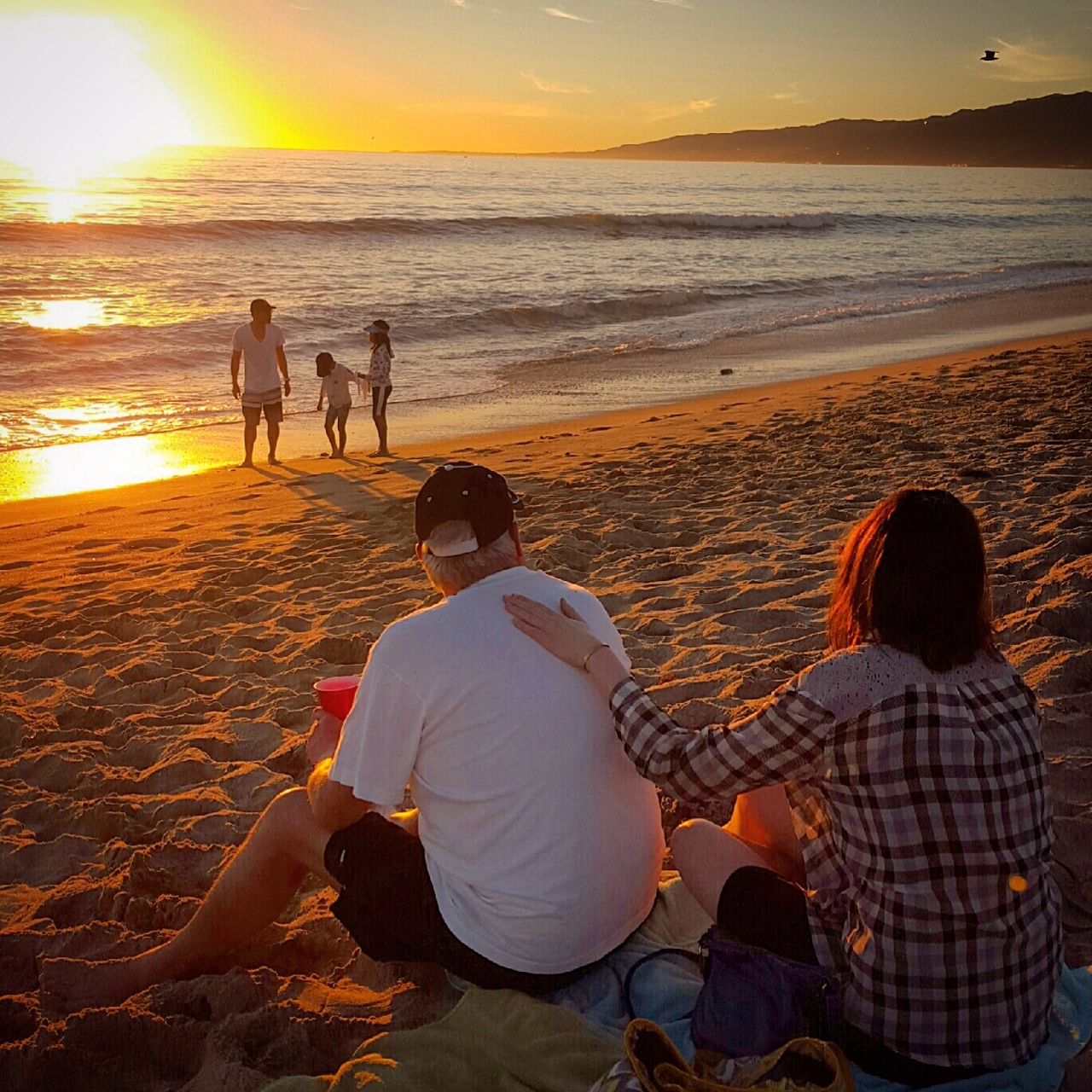
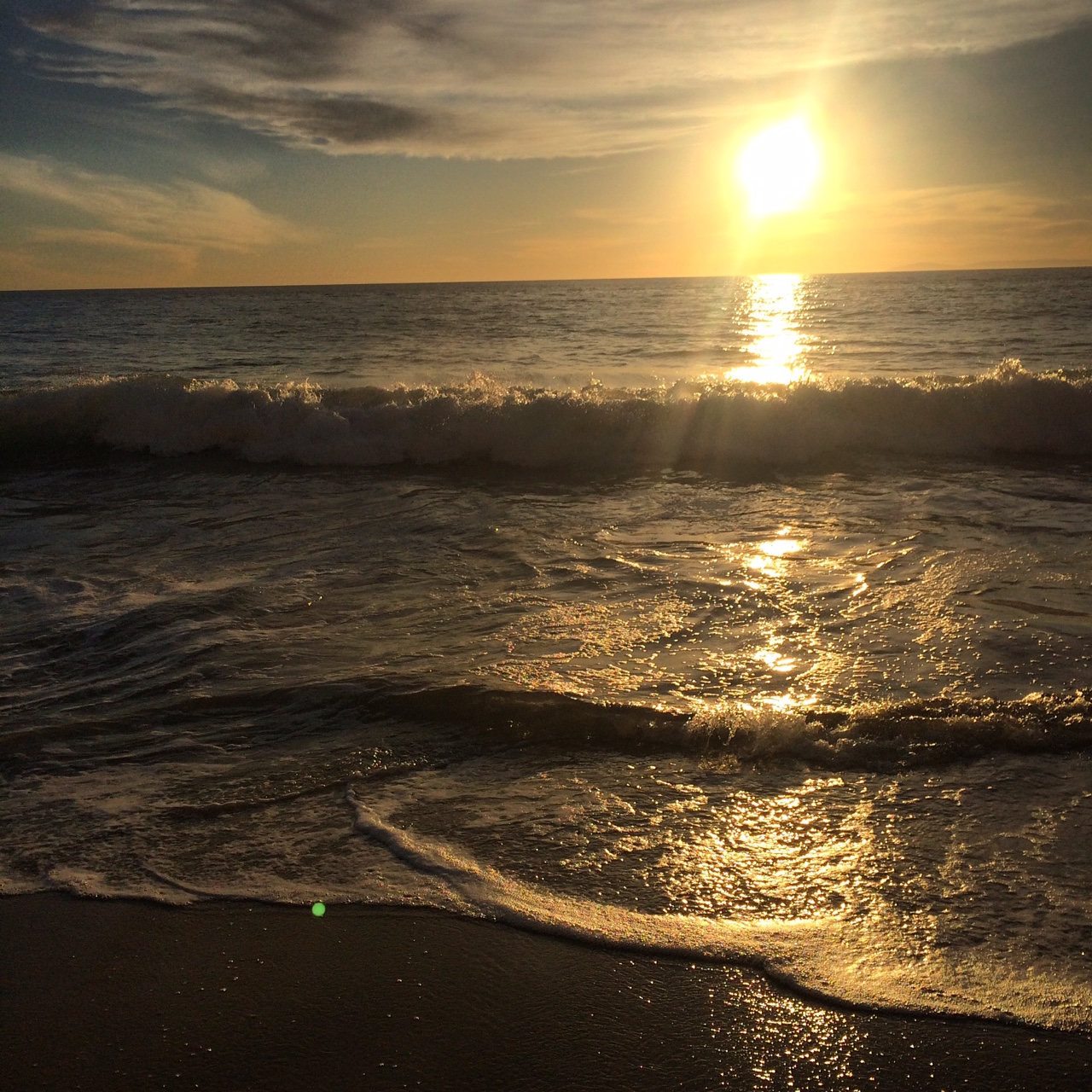
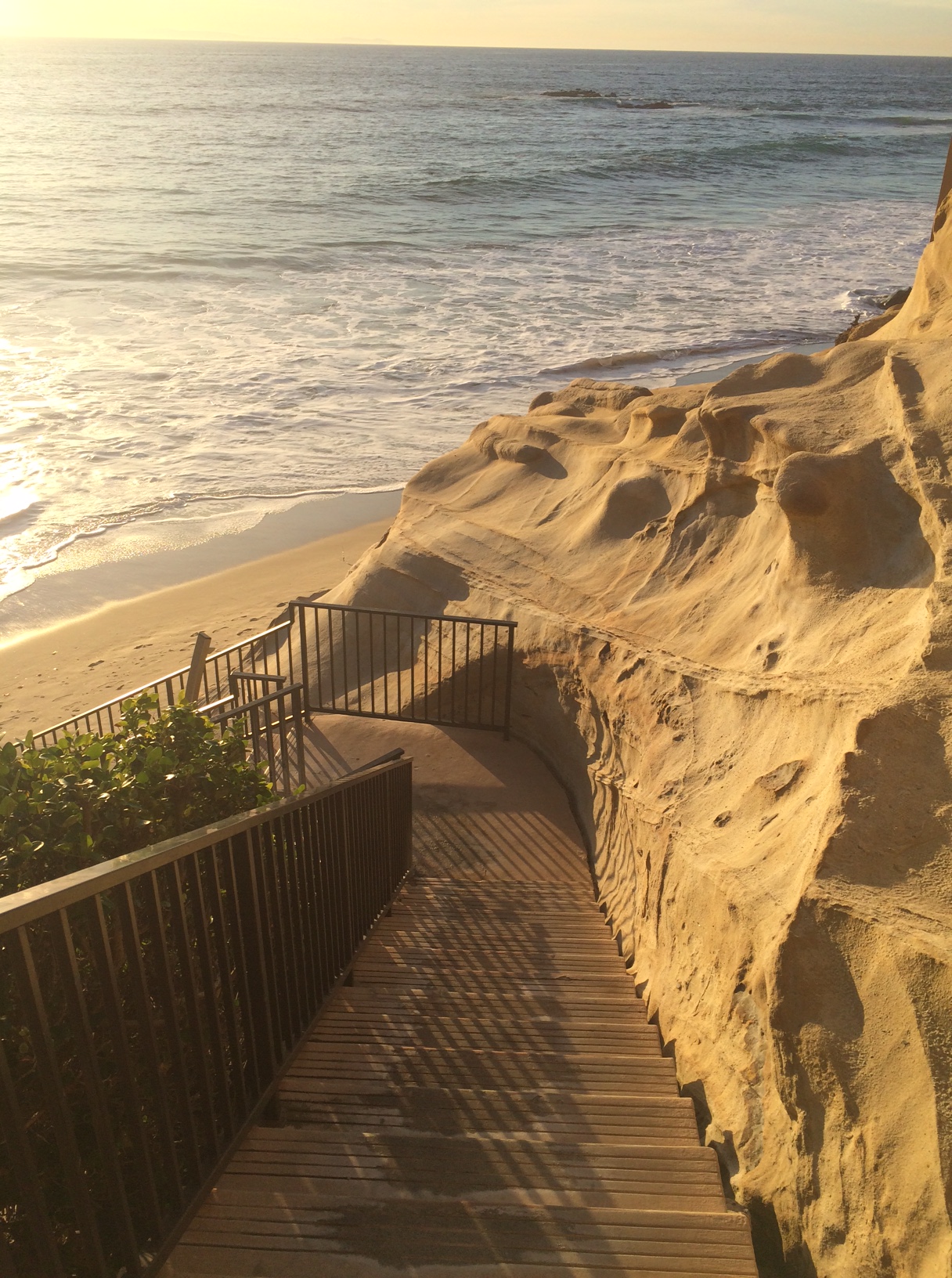
On President’s Day, armed with towels, a water canteen filled with fancy French champagne, and red Solo cups, the three of us marched north through Palisades Park, away from the throng of tourists. At Montana Ave., we descended steep wooden stairs, crossed the bridge over Pacific Coast Highway, and landed on Santa Monica Beach, sinking our toes into the warm sand. We waded in the ocean, the foamy waves lapping at our feet, and then settled into the sand. We filled our cups with fizzy liquid, raised them in a toast to Grandpa, and then turned our eyes toward the fiery orange sun slipping low on the horizon and fell silent.

I captioned a photo from that day, taken by my aunt of my uncle and I looking into the sunset, my hand resting upon his shoulder, with a quote from a letter that my grandfather wrote to me more than a decade ago: The beach never changes, ‘tis only we who change. Those words recalled a different time, and Grandpa was referring to a different beach, yet they still hold true.

I have changed. We all have. Given everything that has happened over these last three years, it would have been impossible not to. And while I have no idea what the future holds, little by little, I am learning to let go of my obsessive need to control it. Maybe this Monkey Year will be lucky. And maybe, as the Chinese zodiac asserts, it won’t be.  But two weeks in, I have decided that whatever happens, I will greet it with the same indefatigable spirit of my zodiac sign: with curiosity, with optimism, and with an unwavering sense of adventure.

Onward.

Until next time, friends.

IMG_6737

Where I live.

January has not started out as I’d hoped. I began 2016 filled with enthusiasm for the year ahead and the changes that it promised, but that enthusiasm was quickly replaced with the less-than-bright-and-shiny realities of the day to day.

Immediately after the glow of the holidays wore off, I found myself surprisingly unmotivated: sluggish, fatigued, even a bit depressed. In December, life was moving fast and I struggled to keep up, but the manic energy that it brought also seemed to serve as a sort of inspiration. Words and ideas flowed out of me. I had so much to say, and writing felt easy.

Not so, lately. Every day, I sit down to work on a new piece: a stage play I’m planning to produce in early summer. And every day I find myself frustrated, tugging at a narrative that hasn’t quite shown me how it is meant to unfold. Little by little, I’m getting there, but the progress has been a maddeningly slow one of scribbling words into my notebook and scratching them out, throwing out more than I’m keeping, writing and re-writing.

IMG_6567

And then there was yesterday. Running out for groceries, I shifted my car into reverse, and heard something that sounded like a motorcycle revving its engine. Is that me? I thought. I turned off the engine and the sound stopped. Turned it on and there it was again. What in the hell? I had never in my life heard a sound like that come out of my almost stealthy quiet Prius. Exiting the car, I smelled gasoline in the air.

Calls to Toyota and Triple A revealed what had happened: someone had stolen my catalytic converter. Prior to yesterday, I’d never even heard of a catalytic converter, but it is amazing how quickly Google and a couple of mechanics with I’m so sorry faces can turn you into an expert.

According to Auto.com, “the job of the catalytic converter is to convert harmful pollutants into less harmful emissions before they leave the car’s exhaust system.” Without it, not only does your car become a major polluter, it makes a roaring sound akin to having a pack of Hell’s Angels riding shotgun. Not pleasant. As the apologetic mechanic at my local Toyota informed me, there has been a rash of catalytic converter thefts all over L.A., due to the fact that it contains valuable metals that are then melted down and sold. And as an external part, they’re relatively easy for an experienced thief to remove (by sawing them off!) within minutes. Now the kicker: because of the recent epidemic of these thefts, catalytic converters are on a national backorder and mine could take up to eight weeks (and cost thousands of dollars) to replace. Eight weeks? Without my car? In L.A.?

I suppose you could say that this was the punch in the gut that turned a disappointing January into an abysmal one.

Later, as I’m on hold with my insurance company, trying to figure out if any of this is covered, it hits me that it’s not just the money, or the hassle, or the fact that I feel stranded without a car that has left me so shaken. It’s the fact that for the first time in the nearly two years since I moved to this (mostly) quiet residential neighborhood, I feel unsafe. Yes, I live in a big, dangerous city, and yes my neighborhood is tucked away right off a busy intersection, but the street where I live is populated with nice people: young working professionals and families with kids and dogs. I know – and like – my neighbors. I walk everywhere, striking up conversations with friends and strangers alike. I don’t feel scared walking home at night. And yet, someone still came along and did this: hacked up a piece of my car in plain sight. It’s the car that has faithfully and reliably carried me around this city for eight years. The car that my mother gave me. I feel sick.

IMG_6568

Through my living room blinds, I see the late afternoon sunset beginning to streak the sky pink. I get off the phone, take a deep breath, pour a glass of wine and go outside to my patio. I’m lucky, I tell myself, as I breathe in the sunset and try to calm down. This sucks, but it will be OK. Maybe I’m not supposed to drive for a while. Maybe I’m supposed to slow down and simplify and focus on my writing. Maybe I’m supposed to move – the thought creeps in without my consent.

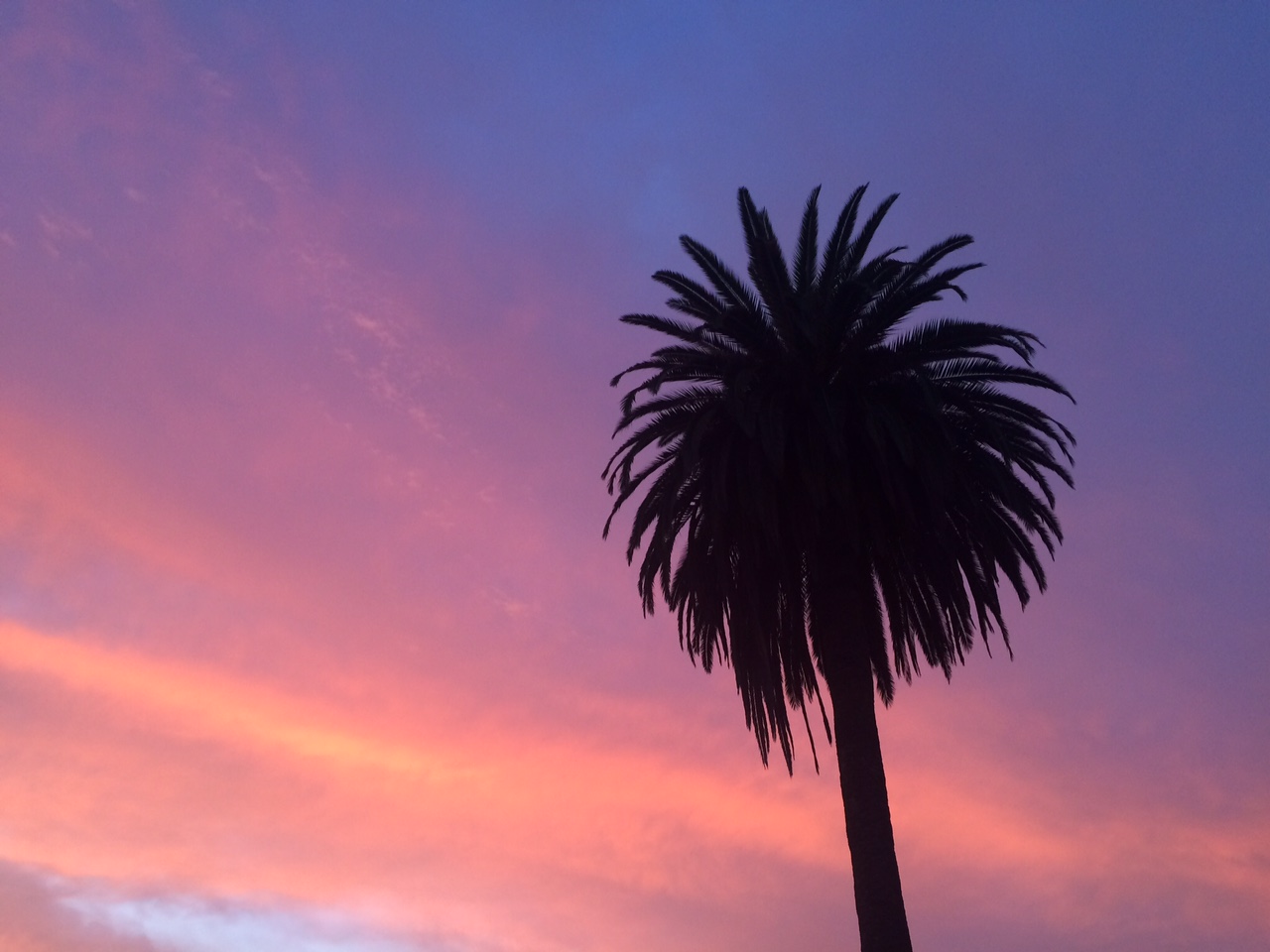
No, I think, as the rosy glow of the waning sun fills in the blue sky behind the majestic, lone palm tree that towers stoically above my roof. I don’t want to move. I don’t want to run away, just because things are difficult. I’m reminded of a saying from Lao Tzu that I posted on the Facebook page for my blog only yesterday morning, before I knew about any of this stuff with the car:

Stop leaving and you will arrive.

Stop searching and you will see.

Stop running away and you will be found.

I was attracted to the quote because it reminded me of my writing, and my tendency to abandon long form projects whenever I get stuck or when inspiration runs out. But maybe there’s a bigger life lesson there. One about endlessly searching for something to make me whole again, and always coming up short.

This is not the start to the New Year that I wanted, not at all. But maybe, buried underneath everything that’s icky and uncomfortable, maybe there’s something in it that I needed. Maybe instead of running away in search of something better, this is where I will be tested, and where I decide to stand and fight.  And maybe, in that fight, I will learn something about myself that I needed to know.

Maybe.  Or maybe it’s just a really crappy January.

Until next time, friends.

The Great Unknown.

A long December and there’s reason to believe/

Maybe this year will be better than the last/

I can’t remember the last thing that you said as you were leavin’/

Now the days go by so fast.

– Counting Crows

IMG_6165

I’m not very good at New Year’s resolutions. Oh sure, I make them. I make them every year, without fail. I’m just not very good at keeping them.

I approach every New Year with renewed enthusiasm, determined that this year will be the year that all of my dreams come true. But anyone who’s ever abandoned their resolve before the close of January will likely agree: it’s one thing to make grand promises in a happy, hopeful champagne haze as the clock strikes midnight, and quite another to do the hard work of goal setting, holding yourself accountable, and meeting the necessary self-imposed deadlines on the way to achieving personal growth.

But this January, I stand on the precipice of a very different year. It’s a year where change is inevitable. A year that has challenged me to live differently. A year that has proposed a dare.

Shortly after my grandfather died, I returned to Los Angeles to discover that the small company I’ve worked at for the last 11 years – essentially my entire adult life – had been sold. There was a new job waiting for me in another state. But not just any state:  it was the state where I was born, where members of my family lived, and where I’d been thinking about moving back to. Surely this was the universe giving me a sign, right?

Well, maybe not. The closer I looked at the job and the ways my life would change if I accepted it, the more the sinking feeling in the pit of my stomach grew. While a piece of my heart would always reside in the Pacific Northwest, it was actually all of the time I had recently spent there seeing my grandfather through hospice that opened my eyes to how much I still love my life in L.A. True, Los Angeles can be a harsh and difficult place to live, but it’s also a place of tremendous energy and excitement. It has been my home for fifteen years, and in that time I have built a solid community of amazing friends and gifted creative collaborators. I had been seriously considering leaving L.A., but after my grandfather died, I realized that I wasn’t ready to. There was still too much left undone – opportunities unexplored, projects unfinished – for me to walk away now. If I left before I felt ready, I knew I’d be filled with regret.

IMG_0751

Still, staying in L.A. meant no job, and stability had always been important to me. In contrast to my old position with the small company – where I’d sacrificed pay increases for the ability to work from home, maintain a flexible schedule, and have a tremendous amount of autonomy – this new company was much bigger, and much more corporate. It was a grown-up job. I’d be an integral part of their marketing team, with the ability to climb the corporate ladder and build an impressive resume. This job was a sure thing.

But once I got really quiet and listened to my inner voice, I realized that there is no such thing as a “sure” thing. Here’s what I believe instead: we trick ourselves into investing in “safe” choices and manufacturing the illusion of security to distract ourselves from the terrifying truth that everything goes away. Even us. Anyone who has ever received that phone call, or that diagnosis or that pink slip knows that the foundation upon which we build our lives is fragile, and it only takes a sudden, unexpected gust of wind to send everything tumbling down.

I never thought that, at thirty-five, both of my parents would be dead, and my grandparents, too. I never thought that I’d get married, and that it wouldn’t work out. I never thought that the company I had worked at since I was twenty-three would leave the state, taking my job with it.

But all of those things happened. I wasn’t ready for any of them, but they happened all the same.

IMG_2251

My father was a serious risk taker. I wish I was more like him. In truth, I’m kind of a chicken. Not Dad. He preferred to put it all out on the line and roll the dice. Sometimes, he lost, and he lost big. But he also won, and his winnings made him tremendously successful. It is because of that success and the money that resulted from it that I realized something else: I don’t have to settle for a life I don’t want to live.

A few days before Christmas, I turned down the “safe” job to stay in L.A. For the first time in my life, I’m going to see what it means to not work in service of someone else, but instead to invest in building my dreams and the higher vision of my life. It is a choice that terrifies me, but it is the only choice that I could make. Here’s something else that I believe: my fear is less about running out of the money my parents left me and more about the fact that taking accountability for my life means that there’s no one else to blame if it all goes wrong.

So here I go. This New Year, I am plunging into the great unknown. I am filled with gratitude for the gift my parents have given me, and filled with fear that I’ll screw it up. But my gratitude is bigger than the fear. So is my determination. And so is the quiet, unwavering voice inside of me telling me that this is the right thing to do.

It’s been a long December and there’s reason to believe/

Maybe this year will be better than the last/

I can’t remember all the times I tried to tell myself/

To hold on to these moments as they pass/

And it’s one more day up in the canyon/

And it’s one more night in Hollywood/

It’s been so long since I’ve seen the ocean . . . I guess I should.

Until next time, friends

IMG_2209


Thirty-five.

On December 2nd, I marked a milestone birthday: thirty-five. Perhaps it’s fitting then, that this entry also signifies another milestone: my 100th post on Extra Dry Martini.

Bare Feet

Normally, I love birthdays (both my own and other people’s), but this one felt less celebratory and more like staring down the barrel of a gun. Thirty-five? Shouldn’t I have it all figured out by now? Shouldn’t I own a home, have a family, be navigating the ladder of success on my way toward building a lucrative career? Numbers don’t lie, and based on my age, there’s no denying that I am officially a grown up. So why aren’t I acting like one?

Though these (judgmental) thoughts danced across my brain, the truth is, when the day arrived, I was too exhausted to be as hard on myself as my inner critic demanded. I was fresh off the recent experience of seeing my beloved grandfather through hospice (which I documented here, here and here), and after spending the better part of a month camped out in a small town in rainy Washington state, I returned to Los Angeles only to be confronted with another piece of life-shaking news. While I’m not ready to share this latest development publicly (I will, probably in my next post), suffice it to say I find myself at a significant crossroads, with two very different paths to choose from. Whichever decision I make means big change, and the only way for me to know which road to follow is to look within my own heart and ask myself what I want.

Hotel Palms

The Friday after my birthday, I did what I often do when I’m feeling lost: I went to the ocean. I packed a journal, my birthday cards, a tattered copy of Anne Morrow Lindbergh’s A Gift from the Sea, and drove south. Needing to decompress from an intensely emotional couple of months, I decided to spoil myself and reserved an oceanfront hotel room at the stunning Surf & Sand Resort in Laguna Beach, CA.

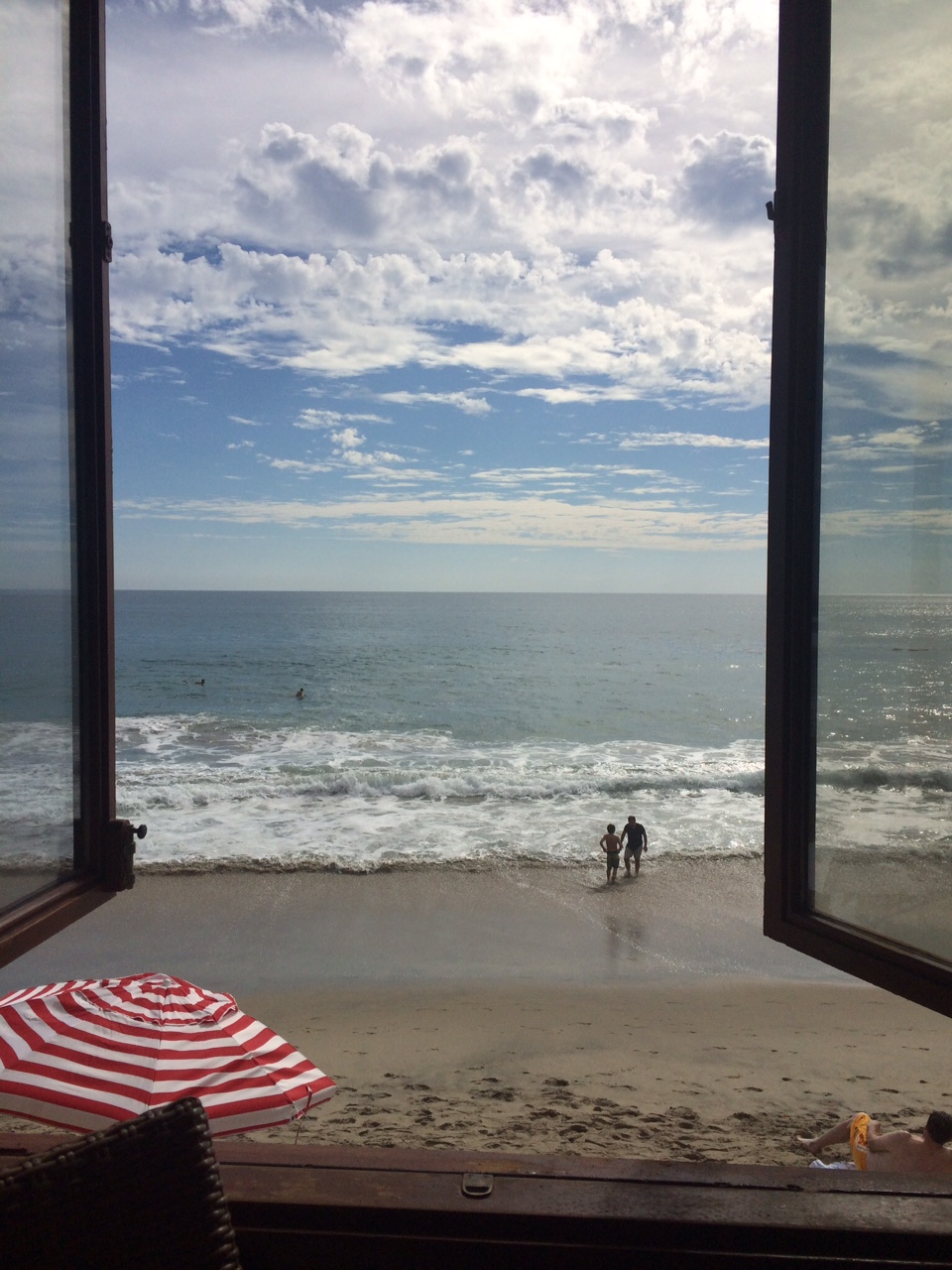
I expected the resort to be luxurious, but the property exceeded my every expectation. Upon checking in, I was greeted by an expansive guest room appointed in crisp whites and soft sandy neutrals, a bottle of sparkling water chilling on ice, an artfully arranged fruit and cheese platter, and a handwritten note of welcome from the hotel staff. I opened the white shutter balcony doors to a breath-halting view of the sunset over the Pacific. I cracked open a bottle of birthday wine, collapsed onto the enormous King Size bed, and fell asleep to the sound of waves crashing outside.

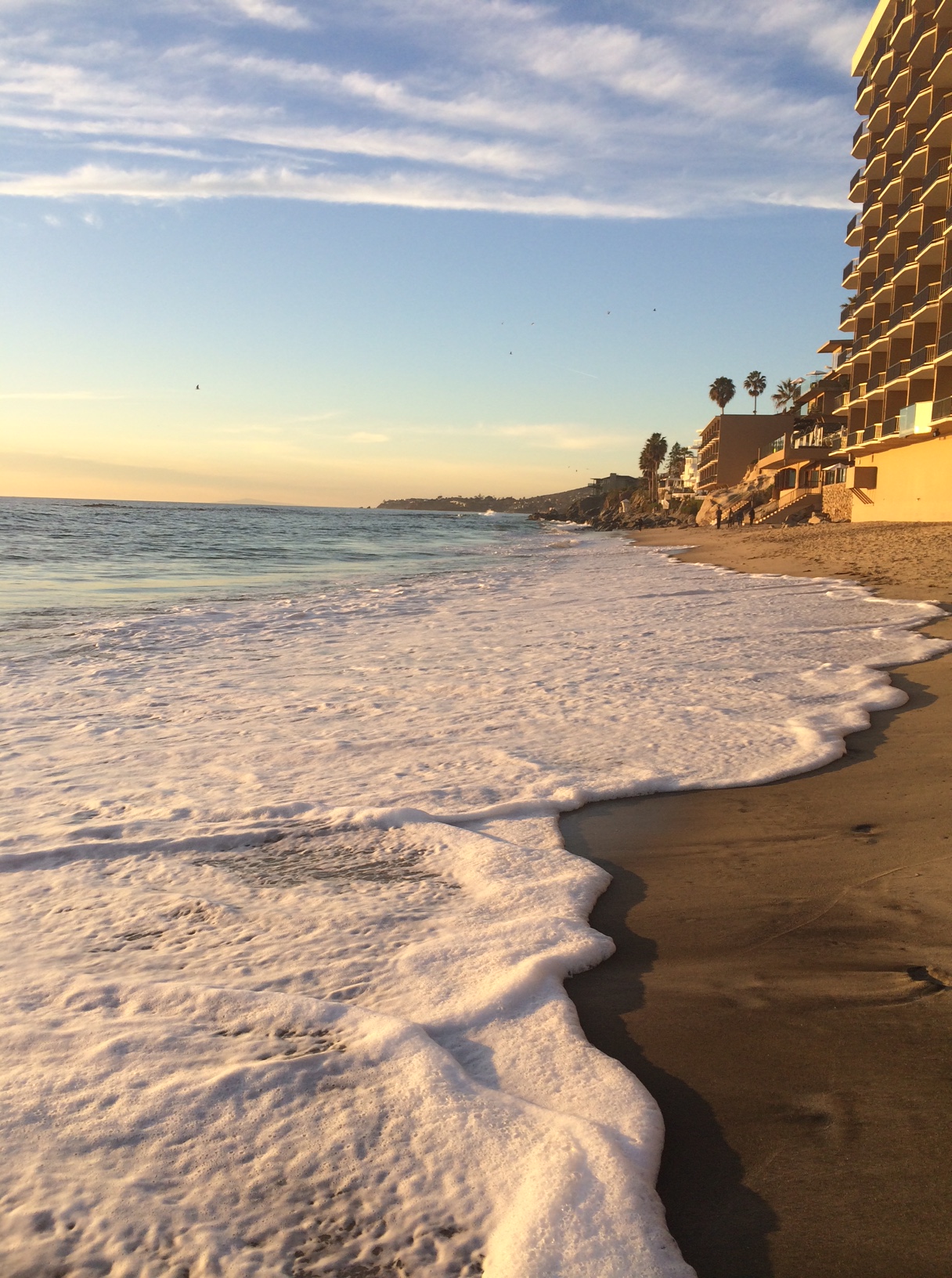
It took a full twenty-four hours for my tired brain to stop racing, and to allow my internal rhythms to slow down and mimic the pace of the ocean. I went for long walks along Pacific Coast Highway, enjoyed delicious meals, and savored the sight of the sun slipping below the horizon, streaking the topaz sky with tangerine fire.

Waves

On my last day in Laguna, I lounged in the afternoon sun and swam lazy laps in the warm saltwater pool. An hour before sunset, I made my way down to the beach. Running in and out of the surf, I laughed as the tide quickly receded then rushed back, swallowing my bare feet with a force as the not-quite-cold foamy white waves tickled my toes.

My whole life, the ocean has always held a certain mysterious allure. In the presence of its seemingly infinite expanse I am small, but not in a way that renders me insignificant. Instead, my tiny-ness thrills me, reminding me that my problems are a mere droplet compared to such a mighty sea. As the roar of the surf matches the drumbeat of my own heart, I know that I am part of the earth – all of it – and my connectedness to such great beauty makes me feel both awestruck and safe.

The first four years of my thirtieth decade brought challenges I never thought I’d face. Not this young, not this soon. These years have brought death and unimaginable heartbreak and a loneliness I feared I’d never find the bottom of. But they also brought strength, and resilience, and gratitude, and a deeper knowledge of love than I’ve ever known. I am often sad and fragile, but I am also wise, and tenacious, and alive.

Palms and Sea

A few days after my thirty-fifth birthday, I stared out at the Pacific, wondering how I could go on, now that the four people who had most shaped my life were no longer here. As I thought about them, images of other people appeared in my mind – both family and friends – who had stepped in to fill the void in the absence of those four. A cherished bunch who had laughed and cried with me, who had embraced me with kindness, who had counseled me through hardship, who had held me up when I feared I would collapse. And in that moment of quiet reflection, I knew unquestionably not only that I could go on, but that I would.

When I left Laguna, a piece of my heart stayed behind. I vowed to return after questions had been answered, decisions had been made, and challenges were met, head on. As Anne Morrow Lindbergh wrote in that well-worn book I carried along with me on my journey: “Patience – Faith – Openness, is what the sea has to teach. Simplicity – Solitude – Intermittency . . . But there are other beaches to explore. There are more shells to find. This is only the beginning.”

Until next time, friends.

Stairs

Gerry.

Come fly with me, let’s fly, let’s fly away

If you can use some exotic booze

There’s a bar in far Bombay

Come fly with me, let’s fly, let’s fly away

The tide is high on the morning of Halloween. So high, that the magic rock is hidden from view. “Where is it?” someone asks. “Underwater,” I say.

Grandma and Grandpa

As we reminisce about Grandpa’s daily swims in Case Inlet – the way he circled that tall, narrow, granite rock formation as though it were his prey, his snorkel mask strapped on, swim fins slicing through the water – I realize I don’t know the answer to the most basic of questions: “Why is the rock magic?”

No one seems to know. Finally, the only reply that makes sense: “Because Grandpa said it was.”

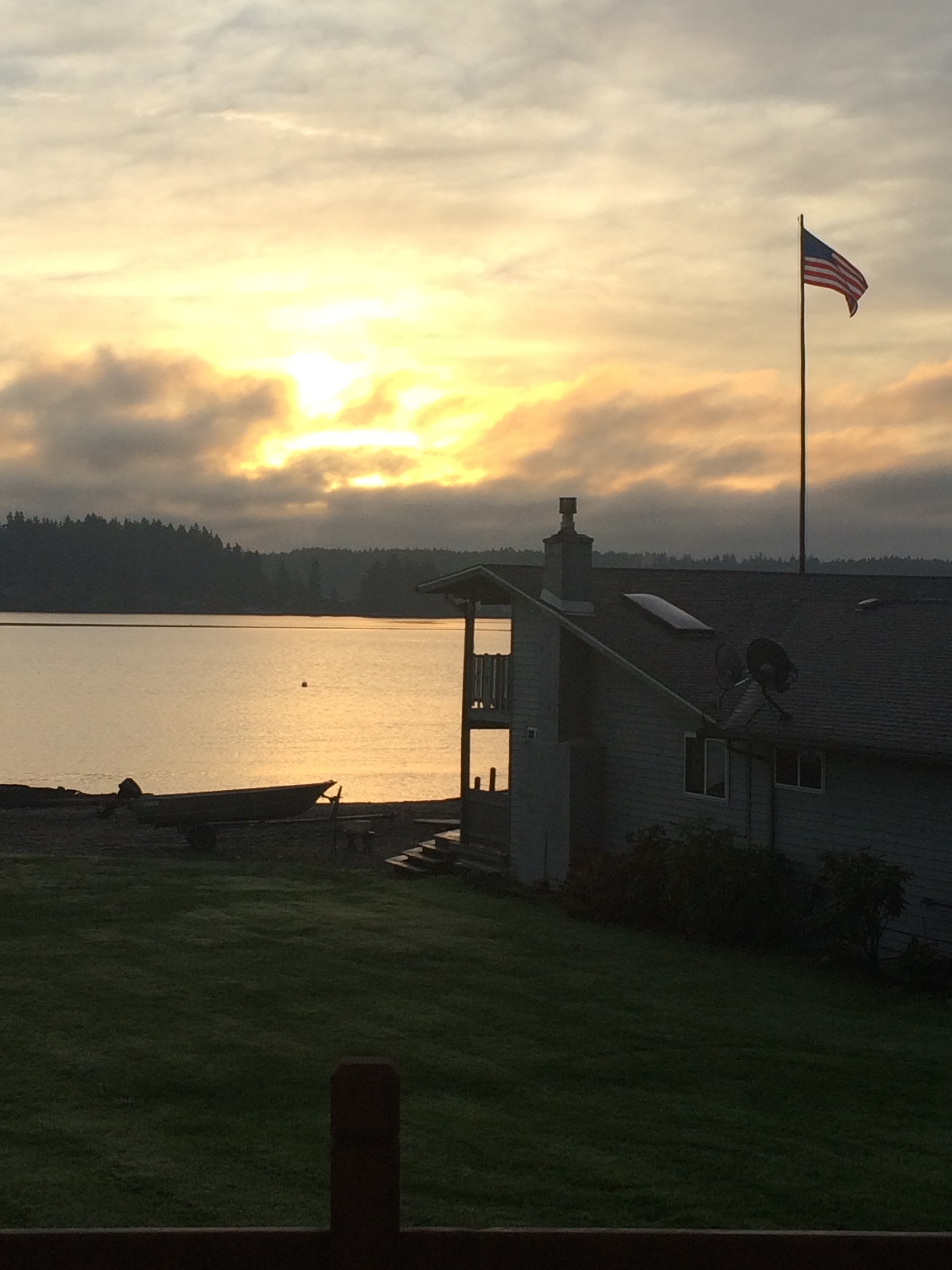
My grandfather, Gerald James Popelka (or “Gerry,” to those who knew him), lived a whole half century before I met him. There are so many things about his life that I don’t know, but what is clear to me as we gather on this Halloween morning, a group of twenty or so family and close friends, the hospice chaplain, and a Vietnam veteran who will honor Grandpa for his service as a Navy court reporter during World War II and the Korean War, is this: it was more than just a rock that he made magic, it was this whole place, this handful of acres tucked away on western Washington’s Case Inlet, a place that has been known to my family for the last five and a half decades simply as “the beach.”

The beach isn’t special simply because of its picturesque setting on a saltwater bay framed by tall banks of evergreen trees, Mt. Rainier towering above, keeping watch over us all. It’s special because over so many years, during all those summers spent boating and swimming, digging clams on the rocky beach, building great big bonfires, roasting S’mores and telling stories under the stars, this place has always been infused with the same spirit of delight with which my Grandfather undertook everything he did. As my Uncle Glenn said during closing remarks at Grandpa’s Navy blessing, looking around at the place, at all of us: “All of this is because of you, Dad.”

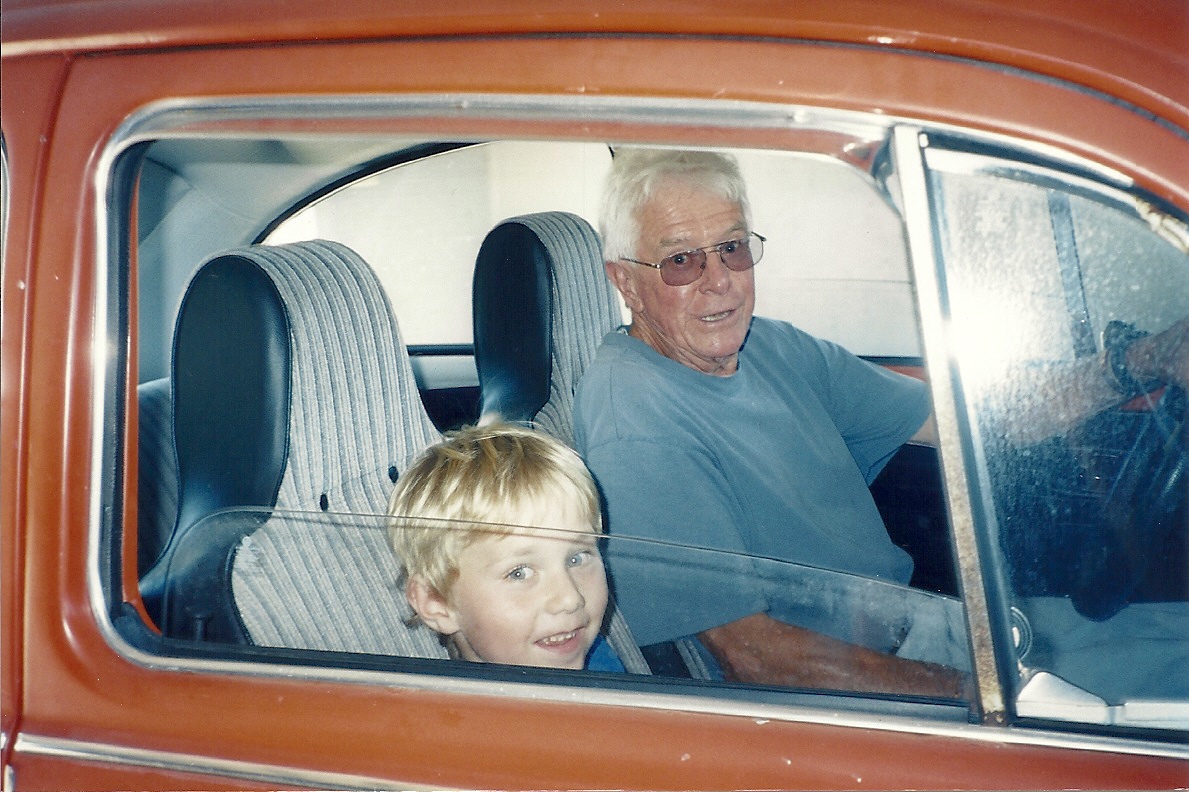
July 2005 Joyride

My Grandpa Gerry was a spirited Bohemian whose sense of humor and zest for life were utterly infectious. He was a lover of the lexicon, honing his skills by working daily crossword puzzles and ever ready to stump some poor unsuspecting victim with an impossible-to-figure-out vocabulary word. He was a practical joker, often following up a witty wisecrack with a mischievous twinkle in his eye. The bold striped t-shirts he favored matched his perfect shock of thick white hair and his larger than life personality.

Grandpa was tremendous fun to be around, but above all else, he was kind. To me, he was a bright light that illuminated the dark corners of an often sad and lonely childhood. He was the one person with whom I never fought, never exchanged a harsh word. In fact, I can’t remember him ever saying an unkind word about anyone.

On October 12th, I received word that Grandpa – at 89 years old – was terminally ill. After a recent series of what can only be described as traumatic experiences with death – my mother, my father, my grandmother – this sudden turn of events felt unnecessarily cruel. After so much loss, how could I possibly be expected to say goodbye to my beloved grandfather too? It wasn’t fair. I needed more time.

Hospice prepared us for the worst, telling us that given Grandpa’s failing liver, intense pain, nausea and heavy bleeding were all likely to happen “near the end.” As the social worker cautioned, “People hope their loved ones will pass away quietly in their sleep, but that rarely happens. Dying is usually quite an active process.”

Sarah Grandpa Black and White

I wasn’t ready, but I went to the beach anyway. For sixteen days, Grandpa and I sat together. We looked at old photos and reminisced. We shared secret jokes, poking fun at those who weren’t in on them. We counted the Canada geese that glided serenely across Case Inlet and congregated on a neighbor’s lawn.

But after sixteen days, without a dramatic change in Grandpa’s health, I headed back to Los Angeles with a plan to return in two weeks. It was only four days later that I got the call: Grandpa was weak, bedridden, and asking for me. Back to the beach I went.

I arrived on a Tuesday night. Friends and family were gathered in Grandpa’s room, and outside, the wind howled and rain poured. Grandpa drifted in and out of sleep, but he opened his eyes long enough to look at me and squeeze my hand. He tried to speak and couldn’t, but I told him that it was OK. I already knew.

I awoke the next morning, Veteran’s Day, to the sun streaming through my window, the clear blue skies and calm winds an unexpected gift after such a long and miserable night. Grandpa was sleeping peacefully, so I took a break to do some work. Around lunchtime, Glenn informed me he’d just gone to see Grandpa and told him that my mother was waiting for him to start cocktail hour. “Don’t be late,” he said.

FullSizeRender[1]

Now this next part will sound like I’ve made it up, because it’s the type of Hollywood ending a writer like me would invent, but I swear on everything that I am that it’s exactly what happened. I took my laptop to Grandpa’s room, and as my Aunt Sandy searched through his decades’ old collection of compact discs, I pulled up an iTunes playlist of standards. I tried a few oldies before I settled on a Sinatra classic. I sat next to his bed and turned up the volume:

Come fly with me, let’s float down to Peru

In llama land there’s a one-man band

And he’ll toot his flute for you

Come fly with me, let’s take off in the blue

Grandpa’s breathing slowed considerably and halted for several beats in between breaths. This was different, and we knew it. We called Glenn, who appeared in the doorway of Grandpa’s room somewhere around here:

Once I get you up there where the air is rarified

We’ll just glide, starry-eyed

Once I get you up there I’ll be holding you so near

You may hear angels cheer ’cause we’re together

Before Sinatra had finished singing, my grandfather quietly, gently, drew his last breath. As we hovered around his bed in a sort of reverent silence, waiting, knowing, yet not quite ready to speak the words out loud, I imagined Grandpa sitting with my Mom in the cozy living room of their old West Seattle house on Beach Drive, sipping martinis, enjoying the view of Puget Sound, Ol’ Blue Eyes softly crooning in the background.

FullSizeRender[3]

I inherited my love of language from my grandfather. And I believe that a wordsmith like him would understand better than most that there are times when words simply aren’t enough. After all, how could I possibly explain to you that after all of my fear surrounding what would happen when my grandfather died, that what actually did happen was so beautiful that it somehow made all the other deaths a little easier to bear? How could I express to you the depth of my gratitude for an exit so gentle that it helped restore my faith that sometimes, good things do happen to good people? And most importantly, how could I possibly capture in words the essence of a man who meant so much to so many, so that you could know him as I knew him, love him as I loved him?

I can’t. Words are not enough. I can only tell you that my grandfather, Gerald James Popelka, was the best man I ever knew.

And he made us all believe that a rock was magic, just by saying it was so.

Weather-wise it’s such a lovely day

You just say the words and we’ll beat the birds

Down to Acapulco Bay

It’s perfect for a flying honeymoon, they say

Come fly with me, let’s fly, let’s fly away

 Until next time, friends.

FullSizeRender[2]


Limbo.

Grandpa sits in his usual spot in the living room, staring out the picture window at the placid, silvery surface of Case Inlet, framed by evergreens that have turned an early November shade of amber. His yellow-tinged eyes reflect the vacant gaze of someone who’s looking but not seeing. “What are you thinking about?” I ask, patting him on the shoulder. I expect his typical response: “Nothing.” Instead, he intones softly, “I’m thinking about how quickly the time has gone.”

I’ve been at the beach for fifteen days, though of course, that’s not the measure of time that Grandpa is referring to. This evening, barring a catastrophe, I will leave, and board a plane headed back to Los Angeles. It is staggering to me that my time here has passed so swiftly, and yet, has contained so much within its rapidly elapsing days. I feel as though I’ve been moving in slow motion for weeks, traveling from joy to despair to fear in the space of a single hour, sometimes in a single minute. There is always another hospice appointment, another phone call, another email, another problem, another difficult conversation. And in between it all, I’ve been working, straddling two worlds – here and there – with the aid of an unreliable Wi-Fi connection.

I’ve never been very good at living in the moment, but these last couple weeks, the moment is all I’ve had. It’s no wonder my sense of time is so screwy, with Grandpa’s feeling borrowed and mine suspended. What a strange sort of limbo it is to sit with someone you love as they face the end of their life. The question that looms before us is when? It is the question he asks of everyone: his caregivers, the hospice nurses, the chaplain, the social worker, and of course, his family. It is the question that no one has the answer to, least of all me.

IMG_5702

I am prepared for what’s coming in a way that I wasn’t able to be with either of my parents, and for that I am grateful. I am grateful for all of the time I’ve been able to spend with him. But after fifteen days, there is little for me to do but wait.

Twenty-four-hour care is in place; contingency plans have been made. And the look Grandpa now sees reflected back in my eyes is one of someone who’s watching his every move, searching his face for signs of what’s to come. I can’t do this any longer. I can no longer sit around this rain-soaked place – beautiful as it is – waiting for my 89-year-old Grandfather to die.

I feel selfish for craving a way out, for craving warmth and palm trees and cheap, delicious Mexican food, and a hike in the hills and the sight of the Pacific and a desperately needed session with my therapist, but I do. I crave all of these things. I even crave the to-do list that awaits me upon my return, because it represents routine, and the opportunity to pretend, for a little while, that everything is normal.

So back I will go, for now. My return to the beach is already booked, but every ticket is refundable, every plan changeable. This type of freedom, it turns out, is expensive. But it’s the price you pay when you’re in limbo. When you’re left with nothing to do but wait.

photo 1


Doe Bay.

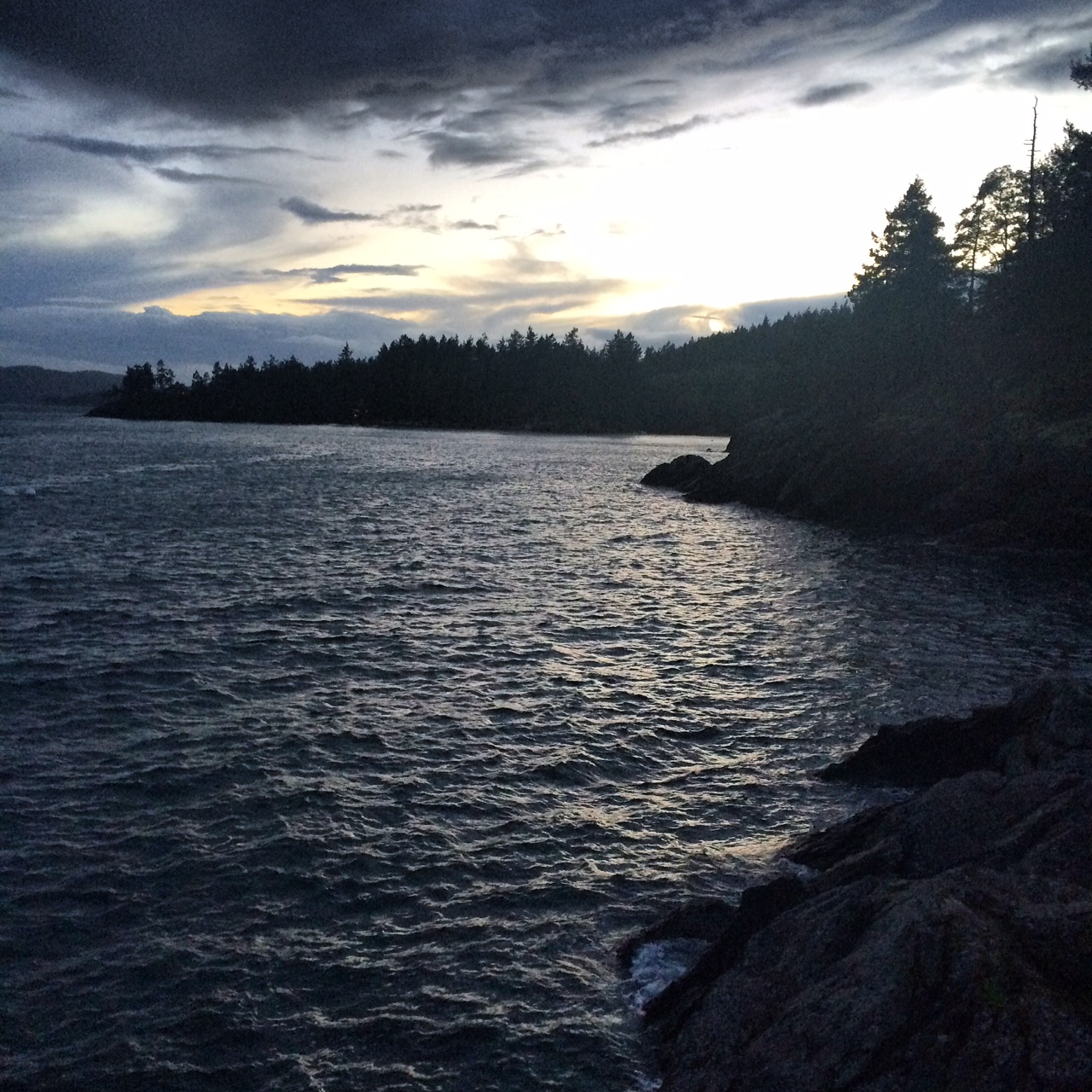
I’m sitting on Meditation Point, a promontory overlooking the sea, trying to decide where to fix my gaze. The unseasonably warm October weather has abruptly turned cold, and I’m shivering in my thin flannel shirt. I long for the puffy down jacket I left behind in the Retreat House, but I brush the longing aside, choosing instead to focus my attention on the rippling waters of Otter’s Cove, and the fog rolling over the tops of impossibly tall evergreen trees.

IMG_5550

A few minutes ago, as part of her workshop at Write Doe Bay, papercut artist Nikki McClure led us on a walk through the woods, instructing us to remain silent as we followed the forested trail toward the overlook. Rather than speak, we were meant to simply observe the natural beauty all around us, find a spot to settle in, and sketch what we saw.

As our group of writers trudged along, passing campsites, we encountered a middle-aged couple cavorting among the trees, the door of their yurt flung open as they enjoyed a morning picnic. They hollered “hello!” at us, and though I (mostly) obeyed the instructions to stay quiet, the pair’s unchecked exuberance left me unable to suppress a chuckle. I wanted to shout greetings back at them, but instead, I smiled. A smile that said, “I know just how you feel.”

I’ve been back from Doe Bay for just over a week, and though it was my second time attending Write, this trip was a markedly different experience for me. Sure, the teaching artists were different, as were most of the attendees. But one year later, I was also different. And it was this difference that I found to be the most striking.

IMG_5545

There’s a phrase that the founders of Write often use when referring to the workshop and to Doe Bay itself: The power of a place to unlock you. To underscore this idea, participants exchange vintage keys at the close of the workshop, placing them around each other’s necks on a string of suede.

But here’s the thing: if a person is going to be unlocked, they have to be willing to open up. And last year, I wasn’t. I came to Doe Bay fragile and frightened, hollowed out by tragedy, and desperately seeking some magic elixir to heal my battered psyche. I listened to the powerful stories of the other writers. I was moved. And I tried my best to be present. But if I’m honest, I wasn’t able to allow myself to participate in the workshop in any meaningful way.

Fast forward one year later. On this visit, waking up to the staggering sunrise outside the window of my cabin felt like nothing short of a miracle. On this visit, I found myself passionately curious about all of the attendees, wanting to connect with each and every one of them – even if only for a few minutes – in the short time we had together. And on this visit, the fear that churned in my stomach at the thought of reading my unpolished workshop writing or deeply personal stories from my life served as motivation to jump in and share, rather than something that held me back.

IMG_5533

During her workshop at Write, Jenny Feldon asked us to consider changing one thing upon our return to our “normal” lives. “Change one thing,” she said, “and believe that other changes will follow.”

One year later, with Doe Bay as my barometer, I can tell you that, for me, many things have changed. Maybe the island and the rolling fog and the space we share together over the course of those three days really are magic. And maybe I simply needed to try again, to come back to this beautiful place tucked away amidst the trees, to realize how much – over the last year – I have been coming back to myself.

The power of a place to unlock you.

Until next time, friends.

Doe Bay Fall 2015

Blog at WordPress.com.