Strong in our broken places.

“Sometimes the people around you won’t understand your journey. They don’t need to. It’s not for them.”

-Unknown

IMG_3546

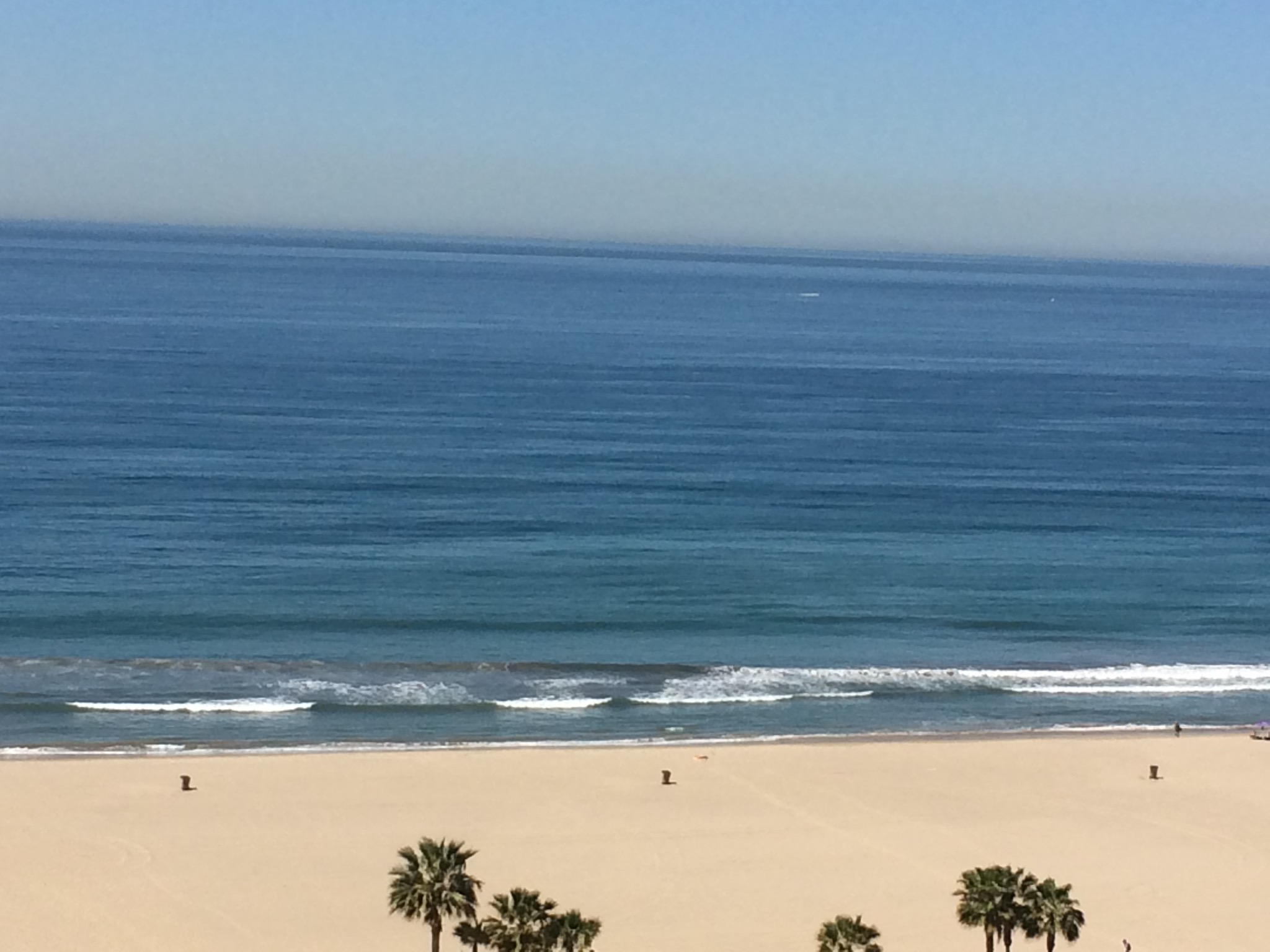
I spent Mother’s Day on a boat. The morning dawned with overcast skies and I was afraid that the marine layer would wrap itself around the coastline and not let go. To my surprise, the sun broke free from the fog’s grasp and by late morning, it was casting gentle rays of light out across the water, creating a perfect spring Southern California Sunday.

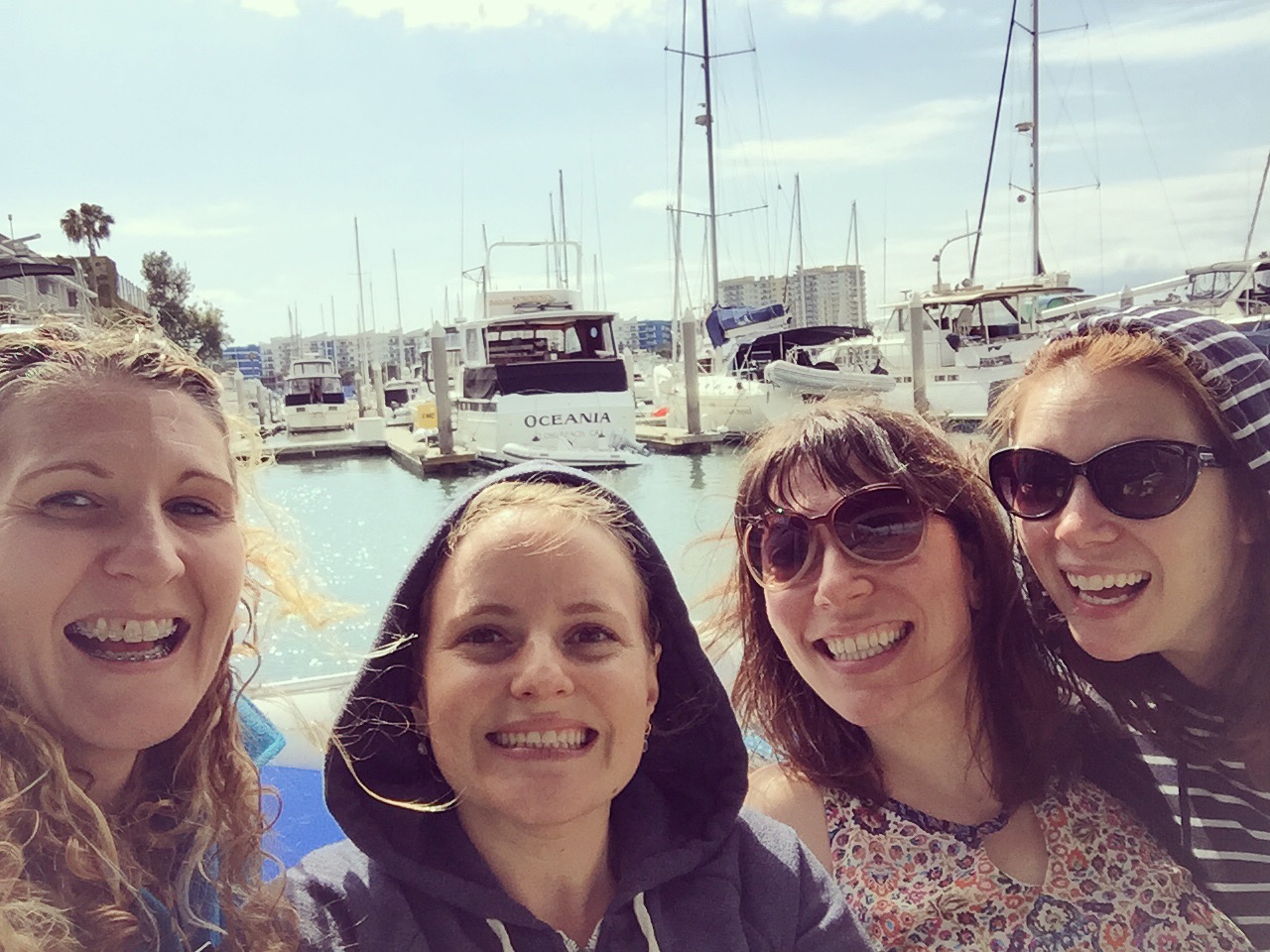
We never left the harbor. The boat was borrowed and expensive: a sleek, beautiful vessel complete with two bedrooms, a bathroom and a spacious deck. Far too valuable for any of us to pilot, even if we did know how, which of course, we didn’t. Besides, there was good food to eat and tequila to drink and – most importantly – girl talk to be had underneath that shaded canopy on the sea.

How do you celebrate a holiday when the person that holiday is built around celebrating is no longer with you? How do you continue to embrace gratitude for all that you’ve been given on an occasion that can’t help but remind you of all that you’ve lost? How do you keep moving forward, heart open, even on days when moving forward feels impossible?

I don’t know what works for other people, but here is what has been working for me, as a strategy for dealing with the difficult days: 1.) Surround yourself with your tribe. 2.) Do what feels good. 3.) Don’t apologize.

So this past Mother’s Day, that is exactly what I did. The three friends I shared that boat with are all brilliant, creative, generous, tough as nails, women. They also – like me – carry the scars of having lived on this planet long enough to have had their hearts broken. All of us have been humbled by the difficult days. And yet, it is in those difficult days that we have found our strength, our grace, and our empathy. We are, in the words of Ernest Hemingway, “Strong in our broken places.” These friends – and others like them – are my tribe. And these days, they’re the only people I feel like spending time with.

IMG_3613

One member of that tribe is my friend Sam. Sam is someone that I’m not sure that the old Sarah – the Sarah from before all the bad stuff happened – would have been friends with. Sam is a fiercely talented actress, and she moves through the world with an authority about who she is that the old me would have found intimidating. In truth, I still occasionally do find her intimidating, but mostly, I recognize her as a kindred spirit, someone that, through her own example, has given me permission to be the bolder, braver person that I know I am, deep down inside.

Not long after I met Sam – before we’d become the friends we are now – she invited me to a screening of a short film she co-produced and starred in, called Life Grows On*. It’s a twelve minute movie that follows the cycle of one woman’s life, illustrating how she responds to her own difficult days (and her joyful ones, too) in a way most women can relate to: by changing her hair. It’s a beautiful film, and I cried when I watched it. And I also knew that I wanted to be friends with the person who made it.

For me, these last few years have been a journey toward self-acceptance, of learning to give myself permission to be who I am. I’m not there yet, but I’m a lot further down that road than I used to be. And that is thanks in large part to friends like Sam:  friends who are teaching me that it is in our broken places where often, we are the strongest.

Surround yourself with your tribe. Do what feels good. Don’t apologize.

Until next time, friends.

*P.S. – You can watch Sam’s film Life Grows On by clicking here. I think you’ll be glad you did.

IMG_3633

The month of May.

“Time is the school in which we learn.”

-Joan Didion

Mom Wales

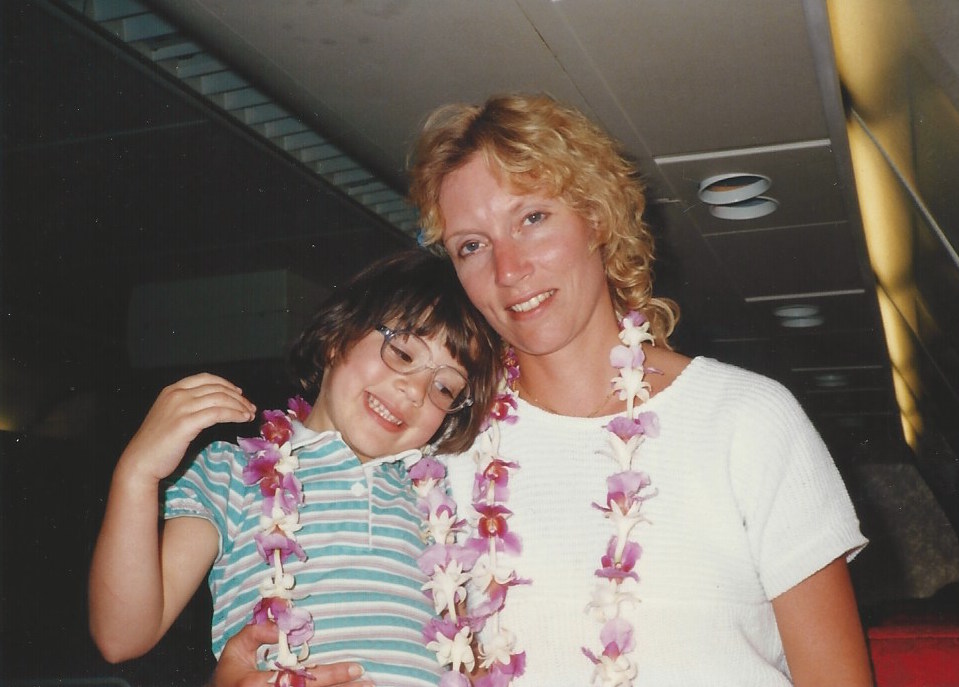
I don’t want to write about my mother. I don’t even really want to think about her, which, of course, I feel immediately guilty for saying out loud. It’s also not true. I do want to think about her, and write about her, I just don’t want those thoughts and words to be sad or painful anymore. I don’t want to be possessed by grief, or by the unanswered questions surrounding her death. I don’t want to pen another depressing Mother’s Day missive, tinged with longing and regret.

But as I think about all the motherless daughters (and sons) out there, facing the onslaught of greeting cards and flowers and an entire industry built around trumpeting “Mom’s special day,” I also feel that it’s important to be honest. I feel that it’s important to say that for some of us, Mother’s Day is just a day we have to endure, a day we need to get through. And there’s nothing shameful or wrong in admitting that.

My mother is everywhere lately. She’s been showing up in my dreams on the regular, uninvited, in places where she normally wouldn’t be, in places that don’t make sense.

They’re not bad dreams, not scary or unpleasant. Most of the time I don’t even remember them; they fade from view as soon as I wake up. I only know that in my subconscious mind, my mom and I have been spending a lot of time together lately.

Maybe it’s because the calendar has flipped to May, which was always her month. The month of Mother’s Day and her birthday, but also the month when spring flowers bloom, after those proverbial April rains that never seem to fall in Los Angeles. My mother was an avid gardener. She loved planting things and watching them grow.

Hawaii Babes

So maybe it is the season. Or maybe it’s just the place I’m at in my life – one of uncertainty and change – that has me craving maternal guidance. There are so many questions I want to ask her, so many things I want to say. There’s something about losing your parents that propels you into adulthood in a way that simply getting older never can. There’s something strangely disorienting about no longer needing to seek permission or approval, of having to own your life choices – both good and bad – because they are yours, alone.

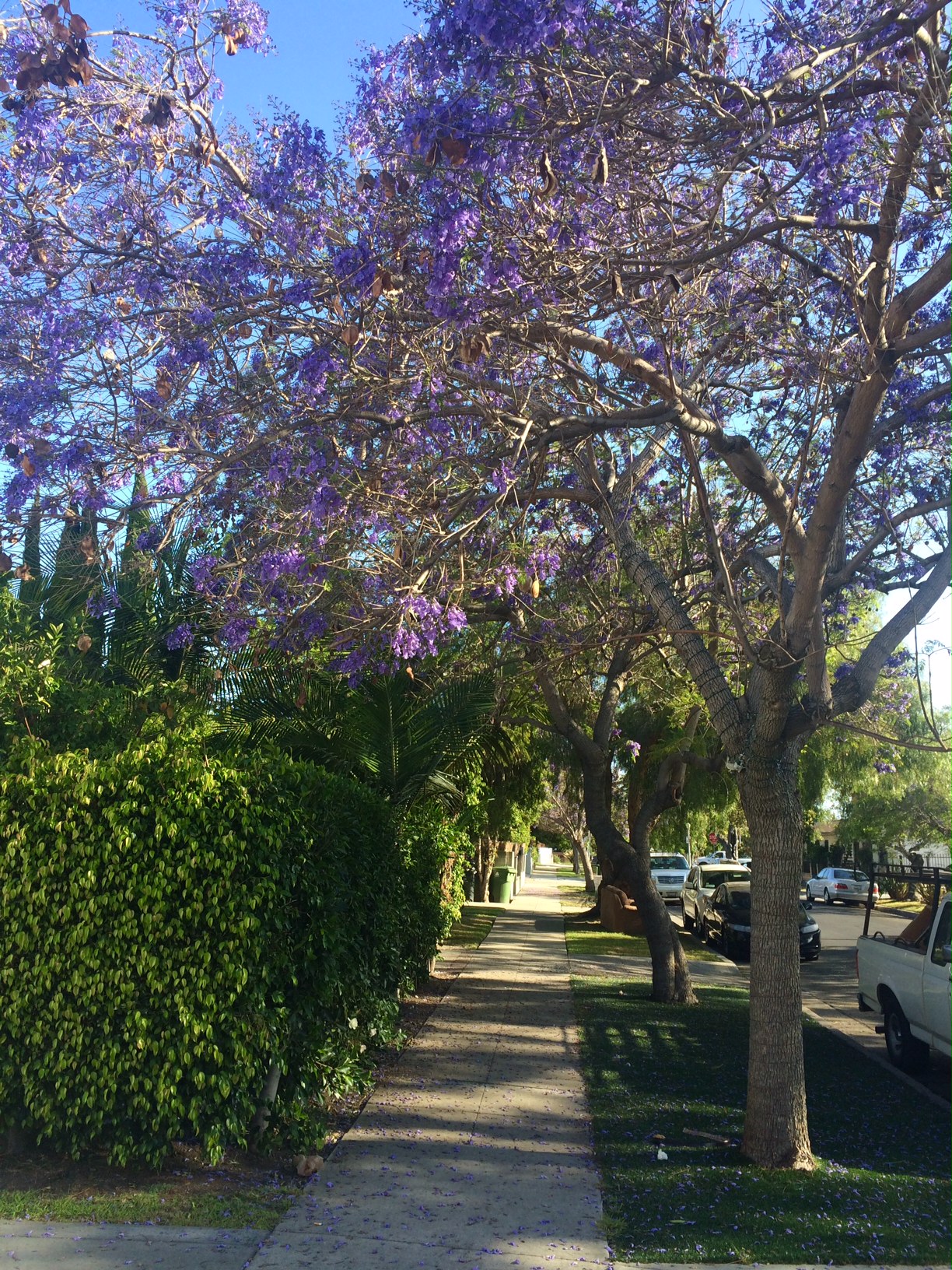
The Jacarandas are blooming in Los Angeles. All over the city, trees burst with purple flowers, blossoms spilling onto the street, leaving a trail of vibrant lavender. I’ve always loved the color of Jacaranda purple, even before I knew Jacarandas were a thing. It was the color of my high school bedroom, and I remember feeling cheerful and happy inside of those walls. Even now, there’s something soothing and dreamy about those bluish violet flowers filling up the sky. Some days, a walk through my neighborhood feels like stepping onto the canvas of an Impressionist painting.

But as pretty as they are, Jacarandas are also a real nuisance. Their flowers float down from the sky in droves, blanketing the streets with purple carcasses. And as they turn brown and die, they leave a sticky, slippery, gelatinous residue on everything they touch. Park your car underneath a shedding Jacaranda tree for more than a few minutes, you begin to hate the things.

I suppose, like everything in life, it’s about perspective. If you look up, the Jacaranda trees are beautiful. Look down, not so much.

I’m trying to keep that in mind as I approach this Mother’s Day. On difficult days, looking up toward the sky doesn’t always come naturally. But when you do – if you can – it’s bound to be more beautiful.

Until next time, friends.

FullSizeRender

Wanderlust.

“Why don’t more people live on Maui?”

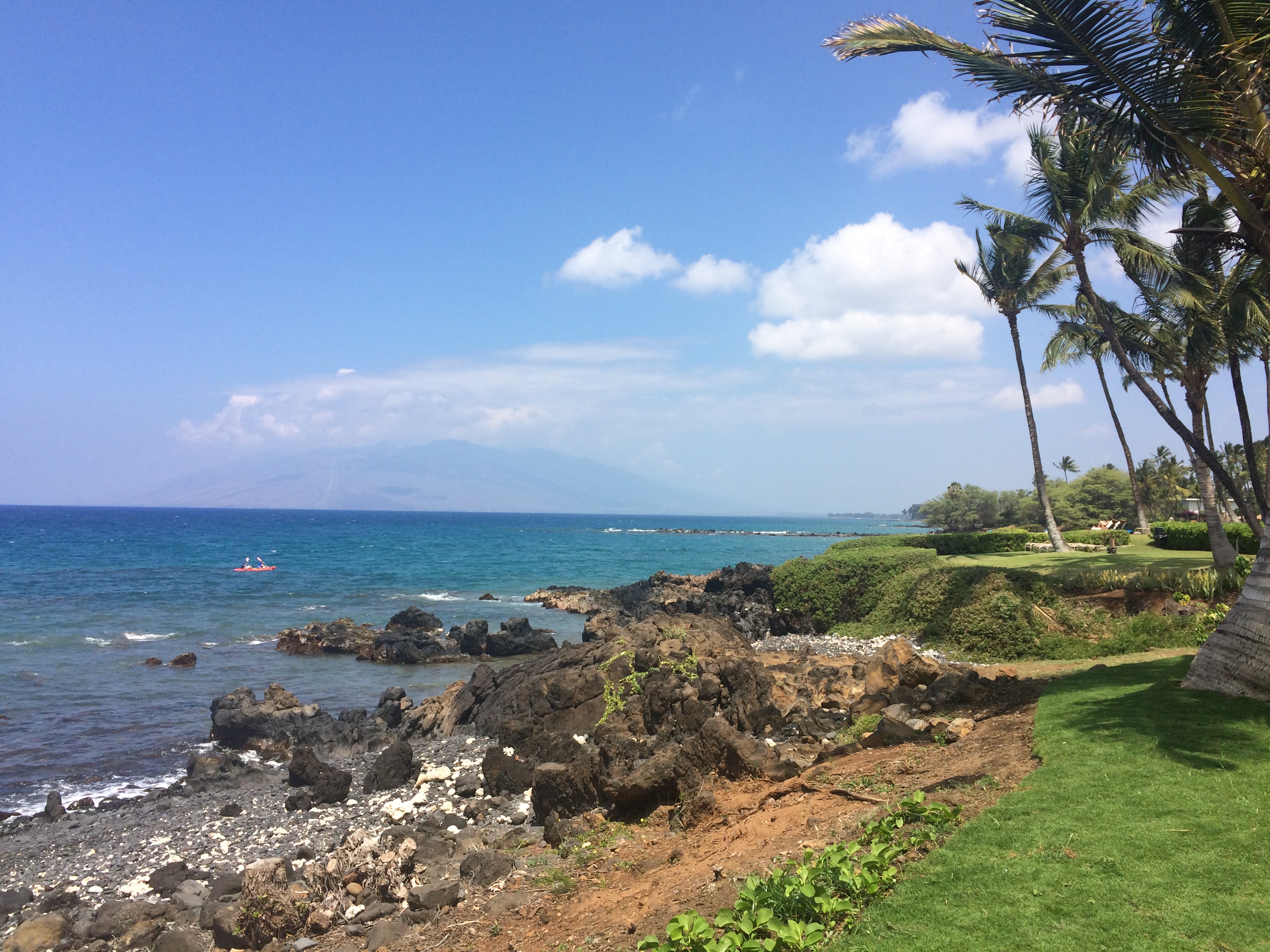
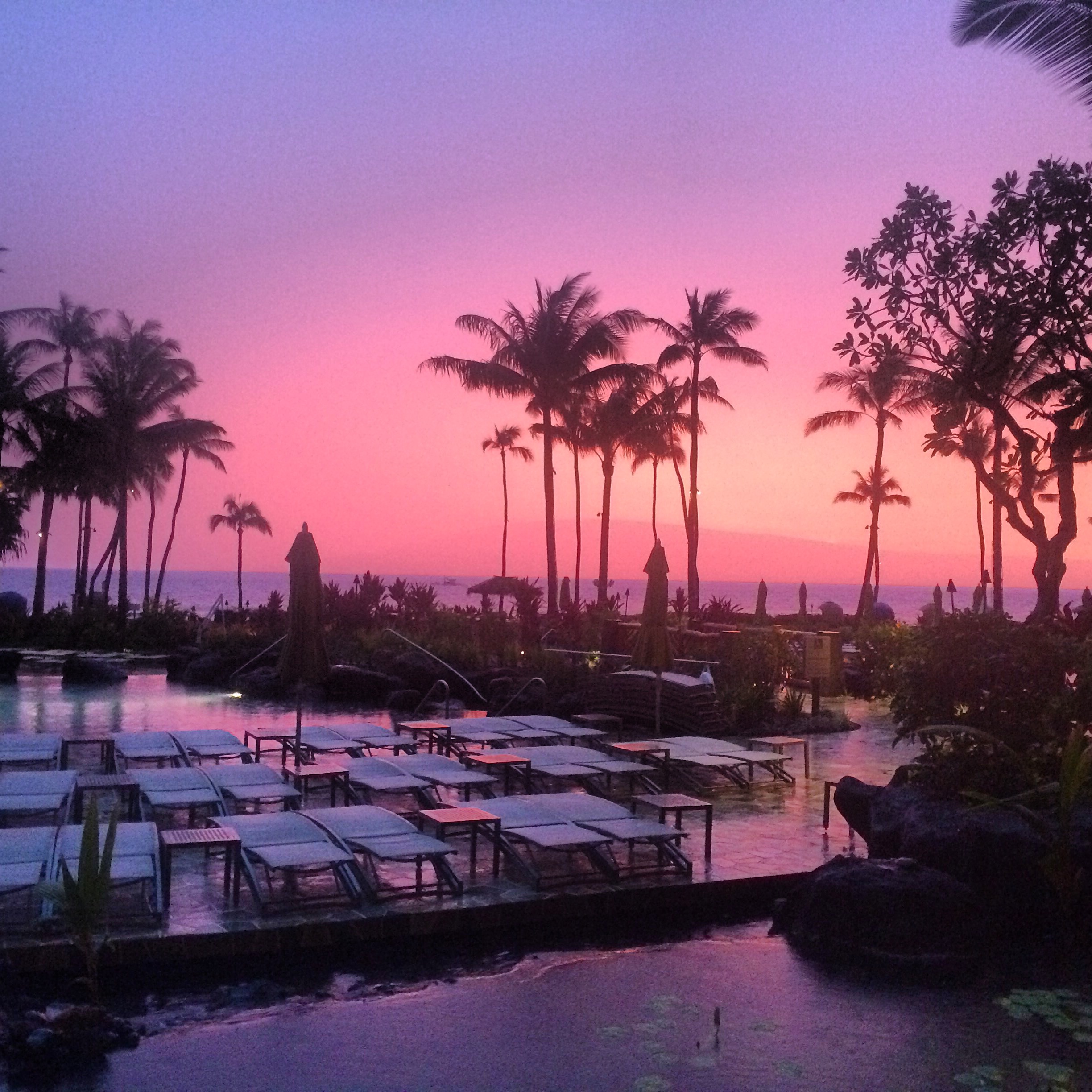
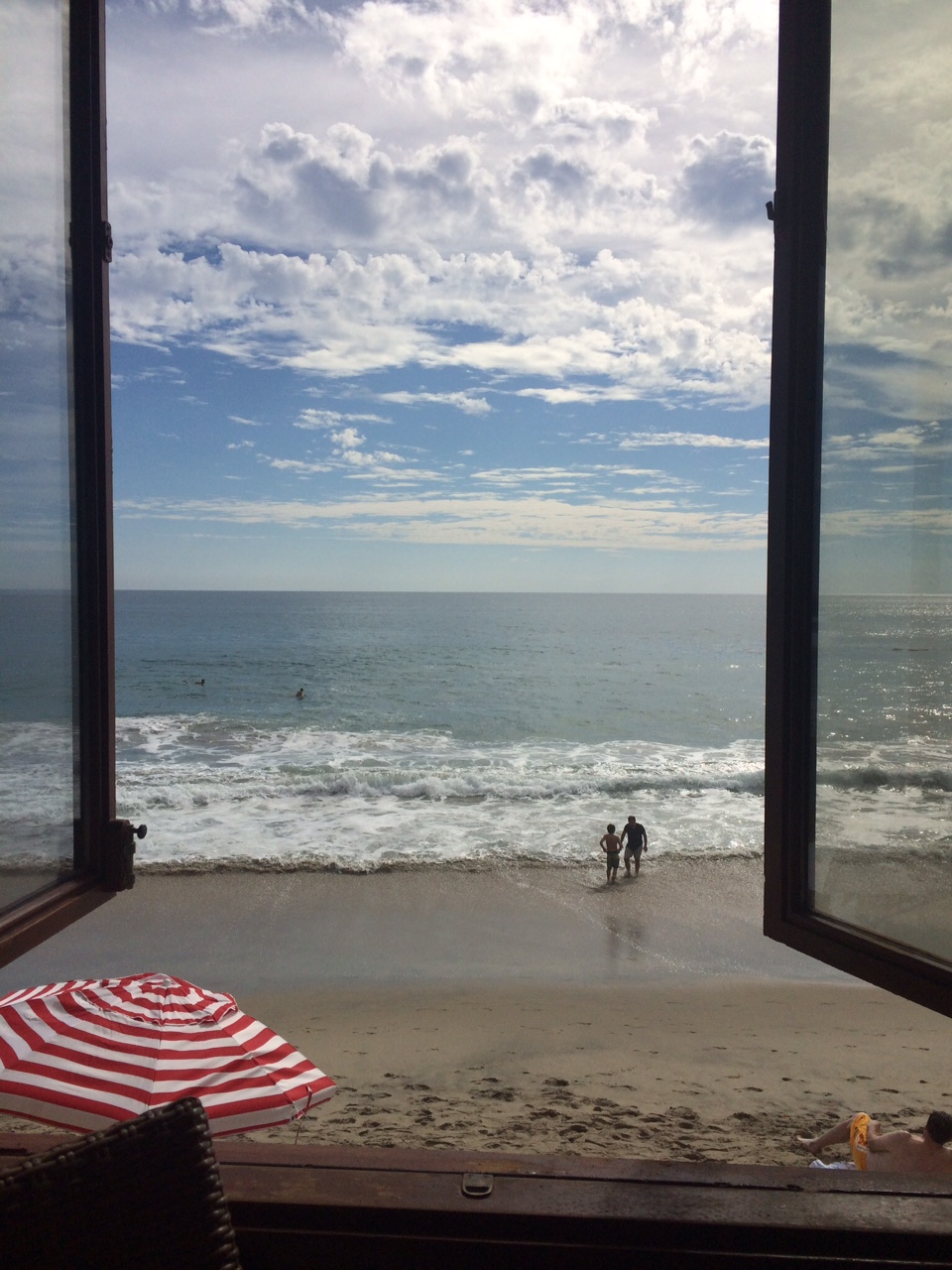
My brother-in-law poses this question to my sister and I as we sit, sipping Mai Tais, on the patio of an oceanfront bar in Kihei. Our faces pointed toward the Pacific, we admire the soft sandy beach, the sunlight glinting on topaz water, the crisscrossing cluster of palm trees extending into a clear blue sky that’s increasingly tinged with fuchsia and tangerine as the late afternoon presses on toward sunset. In the distance, someone spots a Humpback whale and restaurant patrons crane their necks to catch a glimpse of a tail fin or a water spout.

FullSizeRender[2]

“I mean, think about it,” he continues. “Look at all these tourists. Why don’t more of them say to themselves: This is beautiful. This is paradise. I should find a way to live here.”

We throw around some ideas. Hawaii is too expensive. Not enough jobs. Island fever. Paradise, while great for a vacation, is a little too perfect for everyday life.

Do we actually believe that, the “paradise is too perfect,” part? Do we think we should only be granted brief, idyllic respites from our otherwise stressful and crazy-making lives?  Do we secretly harbor the belief that it’s simply too self-indulgent to seek out a life of bliss? Or is the root of this belief a bit more complex? Could it be that we fear that if we actually do it – take the leap, uproot our lives, and relocate to a tropical paradise – we’ll realize that problems happen to people in “paradise” just as often as they happen to people everywhere else? After all, paradise is where we come to escape reality, not to live it, and if we make paradise home, where will we escape to then?

IMG_7066

Escapism has been my thing for a while now. I’ve always loved to travel, but never more so than these last few difficult years, when hopping on a plane to somewhere – anywhere – consistently holds more appeal than the here and now. While I think it’s too reductive to classify a searching wanderer like myself as someone who’s simply “running away,” there is some truth in it. I look toward each new voyage with hopeful eyes, wondering if this trip will be the trip: the magic cure-all that changes everything. Of course, it never quite works out that way.

My sojourn on Maui was no different. Don’t get me wrong: I am grateful for both the time I spent there, and for the suitcase full of memories I returned with. The island was stunning, the weather warm, the vegetation lush, the food scrumptious, the ocean soothing, the time spent with family happy. But in the spirit of the old “wherever you go, there you are,” cliché, real life intervened. I had work on my mind, with the deadline to finish the second draft of my play War Stories looming large. The family dynamic – never free from complication – was especially complicated on this trip. And whether it was jet lag or anxiety or some mixture of both, I couldn’t sleep, spending several nights awake for hours on end, leaving me tired and short-tempered the next day. Wherever you go, there you are.

I’m about to embark upon an interesting experiment, one I’m not sure if I’m ready for. My contract job is all but over, and then the future is mine, to make of it what I will. A prospect that is both exhilarating and terrifying. I’ve been craving this type of free, unstructured time for so long, craving it the way I crave my next vacation, but I can’t help but worry that, like my recent trip to Maui – like every trip, really – it can’t possibly live up to the hype.

IMG_7133

The immediate future will be busy. In June, I’m producing War Stories at Hollywood Fringe Festival, and the spring will be filled with rewrites, rehearsals, production meetings, marketing, mixers, and (hopefully) an abundance of creativity and fun.

But beyond that? I don’t really know. I have lots of ideas but nothing – and I mean nothing – is set in stone. For a meticulous planner, this is uncharted territory: a future where everything is uncertain, everything transitional, everything in the wind.

Which also leaves me at a loss as to how I should end this blog post. Normally, I’d try to wrap it up with something that provides a sense of closure, something that circles back to how I began the piece, something that ties it all together in a neat, tidy bow. But I can’t do that this time, because life isn’t like that. Not right now. It’s not conducive to neat, tidy endings. It’s fluid and changeable and open-ended.

But I suppose that’s the beauty of it. I suppose that – right now – is the point.

Until next time, friends.

 FullSizeRender[1]


The Year of the Monkey.

In truth, I don’t know all that much about Chinese astrology. As a child, I remember being fascinated by the red and gold Chinese restaurant placemats depicting the twelve zodiac animals and detailing the characteristics of each of them. Those placemats taught me that as a December 1980 baby, I am a Monkey: a sign known for its optimism, cleverness, sense of adventure, curiosity, and inclination toward mischief.

IMG_6723

On February 8, we began a new Lunar New Year: the Year of the Fire Monkey. According to the Chinese zodiac, it is not a good thing when you enter a year that corresponds to your sign. In fact, it is usually quite unlucky. This is an assertion that I have chosen to ignore. Given the way 2016 began, can you blame me?

A couple of weeks into the (Western) New Year, my car was vandalized, resulting in thousands of dollars worth of damage and leaving me feeling shaken and scared about the neighborhood I call home. My temporary job as an independent contractor – that began after the company I worked for was sold and moved to another state – was more stressful than I’d anticipated, leaving me tired and frustrated. Inspiration was difficult to come by, and my writing stalled. A persistent feeling of hopelessness started to creep in, threatening to derail my big plans for 2016.

Probably out of sheer stubbornness and my absolute need for things to be better this year than they’d previously been, I pushed forward. I kept writing, even though I didn’t feel like it. I reached out to a friend who’d produced my last play, asking her to come on board, even though I didn’t yet have a script. I renegotiated the terms of my independent contractor job, resulting in an arrangement more favorable to me. And I began the insurance claims process for the damage done to my vehicle.

Little by little, the clouds stared to lift. The original timetable of eight weeks to repair my car turned out to be mere days as the backordered part my mechanic needed became available much sooner than expected. Filing the insurance claim proved to be easier than I’d anticipated (dare I say, it was even pleasant), and within a couple of weeks I received a check covering all of the repair costs beyond my deductible. My friend and previous collaborator agreed to sign on to co-produce and direct my new play, giving my writing an increased sense of urgency and providing the motivation I needed to finish a first draft. And a fun-filled weekend celebrating a dear friend’s birthday in the San Francisco Bay Area lifted my spirits and temporarily curbed my growing wanderlust.

IMG_6697

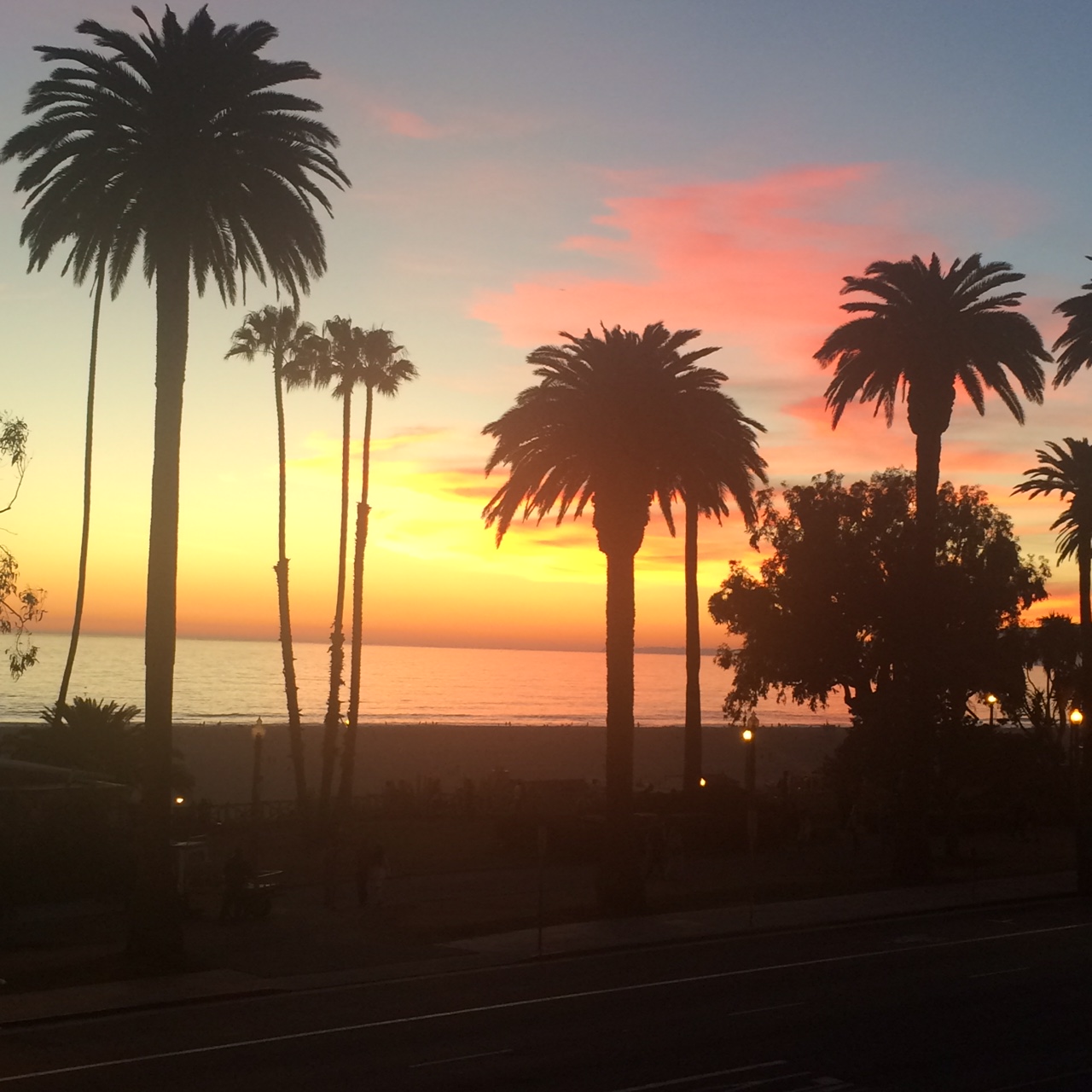
By the time the Lunar New Year began, I was feeling like my old optimistic Monkey self again. A few days later, my aunt and uncle arrived in L.A. for a visit, booking a hotel on Ocean Avenue in Santa Monica overlooking the pier, Palisades Park, and the Pacific Ocean. Their visit coincided with a rare winter heat wave: clear blue skies free of the smog that so often blankets this city, temperatures in the 80s, the Pacific sparkling like so many sapphires. The three of us hadn’t been together since Grandpa’s death three months earlier, and after the intense, emotionally taxing period of hospice, reveling in the majestic, sun drenched California coastline felt like a miracle.

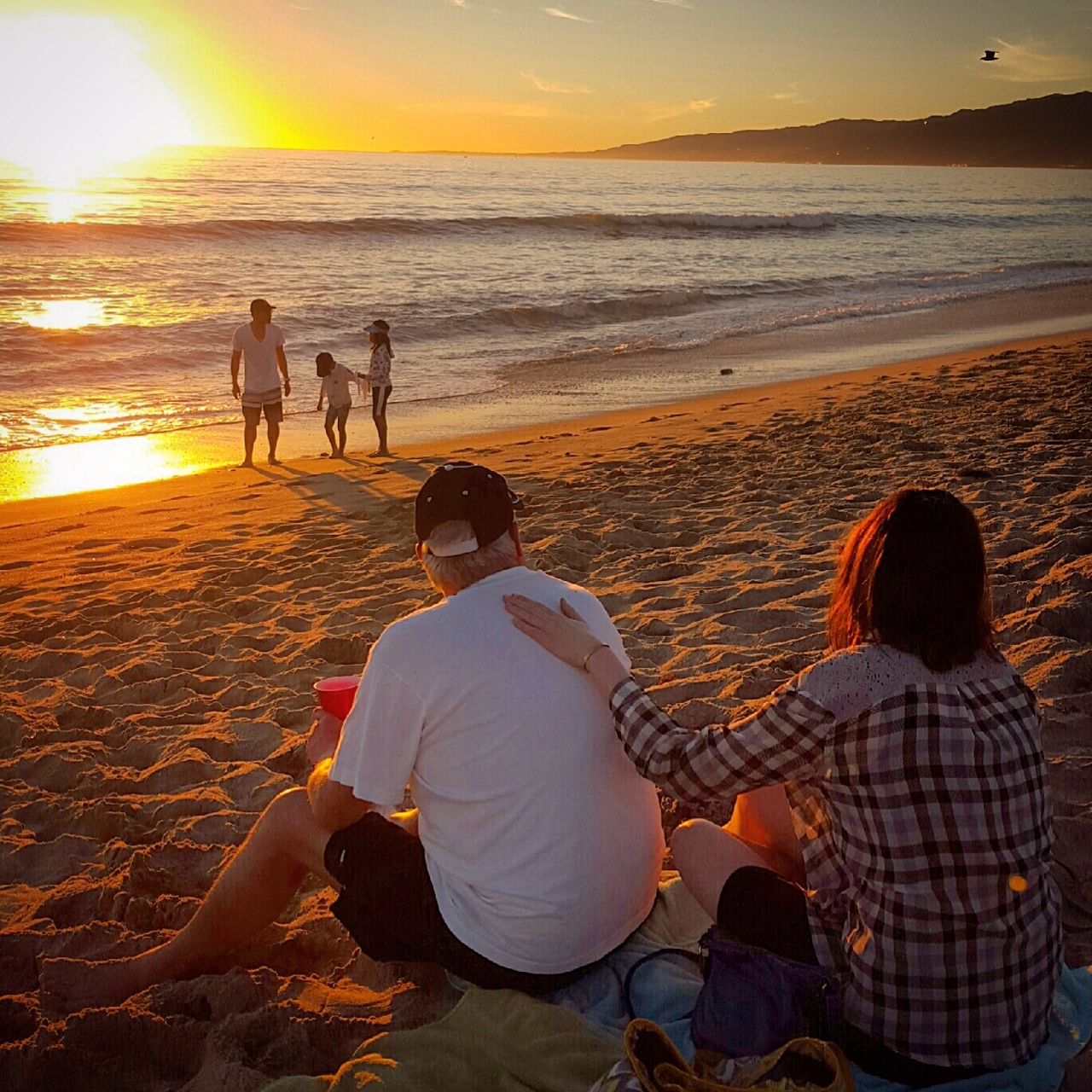
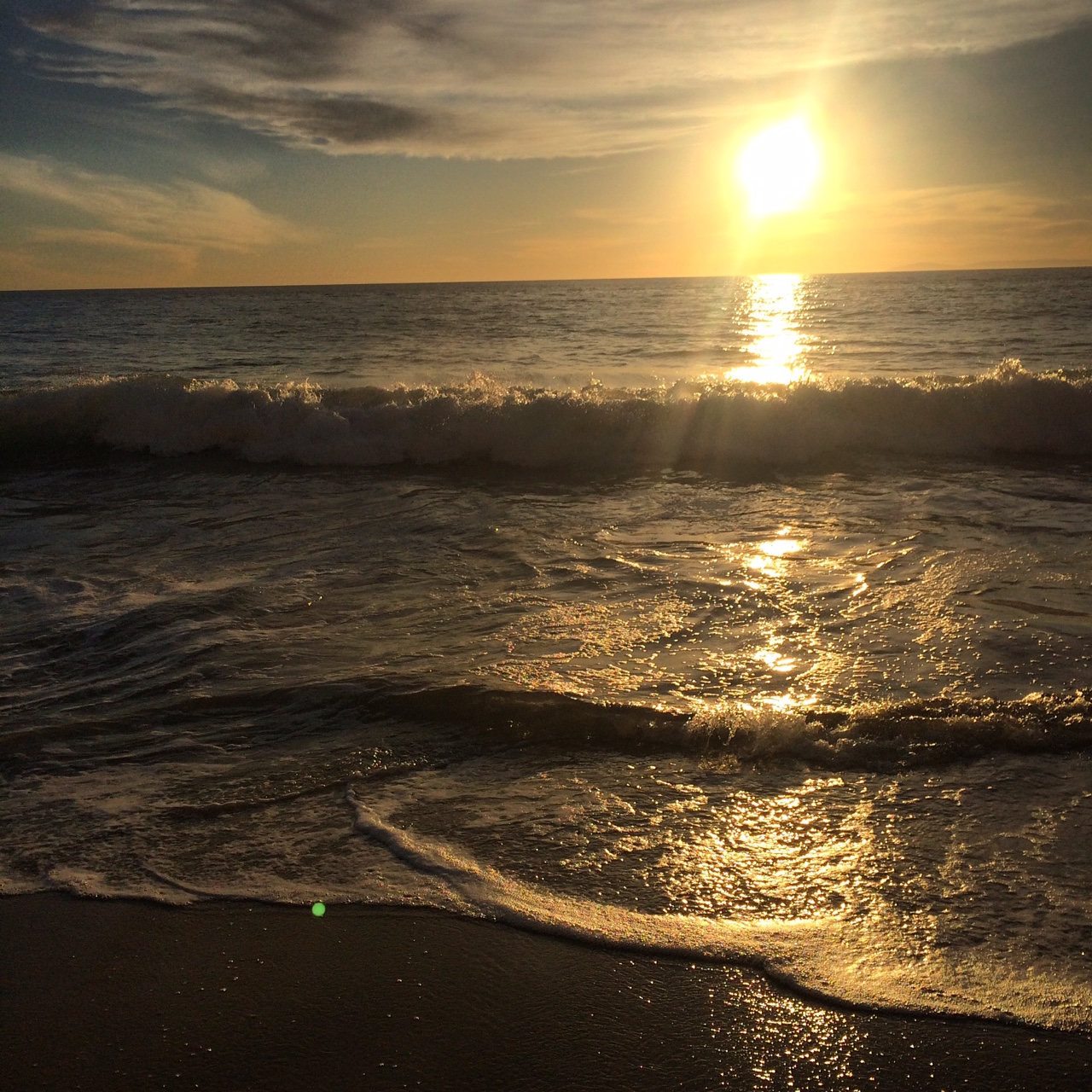
On President’s Day, armed with towels, a water canteen filled with fancy French champagne, and red Solo cups, the three of us marched north through Palisades Park, away from the throng of tourists. At Montana Ave., we descended steep wooden stairs, crossed the bridge over Pacific Coast Highway, and landed on Santa Monica Beach, sinking our toes into the warm sand. We waded in the ocean, the foamy waves lapping at our feet, and then settled into the sand. We filled our cups with fizzy liquid, raised them in a toast to Grandpa, and then turned our eyes toward the fiery orange sun slipping low on the horizon and fell silent.

I captioned a photo from that day, taken by my aunt of my uncle and I looking into the sunset, my hand resting upon his shoulder, with a quote from a letter that my grandfather wrote to me more than a decade ago: The beach never changes, ‘tis only we who change. Those words recalled a different time, and Grandpa was referring to a different beach, yet they still hold true.

I have changed. We all have. Given everything that has happened over these last three years, it would have been impossible not to. And while I have no idea what the future holds, little by little, I am learning to let go of my obsessive need to control it. Maybe this Monkey Year will be lucky. And maybe, as the Chinese zodiac asserts, it won’t be.  But two weeks in, I have decided that whatever happens, I will greet it with the same indefatigable spirit of my zodiac sign: with curiosity, with optimism, and with an unwavering sense of adventure.

Onward.

Until next time, friends.

IMG_6737

The Great Unknown.

A long December and there’s reason to believe/

Maybe this year will be better than the last/

I can’t remember the last thing that you said as you were leavin’/

Now the days go by so fast.

– Counting Crows

IMG_6165

I’m not very good at New Year’s resolutions. Oh sure, I make them. I make them every year, without fail. I’m just not very good at keeping them.

I approach every New Year with renewed enthusiasm, determined that this year will be the year that all of my dreams come true. But anyone who’s ever abandoned their resolve before the close of January will likely agree: it’s one thing to make grand promises in a happy, hopeful champagne haze as the clock strikes midnight, and quite another to do the hard work of goal setting, holding yourself accountable, and meeting the necessary self-imposed deadlines on the way to achieving personal growth.

But this January, I stand on the precipice of a very different year. It’s a year where change is inevitable. A year that has challenged me to live differently. A year that has proposed a dare.

Shortly after my grandfather died, I returned to Los Angeles to discover that the small company I’ve worked at for the last 11 years – essentially my entire adult life – had been sold. There was a new job waiting for me in another state. But not just any state:  it was the state where I was born, where members of my family lived, and where I’d been thinking about moving back to. Surely this was the universe giving me a sign, right?

Well, maybe not. The closer I looked at the job and the ways my life would change if I accepted it, the more the sinking feeling in the pit of my stomach grew. While a piece of my heart would always reside in the Pacific Northwest, it was actually all of the time I had recently spent there seeing my grandfather through hospice that opened my eyes to how much I still love my life in L.A. True, Los Angeles can be a harsh and difficult place to live, but it’s also a place of tremendous energy and excitement. It has been my home for fifteen years, and in that time I have built a solid community of amazing friends and gifted creative collaborators. I had been seriously considering leaving L.A., but after my grandfather died, I realized that I wasn’t ready to. There was still too much left undone – opportunities unexplored, projects unfinished – for me to walk away now. If I left before I felt ready, I knew I’d be filled with regret.

IMG_0751

Still, staying in L.A. meant no job, and stability had always been important to me. In contrast to my old position with the small company – where I’d sacrificed pay increases for the ability to work from home, maintain a flexible schedule, and have a tremendous amount of autonomy – this new company was much bigger, and much more corporate. It was a grown-up job. I’d be an integral part of their marketing team, with the ability to climb the corporate ladder and build an impressive resume. This job was a sure thing.

But once I got really quiet and listened to my inner voice, I realized that there is no such thing as a “sure” thing. Here’s what I believe instead: we trick ourselves into investing in “safe” choices and manufacturing the illusion of security to distract ourselves from the terrifying truth that everything goes away. Even us. Anyone who has ever received that phone call, or that diagnosis or that pink slip knows that the foundation upon which we build our lives is fragile, and it only takes a sudden, unexpected gust of wind to send everything tumbling down.

I never thought that, at thirty-five, both of my parents would be dead, and my grandparents, too. I never thought that I’d get married, and that it wouldn’t work out. I never thought that the company I had worked at since I was twenty-three would leave the state, taking my job with it.

But all of those things happened. I wasn’t ready for any of them, but they happened all the same.

IMG_2251

My father was a serious risk taker. I wish I was more like him. In truth, I’m kind of a chicken. Not Dad. He preferred to put it all out on the line and roll the dice. Sometimes, he lost, and he lost big. But he also won, and his winnings made him tremendously successful. It is because of that success and the money that resulted from it that I realized something else: I don’t have to settle for a life I don’t want to live.

A few days before Christmas, I turned down the “safe” job to stay in L.A. For the first time in my life, I’m going to see what it means to not work in service of someone else, but instead to invest in building my dreams and the higher vision of my life. It is a choice that terrifies me, but it is the only choice that I could make. Here’s something else that I believe: my fear is less about running out of the money my parents left me and more about the fact that taking accountability for my life means that there’s no one else to blame if it all goes wrong.

So here I go. This New Year, I am plunging into the great unknown. I am filled with gratitude for the gift my parents have given me, and filled with fear that I’ll screw it up. But my gratitude is bigger than the fear. So is my determination. And so is the quiet, unwavering voice inside of me telling me that this is the right thing to do.

It’s been a long December and there’s reason to believe/

Maybe this year will be better than the last/

I can’t remember all the times I tried to tell myself/

To hold on to these moments as they pass/

And it’s one more day up in the canyon/

And it’s one more night in Hollywood/

It’s been so long since I’ve seen the ocean . . . I guess I should.

Until next time, friends

IMG_2209


Gerry.

Come fly with me, let’s fly, let’s fly away

If you can use some exotic booze

There’s a bar in far Bombay

Come fly with me, let’s fly, let’s fly away

The tide is high on the morning of Halloween. So high, that the magic rock is hidden from view. “Where is it?” someone asks. “Underwater,” I say.

Grandma and Grandpa

As we reminisce about Grandpa’s daily swims in Case Inlet – the way he circled that tall, narrow, granite rock formation as though it were his prey, his snorkel mask strapped on, swim fins slicing through the water – I realize I don’t know the answer to the most basic of questions: “Why is the rock magic?”

No one seems to know. Finally, the only reply that makes sense: “Because Grandpa said it was.”

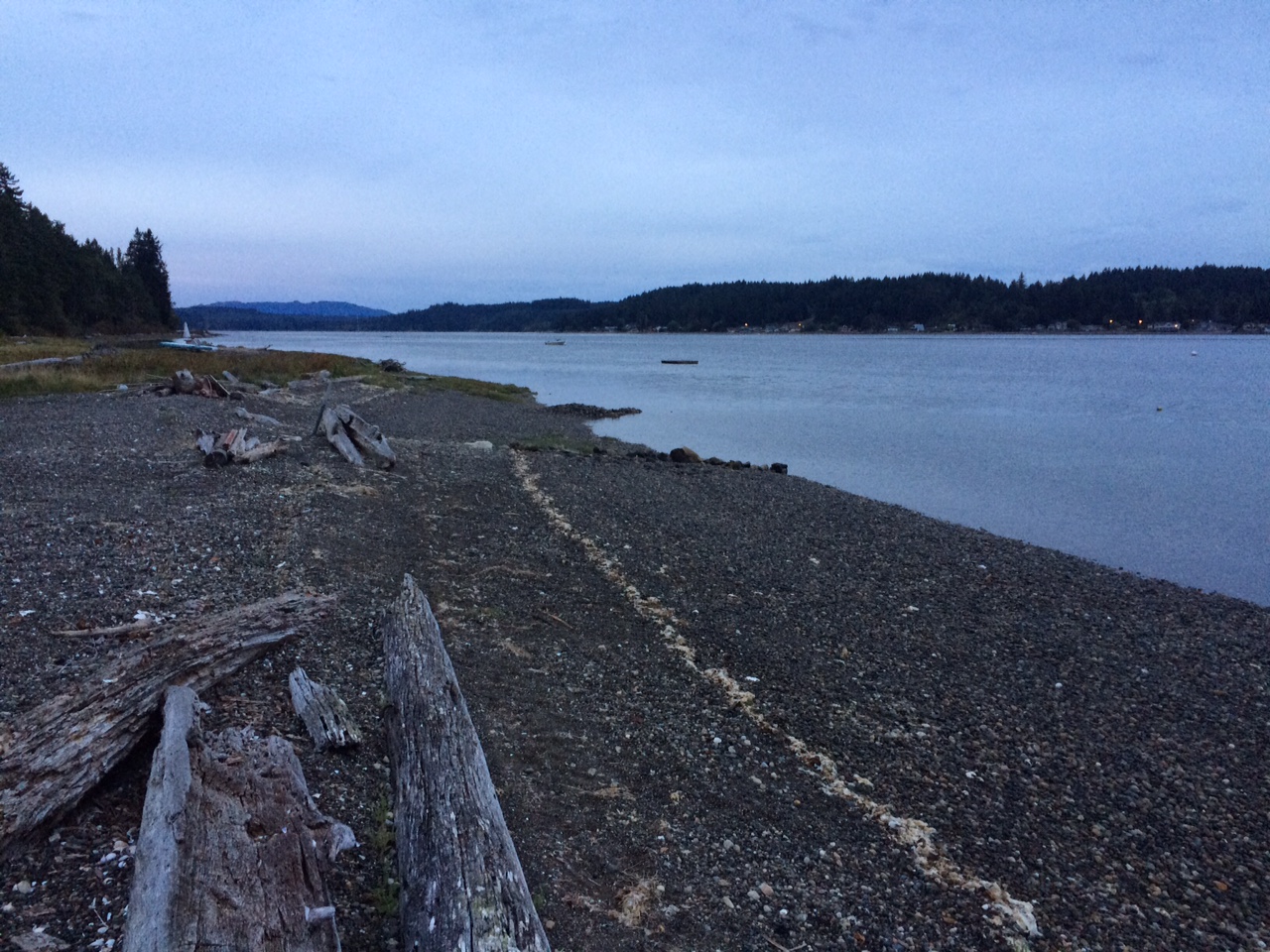
My grandfather, Gerald James Popelka (or “Gerry,” to those who knew him), lived a whole half century before I met him. There are so many things about his life that I don’t know, but what is clear to me as we gather on this Halloween morning, a group of twenty or so family and close friends, the hospice chaplain, and a Vietnam veteran who will honor Grandpa for his service as a Navy court reporter during World War II and the Korean War, is this: it was more than just a rock that he made magic, it was this whole place, this handful of acres tucked away on western Washington’s Case Inlet, a place that has been known to my family for the last five and a half decades simply as “the beach.”

The beach isn’t special simply because of its picturesque setting on a saltwater bay framed by tall banks of evergreen trees, Mt. Rainier towering above, keeping watch over us all. It’s special because over so many years, during all those summers spent boating and swimming, digging clams on the rocky beach, building great big bonfires, roasting S’mores and telling stories under the stars, this place has always been infused with the same spirit of delight with which my Grandfather undertook everything he did. As my Uncle Glenn said during closing remarks at Grandpa’s Navy blessing, looking around at the place, at all of us: “All of this is because of you, Dad.”
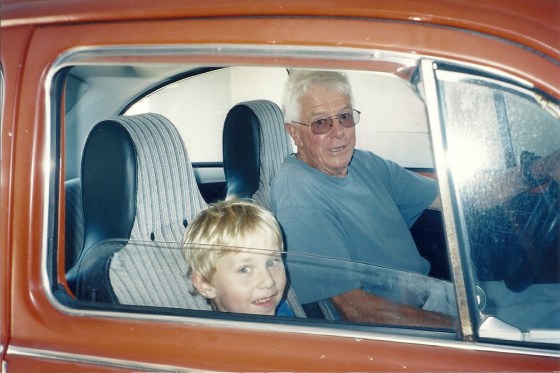
July 2005 Joyride

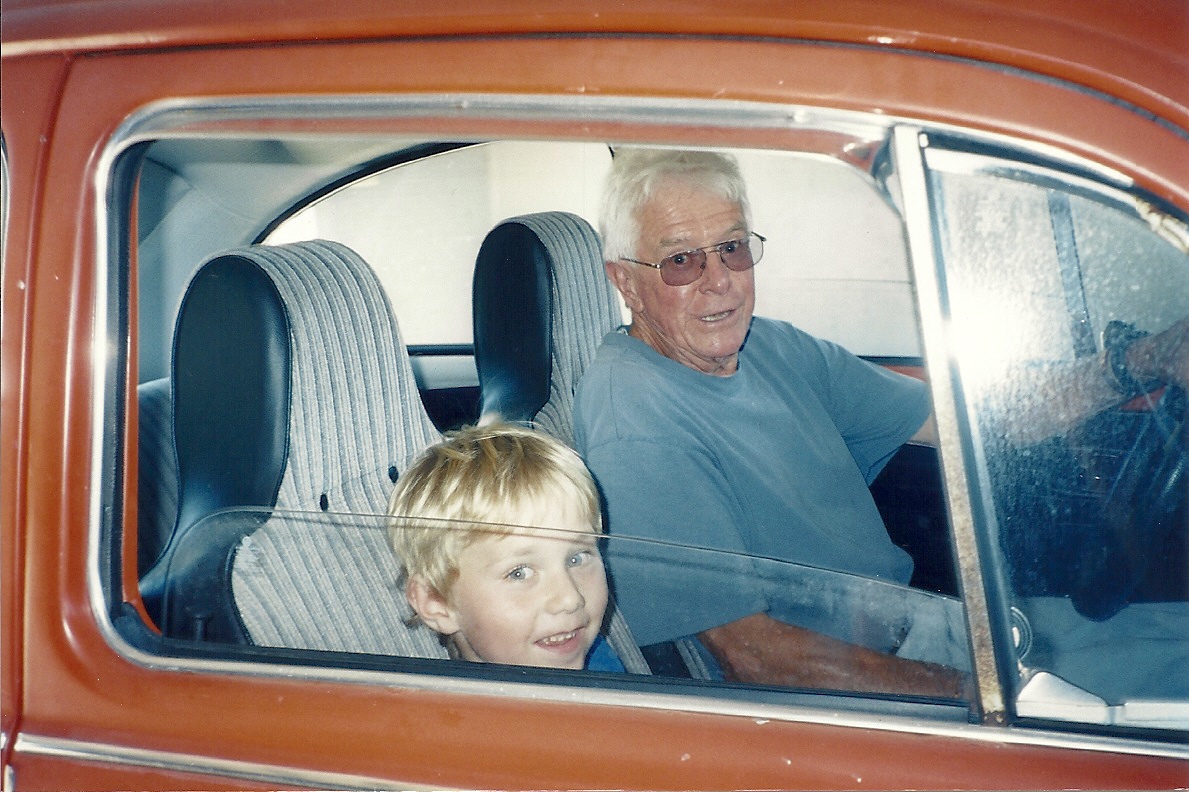
My Grandpa Gerry was a spirited Bohemian whose sense of humor and zest for life were utterly infectious. He was a lover of the lexicon, honing his skills by working daily crossword puzzles and ever ready to stump some poor unsuspecting victim with an impossible-to-figure-out vocabulary word. He was a practical joker, often following up a witty wisecrack with a mischievous twinkle in his eye. The bold striped t-shirts he favored matched his perfect shock of thick white hair and his larger than life personality.

Grandpa was tremendous fun to be around, but above all else, he was kind. To me, he was a bright light that illuminated the dark corners of an often sad and lonely childhood. He was the one person with whom I never fought, never exchanged a harsh word. In fact, I can’t remember him ever saying an unkind word about anyone.

On October 12th, I received word that Grandpa – at 89 years old – was terminally ill. After a recent series of what can only be described as traumatic experiences with death – my mother, my father, my grandmother – this sudden turn of events felt unnecessarily cruel. After so much loss, how could I possibly be expected to say goodbye to my beloved grandfather too? It wasn’t fair. I needed more time.

Hospice prepared us for the worst, telling us that given Grandpa’s failing liver, intense pain, nausea and heavy bleeding were all likely to happen “near the end.” As the social worker cautioned, “People hope their loved ones will pass away quietly in their sleep, but that rarely happens. Dying is usually quite an active process.”

Sarah Grandpa Black and White

I wasn’t ready, but I went to the beach anyway. For sixteen days, Grandpa and I sat together. We looked at old photos and reminisced. We shared secret jokes, poking fun at those who weren’t in on them. We counted the Canada geese that glided serenely across Case Inlet and congregated on a neighbor’s lawn.

But after sixteen days, without a dramatic change in Grandpa’s health, I headed back to Los Angeles with a plan to return in two weeks. It was only four days later that I got the call: Grandpa was weak, bedridden, and asking for me. Back to the beach I went.

I arrived on a Tuesday night. Friends and family were gathered in Grandpa’s room, and outside, the wind howled and rain poured. Grandpa drifted in and out of sleep, but he opened his eyes long enough to look at me and squeeze my hand. He tried to speak and couldn’t, but I told him that it was OK. I already knew.

I awoke the next morning, Veteran’s Day, to the sun streaming through my window, the clear blue skies and calm winds an unexpected gift after such a long and miserable night. Grandpa was sleeping peacefully, so I took a break to do some work. Around lunchtime, Glenn informed me he’d just gone to see Grandpa and told him that my mother was waiting for him to start cocktail hour. “Don’t be late,” he said.

FullSizeRender[1]

Now this next part will sound like I’ve made it up, because it’s the type of Hollywood ending a writer like me would invent, but I swear on everything that I am that it’s exactly what happened. I took my laptop to Grandpa’s room, and as my Aunt Sandy searched through his decades’ old collection of compact discs, I pulled up an iTunes playlist of standards. I tried a few oldies before I settled on a Sinatra classic. I sat next to his bed and turned up the volume:

Come fly with me, let’s float down to Peru

In llama land there’s a one-man band

And he’ll toot his flute for you

Come fly with me, let’s take off in the blue

Grandpa’s breathing slowed considerably and halted for several beats in between breaths. This was different, and we knew it. We called Glenn, who appeared in the doorway of Grandpa’s room somewhere around here:

Once I get you up there where the air is rarified

We’ll just glide, starry-eyed

Once I get you up there I’ll be holding you so near

You may hear angels cheer ’cause we’re together

Before Sinatra had finished singing, my grandfather quietly, gently, drew his last breath. As we hovered around his bed in a sort of reverent silence, waiting, knowing, yet not quite ready to speak the words out loud, I imagined Grandpa sitting with my Mom in the cozy living room of their old West Seattle house on Beach Drive, sipping martinis, enjoying the view of Puget Sound, Ol’ Blue Eyes softly crooning in the background.

FullSizeRender[3]

I inherited my love of language from my grandfather. And I believe that a wordsmith like him would understand better than most that there are times when words simply aren’t enough. After all, how could I possibly explain to you that after all of my fear surrounding what would happen when my grandfather died, that what actually did happen was so beautiful that it somehow made all the other deaths a little easier to bear? How could I express to you the depth of my gratitude for an exit so gentle that it helped restore my faith that sometimes, good things do happen to good people? And most importantly, how could I possibly capture in words the essence of a man who meant so much to so many, so that you could know him as I knew him, love him as I loved him?

I can’t. Words are not enough. I can only tell you that my grandfather, Gerald James Popelka, was the best man I ever knew.

And he made us all believe that a rock was magic, just by saying it was so.

Weather-wise it’s such a lovely day

You just say the words and we’ll beat the birds

Down to Acapulco Bay

It’s perfect for a flying honeymoon, they say

Come fly with me, let’s fly, let’s fly away

 Until next time, friends.

FullSizeRender[2]


Limbo.

Grandpa sits in his usual spot in the living room, staring out the picture window at the placid, silvery surface of Case Inlet, framed by evergreens that have turned an early November shade of amber. His yellow-tinged eyes reflect the vacant gaze of someone who’s looking but not seeing. “What are you thinking about?” I ask, patting him on the shoulder. I expect his typical response: “Nothing.” Instead, he intones softly, “I’m thinking about how quickly the time has gone.”

I’ve been at the beach for fifteen days, though of course, that’s not the measure of time that Grandpa is referring to. This evening, barring a catastrophe, I will leave, and board a plane headed back to Los Angeles. It is staggering to me that my time here has passed so swiftly, and yet, has contained so much within its rapidly elapsing days. I feel as though I’ve been moving in slow motion for weeks, traveling from joy to despair to fear in the space of a single hour, sometimes in a single minute. There is always another hospice appointment, another phone call, another email, another problem, another difficult conversation. And in between it all, I’ve been working, straddling two worlds – here and there – with the aid of an unreliable Wi-Fi connection.

I’ve never been very good at living in the moment, but these last couple weeks, the moment is all I’ve had. It’s no wonder my sense of time is so screwy, with Grandpa’s feeling borrowed and mine suspended. What a strange sort of limbo it is to sit with someone you love as they face the end of their life. The question that looms before us is when? It is the question he asks of everyone: his caregivers, the hospice nurses, the chaplain, the social worker, and of course, his family. It is the question that no one has the answer to, least of all me.

IMG_5702

I am prepared for what’s coming in a way that I wasn’t able to be with either of my parents, and for that I am grateful. I am grateful for all of the time I’ve been able to spend with him. But after fifteen days, there is little for me to do but wait.

Twenty-four-hour care is in place; contingency plans have been made. And the look Grandpa now sees reflected back in my eyes is one of someone who’s watching his every move, searching his face for signs of what’s to come. I can’t do this any longer. I can no longer sit around this rain-soaked place – beautiful as it is – waiting for my 89-year-old Grandfather to die.

I feel selfish for craving a way out, for craving warmth and palm trees and cheap, delicious Mexican food, and a hike in the hills and the sight of the Pacific and a desperately needed session with my therapist, but I do. I crave all of these things. I even crave the to-do list that awaits me upon my return, because it represents routine, and the opportunity to pretend, for a little while, that everything is normal.

So back I will go, for now. My return to the beach is already booked, but every ticket is refundable, every plan changeable. This type of freedom, it turns out, is expensive. But it’s the price you pay when you’re in limbo. When you’re left with nothing to do but wait.

photo 1


Three years.

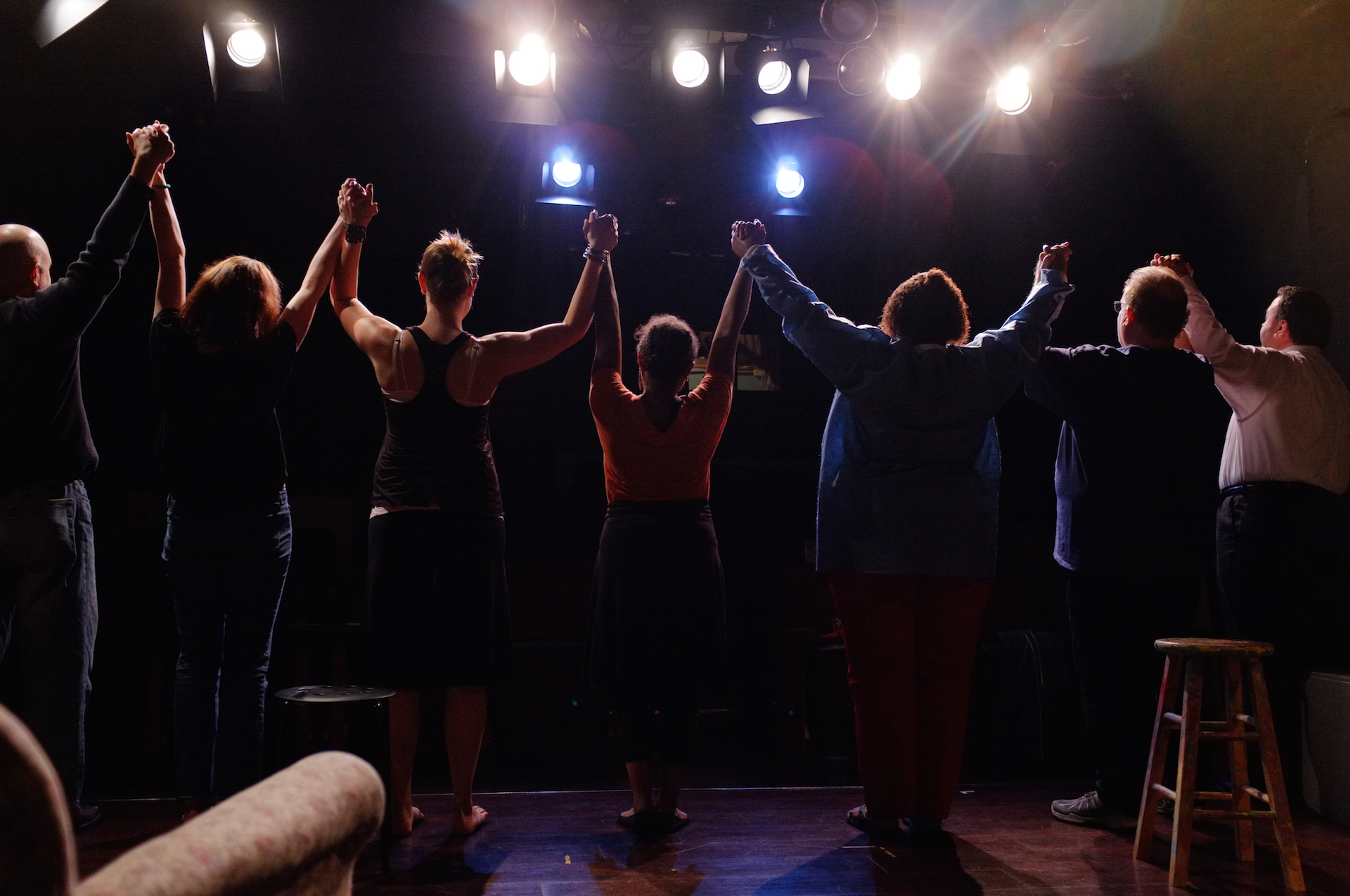
I’m perched on a paint-splattered stool, located downstage right, in a darkened forty-seat theatre. We’re well into the second act of Barenaked Angels, a show that’s a sort of hybrid between solo performance and an ensemble piece (I wrote about it here). My fellow cast mate Phil is standing on the opposite side of the stage, recounting a story about his niece Sam, a young girl who died after a battle with Mitochondrial disease. Sam had an affinity for butterflies and ladybugs, and in this particular story, Phil tells the audience that on the day of his first big acting job, a ladybug appeared next to him on set during the filming of his scene. The ladybug remained in the same spot for several takes, and Phil was convinced that the ladybug was in fact Sam, turning up in the form of the creature she loved, to let him know that she was all right.

DSCF5397-small copy

This is not the first time I’ve heard the story of the ladybug, but during this particular performance, something is different. As I sit on my stool, listening, I’m transported back to an evening in late September: the night that followed the long day during which we eulogized my mother. After most of the guests had gone home, I sat on the deck of my grandparents’ beach cabin, staring out at the sea. The sunset was slowly shifting into twilight, and a huge full moon hung high in the pink and purple-streaked sky, casting a rosy glow over Case Inlet, which was so flat that it seemed a great mirror, reflecting the heavens back onto themselves. As I sat there, the silence so loud it was nearly reverberating, warmth filled my core and spread outward, tickling the tiny hairs on my arms. Stillness enveloped me like a blanket and the moon and the sea and sky seemed to be speaking directly to me, whispering words of calm and comfort, telling me that my mother was at peace, and that everything would be OK.

Almost immediately after that night, the world as I knew it came tumbling down. Illness. More death. Identity theft. A move. A break up. The pace of life was frenetic as I moved from crisis to crisis. The magic of that September evening and its tranquil, perfect moment all but vanished from my memory.

That is, until this night – nearly three years later – as I sit on stage listening to the story of the ladybug. A warm vibration floods my center, goose bumps rise on my legs and arms. The quiet audience, intently listening, the hum of the stage lights – everything feels more somehow. And suddenly, I’m right back there, possessed of the same calm, all-knowing that visited me on that September night.

As quickly as the moment arrives, it is gone. Phil finishes his story and I snap back to reality, knowing it’s my turn to speak. I choke back the lump in my throat and rise from my stool, crossing downstage center to find my light.

Scan 1

Today, September 23rd, marks three years. Three years since I received the worst news of my life: my mother – my best friend – was dead.

If there is an emotion that a person can feel, over these last three years, I have felt it. Crushing sorrow. Denial to the point of delusion. Blinding rage. Crippling guilt. Red-faced shame. Paralysis-inducing fear.

I have spent much of the last three years trying to feel “better.” It is only recently that I have learned – with the help of counseling, writing, and the passage of time – that I am not meant to feel better. I don’t even know what better means. Life has changed, and I am changed in it. And in this new reality – a reality where certainty is no longer certain – I am awake and alive to every moment, knowing the weight and import of each one.

A few weeks ago, I found myself sorting through some boxes from my parents’ old house that had been in storage for the last two plus years; boxes that I had only recently been able to bring myself to open. Among the assorted mementos, I found some treasured photographs – taken before everything went digital – that I had feared were forever lost.

The photos were from a trip my Mom took to visit me in England, after I finished a college semester studying abroad. We spent a few days in London, and then traveled to Wales. Craving luxury, I booked us into a fancy hotel in Cardiff. But Mom wanted something a little more rugged. She wanted to see the natural beauty of the countryside.

Scan 2

After asking around, we took a train to Swansea and then boarded a small bus bound for the Gower Peninsula. When we arrived, we stood on jagged cliffs, looking out in wonder at the vast sea before us, feeling as though we had come to the edge of the world. Among the handful of photographs we took that day, my favorite is of my Mom, pretending to drive a golf ball (she was an avid golfer) over a cliff, a huge grin spread across her face.

I had forgotten how full of life my mother had been on that trip, how adventurous she was. That memory is such a departure from the mother I became used to in the years leading up to her death: someone who mostly stayed at home and avoided crowds, contenting herself with simple pleasures like gardening and cooking. Someone who gradually became more and more anti-social as she clung to memories of the past, slowly disappearing before my eyes.

It is so easy for the worries and the fears and the anxieties to grab hold of you and to keep you from moving forward, as they did my mother. It is much harder to know how much life can hurt you, and to throw your arms around it anyway, embracing it with all you have.

Three years is an awfully long time. It’s an awfully long time to miss someone, and it’s an awfully long time to feel stuck and lost and searching in their absence. But it’s a short time too. Elapsed so quickly, in the blink of an eye.

I have felt it all these last three years. Every dark, impossible, hopeless thing. But today, as I think of my mother, I think of the woman who insisted we travel by train and bus to the edge of the world so that we could gaze out at the sea, sensing all the possibility that spread out before us. And I think of that serene September evening after we said goodbye, when I knew in the core of my being that she was all right.

She is all right. And I am all right too.

Until next time, friends.

Scan 5


The memory of a place.

We received a brief respite from the heat this week in Los Angeles – even a desperately needed bit of rain – before the mercury began to spike again, signaling the arrival of another sweltering September weekend. In all the years I’ve lived here, I always remember September being hot, but never quite as insufferable as the recent Sunday evening when I returned to L.A. after a two-week absence. Upon crossing the threshold of the little stucco box that is my one-bedroom apartment, I was greeted by a wall of heat so humid, so stale, and so oppressive, that it nearly immobilized me. As I began to unpack, giant beads of sweat dripping down my nose, I imagined I was back in my seat on the Amtrak Cascades, gazing dreamily out the rain-kissed window at Puget Sound, the train pressing steadily onward toward British Columbia.

IMG_5114

Is it possible to feel homesick for a place that was never really home? While it’s true that sandwiched between my youth in Anchorage, Alaska and my adult life in Los Angeles, I did spend four years of high school in the Pacific Northwest town of Olympia, Washington, that was merely a blip, and the late 90’s were so long ago. Over the course of my life, I’ve been less of a resident of the Pacific Northwest, and more of a frequent visitor.

Still. Nearly all of my family – at least the family members that I know – live somewhere between Anchorage and Medford, Oregon, with most of them tracing their roots to Washington State and Oregon. And while Mom and I joined Dad in Alaska shortly after my birth at Seattle’s Swedish Hospital, Mom never fully settled into life in Anchorage. The Pacific Northwest was in her blood, and we returned there often. Many of my childhood memories are hazy mental photographs of my grandparents’ home on Beach Drive in West Seattle: playing catch in the long driveway, Grandpa’s rose garden, the living room with its seascapes and sea gull décor, the blond shag carpeting and terrier (Benji) to match.

And then of course there’s the Beach – the property on Case Inlet in Southwest Washington that I wrote about at length in my last post. That place is not only where several of my close family members reside, it is forever entrenched in my history.

As beautiful as the Pacific Northwest is, it has been difficult for me not to feel a bit haunted whenever I return there. Amid the inlets and elbows of Puget Sound, the tall evergreen trees, the gorgeous views of Mount Rainier, are memories of people that are no longer living, and a life that’s no longer mine.

IMG_5103

But this time – and I’m not quite sure why – the ghosts of the past seemed to peacefully coexist with the experiences of the present. The familiar was no longer haunting; it was a source of comfort. The Pacific Northwest was markedly different, yet ever the same.

The tree-lined drive along Highway 3 into Shelton – where I took my driver’s test –this time made in Grandpa’s ice blue Honda CR-V with the handicapped sticker hanging from the mirror. The same, yet different.

Olympia. The loop around Capitol Lake – where I would walk so many times, rain or shine – and the Capitol Building, with its dome that I used to photograph for the school paper. This time, a walk downtown for lunch with one new friend, then coffee with another on the Capitol campus, where she works. The same, yet different.

Seattle. Echoes of my mother’s laughter all around Westlake Center. The flagship Nordstrom where we’d spend an afternoon lunching and shopping for shoes. The Paramount Theatre, the site of one of my first concerts – Garbage – now hosting the band Hall and Oates. The waterfront – and the arcade where we spent our high school grad night – now mired in new construction. This time, I stop to ask a handsome police officer if he can point the way to Ivar’s restaurant. He laughs and directs us through scaffolding and over a rickety wooden walkway. Ivar’s – the place I’d feed seagulls and watch departing ferryboats as a child– now a spot to enjoy a leisurely lunch with my sister Marion, sipping wine and planning our trip to Bainbridge Island. The same, yet different.

IMG_5128

The border crossing into Vancouver. That same Amtrak train – number 510 – departing daily from King Street Station, with its iconic clock tower and cavernous marble lobby. This time, sitting on a wooden bench, ticket in hand, waiting to board and remembering the summer I drove across the border by myself, just seventeen, in my maroon Toyota Rav-4, receiving endless harassment from the border agents. The same, yet different.

Vancouver’s West End. The condo on Nelson Street where my sister and brother-in-law lived when my niece Nora was just a toddler, before my nephew Quinn was born. Now, Quinn is in high school, and Nora is away at University in Montreal.

It’s all the same, but it’s all so different. Yet for the first time that I can remember, the differences don’t seem to bother me. They don’t feel tinged with sadness like they usually do.

Perhaps it’s me that’s different, and not these places. Perhaps the change is simply the result of the passage of time and the slow healing that comes along with it. Or perhaps love of place has finally been able to transcend the pain of all that’s missing.

But whatever the reason, this time, the ghosts stayed at bay. And I was able to make new memories. Good ones. Memories that I will hold on to, dreaming of the gentle breeze off Puget Sound, until I’m able to return again.

Until next time, friends.

IMG_5183

The beach.

If only you’d have known me before the accident/

For with that grand collision came a grave consequence/

Receptors overloaded, they burst and disconnect/

‘Til there was little feeling, please work with what is left.

IMG_4960

I’m running along Grapeview Loop Road in the sleepy Western Washington town of Allyn. It’s Friday afternoon and the rain that has been falling steadily all morning has let up, topaz blue skies peeking through the still stormy, not-quite-white cotton candy clouds. It’s what people in the Pacific Northwest call a “sun break,” and I’m taking full advantage of it. Rain is usually an unwelcome sight in this part of the world during the late summer months, but it’s desperately needed due to abnormally dry weather conditions and a series of terrible fires that are pummeling the Eastern side of the state. For me, the rain also offers a welcome respite from the 100-degree temperatures currently baking Southern California, where I live. As I imagine the wall of heat permeating my little stucco bungalow in West Los Angeles, I am grateful that I’m here and not there.

As I wave appreciatively at the motorists who drift toward the median, giving me the widest possible berth as I jog by on the shoulder, I savor the delicious irony of the Death Cab for Cutie song, The Ghosts of Beverly Drive, pulsating through my headphones. It’s a song about damaged and jaded people in Los Angeles, people with “no firsts anymore.”

I don’t know why, I don’t know why/

I return to the scenes of these crimes/

Where the hedgerows slowly wind/

Through the ghosts of Beverly Drive.

While I don’t consider myself to be damaged or jaded by Los Angeles, after sixteen years of living there, I understand where those lyrics come from. Over the last decade and a half, I’ve changed dramatically from the eighteen-year-old college student who first arrived there, bright-eyed and full of hope. It took me years to get to where I am now, living a life that actually fits me, rather than trying too hard to be someone I’m not in a desperate effort to impress other people or feel worthy of their attention.

And yet. Despite the fact that I have greater ownership over my life than I’ve ever had, L.A. still doesn’t feel like home. It never really has. Not in the way that this place does: the place where I’m currently jogging down the road.

IMG_4995

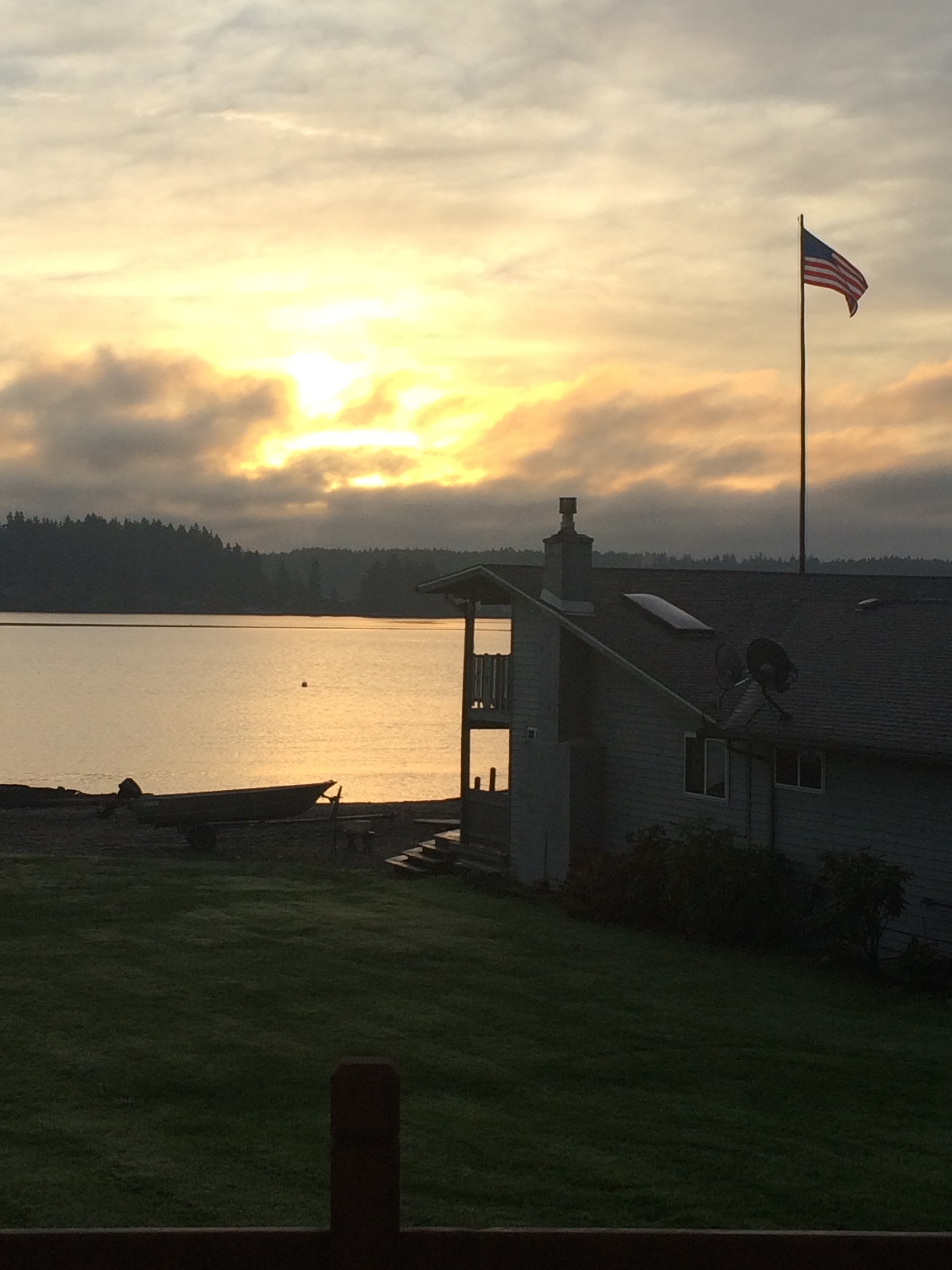
For just over a week, I’ve been staying in Allyn, in an area of the Pacific Northwest that my family simply calls, “the beach.” It’s a large parcel of waterfront land overlooking Case Inlet, a piece of property first purchased by my grandparents in 1959, when they were court reporters working in Seattle and looking for a place to build a summer home.

As a child, I remember the beach as nothing short of magical. It was far away from everything, tucked away at the edge of the world like some sort of family secret. I spent all of my summers there: foraging for driftwood to build great big bonfires, roasting s’mores under the starlight, digging for clams at low tide (still the best clams you’ve ever tasted), cruising around Case Inlet in my uncle’s boat, dogpaddling through the saltwater and dodging big scary jellyfish.

As I got older, the magic began to fade as reality set in. My first cousin, who was, for many years, the closest thing I had to a brother, turned to drugs and violence and severed all ties with our family. My once vital and full-of-life grandfather suffered a stroke, leaving him wheelchair-bound and depressed. My dad was diagnosed with stage-four pancreatic cancer, but my mother shocked everyone by dying first, just a few months before him. My maternal grandmother quickly followed suit, succumbing to Alzheimer’s disease that had gone undiagnosed for years.

It got to the point where I started to hate the beach, because every visit was a painful reminder that so many people I loved had been so abruptly ripped away. Memories of carefree childhood summers were replaced with harsh adult realities like probate court, property tax, and estate planning. The left turn off of Grapeview Loop Road and on to our property – with its still, serene view of Mt. Rainier rising above Case Inlet – no longer made my heart swell. It leveled me.

IMG_4938

It took some time, many return visits, and no small amount of healing to realize that in spite of all of the change and loss, the beach is deeply rooted in my DNA. Not long ago, among a box full of mementos, I found a letter that my grandfather wrote me upon my college graduation, just over a decade ago. I was about to embark on my new, exciting life as an adult in Los Angeles, and he sweetly implored me not to forget where I came from. He closed the letter with these words: The beach never changes, ‘tis only we who change.

He’s right. I have changed. We all have. But as life shapes and shifts around me, the beach remains a constant. During these last three years of navigating emotional chaos and loss and questioning my life choices, years where I’ve slept with one eye open due to nightmares and panic attacks and occasionally crippling anxiety, the beach is the only place where I’ve continued to feel sheltered and safe. It’s the only place where I’ve been able to submit to deep grief and let it wash over me, allowing the healing process to begin. It’s the only place where my equilibrium returns, and where I’ve often thought – sometimes in spite of all evidence to the contrary – that everything is going to be OK.

It’s ironic to think that it took my mother dying for me to understand why she loved this place so much. Why it was always, throughout her life, her True North. Why she insisted, as far back as I can remember, that her ashes be scattered here, so that she could forever be a part of the sea and the sky and the evergreen trees. The other day, as I swam in Case Inlet, feeling the tingle of saltwater in my mouth, with the air perfectly still and everything around me slowing down, I whispered aloud, almost as though it were a prayer: I get it, Mom. And I wonder if somehow she heard me. I wonder if somehow she knew.

The beach never changes, ‘tis only we who change.

Until next time, friends.

IMG_4997

Blog at WordPress.com.