Laguna

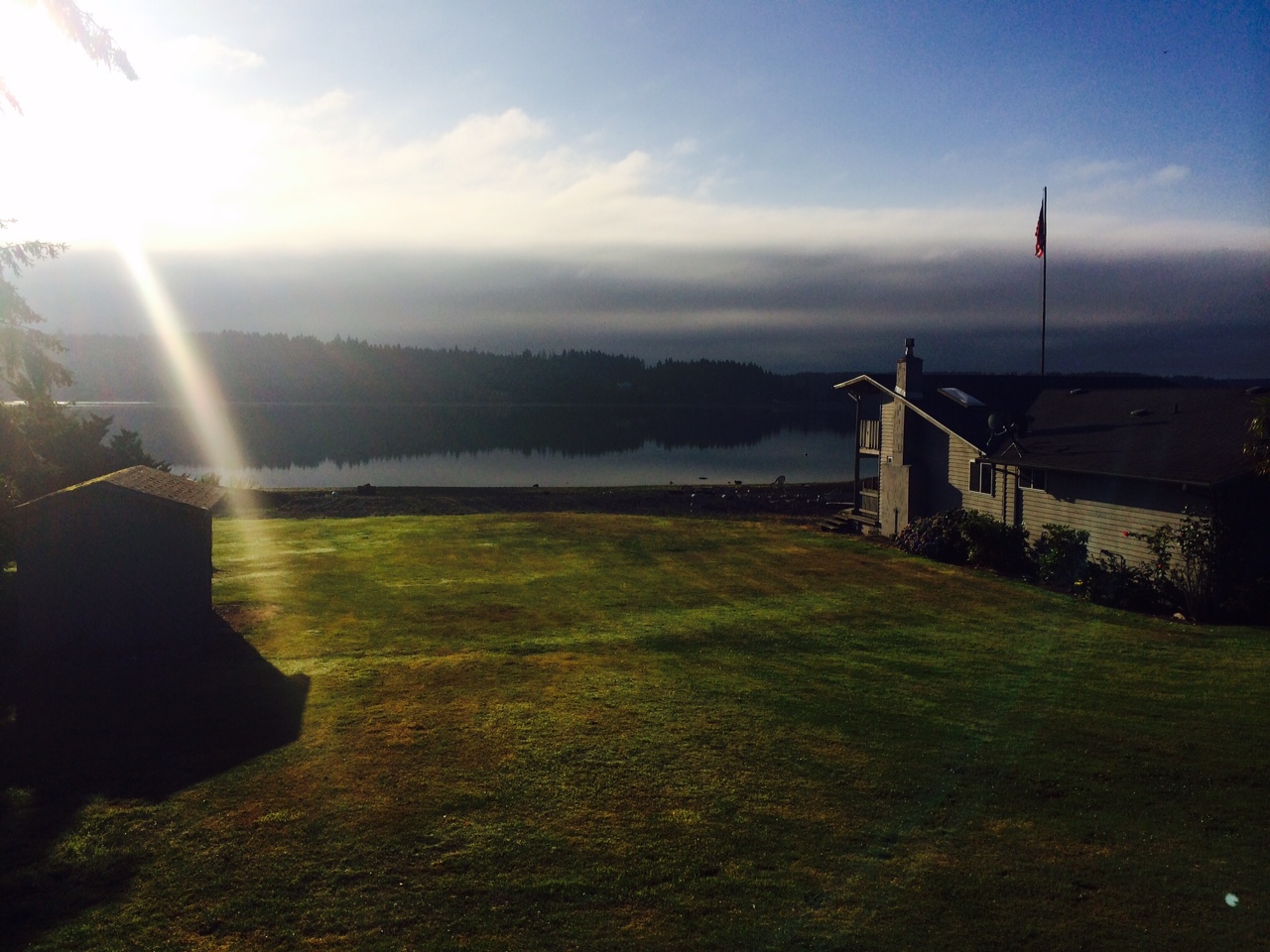
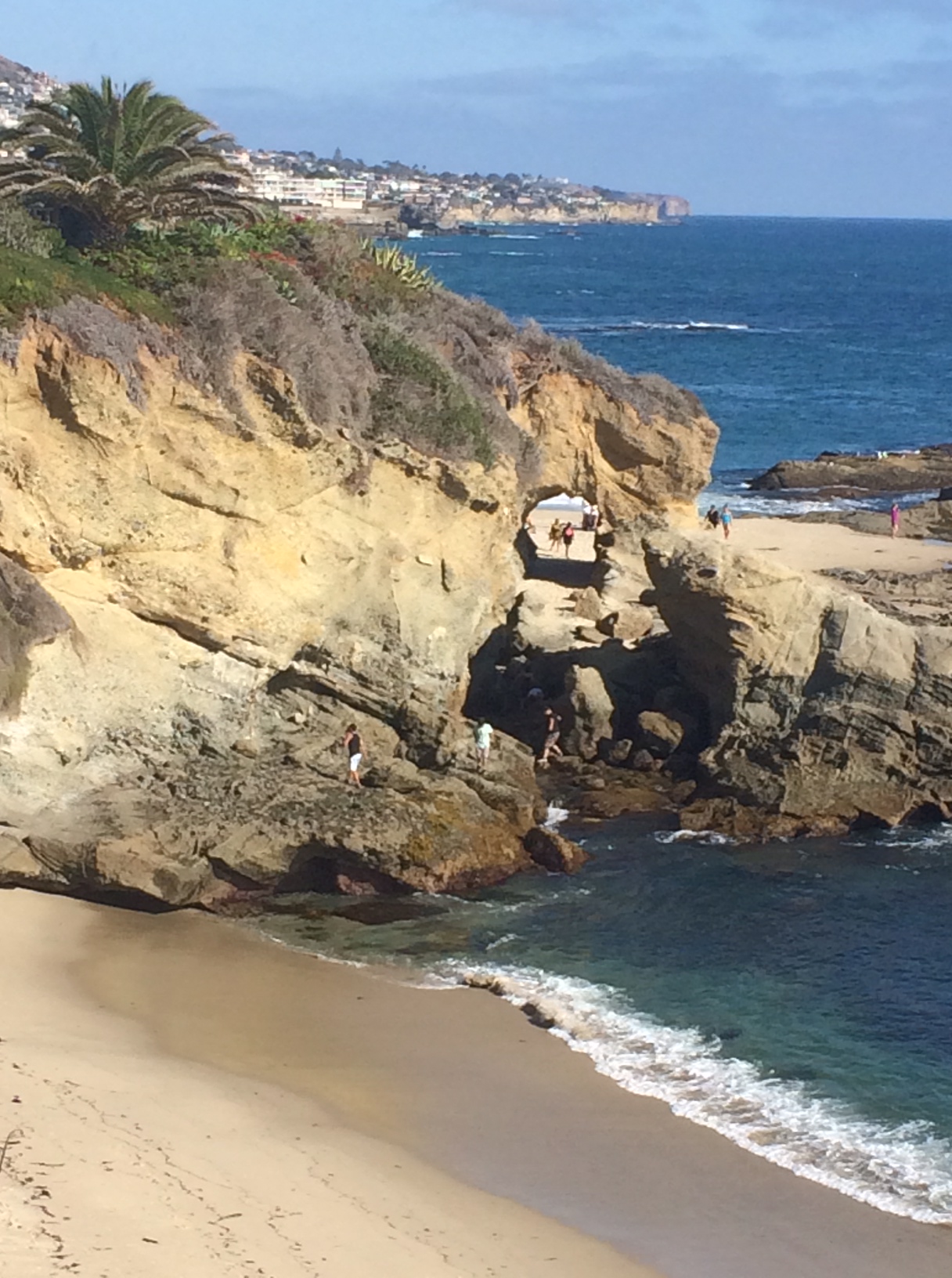
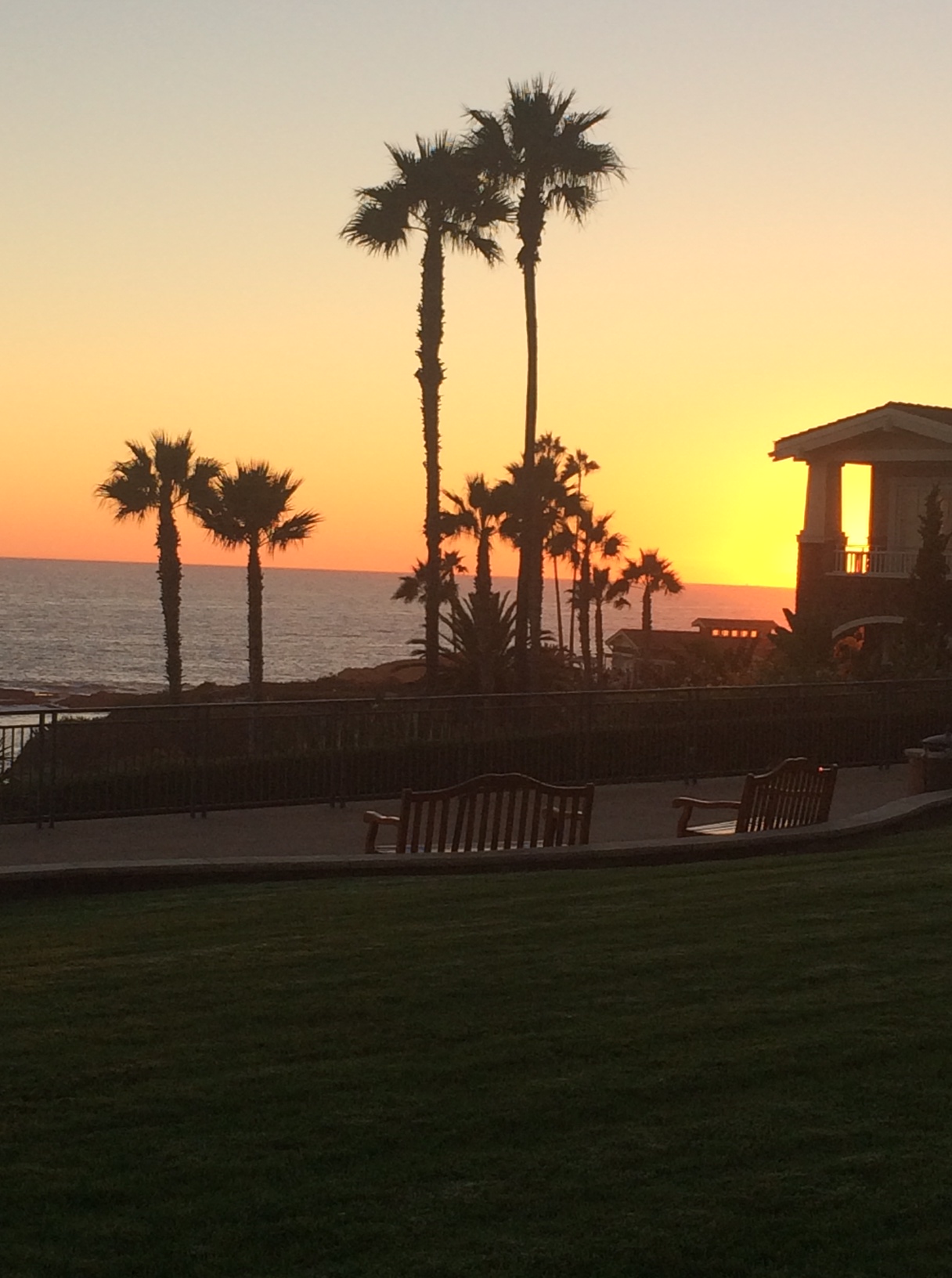
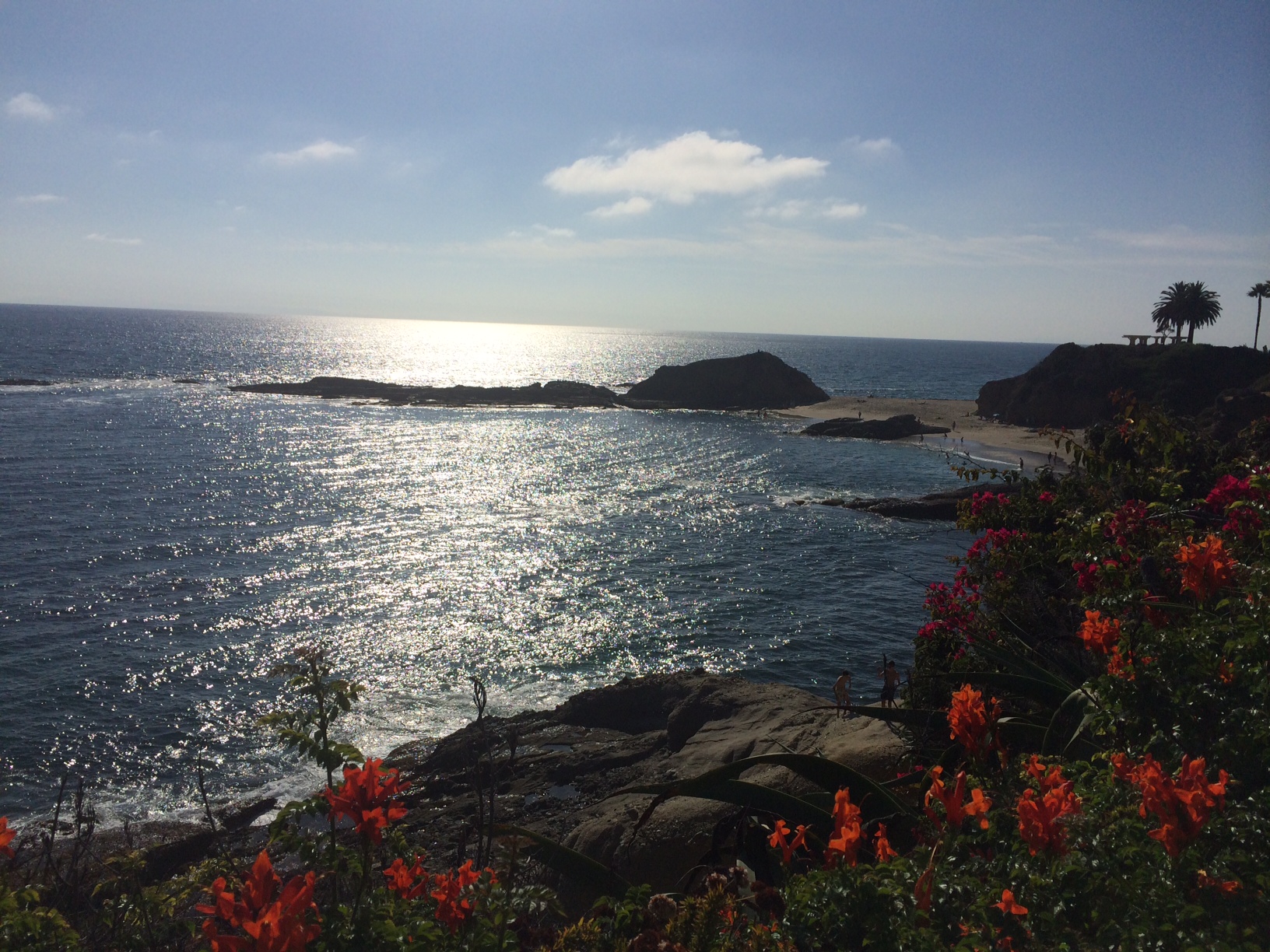
I’m very lucky. One of my closest girlfriends rents a beautiful home in South Laguna Beach, California. It’s on a hill overlooking Pacific Coast Highway, a long, bright, airy space with large windows dressed in soft, billowy curtains overlooking the sea, and a white wooden chair with a colorfully-embroidered cushion on which to sit and watch the sun setting over the ocean.
cliff

I’ve been feeling lost, adrift, bogged down under the weight of emotions I can no longer shake off or brush aside, at a crossroads and feeling overwhelmed by the nagging question, ‘what now?’ The world no longer feels safe or predictable; what was once familiar has turned foreign. And my little bungalow in Los Angeles – while charming – has hardly been a refuge. My girlfriend with the beautiful home by the sea has been working in New York, her home sitting vacant, and when she offered to let me stay there, I gratefully accepted.

It’s not easy to leave life in L.A. for more than a few days – too many commitments – but I cleared six days from the calendar, packed up my car and hit the 405 freeway heading south, past two airports, into Laguna Canyon, and out the other side, arriving at the ocean.

My trip didn’t exactly begin as planned. I arrived in Laguna, opened up my laptop, and connected to WiFi to learn the sad news that Robin Williams had committed suicide. I was heartbroken. Heartbroken, and at the same time, grateful. Grateful that in all the dark places I’d been over the past couple of years, I’d never been there: the darkest of the dark.

Moved by his passing, my scene partner from acting class texted me to ask if we could change the scene we were working on to something from the movie What Dreams May Come. I said sure. It had been years since I’d seen the movie and this time, I watched it with different eyes. Eyes that had known the type of grief and sorrow portrayed in the film. As I watched it, I wept. Wept at the beauty of it, the beauty of a love so powerful that it could transcend death, transcend hell, transcend the darkest, most twisted places imaginable. And I wept at the irony of it too, given that this beautiful, gifted man had, in the end, succumbed to the darkness. I wept for a man who made so many people happy while carrying such desperate pain.

The next day, returning from the beach, I turned on my phone to find more sad news waiting: Lauren Bacall had died. And I felt gut-kicked. Because I admired her tremendously, held her up as a film noir icon, a legend, a true dame. And it felt like some bygone Hollywood era that had already ended was now finally, officially, over. And I sat in the open-air trolley car on the way home, the wind kissing my cheeks, and I cried.
Sunset

So the first two days I spent by the sea were sad. At first, I fought it. But then, gradually, I gave in. I worked a little, and slept a lot. I rose early and sat by the window and watched the marine layer break apart over the ocean. I walked down the long wooden staircase to Table Rock Beach and I lay out on the hot sand and tried to read important things. I made a playlist of happy, poppy, empowering music and I ran up and down steep hills, pushing myself to the top of one hill, past a street called summit, up to mar vista – sea view – telling myself not to give up, that I’d remember this moment, that it was symbolic (stupid writers, looking for symbolism in everything), that even though my lungs burned and my legs were heavy as lead, even though it hurt, that I could push past the pain, that I could still do it. And I did, arriving at the top, gasping for breath.

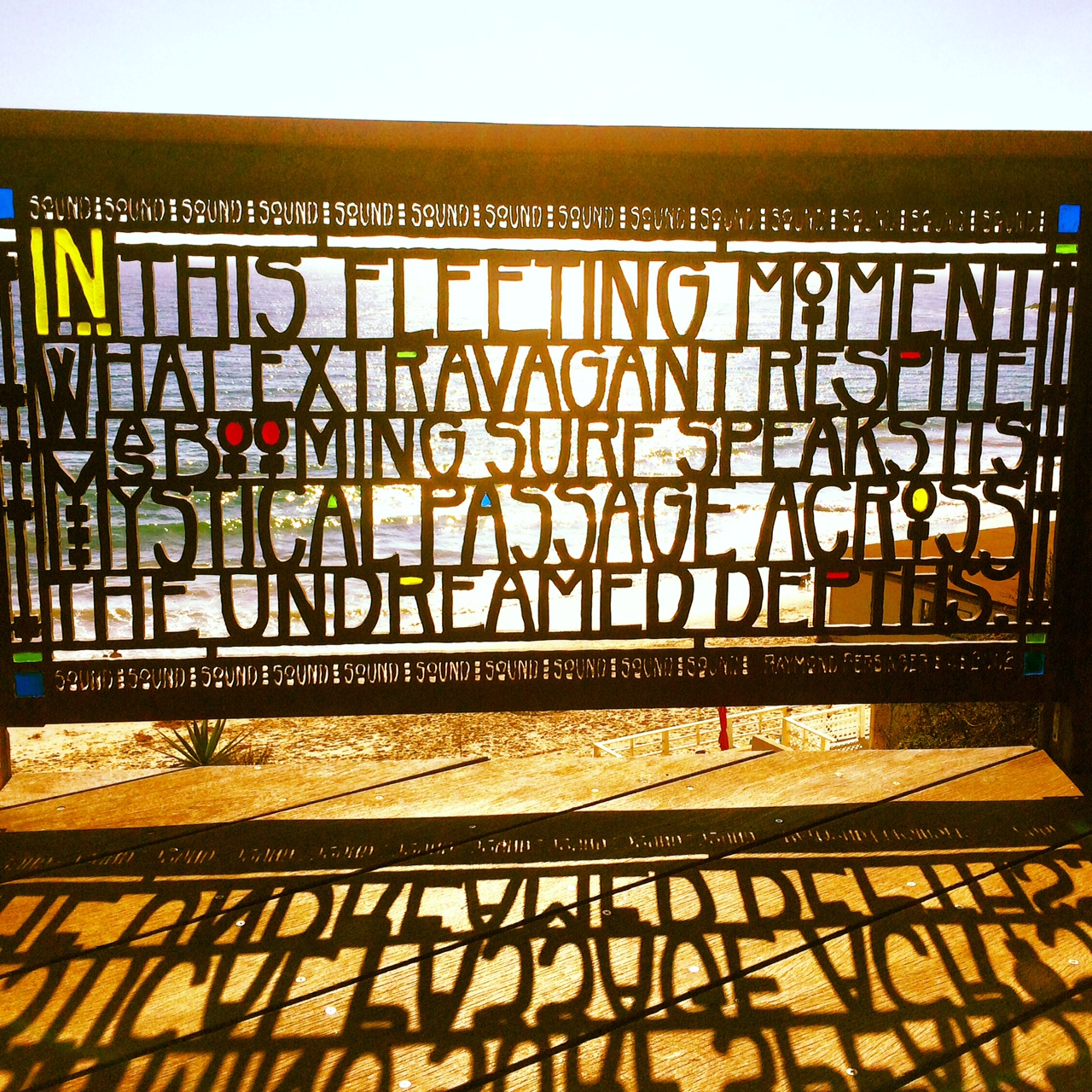
And little by little, I got lighter. I felt like having more fun. I wandered through lush gardens and took pictures. I browsed art galleries and daydreamed over watercolor paintings. I got dressed up and took myself out to dinner. I indulged in sunset cocktails on a terrace at the luxurious Montage resort, becoming the vicarious guest of an extravagant, breathtaking Indian wedding – in which the bride and groom arrived on bejeweled horses – unfolding on the grounds below.

I spent five days never needing to drive, traveling on foot and hopping on and off the free open-air trolley cars running up and down PCH. I’d stick my head out the window, like a dog sniffing the wind, watching the sun sparkling on the sea, my arms tingling with goose bumps as the ocean breeze whipped through my hair.
ocean

On my last day there, in an effort to pamper myself, I visited a CVS drugstore and loaded up on beauty products that I didn’t really need – salt scrubs and mud masks and lip gloss and nail polish. Standing in line, I grew impatient as the store’s only sales clerk spent an inordinately long time chatting with the elderly lady in front of me. They talked and talked, even though she’d completed her transaction, even though the line was steadily growing behind them. I sighed, checked my phone, rolled my eyes.

When it was finally my turn, the clerk gave me an apologetic smile. ‘I’m sorry,’ he said. ‘She just lost her husband. They were married for a lot of years.’

‘Oh no,’ I said. ‘Yes, very sad. Very sad,’ he replied. ‘But when God decides to take you, there’s nothing you can do.’ I nodded, said nothing. Knowing all too well.

Outside in the parking lot, feeling guilty and ashamed at my impatience – after all, where in the hell did I have to be anyway, I was on vacation – I approached the elderly woman as she was loading her car and asked if she needed help. Too late, as she placed a twelve pack of Dr. Pepper – the last of her purchases – in the backseat. ‘I forgot this was heavy,’ she said, indicating the soda. I smiled at her, knowing exactly what she meant, knowing how the fog of grief makes you forget, makes the ordinary seem strange. ‘I hope you have a good day,’ I said. ‘I’m trying,’ she replied. ‘That’s all we can do,’ I called after her, as she got into her car.

So I went back to the beautiful house by the sea, and I lit the healing candle I’d purchased at the new age store downtown on my first day there. The candle that I’d been lighting every night. And I thought about that woman, and I thought about the fact that even a place that was this beautiful couldn’t keep out suffering, that things are so rarely how they appear on the surface, that we all have something – all of us – that we’re carrying around with us. Something that we’re trying to make peace with. Something that we’re trying to let go.

And I burned that candle down and I said a silent prayer that I’d be on the other side of my something soon, and that a new something – something beautiful and unexpected and exactly what I needed – was on its way. That if I just kept going, kept pushing myself up the hill, kept moving through life with an open heart, that I’d find it. That it would arrive. ‘I’ll just keep trying,’ I told myself. ‘That’s all I can do.’ After all, that’s all we – all any of us – can do.

Until next time, friends.
Laguna Sign


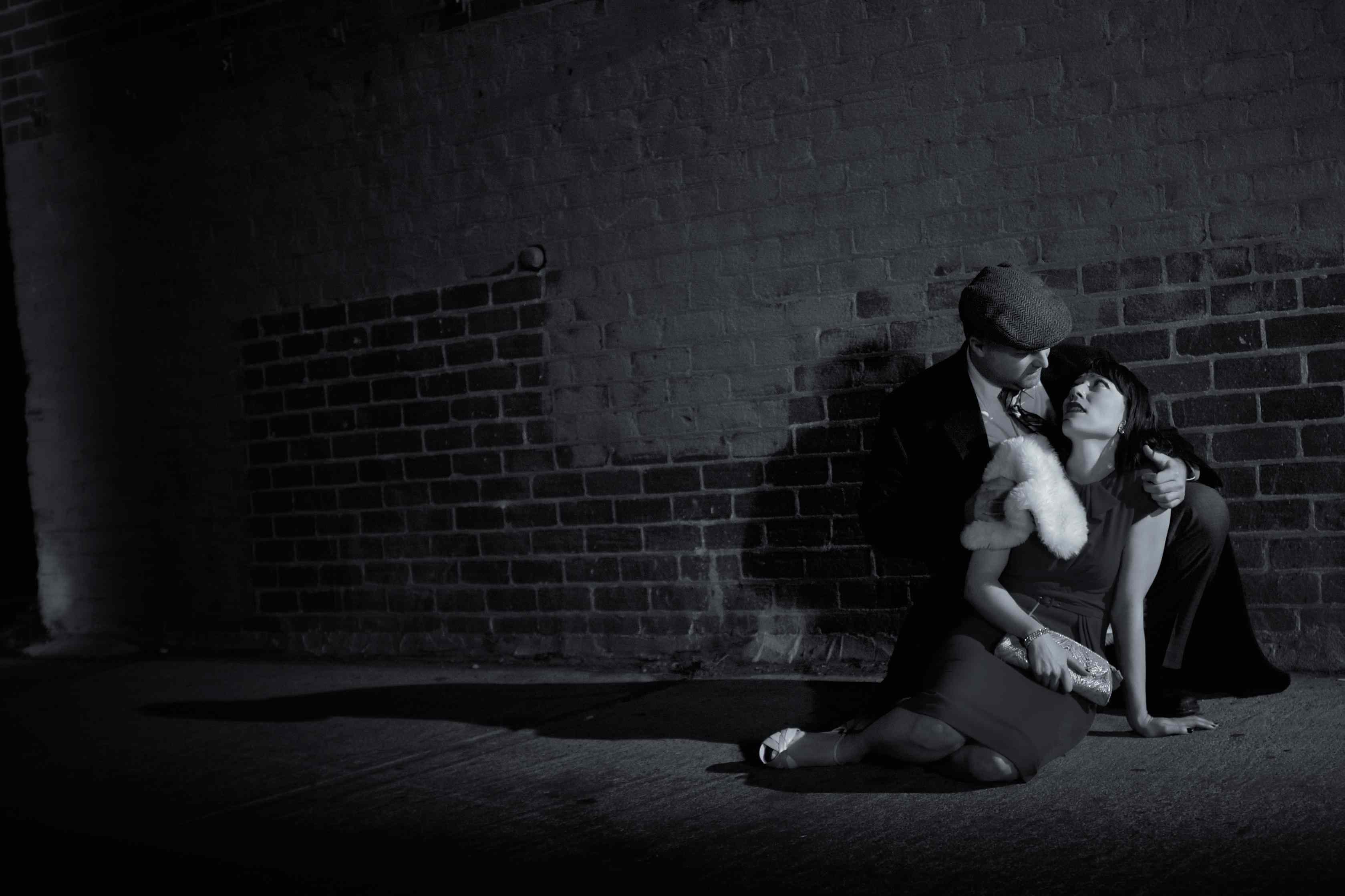
Noir.

SNE010

It was a Saturday morning in early March, and I was helping to run a photo shoot at an Italian restaurant in Burbank. A photo shoot for a play series I was co-producing – a series of film noir-themed one-acts. I had just returned to Los Angeles after spending ten days in the Pacific Northwest on important family business, ten days that culminated in a freezing, cold, bleak weekend in Medford, Oregon, during which we buried my dad.

And now it was back to L.A., back to business as usual. I was already behind – I’d missed the first table read of the plays while sorting through clothing and property at my parents’ house, hadn’t been able to focus on production emails in between taking meetings and organizing funeral arrangements with my sister – so now there wasn’t any time to lose. The photo shoots were a start; black & white character headshots to be used as a marketing tool to promote the show. We’d booked actors in thirty-minute increments and one by one they arrived at the restaurant with their wardrobe and props. Many of the actors were close friends and as they arrived, they hugged me, asked how I was. ‘Fine,’ I said. ‘You know.’

One of the members of our ensemble made a comment, almost off-handedly, about the fact that bad luck seemed to follow me around when I produced this show. ‘Maybe you should stop doing it,’ he said. I flinched, shrugged it off, and kept going.

But in truth, he had a valid point. We were now in the second year of the noir play series, and ever since I’d been working on it, ever since my co-producer – my husband James – and I had developed the concept, bad things had been following me around. In the weeks leading up to year one’s production, our beloved dog succumbed to cancer, and just a few days later, my dad was also diagnosed with the big C, his prognosis terminal.

After dad’s diagnosis, my mother – I think, in a desperate attempt to feel better – booked a trip to L.A. to see the show, took one look at me and promptly fell apart. And when I say fell apart that is a grand understatement. She unraveled before my eyes. She went into an emotional tailspin during which she spent a week holed up in her hotel, too sick to travel, visited frequently by the hotel doctor. I passed the week on high alert, fielding her frantic phone calls, until, finally, she ended up in the emergency room. I kept vigil the entire day, helpless, watching the heart rate monitor as her pulse raced at frightening speed, as she maxed out on anti-nausea meds and still couldn’t stop vomiting, as the doctors were unable to diagnose her with anything other than severe anxiety. They sent her home with a whole slew of Ativan, and the next day she was back in Olympia. The show went on, though my mom never got to see it. And three months later she was dead.

Fast forward to year two of the noir play series, to the aforementioned photo shoot, to March of 2013. My father had just died, succumbing to pancreatic and liver cancer roughly nine months after his stage four diagnosis. Shortly before my mother’s death, my grandmother (my mom’s mom) was diagnosed with Alzheimer’s disease and the shock of my mom’s passing caused her to spiral suddenly and rapidly. She erupted in rage fits and it was no longer safe for her to live at home, so my uncle placed her in a full time care facility. When I visited her the week after my dad died, she barely knew me, though just three months earlier we’d talked on the phone nearly every day, mostly about my mom, about how sad she was, about how she didn’t understand what had happened. Now here she was in a wheelchair, with pink painted fingernails and childish plastic barrettes in her hair, a vacant look in her eyes.

And the show went on. In the space in between my parents’ deaths, in the months where I rarely slept through the night, during the days that every time a number with a 206 or a 360 area code appeared on my cell phone and my heart momentarily arrested (Dad? Are you OK?), I found a play that I fell in love with. It was called Speak No Evil, written by a Chicago-area playwright named Michael Moon, whose work we’d produced in the first year of the series. He had such a fantastic grasp of the noir genre, such a beautiful, lyrical way of writing, I emailed him and asked if he had anything else. And Speak No Evil arrived, a simple, compelling story about a mute street vendor who witnesses a murder, and enlists the help of a down and out private detective to clear his name. I didn’t care what other stories we produced, I wanted Speak to be the centerpiece of the noir festival. In fact, the play touched me so much that it inspired an even greater ambition: to produce it as a film.

And so time went on, filled up with acting rehearsals and directing rehearsals and production duties. It went and went and went and suddenly we were at tech weekend, the weekend that all theatre geeks know as ‘hell,’ because of the long hours in the theatre working out all the stuff that’s less than fun like lighting cues and music cues and scene changes and, well, tech. It was on a Saturday morning in mid-April, the very beginning of tech weekend, that I got the call. My grandfather’s voice on the other line, distant, strained, final, telling me that my grandmother had died. I had known it was coming – she’d been in hospice for weeks – but I didn’t know it would come quite so soon. I didn’t know it would come then. There would be no funeral, just a summer barbecue to celebrate her life, when the weather was better.

So I took the call, and I went to the theatre. And I told no one. Not my friends, not my half-siblings who’d already been through hell with me over our dad. Not even my husband. I kept it to myself and went on with the show. That seems crazy to me now that I did that; that I kept something like that from everyone. But the truth is, I was just tired. Tired of all the tragedy, exhausted from talking about it, tired of re-living the same sad events over and over, of having to manage the reactions and emotions of other people when I told them, tired of the ‘I’m sorry, I have no idea what to say’ look, or worse, the ‘there must be something wrong with you’ look, the look that caused a fellow actor to note that bad things kept happening to me while producing a show revolving around noir – a genre that literally means black – as though I had somehow invited this dark storm cloud to visit me and hang over my head, as though I had unwittingly cursed myself. As though this were all my fault.

I can see now that I kept myself busy to avoid feeling like the world was collapsing around me. I can see now that finding quiet, dark backstage corners to stifle sobs before they became uncontrollable and then going back to work wasn’t normal or healthy. But all I wanted was to do what I loved, to immerse myself in storytelling, to be creative, to find my heart again. All I wanted was to feel normal again. All I wanted was my life back.

So I became an expert. An expert at work, an expert at holding it all together, an expert at being everything for everyone. In a little over a year, I co-produced nine one-act plays, and took on the biggest creative endeavor of my life, Speak No Evil, the movie. While I can admit that the work was an attempt to manage my grief, I remain incredibly proud of the things I accomplished during that horrific year. But I can also see that I took it too far. That, in holding it all together, I covered up uncomfortable truths. I took care of far too many things – and people – that I had no business taking care of. And I never took care of me.

So now it’s another year. And there’s another show. And the show must go on. But this time, it’s going on without me. Because after all that time holding things together, I’m finally falling apart. The thing I never wished for – that grief would catch up with me and knock me sideways – has happened. Without my consent, against my will, it has happened. And while I wish that the grief hadn’t entrenched itself so firmly in my chest, it has nevertheless, found its residence there. I wish this wasn’t the case, but as a beloved teacher of mine once said, ‘so much for wishes.’

This week, thanks to the generosity of a friend, I’ve been passing my days alone in a beautiful home by the sea. A place where I can spend the week writing and reading and taking long walks and lying in bed with the windows open and the ocean waves lulling me to sleep. A place that’s safe and quiet and serene. I know a week isn’t enough time to process and heal from everything I’ve been running from, but it’s a start. Slowing down does not come naturally for me, but life has taught me that sometimes, you have to submit. To give up, and give in. And to have faith that when all the falling apart is over, I’ll be able to piece myself back together – stronger, better – and begin again.

Until next time, friends.

Alley Panorama 2

The same people with different faces.

Ever since I’ve been changing, ever since I stopped abiding by ‘the rules,’ ever since I’ve been less of whatever it was that I used to be, I keep meeting the same people with different faces, over and over and over again.

I would give anything to encounter someone who’s less predictable, less exactly-what-I-expected, less rule-bound and polite and politic. I’m exhausted by people who say the right thing and do the right thing, are nice enough and kind enough but only just enough, just enough to not really be anything.

Just enough is no longer enough. Not for me. Just enough is cold, impersonal, indifferent. Just enough feels like slowly dying.

I want to know who you are. I want to know what you believe in, what – and who – you are willing to stand behind. I want to know about the one thing that gets you out of bed in the morning, the thing that you’d be willing to risk it all for. I want to know what makes your heart beat, what stops your breath, the things you dream about when you’re awake. And yes, I even want to know your flaws, your struggles, your weakest points. Just don’t ask me to fix them.

Life is happening all around us, and I don’t have any more time for people who are not on fire for their lives. Where are the ones who greet the day with enthusiasm, bursting with passion for what’s next? Where are the ones who don’t rely on words alone – because they know that words are nothing but a false promise if not met by action?

Please be different. Please listen, please be aware, please be present. Please be willing to be wrong, to challenge what’s expected, to voice your opinion proudly, even if it means making enemies. Please embrace magic and wonder, please be engaged, be fascinated, please give a damn about something bigger than yourself. Please be alive. Be alive. Be alive.

Please don’t just tolerate me, or tell me ‘good job,’ or (the worst) ‘I’m sorry.’ Please inspire me, provoke me, even, but please, please, please make me feel something. Make me feel something, and I promise you, I’ll do the same.

Whatever you do, please just don’t be more of those same people with different faces. The ones who are everything to everyone and nothing to no one. Please be something more than that, I am begging you.

I am aching for the world to wake up.

Zero.

Last Christmas, I thought that I had hit zero. A dark and depressing Christmas where – not knowing where else to turn – I said a desperate prayer to my mother while cradling a box of her ashes (an experience I documented in my blog post, Faith).

In truth, I hadn’t hit it yet. Actual ground zero was one week ago, last Monday morning, when I woke up with the heavy, oppressive realization that I had been lying to myself. That I could no longer live with one foot in my old life, one foot in my new one, trying to have it both ways. I couldn’t forge ahead into the future while still holding on to the security blanket of the past. I needed to finally give it up, all of it.

I miss my old life. I miss my old life, even though I know it’s not for me. I miss the rhythms and the routine. I miss the comfort in the familiar, even though the familiar was often discomfort itself. I miss always knowing what was coming next, even though what was coming next was often stressful, anxiety producing. And I miss the person that I used to live with, even though he made me crazy. Even though we fought. A lot. Even though I cried.

I walked away from my old life because I had to. Because in the midst of all the loss – my mom, my dad, my grandmother, my dear friend – I had also lost myself. I was drowning, and losing so many people that I loved in such tragic, jarring, devastating ways taught me that if I didn’t change, I was going to die too. In fact, I already was dying, but so slowly that I barely even noticed.

In walking away, I left my home, my marriage, my friends (some of whom, I would learn, were only ‘friends’), and a passion project that I am immensely proud of, an ongoing theater festival that I helped to create, that I worked tirelessly on, gave my whole heart to, and that involved collaboration with many people that I dearly love. Walking away from all of those things hurt like hell.

When I hit ground zero one week ago, I realized that in saying goodbye to so much that I anchored my identity to, I’m no longer sure who I am. I’m no longer sure who I am outside of a relationship that defined my twenties and that brought me both enduring joy and profound heartbreak. I’m no longer sure who I am outside of a company that I co-founded, a company that has been my creative home and my sanctuary from the soul-sucking world of Hollywood for the last five years. And I’m no longer sure who I am outside of my role as an exceptionally competent (what’s the point in false humility, it’s true) producer and caretaker-in-chief, the girl with the plan, the one who manages the to-do list, the problem solver, the go-to, the one with an answer for everything.

The girl in this new life no longer has a plan, save to keep going, to keep forging ahead, one foot in front of the other, into the great unknown. She’s a girl alone in a city where it’s easy to be lonely, a city where she’s not sure she belongs anymore. She’s an actress and a producer without a passion project, and a writer with so many projects that she doesn’t know where to focus, only that they’re all driving her crazy with their dizzying, disorienting, the truth is everywhere and it’s fucking painful, thoughts.

How did this girl, how did I, know that I had finally hit zero; that it hadn’t already happened yet? Because I couldn’t stop crying. Not for three whole days. Because anything – going for a run, ordering lunch, brushing my teeth – produced instantaneous, uncontrollable, sobbing. Because I couldn’t get off the floor, not for an entire afternoon. Because in the midst of all of this, I wrote myself a ‘get well soon’ greeting card, filled it with inspirational thoughts that I didn’t really believe, trudged over to the post office, and mailed it to myself. And when the mailman delivered it the next day, I didn’t feel better, as I hoped I would. I couldn’t even bring myself to open the damn thing, I just looked at it, bawling, feeling like an insane person, for fifteen minutes straight.

If this is what letting go feels like, then I fucking hate it. It’s the worst thing you can imagine. Throughout all the loss and the sickness and the death and the crises that I’d been managing over the last two years, I have never felt anything like this. And it’s probably because I’d never stopped, or settled down long enough to allow myself to feel it. I was producing a play when my mom had her nervous breakdown, another one after my dad’s death and during my grandmother’s. And then I went on to tackle producing an ambitious, thirty-minute film noir movie. Through it all, I worked, worked, worked, not because I was (at least, not consciously) trying to avoid feeling things, but because it’s how I deal. It’s what I know how to do. I’m the competent, problem-solving caretaker, remember? The one managing the to-do list.

I’m not a negative person. I’m not a defeatist. The rational part of me knows that the only way out is through, and that I have no choice but to wade through this until I get to the other side. But it sure doesn’t make it any easier. And when you’re desperate and searching, sometimes help can be found in the oddest places. Like Pinterest. While doing some work for my social media job, I happened upon a quote by the poet Mary Oliver. I had been introduced to Mary’s writing years ago, thought occasionally about her line ‘what are you going to do with your one wild and precious life?,’ but couldn’t call myself a follower by any stretch of the imagination. But when I came upon her poem The Journey, my heart nearly stopped. It is so beautifully written, so profound, that as a writer I’m incredibly jealous that I didn’t write it. And I’m also overwhelmingly grateful that she did, because it encapsulates everything I’m experiencing right now so perfectly. Here it is:

One day you finally knew

what you had to do, and began,


though the voices around you


kept shouting


their bad advice – – -


though the whole house 


began to tremble


and you felt the old tug


at your ankles.


‘Mend my life!’


each voice cried.


But you didn’t stop.

You knew what you had to do,


though the wind pried


with its stiff fingers


at the very foundations – – -


though their melancholy


was terrible. It was already late


enough, and a wild night,


and the road full of fallen


branches and stones.

But little by little,


as you left their voices behind,


the stars began to burn


through the sheets of clouds,


and there was a new voice,


which you slowly 


recognized as your own,


that kept you company


as you strode deeper and deeper


into the world,


determined to do


the only thing you could do – – – determined to save


the only life you could save.

I’m not going to lie: I wept for a long time after reading those words. I read them again and again. I’m still reading them. And here’s the thing: I know in my heart that when nothing is sure, everything is possible. I know that there are many doors open to me, and I just need to stop waffling, choose one and walk through it. After all, if I’m not sure who I am anymore, that means I can be anything, right? I could haunt sidewalk cafes in Paris, and finally write my memoir. I could steal away to a village by the sea and forge a simple life. I could pull a Cheryl Strayed and give away all of my personal belongings and go on a months-long, soul-searching, danger-filled adventure. I could become notorious, and invite other writers to write things about me.

The exhilarating and terrifying part of true reinvention is the prospect that someday – in the not too distant future – I may very well look into the mirror and barely recognize the person I’ve become. What if, in starting anew, I lose parts of myself that I really like, never to be found again? But I guess that’s where faith comes in. Faith in myself. Faith in my intuition, faith in my inner voice, a voice that I ignored for far too long while it was screaming at me and stomping its feet, a voice that had been trying to tell me something for a reason.

After crying for three days straight, after barely being able to get off the floor, I woke up last Thursday morning, suddenly, inexplicably, lighter. I felt like getting out of bed, and doing something productive with my day. And so I did. And it felt good. And since last Thursday, I’ve been feeling mostly OK. I think this pattern may continue for a while. Some days I’ll wake up, feeling fine, and some days, not so much. But the important thing is, I’ll wake up. And I’ll continue to go.

So this is it. This is true ground zero. This is where recovery – where reinvention – begins.

It sucks. I fucking hate it.

But it doesn’t appear that I have a choice in the matter. So – onward I go. Into the great unknown.

Until next time, friends.

The house on Cooper Point Road.


The last time I saw the house on Cooper Point Road, I didn’t know it was going to be the last time. I didn’t know that the night before would be the last time I’d sleep in that windowless basement bedroom with the lavender walls upon which the Titanic movie poster hung; the room with the cherry wood armoire topped by the commemorative Space Needle–shaped bottle from the 1964 World’s Fair and the two tall bookcases crammed with photo albums and novels that were required reading from my high school English classes.

I didn’t know it would be the last time that I’d stand on that expansive wooden deck, staring out at Budd Inlet, watching the boats and the barges pass by on their way to the Port of Olympia. I didn’t know it would be the last time I’d set eyes on that eyesore of a red oriental rug in the downstairs office, or the photograph of the sunset over Mt. Rainier that I took in the 11th grade that my mom framed and hung proudly near her bed, or the musty, cavernous garage containing the oil painting with a warped canvas, depicting me, my parents and our Cairn Terrier Duncan on a snowy Alaska day – painted by mom’s German friend Ernst, who shipped his canvasses wrapped in butcher paper and addressed in flowery letters to ‘Lady Annieleine,’ causing our Anchorage neighbors to wonder if my pretty, blue-eyed, blonde-haired mother with the delicate cheekbones and the gentle way descended from royal bloodlines.

I didn’t know that it would be the last time, though the thought had crossed my mind. In truth, thought wasn’t something I had much time for, not since arriving in Olympia a week earlier, after receiving the call from my sister Deirdre on Valentine’s Day morning that our Dad had passed away. I booked a flight to Sea-Tac and spent nearly four hours on an airport shuttle trying to get to the house on Cooper Point Road. With a bus full of passengers, multiple stops, and Friday afternoon gridlock, the journey out to that long, tree-lined peninsula, past the sign that warned ‘end of county road,’ and down the hill toward the house where my parents used to live might as well have been a journey to the end of the world.

When I finally arrived, there was a bottle of tequila and conversations about when the memorial in Medford, Oregon would be taking place. A decision that, apparently, hinged upon me, probably because my half siblings were exhausted and didn’t have any decision-making abilities left. I settled on a week from Saturday, thinking it made the most practical sense.

The next day, Matt and Marion went back to Anchorage, and Deirdre and I were alone – dad’s oldest and youngest – to sort out life in the house on Cooper Point Road. Time passed in a blur and shifted into some nebulous thing we labeled ‘the vortex.’ We arose each morning with the sun and assembled ourselves around the dining room table, making endless to-do lists and checking things off as we went. There were the mundane tasks – cancelling newspaper subscriptions, sorting through old CDs, selecting floral arrangements for the funeral – and the more oppressive ones: editing obituaries, inventorying personal items, picking up dad’s ashes from the funeral home.

I spent one entire day in my mother’s room, amassing piles of clothing and shoes and handbags and jewelry, trying some things on, but opting to donate almost everything. I filled eight 40-gallon black plastic garbage bags -all impossibly heavy to carry, but that I managed to anyway, almost due to sheer force of will – and delivered them to the Goodwill.

Before we knew it, a week had passed. We said goodbye to the house on Cooper Point Road on a dreary Friday morning. The airport shuttle was late picking us up, though I’d confirmed with them twice and given specific directions as to how to find the house, hidden away as it was in the Olympia woods. My brain swirled with worry – partially that we’d miss our flight – but mostly about the logistics of transporting the heavy square box containing dad’s ashes through airport security without incident.

There was so much to be preoccupied about that morning, that we didn’t realize until the Capitol Aeroporter dropped us off curbside at Sea-Tac that my sister had left one of her suitcases – the smaller one, containing goodies and gifts for her husband and kids – outside in the driveway of the house on Cooper Point Road, left to soak in the pouring rain.

As we boarded the Horizon Air turboprop bound for Medford, I stared out at the runway, rain streaming against the windows, and I thought about the fact that this would very likely be the last time I saw the house on Cooper Point Road. And in a flash, I felt at once devastated and relieved. I wasn’t sure that I wanted to see it again. After all, both of my parents had died in that house, and it contained so many sad memories crammed into such a small space of time. And yet, I knew what never going back meant: no more holiday parties watching boats decked out in Christmas lights lazily cruising Budd Inlet, no more of my mom’s famous ginger snap cookies, no more watching baseball or football games with dad and yelling insults at the opposing team, no more summers soaking up the sun on the deck with majestic views of Mt. Rainier, no more launching bottle rockets into the bay on the 4th of July, no more visitors dropping by via boat and anchoring next door at the Beverly Beach dock. As my uncle Glenn said in a numb, flat tone when I called to tell him that my dad was gone: ‘It’s all over, isn’t it?’ Yes, it was. It was over. Olympia was no longer my home.

As quickly as those thoughts entered, they left, to make room for other thoughts. I was tired, overwrought, consumed by the present moment. As we taxied down the rain-soaked runway, I only briefly entertained the idea that this was indeed the end of something, before other thoughts – flying into bad weather on a small plane that seemed older than me, dad’s funeral mass the next morning, the heavy, square plastic box full of ashes secured above our heads in the overhead bin – intruded. I couldn’t possibly have anticipated what was to come next. I didn’t know anything with certainty, not any more. I didn’t know this would be the last time. But as the engines roared and we ascended into the cloudy Seattle sky, I thought that it might be.

Until next time, friends.

153

Turbulence.

The Boeing 737 was late leaving Vancouver. Not very late – only about 15 minutes. De rigueur for many airlines, but not my beloved Alaska, who always seemed to shuttle me back and forth between L.A. and Seattle perfectly on schedule. After a glorious, eleven day vacation in the Pacific Northwest, including several days visiting family in British Columbia, I was headed back – somewhat reluctantly – to Los Angeles. I found my seat in Row 15, on the aisle, next to a pleasant, middle-aged couple that spoke with soft accents I couldn’t quite place. As I stowed my carry-on and got situated, a girl’s voice came on over the plane’s intercom. She sounded green; fumbling her words and nervously halting before announcing our destination or expected arrival time. She’s probably training, I thought, feeling bad for her.

And then came the words I seldom hear but always dread: ‘We are expecting turbulence.’ The young, inexperienced voice inspired little confidence as she informed us that the flight attendants would have to remain seated until somewhere south of Seattle, due to storms in the area. I sighed, opened up a book and tried to read, hoping I’d magically grow so immersed in it by the time we were in flight that I wouldn’t notice the bad weather. I glanced down at the ruby and diamond band on my right ring finger – my mother’s ring – and said a silent prayer.

I wasn’t always afraid to fly. As a little girl growing up in Alaska, I used to fly frequently: to Seattle to visit my grandparents, to Hawaii or Mexico on vacation with my mom and dad. Takeoff was my favorite part: the taxi down the runway and the roar of the jet engines as the plane accelerated into the sky. ‘Up, up, up and away,’ I’d say with delight, as the plane rose above the landscape and the town and roads and cars and buildings were reduced to ant-size. Even the fact that during the cold Alaska winters, planes were sometimes held on the runway in order to ‘de-ice’ the wings didn’t faze me – just par for the course being an Alaska girl. Now, I have no doubt that hearing that phrase would send terror shooting down my spine. Oh, how things change.

On this current Alaska flight from YVR to LAX, we easily soared to 10,000 feet – the approved elevation for electronic devices. False alarm, I thought, just the pilots being extra cautious. I began to relax. But somewhere on the way to 30,000 feet, the bumps began. Not too bad at first, but gradually worse. Eventually, the pilot’s voice – barely discernible over the engine noise – came over the loudspeaker: ‘Well, folks,’ he said, in a vaguely reassuring, grandfatherly tone, ‘we’ve got reports of thunderstorms from here to Portland, and the winds are moving from east to west, causing the rough air we’re experiencing. Unfortunately, we’re going to have to ask everyone to remain in their seats with seatbelts securely fastened for their safety.’

Dammit, I thought. Seeking comfort, I scanned my immediate surroundings for a friendly face. The couple next to me was sound asleep. The kind-faced, older gentleman across the aisle looked like a good prospect, but he was absorbed in his kindle and didn’t make eye contact. Envious of his calm demeanor, I reluctantly put in my ear buds and searched iTunes for the happiest, poppiest song in my library. As Ob-La-Di, Ob-La-Da by the Beatles played, I stared out the window into the cloudy grey abyss, the plane shimmying, my heart rate rising. What I wouldn’t give for a shot of whiskey – or three – right about now, but the flight attendants had to remain seated too:  no beverage service.

Calm down, I told myself, it’s just bad weather. It’ll be over soon. But the plane wouldn’t stop shaking, the visibility wouldn’t get clear, and even Paul McCartney was not helping matters. I looked down at the ring on my finger, twisted it, and asked my mom for help. ‘It’s going to be OK,’ a voice told me. ‘I won’t let anything happen to you.’ And I thought about my mother, imagined her as my angel watching over me, imagined her keeping me safe, and I twisted the ring and twisted it and twisted it. But no calm came. Just the plane, pushing through choppy air, and me, gripping my armrest for dear life and praying for it to stop.

‘Mom?’ I thought desperately. And then, with full force, a realization hit me, as powerful as the storm we were flying through, and suddenly, I was weeping, unable to stop the deluge spilling forth from my eyes. My mom wasn’t going to save me. Not today. Not ever. She never had.

My mother was my best friend, my world, the most important person in my life. I had no doubt of the fierceness of her love for me or her desire for my happiness above all else. But keeping me safe was another thing entirely. My sweet, beautiful mother had always been too fragile for this world, and from a very early age, I grew up protecting her, watching over her, and making sure she was OK. It’s what therapists call ‘parentalizing,’ which is essentially a parent/child role reversal.

From the time I was around 8 or 9, I remember filling that role. Whether I was consoling her after a bout with dad’s drinking, after harsh words from my grandmother that cut too deeply, or one of the many times that she was depressed and so very sad, I was always the one taking care of my mom.

This continued well after I left home and moved to Los Angeles. During our frequent phone conversations, I’d edit the details of my life so as not to upset her. No matter how hopeless I felt during my lowest moments as a broke, struggling twenty-something trying to make it as an actress in Hollywood, I always painted the truth with an optimistic brush. I couldn’t tell her how I really felt – desperate and alone – because I knew that she’d drive herself crazy worrying about me. The few times I tried the unedited truth, the pain it caused her always cost me more than the temporary relief provided by unloading my burdens on to the one person I wanted to confide them in. So I avoided the unedited truth at all costs, and instead I found a way to always make things OK.

And now here I was, 30,000 feet in the air somewhere over the Washington/Oregon border, exposed, vulnerable, openly weeping, gripping the armrest, praying for safety. But no one was coming to rescue me. Like so many times before, I was on my own. I’d just have to steel myself, and wait for the storm to pass.

And eventually, it did. The air smoothed out, the sun broke through the clouds. And everything was OK again. Just like it always was. But as I twisted that ruby ring, breathed a deep sigh of relief and allowed myself to sink back into my seat, I knew something fundamental: my parents were dead and gone, yes. But life circumstance had only made what was always true more apparent. As much as my parents loved me, as much as they’d supported me, I had always been my own safety, I had always been my own security, and when push came to shove, I had always relied on myself.

Ever since childhood, I had been seeking out a safe place to rest my head. But I’d only found more of what I’d already known: people who were broken – just like my mother – and needed me to take care of them. And on that Alaska Airlines flight from Vancouver to LAX, I knew that I had to change. I had to stop trying to fix the broken ones, and I had to find someplace safe outside of myself. Until I did that, I would always be gripping the armrest, hanging on for dear life. I would always be afraid to fly.

Until next time, friends.

Sad things.

photo 3

I write about sad things.  But I am not a sad person.  A lot of sad things have happened to me in a short span of my life, and for a long while – a twelve month or so period that I’ve labeled The Lost Year – I couldn’t write at all.  I tried and failed many, many times, but I couldn’t crystalize my emotions into sentences that made any sense, or had any meaning.

When I emerged from the darkest of the dark, there was no denying that I was a different person.  At once stronger, and yet more fragile.  I didn’t want anything that happened to me.  I didn’t want to lose three of the most important people in my life, nor did I want to be forced to confront painful truths about my family – and ultimately, myself – through their loss.  I would give anything for things to be the way they were, to live in blissful ignorance once again.  But life doesn’t work that way.

So here I am.  And somewhere in the eye of the storm, in the midst of the vortex, I found my voice again.  And I started to write.  Grateful to be able to once again put my thoughts into words, to be able to finally express myself, I have been writing a lot.  And I’ve been writing a lot of sad things.  But I write about sad things not because I’m a depressive, but because I’m an optimist.  Because through it all, I’m still hopeful.  I still believe that people are essentially good.  I still believe in love.  Even though I’ve been gut-kicked by life, even though my edges are sharper, I’m not bitter or cynical or jaded.  I write painful truths about my family not because I’m angry with them, but because you’re only as sick as your secrets and we kept far too many of them and I don’t want to be complicit in the secret-keeping any more.

So I’m going to continue to write sad things, because I want to get better.  I’m going to continue to explore the dark because it’s the only way to reclaim the light.  I’m going to continue to be honest because I’ve seen too much and lived through too much to be anything else.  And I’m going to continue to tell my story, even though I know it will be painful, even though I know it will cost me something, because there is someone out there who wishes they could do the same and can’t.  And if there’s even a chance that in my quest to heal my heart, in my journey to become a whole person again, that I can help someone else do the same, then it’s all worth it.

Stay tuned.

Until next time, friends.

Make Believe.

I prefer the you that I made up.

I prefer the you that was kind, with a soft sparkle in your eye, a gentle authority in your step.

I prefer the you that charmed me right from the start, that made me feel charming too.

I prefer the you that I laughed with, easily and often.

I prefer the you that made me feel at once safe and secure, held in your gaze.

I prefer the you that made time stand still.

I even prefer the you that broke my heart, because the you that broke it was someone worthy of the break.

The real you, I don’t know what to do with.

The real you is cold and disappointing, sad and shallow.

The real you is careless with my heart, careless with the hearts of others.

When I dream, we’re effortless.  We just have to be, and it’s enough. We just have to be, and it’s everything.

But the real you couldn’t care less about my dreams.

Was the you that I made up ever really you?  Or were you just a figment of my overactive imagination?

If you exist solely in the world of make believe, then I’d rather exist there, too.

Dreaming you up all over again.

Because I prefer the you that I made up.

photo 1

Saltwater.

photo 2

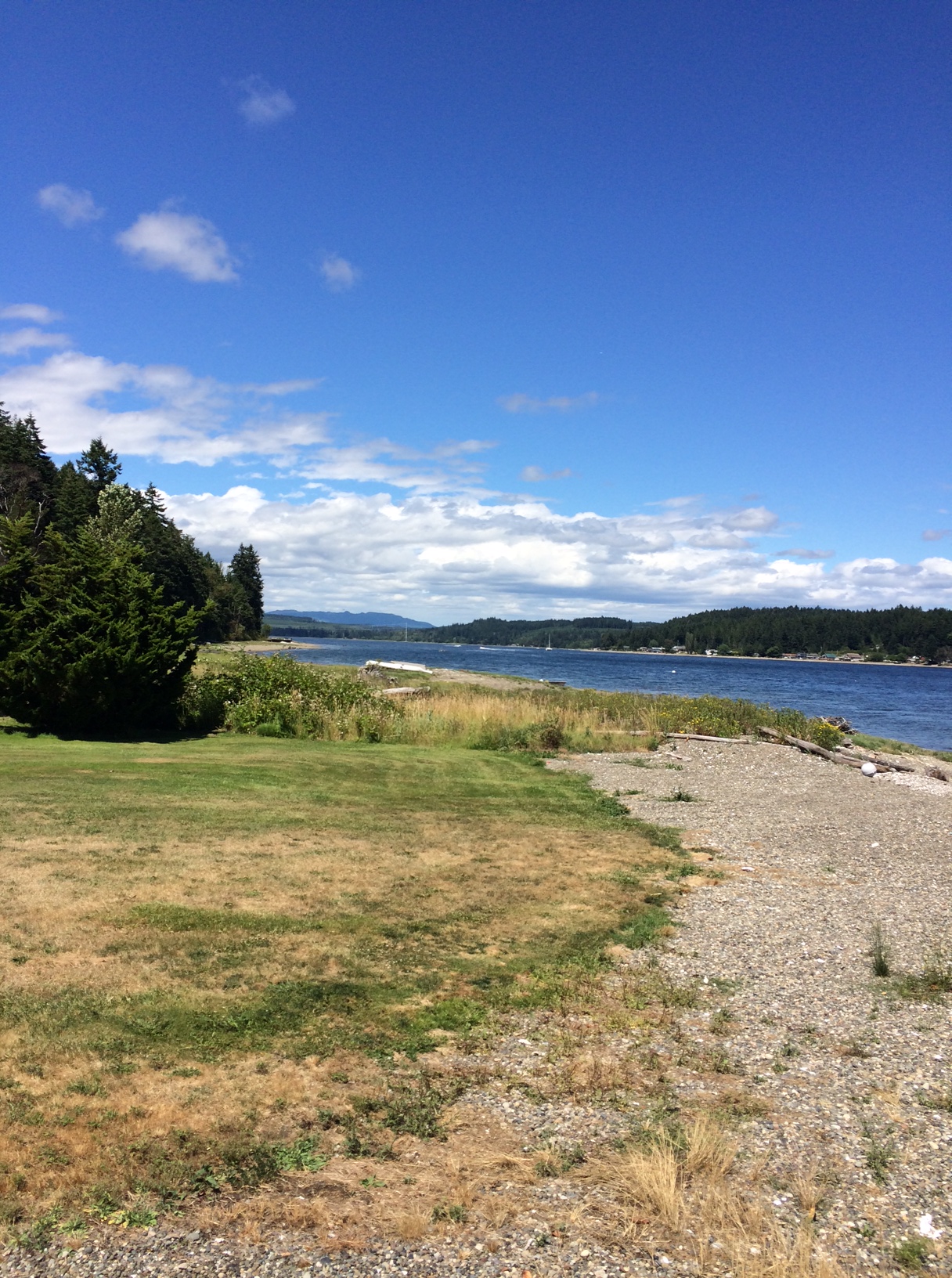
July 7, 2014 was a good day. The weather was warm with temperatures in the low 80s. Sunrays sparkled on a calm, tranquil, barely-rippling Puget Sound, and Mt. Rainier stood strong and stoic, a beacon against the bright blue sky. Summer had officially arrived in the Pacific Northwest, and I couldn’t imagine anywhere else I’d rather be on this perfect July day than out on Case Inlet in my Grandfather’s forty-year-old, freshly refurbished tin boat, just me, my uncle, my aunt and my mom.

The afternoon before, I had finally gathered up the courage to pry open the square, black plastic box that had been living in the manufactured home in Allyn, WA for the last twenty-two months. A box that contained a plastic bag sealed with a twist tie, and a tag that identified the bag’s powdery grey contents as the remains of my mother, Anne Popelka Kelly.

I’m not sure why I was so terrified to open that box, though I surmise it had something to do with the fact that once I finally did it, there would be no denying that all that remained of my brilliant, beautiful mother was a small container of ash and bone. There would be no denying that fact, nor would there be any denying another essential truth: that despite our brave, beating hearts, despite our grandest hopes and loftiest dreams, despite our fiercest passions and boldest aspirations, that we too, would ultimately be reduced to the very same thing.

I suppose that ever since I started losing members of my family, I’ve been running from the idea of my own expiration date. For all my talk of the fierce urgency of now, of the shortness of life, the truth is that I’ve been living ever-terrified of my own mortality, paralyzed in a sort of holding pattern that’s kept me from really letting go and embracing my life.

And every time I visited that manufactured home in Allyn, every time I visited her, that black box had been haunting me, mocking me, berating me for my inability to do the thing that needed to be done. Well, no more. I was finally going to do it. I was going to obey her wishes. And I was going to take a little bit of her with me, too.

I had purchased a sterling silver pendant with an amethyst at its base for the occasion. I unscrewed and removed the bale, and using the paper funnel I’d made, I carefully guided a small pinch of my mother’s ashes into the pendant, and then another pinch, conscious (OK, paranoid) not to spill. Once the ashes were safely inside, I applied glue to the bale, inserted it into the pendant, twisted, and secured it, using a tissue to gingerly wipe away excess glue.  All of my movements were laser beam-focused, with the precision of a brain surgeon.

Having completed that step, it was time. Time to do the big thing. The thing we’d been putting off for the last twenty-two months. My uncle, aunt and I were out on Case Inlet on that perfect July day because it was time. It was time to let her go.

And so we did. Cradling the black box in my arms, a silver ice cream scoop pilfered from my grandfather’s kitchen in hand, we boarded the old tin boat with the words ‘Popelka’ stamped on the inside.  With my uncle manning the outboard motor, we steered out toward the center of the bay, out past rafts and buoys. And when we found what we decided was a good spot, we began.

When we were done, we cruised around Treasure Island, (a tiny island populated by beach homes and way less exciting than the name implies) taking in the banks of statuesque evergreen trees. We waved at other boaters – especially the ones sporting Seahawks banners – the gentle July breeze blowing in our hair, the sun at our backs.

I’d shed more tears over my mother’s death and her absence over the subsequent two years than any other event in my life, but on that day, I didn’t cry. I laughed. As we launched powdery scoop after powdery scoop of my mom’s ashes into the sound, talking about her, taking in the beautiful day, I felt happy. I felt serene. I felt like I was finally doing something right. And after we brought the boat ashore, I jumped in the bay, losing and regaining both my flip flops in the process. ‘Cmon!’ I yelled at my aunt. ‘It’s too cold!’ she squealed in protest. ‘No it’s not,’ I hollered back, ‘it’s gorgeous!’

‘You sound like your mother!’ she laughed. Because no matter the time of year, no matter how cold the currents were, Puget Sound was never too cold for my mother. And as I dogpaddled through the water, inhaling saltwater, I felt lighter than I had in a long time. But it wasn’t just the saltwater making me buoyant, it was something more profound. It was sweet relief.

I briefly flashed back to a conversation I’d had earlier that day, over lunch with a family friend. We were discussing my life, the recent changes I’d been through, the open-ended nature of my future plans. ‘Aren’t you excited about your life?’ he gushed. ‘Anything can happen!’

Excited? That was another feeling I hadn’t felt in a long while. But floating in Case Inlet on that July day, it was one of many emotions I recognized flooding through my body. Having finally set my mother free, having sent her back into the sea she loved her whole life, I felt free too. As though the monster that had its claws into me these last two years had finally released its grip. Here, amidst all of this stunning natural beauty, I felt joyful. I felt grateful for my life. And yes, I even felt excited. Because anything can happen. And now – come what may – I feel ready for it.

Until next time, friends.

photo 4

Ice Water.

Hidden Lane Back View

You nearly died when I was nine. Though I might have been as young as eight, or as old as ten. I don’t remember. I do remember the fear.

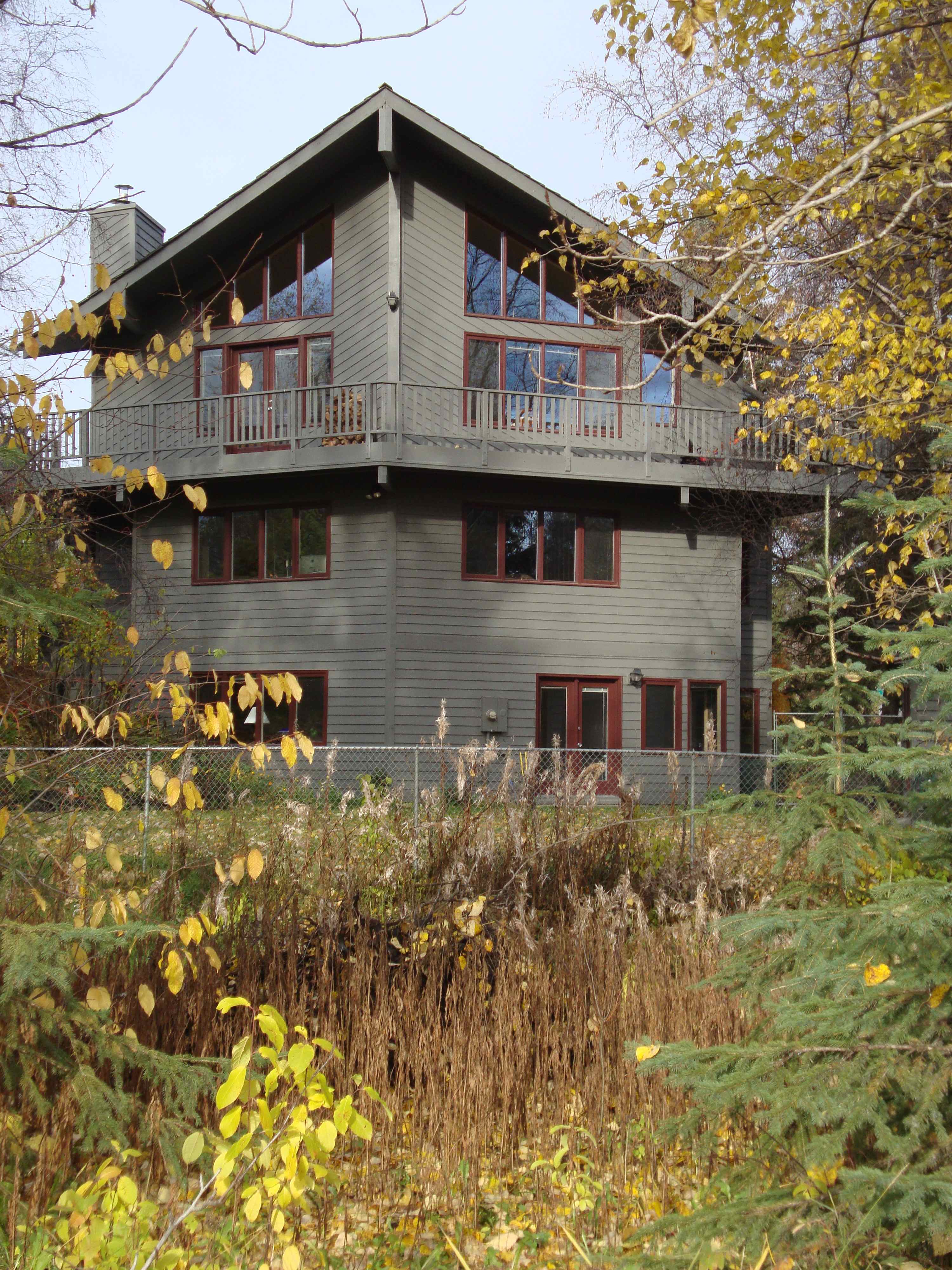
We were living in Anchorage, in the house on Hidden Lane. My mom’s dream house. The three-story Alaskan chateau with the cathedral-high ceilings and the great big skylights, the wrap-around deck, the window bench I used to clamber upon on special nights well after midnight when the Northern Lights were out, the vegetable garden where we harvested rhubarb to make pie, and the jacuzzi in the basement ‘spa’ room populated by my mom’s favorite plants.

I dreamt about that house often after my mother’s death. It had been more than fifteen years since I’d lived there but in my dreams I remembered every detail, every inch of it. That house was as much my mom as her aquamarine eyes or her easy laugh. She worked with an architect to design the floor plan to painstaking detail and she was so very proud of it, as if she’d built it herself with her bare hands.

But as magical as the house on Hidden Lane was, bad things happened there. Burglars smashed in the front door in broad daylight and stole jewelry from my bedroom before an alarm scared them away. My parents fought frequently, often about my father’s drinking and the need for him to retire from his law practice. My mom, miserable during the cold, dark Alaska winters, suffered sad spells and would lock herself in her bedroom for hours at a time, refusing to answer or come out. More than once, I fell asleep curled up on the carpet outside her door, keeping vigil.

And then there was the night you almost died. Mom and I were upstairs, watching a movie. I think you and she had fought about something, but that memory, like many during that time, is fuzzy. What I do remember is the moment mom wondered aloud where you were and her eyes met mine and we both knew in an instant that something was wrong. We flew down the stairs – two or three at a time – to the basement. As we got closer, we could hear the hot tub whirring and I felt fear churning in my stomach.

And then we saw you: submerged under water, eyes closed, face purple. I thought for sure you were dead. It was the first time in my life I felt real terror – the kind that plunges into your chest like a swift, steel dagger, a sudden attack of ice water in the veins, freezing, expanding, breaking you apart from the inside out.

I remember mom pulling you out, screaming, crying, yelling for me to call 911. I don’t remember dialing the numbers, but I know that I must have done it because there was the operator’s voice on the other end, talking me through CPR. There was me, relaying instructions as mom went through chest compressions and mouth to mouth resuscitation. There was mom, turning you over on your side, and you, vomiting up water, coughing, choking, gasping for breath. And you didn’t die. Not that day.

The ambulance arrived, and you went to the hospital. And 24 hours later you and mom were off on vacation somewhere much warmer than Alaska – Hawaii or Mexico, I don’t remember – as though nothing had ever happened. If it wasn’t for the terror, the shock of ice water in my veins, I would think that I dreamt the whole thing up, that it was all just some hazy nightmare.

But I didn’t dream it. It was real. It happened. I wouldn’t feel that same terror, that same sudden, swift dagger again for another twenty years. Not until the Sunday morning when I received a panicked voicemail from my aunt telling me to call home, and you answered the phone and informed me in a flat, distant tone, ‘Mom’s dead.’

The night you nearly died was my first time, my first experience with real fear, my initiation into a world that wasn’t so safe, a world where everything could shift in an instant. It left an indelible mark. When the feeling visited me again many years later, I knew right away what it was, what it meant – that ice water, that steel dagger, that lightning strike of pure terror. After all, you never forget your first time. Do you?

Coastal Trail

Blog at WordPress.com.