Home.

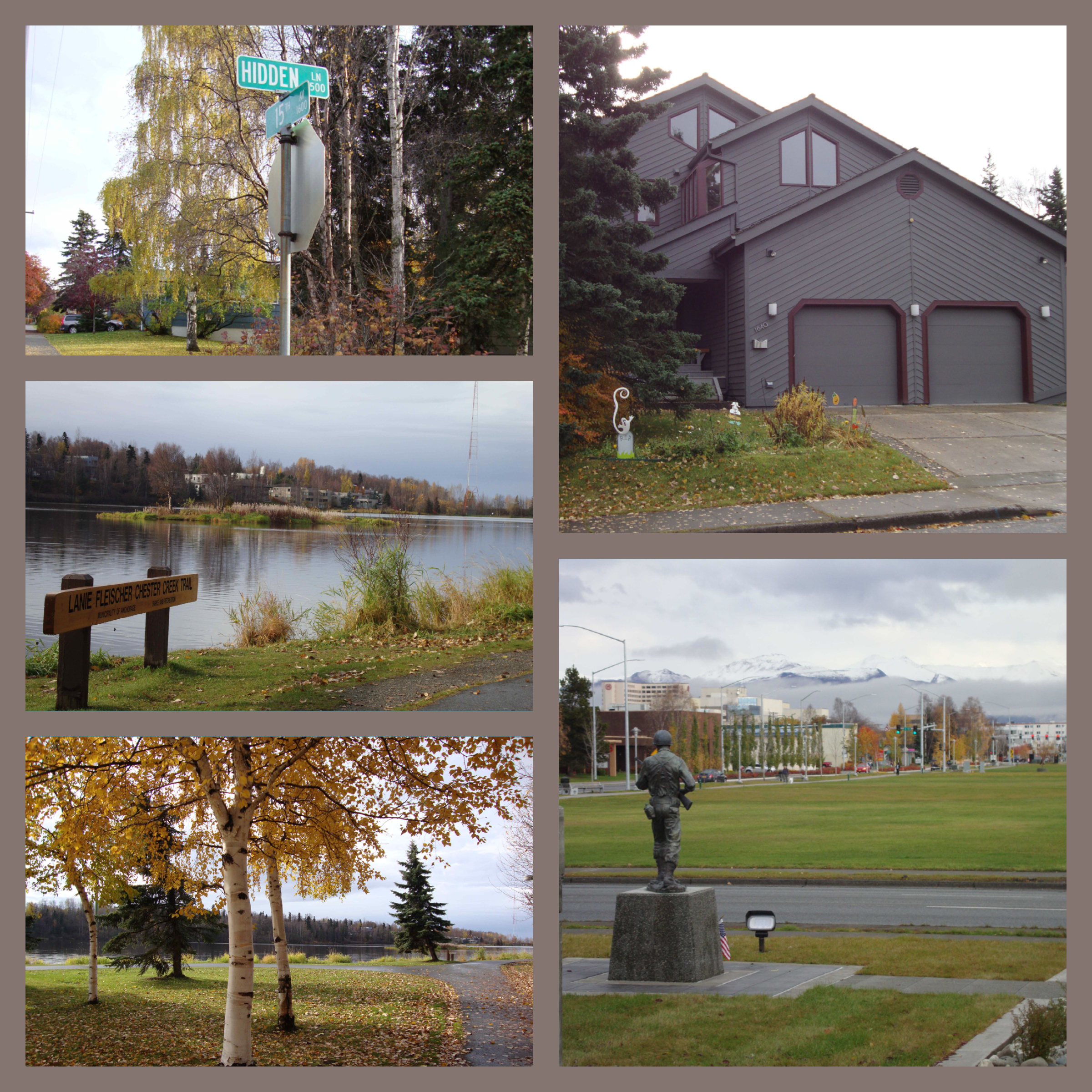
Alaska Collage

“The ache for home lives in all of us, the safe place where we can go as we are and not be questioned.” -Maya Angelou

I want to go home. The problem is, I’m not sure where that is. It’s not Olympia any more, not since my parents died and we sold their house and I packed up my high school bedroom with its lavender walls and blue plastic glow in the dark stars on the ceiling. It’s not Anchorage, where I spent my first fourteen years making happy childhood memories amid snowball fights and sledding and ice skating on Chester Creek. And despite taking up residence for nearly fifteen years in Los Angeles, it’s not really L.A. either.

I’ve been thinking a lot about the concept of home lately, what it is, what it means, how I define it. Is it where we’re from, where we grew up? Is it where our family is? Is it where we feel the warmest and safest? Or is it simply where we live now?

I haven’t felt at home in a while. The last two years of my life have been an intense period during which everything familiar has been ripped away, some of it by circumstance, some of it by my own design.

I have a new home now. It’s still a handful of miles from the ocean but that doesn’t keep it from feeling like the sea. It’s bright and airy with lots of natural light, beautifully landscaped grounds and a patio large enough to do yoga on, a patio that’s begging to be populated by plants. I’ve decorated it in a way that’s very Sarah – furniture made from light-colored wood and textiles in every shade of blue imaginable: teal, turquoise, navy, cerulean, aquamarine. It’s serene and lovely here, and a sense of calm pervades. I feel grounded in this place, and yet I can’t settle in. I can’t shake the feeling that my charming little cottage is a stopgap on the way to somewhere else, some destination yet unknown or undecided.

My whole life, I’ve always gravitated toward the water. Whether it was Cook Inlet in Anchorage or Puget Sound in Olympia or the Pacific Ocean, being near a body of water – something expansive – has always made me feel secure, like I’m not stuck. As though, through a waterway, I’m connected to the rest of the world and if I need to, I can stage a quick getaway. I’m not sure where this feeling comes from, only that I’ve always had it.
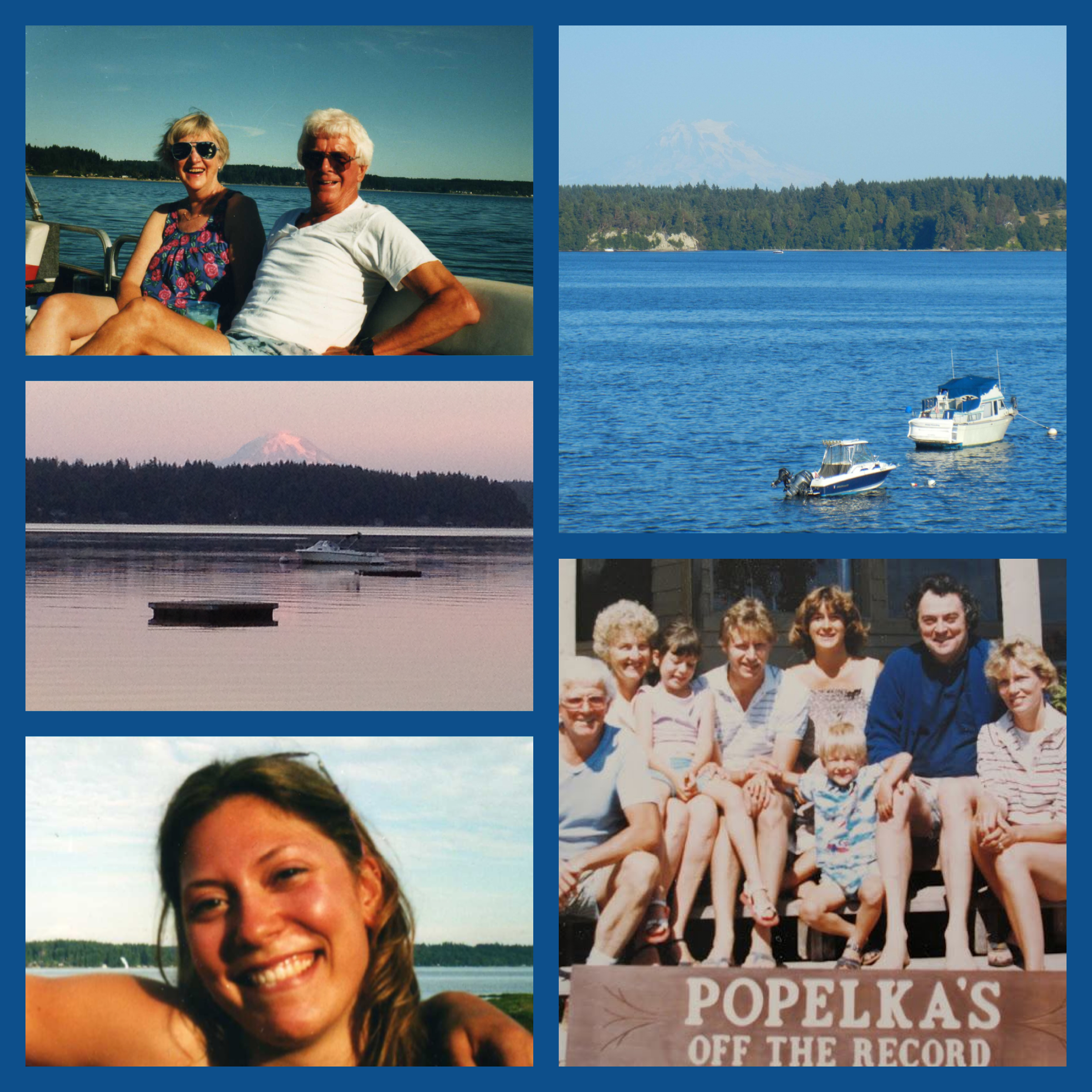
PNW Collage

Given that, I suppose it’s not surprising that upon moving to L.A., I fell in love with Santa Monica. I’d go to the ocean as often as I could, taking long walks through Palisades Park, daydreaming with my headphones on. One building in particular captured my imagination immediately, a gorgeous Spanish style manse on Ocean Avenue called El Tovar by the Sea. I’d imagine that when I’d finally made it big, I would buy the penthouse suite and sweeping views of the Pacific would be the backdrop to the glamorous and exciting life that I’d lead there.

It’s funny how your dreams evolve as you get older. While I still love visiting Santa Monica – breathing in the sea air, taking long walks in the park – I don’t want to live there anymore. Not even if someone handed me that penthouse suite on a silver platter. It’s not that I no longer daydream, but the hard won wisdom that’s come with age and the certainty that nothing is guaranteed has caused my dreams to shift and become less pie in the sky, more grounded in the real and the familiar. There’s something about El Tovar by the Sea, about Santa Monica, about Los Angeles in general that has become too sterile, too perfect, too high atop a pedestal, too held at a distance.

These days when I meditate on the idea of home, I think about where I fit in, where I’m allowed to be myself, where people ‘get’ me. I think about what’s most important: the best place to pursue career success, or the place with the greatest opportunities to grab happiness? And is it possible that those two things can intersect, that they can coexist in one space?

I used to think that there was only one path, only one place, for me. I used to be pretty dogmatic about it. But now I wonder if that’s true. Maybe in the words of Joseph Campbell, it’s time to let go of the life I’ve planned in order to have the one that’s waiting for me. Maybe I can have everything I want, but maybe the road to get there is different than I thought. Maybe it’s simpler, easier, more connected to my past. Maybe, like Dorothy, happiness has always been in my own backyard.

If home is where the heart is, then tomorrow I’m heading home. I’m spending ten days in the Pacific Northwest, dividing time between a waterfront parcel of land on Grapeview Loop Road in Allyn, WA – known affectionately as ‘the beach’ – and Vancouver, B.C. The former is as idyllic as its name implies. It’s the place I came of age, spending every summer swimming in Case Inlet, beachcombing and building bonfires under the stars. The latter is where my big sister lives with her family, and it’s the place that has consistently been my favorite destination for fun and laughter, a picturesque urban center with an international flavor that never ceases to inspire me. The bridge between these two places is Seattle, the city where I was born, the city where my Mom spent many happy days and that she loved so much, the city that I spent many happy days in with her, the city that always makes me feel so connected to her. On my way from point A to point B, I’ll swing through the Emerald City for a quick stay over, just to say hello. It would be impossible not to.

There’s this song I recently discovered – ‘Coming Home,’ by Storyman, an indie band from Ireland. One of the lyrics is stuck in my brain, perpetually on repeat: ‘home is where your heart meets mine.’ It’s simple, and it rings true. But which home? And whose heart?

I haven’t quite figured that out yet. And so, I’ll keep looking.

Until next time, friends.
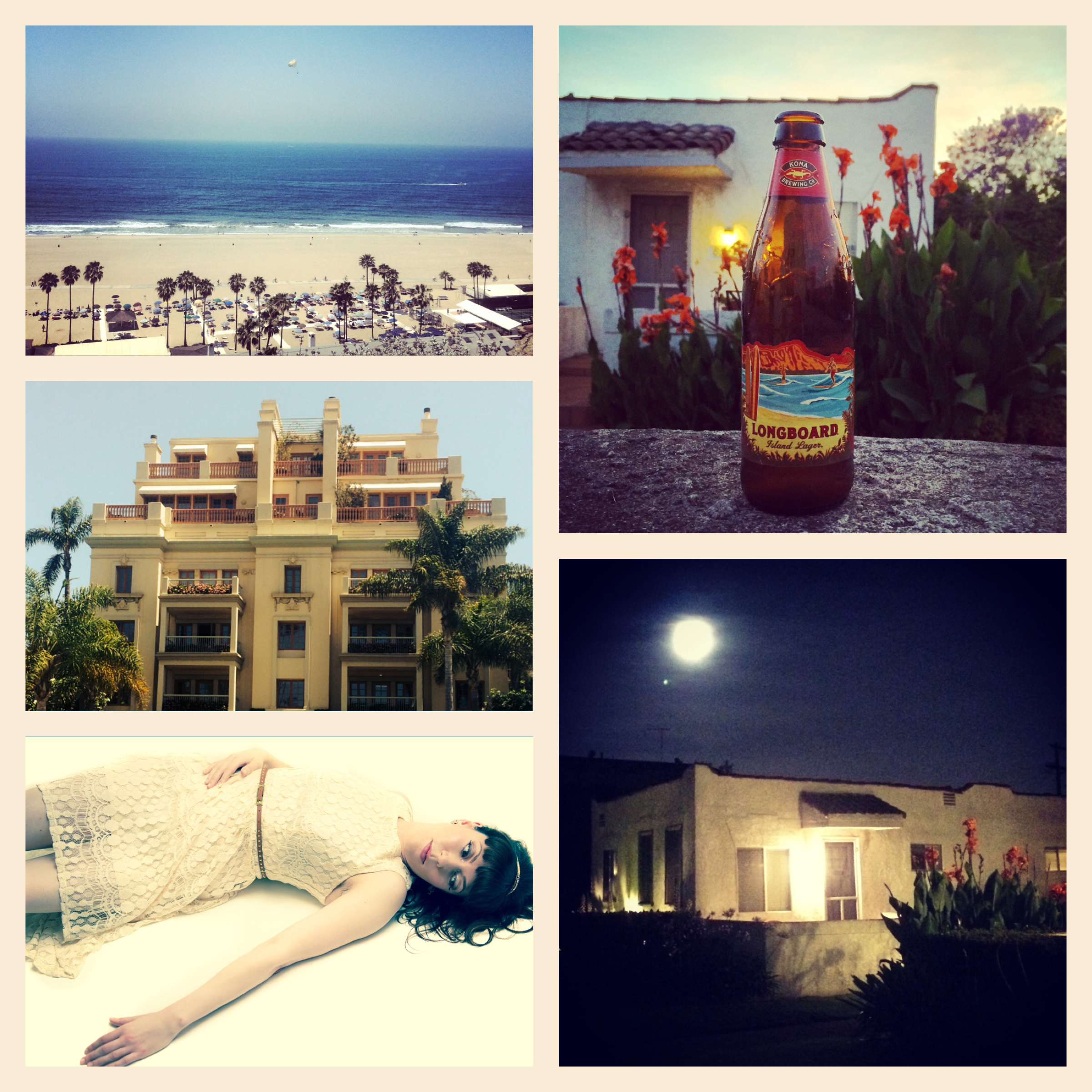
LA Collage

Day Thirty One.

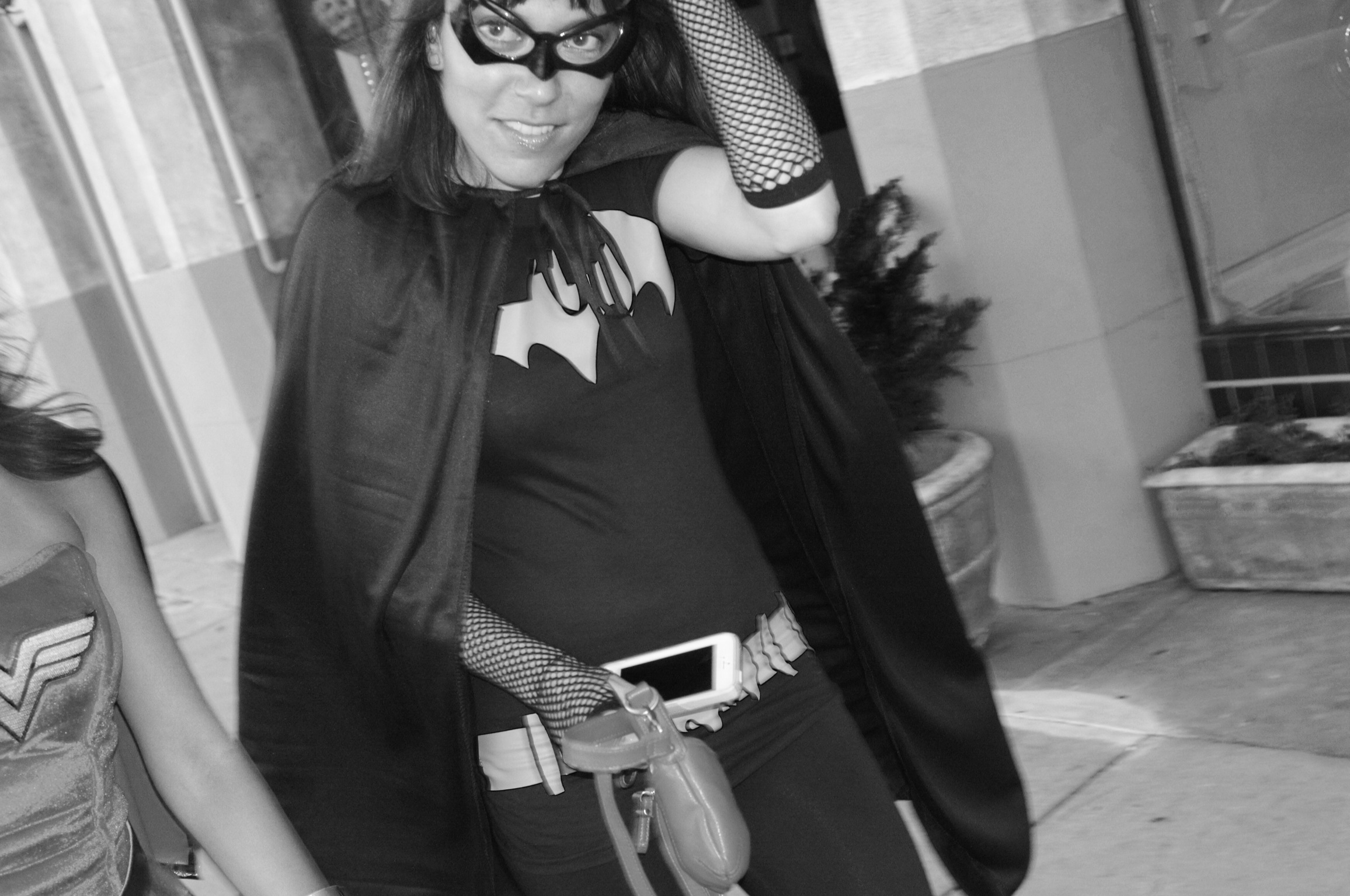
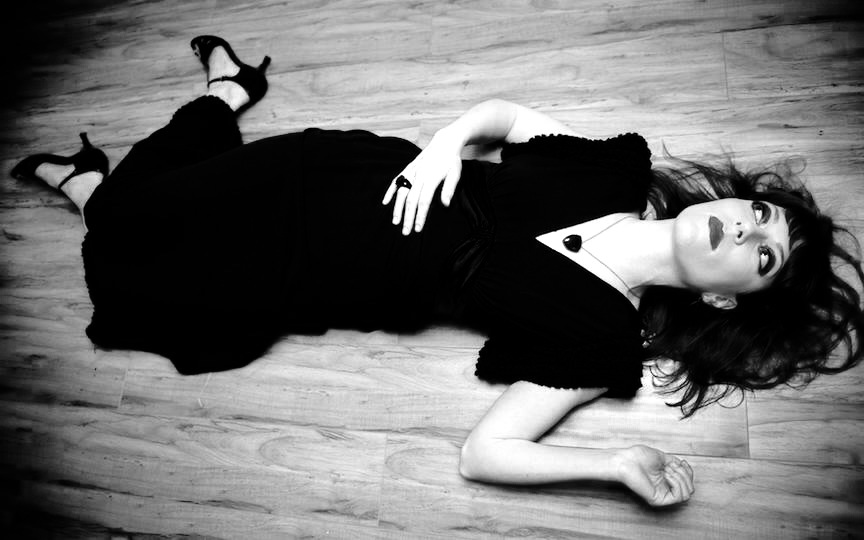
Black and White Batgirl

Well, I did it. I officially quit booze and cigarettes – cold turkey – for thirty days. It was difficult, though not nearly as difficult as I thought it was going to be. I definitely had moments where I wanted to cave, particularly when life got rough.

But, even though I’ve been feeling everything these days, my emotions didn’t overwhelm me like I thought they would. When left alone with thoughts too intense to handle, I was forced to get creative. Rather than my traditional cop out – pouring a glass of wine – I went for a run, or staged an impromptu dance party in my living room, or made a collage out of old photos, or – on one really tough day – dressed up as Batgirl and went out with Wonder Woman (thank you, Elisa) to dinner and a show on a Friday night in the heart of Los Angeles. I wouldn’t trade the interactions I had with curious strangers that night for anything.

Over the last thirty days, what I missed the most was the camaraderie that goes along with drinking, the social aspect of smoking. There was the collective tequila shot with acting class friends on a day when a tequila shot was a really, really good idea. There was the wine and gossip with girlfriends. And there was the late night philosophy that occurs while bumming a cigarette from a friend (or sitting on my patio, contemplating my future, blowing smoke into the darkness.)

But here’s what I didn’t miss. I didn’t miss worrying if I’d be OK to drive after a night out with friends. I didn’t miss starting my weekend already hung over from Friday night. And I certainly didn’t miss the bar tab. Thanks to the money I saved from abstaining from my vices for a mere thirty days, I was able to treat myself to a luxurious facial, a massage, a new dress for a friend’s wedding, and a whole bunch of new music on iTunes. Not bad.

I set lofty goals for myself to accomplish during my thirty days, which I’m sad to say, I fell short of. Most notably, I didn’t finish the first draft of my screenplay, like I had wanted. The prior-to-thirty-days-me would have beaten myself up about that, but I’m not going to. Because here’s the truth: the goal that I set in theory turned out to be way bigger than I anticipated when I put it into practice. I put in countless hours of writing – including two weekends where I essentially didn’t leave the house – and I ended up totally reworking my outline, scrapping a lot of what wasn’t working, and writing fifty new pages. As a result of my work, I’m way more excited about and committed to the story than I’ve ever been, and – while I’m a bit behind where I wanted to be – I know I’ll finish it soon because I can’t stop thinking about the characters and I can’t wait to see them achieve their (sort of) happy ending.

In the end, the most important reason for me to take this thirty-day break was to prove to myself that I could. To prove that I could navigate through a difficult time in my life in a healthy way and stick with it, despite an abundance of temptation. All the great things that came along with my detox – the money saved, the glowing, hydrated skin, the formerly tight clothes that are now loose-fitting – are just the fringe benefits of setting a goal for myself and accomplishing it. So, hooray. And now I ask myself the inevitable question that I always ask at the culmination of any project, endeavor, or challenge: what now?

Well, for right now, today, this weekend – I’m going to let my hair down. After thirty days of behaving like a schoolteacher, I’m going to have some fun. I’m going to enjoy quality time with some of my besties, I’m going to rejoice at the celebration of a dear friend’s wedding, and I’m going to get dolled up and go OUT.

And in a week, my much-anticipated summer vacation to the Pacific Northwest will finally be here. Ten days of relaxing, swimming in the sound, enjoying family time and doing what The Artist’s Way author Julia Cameron calls “filling the well” – renewing my spirit with fresh life experiences, so that when I return I’ll hit the ground running and tackle the next project (whatever that may be) with gusto.

In the meantime, who’s up for some shots?

Until next time, friends.

Extra Dry Martini.

Main blog photo chrome filter

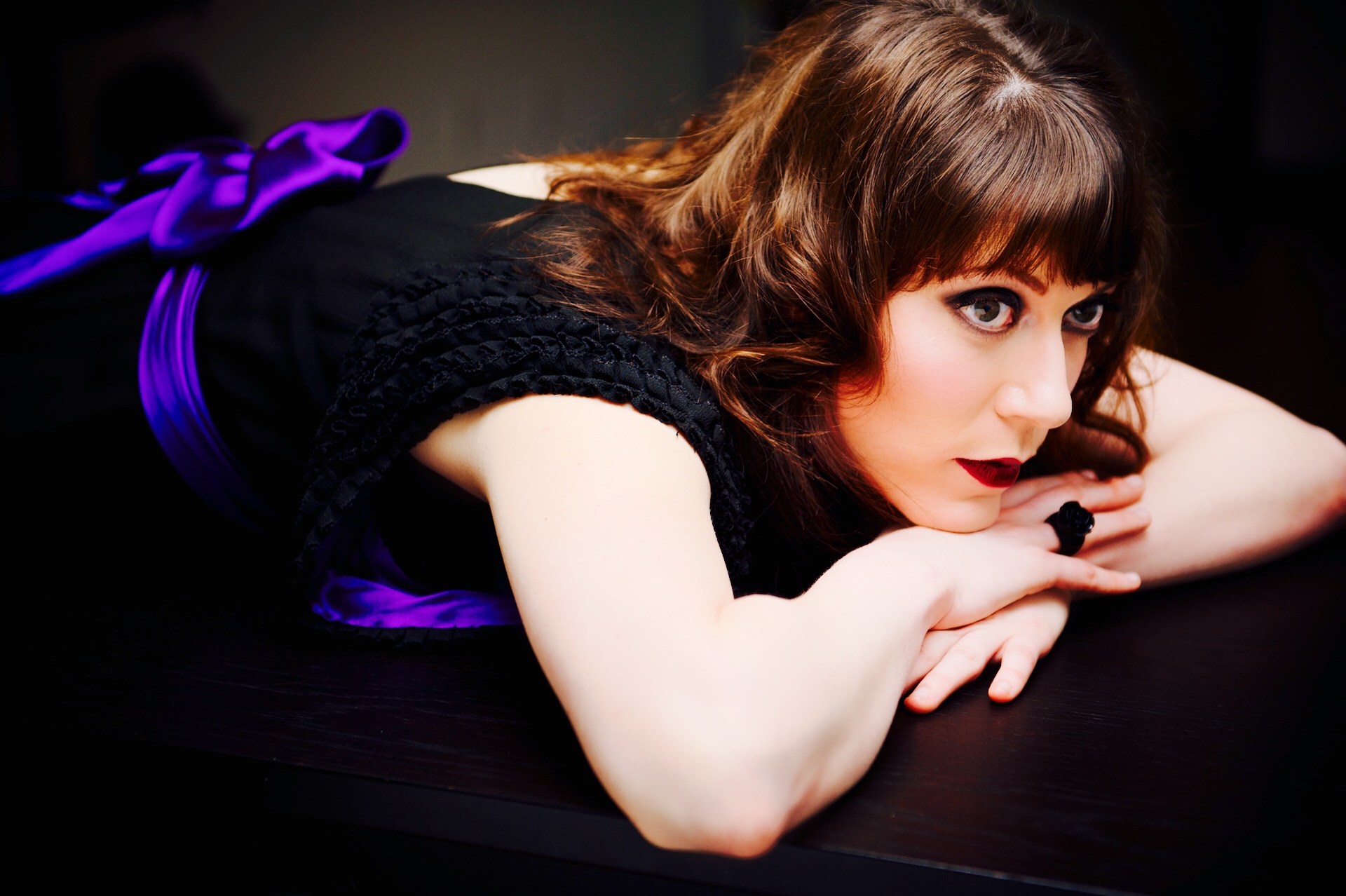
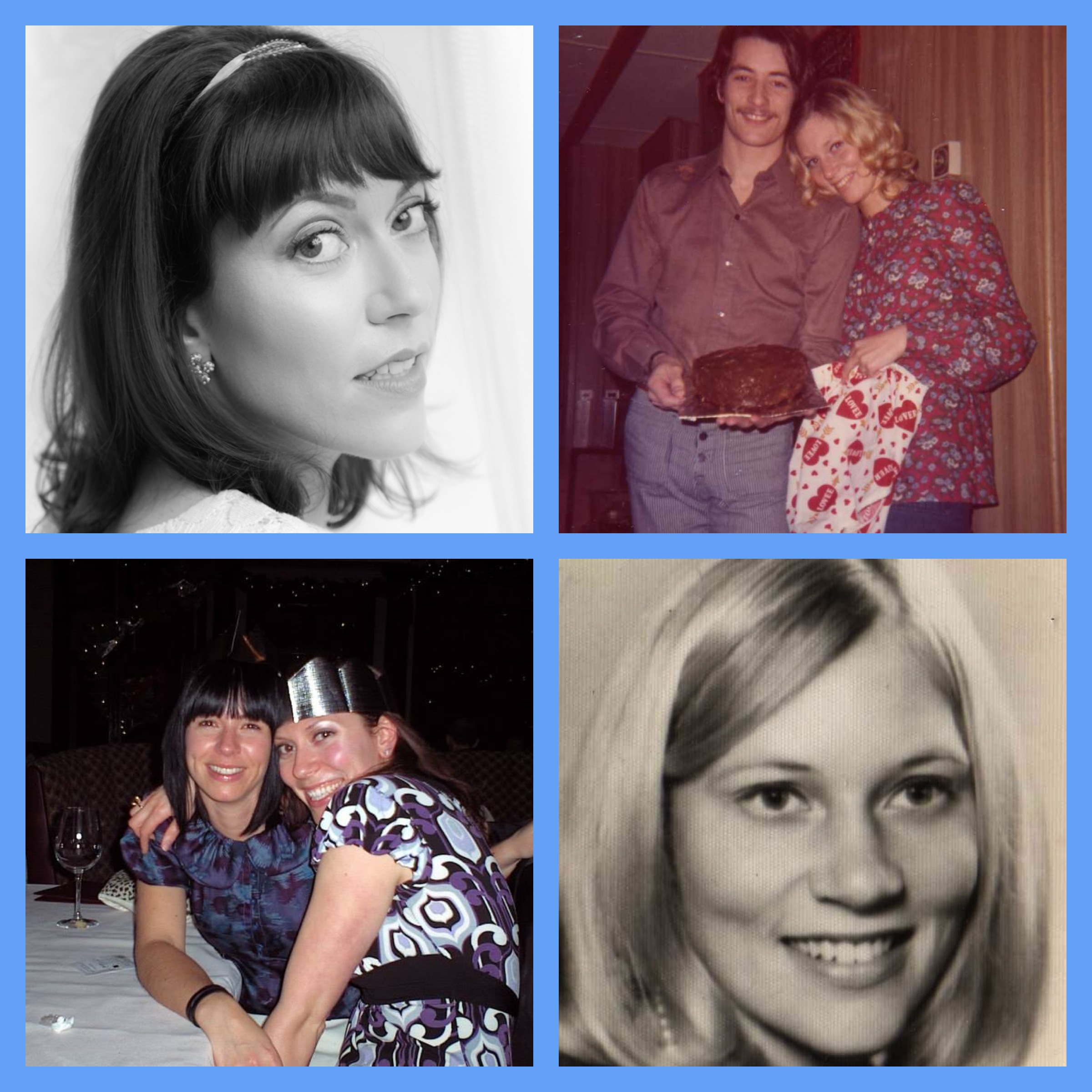
My name is Sarah, and this is my blog. I’ve been quite a few things in my life – an actress, a producer, a director, a publicist, a sports fanatic (go Hawks), a photo stylist, an amateur vocalist, a lover of fine wine and strong coffee, a world traveler with a serious case of wanderlust – but through it all, I’ve always, always been a writer.

Coming of age in the 1990s, I grew up watching the Today Show, and my greatest ambition was to be the next Katie Couric. After writing articles for my school paper and a brief stint anchoring my high school news show (if that footage is lurking out there somewhere, someone for the love of god, burn it), I entered USC as a Broadcast Journalism major. But getting cast in student plays and a semester in London immersing myself in the world of West End theatre ignited the spark of my performance bug, and I set off on a different path.

Yet through it all, writing has remained a vital part of my life. Whether for artistic purposes – penning plays, solo performance monologues, sketches, short screenplays – or to make money – copywriting, branded social media content, press releases – the pen, the notepad and the keyboard and I have never spent very much time apart.

When I began this blog in early 2012, I didn’t have a clear direction of where I wanted to go with it. I only knew that I’d lived through some incredible moments and I wanted to share my stories in a way that was funny, entertaining, and (hopefully), moving. I started with the name, Extra Dry Martini, and its tagline, Straight Up With a Twist: a cheeky take on my favorite cocktail, a tip of the hat to my blunt Sagittarian nature and my edgy, sarcastic sense of humor, and a thinly-veiled attempt to position myself as a female 007.

But life, as it’s wont to do, had other plans. Shortly after launching this blog, life took me on an unexpected and – frequently – painful journey. I now have more material than I know what to do with, but in a case of be careful what you wish for, I’ve discovered that my best writing has been born from my greatest challenges and the most crushing heartbreak I’ve ever known.

This blog has been my platform as I’ve struggled through grief and loss. It has been my attempt to make sense of the senseless, to shine a light in the darkness, and to refine and reclaim my voice. Through it all, I’ve realized that my only safety net is found on the page, my only sanctuary the warm blanket of the written word. If a smooth sea never made a skillful sailor, then consider this blog my attempt to navigate my own perfect storm, compass in hand, ever aiming for my true north.

I don’t know where this road will lead, but I thank you for joining me on it. Thank you for venturing with me into the great unknown. Welcome into my world, my life, my heart. This is, has been, and will be, incredibly personal. This is the thing itself.

Until next time, friends.
Love,

Sarah

Father’s Day.

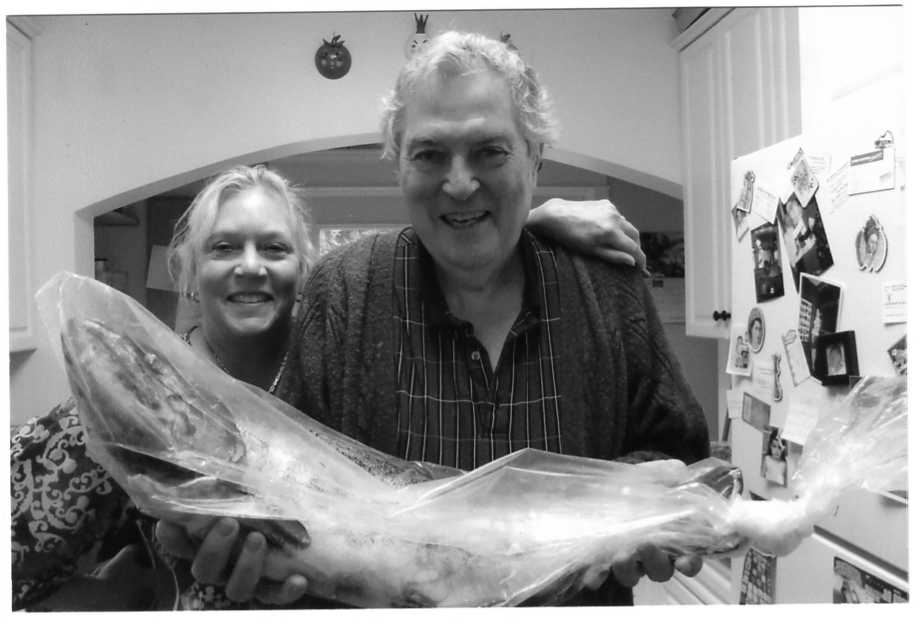
King Salmon copy

Father’s Day has never been a holiday that I’ve gotten super mushy about. Throughout most of my life, my relationship with my Dad has been layered, challenging, complicated. (Everything you’d want to know about our relationship can be read on my blog titled, Dad.) While my Mom was always the emotional center of my life, my Dad was more like a loving antagonist, egging me on from the sidelines. Year after year, the task of choosing a Father’s Day card was a formidable challenge. So much of the cheesy, cookie cutter sentiment simply didn’t fit.

As I got older, and Dad got frail (and ultimately, sick), I started to see him differently, and I began to appreciate qualities that I couldn’t as a young girl. I started to realize that the reason Dad antagonized me so much and was so brilliant at pushing my buttons was actually because we were way more alike than I cared to admit.

Now that my Dad is no longer here, I remain grateful for every quality – both positive and negative – that I inherited from him. I learned so much from him, mostly from the way that he lived his life. In honor of Father’s Day, here are the most important life lessons I take away from my Dad:

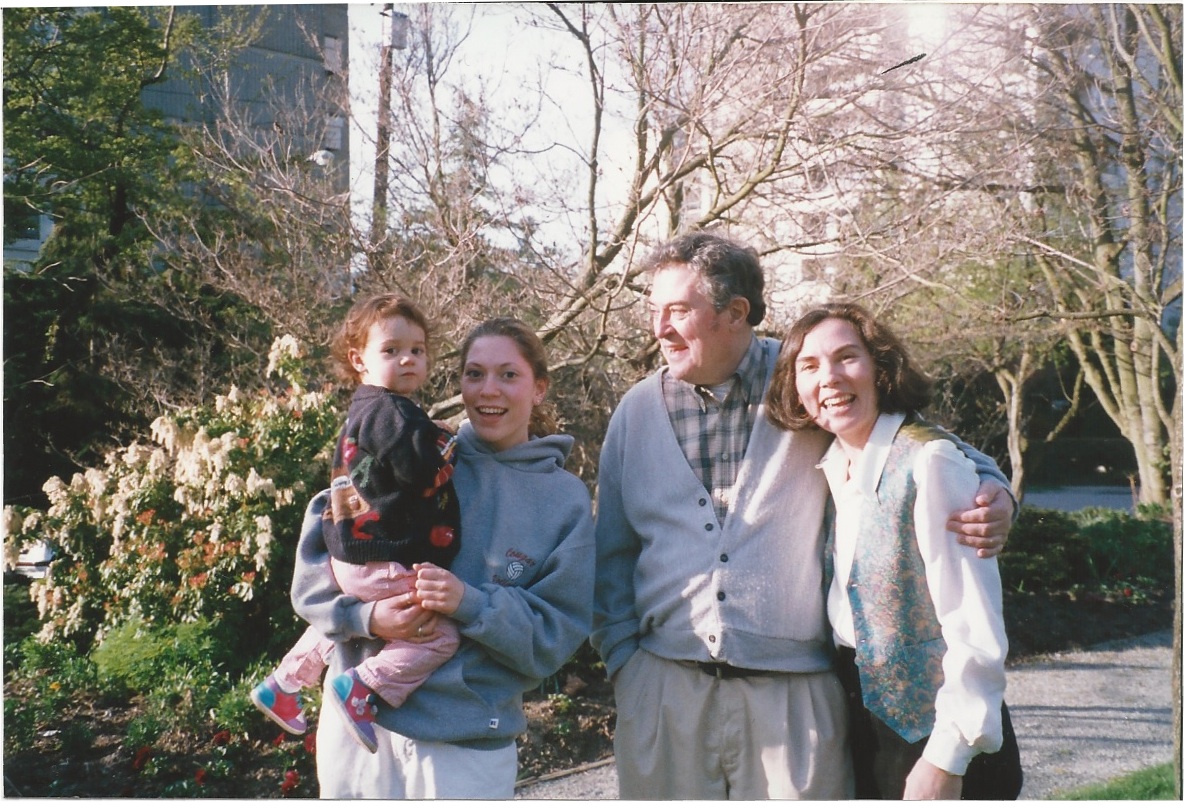
Dad, D, Nora and I

Life is a gamble. As much as we’d like to believe that we can control the outcome of events, the reality is we have no control. Life throws what it will at us, and more often than not, we have to make the best decision we can with the information that we have at the time, and forge ahead. Risk is part of being a human being, so you might as well embrace it. And if the worst thing that could happen happens – you risk it all and lose everything – you must rebuild. If you can do that, and come out on the other side of it, you’ll not only learn what you’re made of, but you’ll also realize that worrying about things you can’t control is a terrible waste of time.

Risk taking is good, but some risks are just stupid. As a personal injury lawyer, one of Dad’s favorite phrases was, ‘That’s an accident waiting to happen.’ There’s a reason I’ve never been in a helicopter or a racecar: because they’re both death traps. For all those thrill seekers out there, more power to you. Skydive or bungee jump or race fast cars to your heart’s content. But any activity where my odds of dying increase exponentially is not one you’ll catch me doing. I’d rather take my risks in other ways, like creative ones.

Keep your sense of humor, even when it gets dark. Especially when it gets dark. No matter how grim things got, Dad always found a way to laugh. When I was little, I used to be a bit horrified at Dad’s macabre sense of humor and his ability to find the funny in stuff that really shouldn’t be funny. Years later, my ability to laugh through cancer, through death, through just about anything, has kept me sane through some trying times. If you can keep your sense of humor throughout the darkest of the dark, odds are, you’ll always be OK.

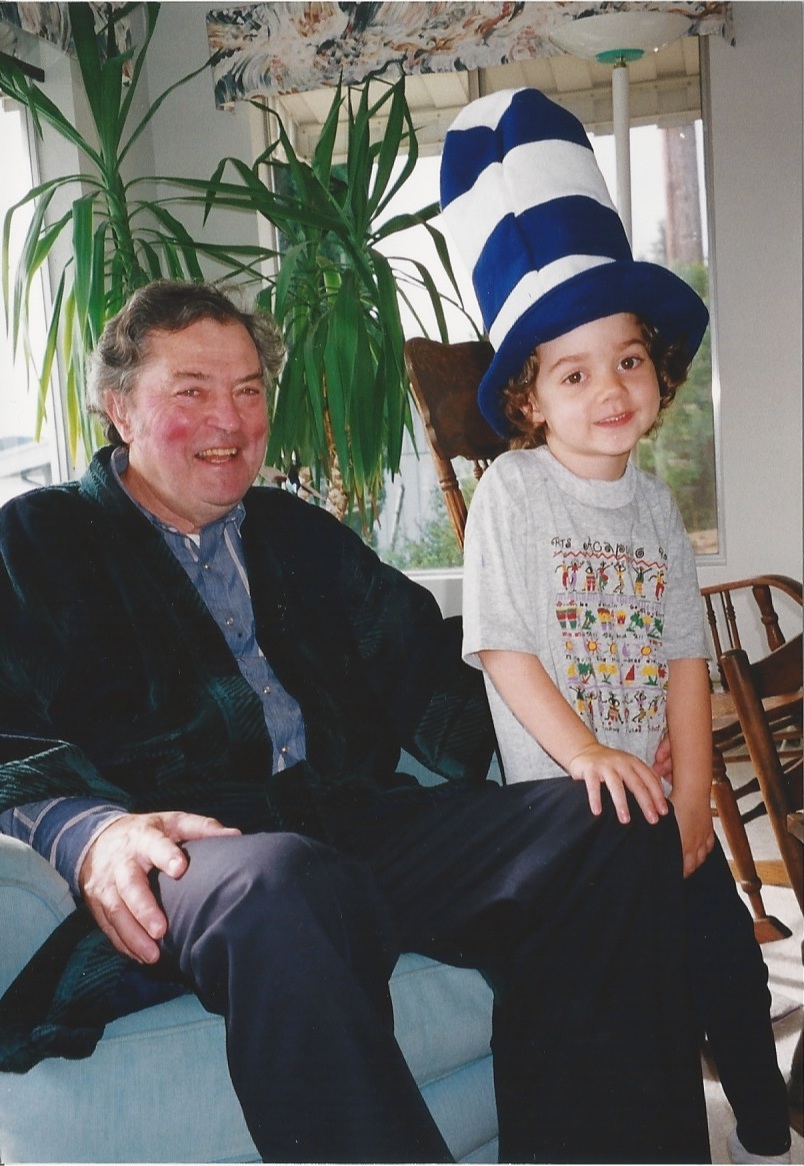
Dad and Nora Cat in the Hat

Stick to your guns. If you believe in something with all of your heart, then stand up for it, and don’t flinch. You may end up making enemies, but at least you’ll be able to look at yourself in the mirror. This doesn’t mean being dogmatic, unyielding, or unwilling to listen to the other side. It does mean to thine own self be true. Nobody respects a flip flopper.

Sports are life, and who you root for says a lot about you. I watched Dad suffer for years as a devoted Portland Trailblazers fan, a Seattle Seahawks fan, and a Boston Red Sox fan. I saw Dad’s loyalty rewarded when the Sox finally broke Babe Ruth’s curse. I saw my own rewarded last February when the Seahawks finally won the Super Bowl. Sure, it feels good to root for a team that wins, but it feels even better after hanging with that team through years and years of losing and knowing you were there through it all. It can be demoralizing to support a team that loses year after year (the Seattle Mariners, anyone?), but for the loyal fan, hope really does spring eternal. Dad taught me to have no patience or respect for fair weather fans, or fair weather people. And on that note: when in doubt, always, always root for the underdog.

Whether you think you can, or think you can’t, you’re right. Dad moved through life with an air of confidence, and an unwavering belief that no matter what, things would work out in his favor. And you know what? He was almost always right. Now, whenever someone tells me something can’t be done, I can’t wait to set out proving them wrong. Even if it’s something as simple as getting a table at a popular restaurant that won’t take reservations. If you believe you can do it and act accordingly, more often than not, you’ll win. Attitude plus perseverance is a powerful combination.

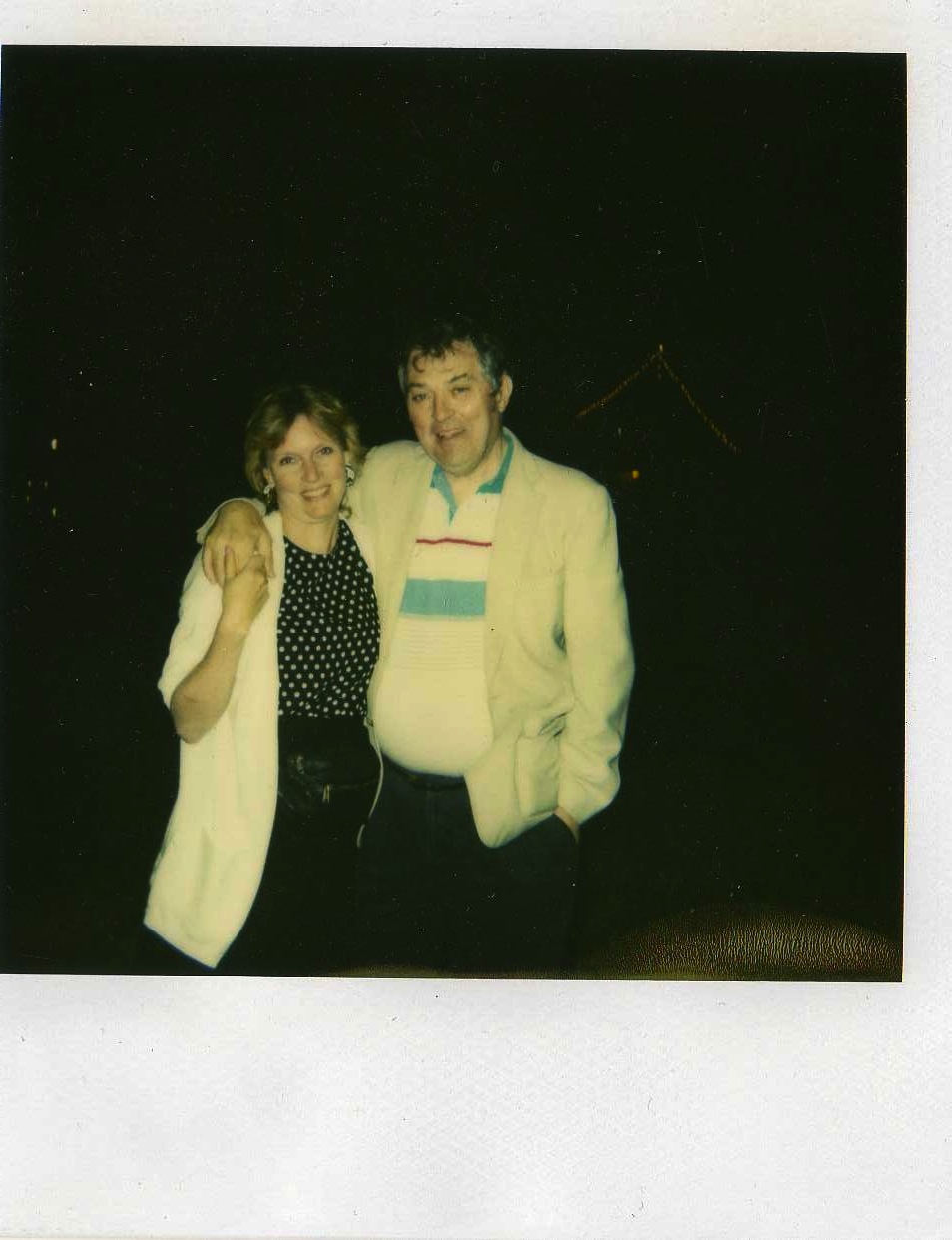
Mom and Dad at M's law school grad copy

Eloquence is important. If you want to sway someone to your cause, make them feel something. Dad loved to quote Shakespeare and recite poetry, often to the point of sappiness. No matter. He knew how to affect people, and how to move them. He also understood this: if you don’t believe it, then nobody else will either.

Life is a great adventure, or nothing at all. So many people spend their lives being afraid, playing it safe, living a life that’s smaller than what’s in their hearts. Why? We’re all going to end up in the ground or scattered to the wind anyway. There is so much in this world that’s thrilling, that’s beautiful, that’s worth savoring. Grab it while you can. Dad lived with a sort of big picture perspective and a zest for life that is more rare than it should be. And I’m pretty sure he went to his eternal rest with no regrets. He many not have been the perfect man, or the perfect father, and he probably made a few enemies throughout his life. But he also understood that ‘you can’t win ‘em all.’ Stop working so hard to get other people to like you. They will or they won’t, and what other people think of you is really none of your business anyway. To thine own self be true.

Happy Father’s Day, Dad. Thanks for all that you taught me.

Until next time, friends

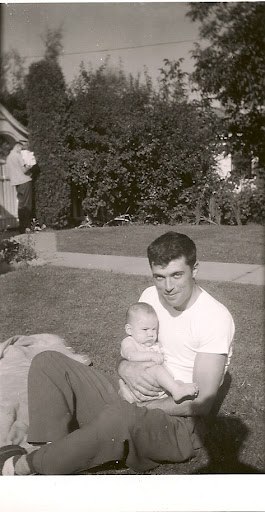
Young Dad

Resistance.

photo

I’ve met the enemy, and its name is Resistance.

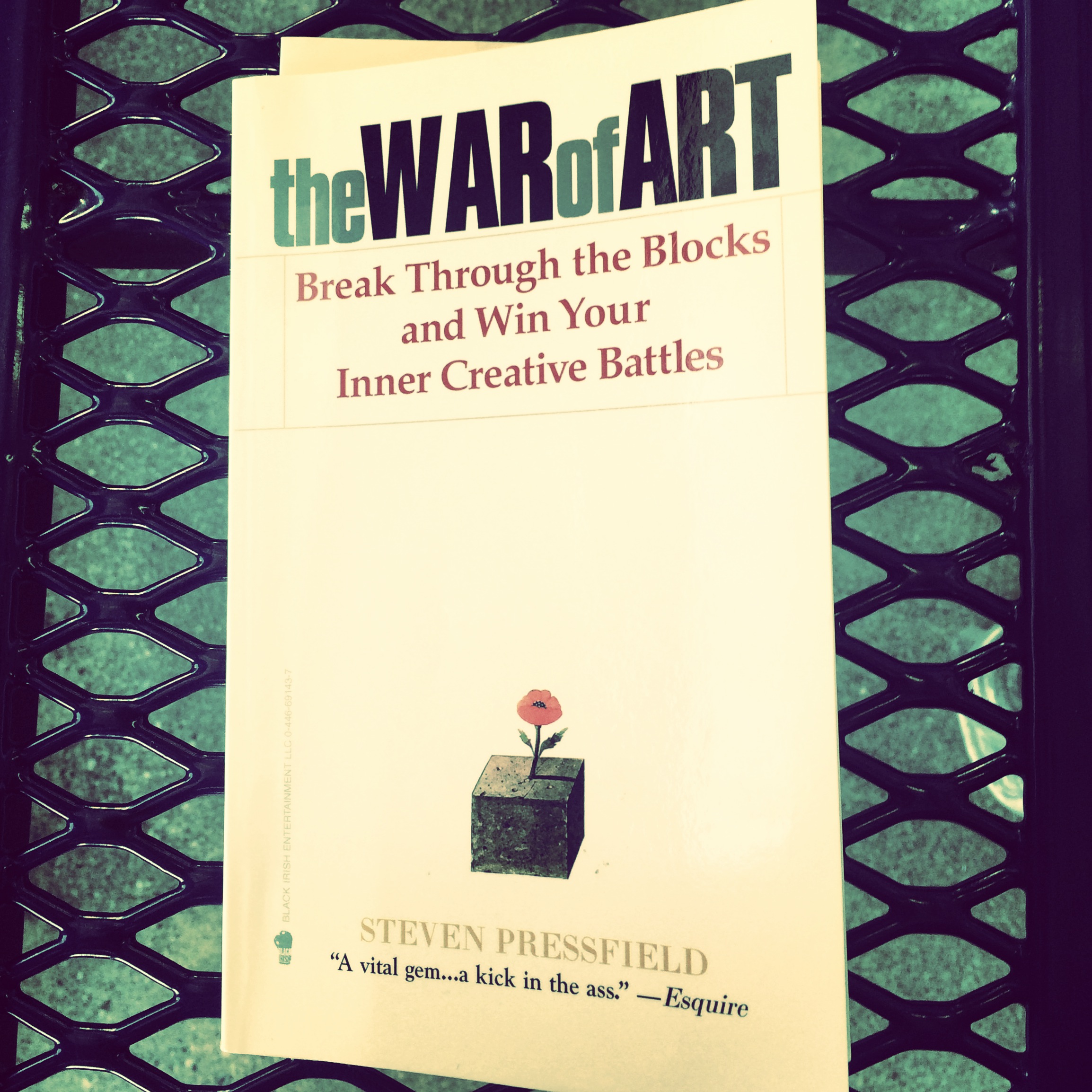
I recently revisited Steven Pressfield’s The War of Art, a book that, in a very direct, plainspoken voice, cuts through the crap and correctly calls out all the ways we self-sabotage and rationalize our way out of designing the lives we want. The book is brutally honest, and it’s brilliant.

Pressfield identifies the pernicious beast that stands between us and our heart’s desire as Resistance. (Resistance with a capital ‘R,’ as it must be taken seriously.) What is Resistance? It doesn’t come from other people, or your life circumstances, or where you live, or your lame job that you hate. Resistance comes from you. It’s the judgmental voice in your head that tells you that you’re not good enough, the voice that leads you to make false comparisons between yourself and other people, the voice that causes you to make a million excuses for not living the life you want. Resistance leads to (among other things): procrastination, poor life choices, boredom, depression, guilt, addiction, and unhappiness. Pressfield calls Resistance ‘the enemy within.’

In The War of Art, Pressfield details his own daily battles with Resistance in his work as a writer. As I, in turn, struggle to get my story out of my head and onto the page, I identify with that battle. About writing, Pressfield says this:

There’s a secret that real writers know that wannabe writers don’t, and the secret is this: It’s not the writing part that’s hard. What’s hard is sitting down to write. What keeps us from sitting down is Resistance.

He’s right. Sitting down is the hardest part. Because just the thought of it, the thought of staring at a blank screen, of struggling to string a sentence together, is pure agony. And I really like to write.

I recently gave up one of my favorite forms of Resistance, alcohol (and its sidekick, cigarettes), for thirty days. I did this to detox and cleanse my system, but also – mainly – because I have work to get done and I need to be super-focused in order to do it. I have a full-time job and countless other responsibilities in addition to my writing, so if I’m ever going to finish the screenplay that has been tugging at my heartstrings, there’s no room for zoning out over wine at the end of a long day until it’s done.

So here I am, sober as a judge on day five* of thirty days and barely any closer to completing the damn thing. I have found a million excuses not to start. I’m lonely and I’m sad. Being alone with the voices in my head is too much. I want to go out, call someone, distract myself. I remind myself that this time is a gift, that I’ve worked hard and sacrificed much in order to create space for it. I can’t waste it.

But the voice in my head is a real bitch. She tells me that what I have to say isn’t important to anyone but me. She tells me that even if I do finish my screenplay and even if I do have the courage to put it out into the world, that it will ultimately just be a waste of time. That people will hate it. That I’ll hate it. Or even if I don’t hate it, and other people don’t hate it, even if it’s actually good, then what? I’ll spend all of my money producing the movie, which is way too hard for me to do on my own, and I’ll screw it up and then I’ll be broke and have nothing to show for it. So really, what’s the point?

This is the sort of Resistance-style crap that leaves me finding all sorts of other things to do during my detox, like washing dishes and folding laundry and making grocery lists and painting my nails and surfing Facebook and posting too much shit on Instagram. And it’s dumb. And I hate it.

So I picked up The War of Art. I’ll keep picking it up and I’ll keep countering the negative voice in my head with Pressfield’s fighting words, to remind myself that Resistance never goes away. I wrote this blog post to remind myself that making art is an act of war and that we have to do battle against the Resistance that threatens to derail our dreams every single day. It’s not glamorous or sexy or all that fun to do our work, but, goddammit, the only way to get it done is to sit down and do it.

I don’t know about you, but when I do force myself to sit down and write one of these blog posts, or bang out a couple pages of dialogue from my script, the bitch inside my head gets a little quieter, and I start to feel ever so slightly relieved. Doing the work is hard, but it’s also – truly – the only thing that keeps the demons at bay.

So here’s to doing what’s hard. Here’s to the struggle. Here’s to waging war. Every. Single. Day.

I’ve pasted the last page of The War of Art – a section entitled The Artist’s Life – below. I hope it helps you along in your own personal war.

Until next time, friends

*It was day five when I wrote this post. It is now (at the time of publishing), day seven, and since spewing out this blog, I’ve revised the first twenty pages of my script, written twelve new pages, and have completely re-worked the outline. Go to hell, Resistance.

The Artist’s Life

Are you a born writer? Were you put on earth to be a painter, a scientist, an apostle of peace? In the end the question can only be answered by action.

Do it or don’t do it.

It may help to think of it this way. If you were meant to cure cancer or write a symphony or crack cold fusion and you don’t do it, you not only hurt yourself, even destroy yourself. You hurt your children. You hurt me. You hurt the planet.

You shame the angels who watch over you and you spite the Almighty, who created you and only you with your unique gifts, for the sole purpose of nudging the human race one millimeter farther along its path back to God.

Creative work is not a selfish act or a bid for attention on the part of the actor. It’s a gift to the world and every being in it. Don’t cheat us of your contribution. Give us what you’ve got.

Thirty days.

photo

Today begins day one of my thirty-day booze-free detox. I haven’t done one of these in over two years – not since before all the very sad things started happening. To be honest, I’ve been afraid to. Throughout it all – the sickness, the never-ending stream of bad news, the deaths, the impossibly hard jobs, the rain-soaked and depressing Olympia visits – the wine or the whiskey or the martini was my reward at the end of another long day, to take the edge off, to help numb the pain. I gave myself permission to drink more than I knew I should, because my emotions were so very intense and I just needed something, anything, to feel better.

But now it’s time to take a break. I’ve come to a safer place in my life, a healthier place, and so it’s time to take away my most reliable crutch and stand on my own two feet. I need to do this for many reasons: to get healthier, to sleep better, to be more productive, to save money. And most importantly, to prove that I can.

I’m very nervous about how this is going to go. For the first time since my Mother’s death and all the deaths that followed, I’m actually sitting in my grief and processing it, rather than running from it. I’ve accepted – or more accurately, I am working toward acceptance of – my new reality, and I am actively taking steps to take charge of and improve my life. But I’m still fragile, and I’m scared that with nothing to help dull the pain, my emotions will overwhelm me. I’m feeling so much these days that the thought of sitting in these feelings alone, raw, unaided, is really frightening. What if I can’t cope? What if I fall apart? What if I cry for thirty days straight?

These fears are exactly the reason why I need to do this. This will be my opportunity to turn away from what’s easy and develop other, healthier coping mechanisms like exercise and meditation and writing. And as much as I’m fearful, I’m excited about it too.  My past alcohol-free detoxes have given way to periods of intense creativity and intense clarity, and the timing couldn’t be better because I have at least three projects in the works that demand my focus, including a very autobiographical partially-written screenplay.

To help keep me honest, I’ll be chronicling my progress over on Extra Dry Martini’s Facebook page. Just a short check in each day to let you know how the month is going.

So here’s to thirty days. Here’s to a healthier me. Here’s to taking away the crutch. And here’s to the fact that the next time I raise a glass, it will be to toast my dear friends at their wedding reception in late June, wearing a new dress paid for with money that didn’t go toward whiskey or Pinot Noir or the occasional pack of Marlboro Lights (yes, I’m giving those up too).

Here we go.

Until next time, friends.

Better.

Broken Doll B & W

It’s hard to believe it has been two years since the bottom fell out. Two years since I lost my faith in permanence. Two years since I stopped believing that all things that were good would stay good.

Two years (and a handful of days) ago, James and I said goodbye to our beloved Chow mix rescue dog Leo. He was 14 years old, blind, rail thin, his poor doggie body ravaged by cancer. It was heartbreaking to watch him waste away, and even more heartbreaking to make the decision to inject him with the syringe that would induce eternal sleep. Little did I know two years ago that was only the beginning.

A week after that sad day at the vet’s office, an innocent phone call home to wish my Mom a happy birthday – a milestone, her 60th – quickly turned strange. Mom was tense, angry, unfamiliar. She didn’t want to tell me, but I pried it out of her. Dad had cancer. It was aggressive, inoperable, terminal. Dad was going to die.

And from there, it only got worse. Bad news kept coming faster than I could absorb it. The horrifying summer in Olympia where I realized that my Mom, who’d been slipping away, was already gone. Suddenly it seemed that everyone I knew was sick. My Mom, my Dad, my Grandmother, my dear friend Rory, and of course, Leo. One by one, they all left. Died. I started calling this time in my life ‘the vortex,’ referring to the whirlpool that kept sucking me down, down, down, underwater, with no end in sight, with no hope of resurfacing.

But end it did. Finally. People stopped leaving, stopped dying. (I feel compelled to knock on every piece of wood in my house.) For a while, I just surveyed the damage, a witness to it all. Shocked, shaken, yet still standing. For a while, I was paralyzed. I’d always been a writer, but I couldn’t write. I’d always been an actress, but I couldn’t act. Words sounded funny coming out of my mouth. I couldn’t string sentences together. All the creative ways that I’d normally express myself stopped working. I was completely and utterly stuck.

Eventually, I started to get angry. Angry about what had happened, the unfairness of it all. But also, angry about my inability to do anything about it. Elisabeth Kubler-Ross, the psychiatrist whose groundbreaking book On Death and Dying introduced her theory of the five stages of grief, said, ‘Anger surfaces once you are feeling safe enough to know you will probably survive whatever comes.’ I had survived, and as I surveyed what remained of my life, I became angry. I realized I’d been living a life that was smaller than what I wanted, that I wasn’t living up to my potential, that I was making my choices out of fear. And so I started to change.

I could say that life changed me. But I don’t think that’s true. I think what’s actually true is that through painful experience, life held a mirror up to my face, to show me the person that I was supposed to be. Peering into that unyielding looking glass has, at times, been brutal. But it has also been necessary.

Two years after it all started to unravel, the pain is still fresh. Sometimes it’s too intense for words. Sometimes I hate it. But it also drives me. It drives me to write and to create and to work harder than I ever have before. With my faith in permanence gone, the urgency to say it now and do it now and feel it now is unceasing.

Two years later, I could say I’m doing better. And in many ways, that’s true. Living through and dwelling inside the most intense emotions I’ve ever experienced has made me a better writer, a better actor, and a better me. I’m sadder and I’m less sure, true. But I’m also more alive.  I’m more awake.

Two years later, I still try. I still hope. I still dream. I still experience joy. But it’s different now. It’s tougher. But so am I. And so is my resolve. My resolve to never give up.

Two years later, I wonder if I’ll ever truly feel better. And sometimes, I wonder if I’d even want to.

Until next time, friends.
Mother’s Day.

photo 2

This past Sunday was the first Mother’s Day that I actively celebrated since my Mother’s death. It feels weird to say ‘celebrated.’ I certainly didn’t feel like celebrating. But I also felt that it was important not to feel sorry for myself or wallow in my Mom’s absence, but rather to observe the day doing things she would have enjoyed, and to be as happy as possible and as grateful as I could be for all that I still have.

Last year I ignored Mother’s Day altogether – or at least, I tried. It was a pretty loaded and impossible day. Not only was it the first Mother’s Day since my Mom’s passing, it was a mere three months after losing my Dad to cancer, and just a few weeks after my maternal Grandmother succumbed to aggressive Alzheimer’s disease. From the fall of 2012 through the spring of 2013, the hits came hard and fast. So I threw myself into work and felt grateful that when Mother’s Day arrived, I was in the midst of the six week run of a play. We had a performance on Mother’s Day, and that, combined with producing duties, gave me plenty to focus on. I stayed busy, I stayed distracted, and I pretended the ‘holiday’ didn’t exist.

Feeling more proactive and better prepared this year, I made a Mother’s Day plan with Zoe, one of my best girlfriends who had lost her own Mom way too young. We went big. We reserved a table at the fancy pants Ivy at the Shore in Santa Monica – the exact type of place my Mom would have loved. Covered in fragrant florals, it’s a large, bright, breezy space with windows overlooking Ocean Ave. and the Pacific. Everything is overpriced, and obsequious servers in pressed pink shirts and flowery ties abound. Oh so Mother’s Day. Oh so perfect.

Just two days earlier, Zoe had accompanied me to see a friend’s play that was unexpectedly, a sort of emotional primer for the upcoming holiday. The story revolved around a family’s attempts to cope when the matriarch is suddenly afflicted with a debilitating neurological disease. She goes from a vibrant, highly capable and driven career woman to someone rapidly losing control of her speech and body. In one particularly heartbreaking scene, the family’s oldest daughter – who is halfway across the world – places a desperate phone call home on Thanksgiving. She doesn’t want to speak to her grandmother, or father, or sister. Only her Mom. And the Mom, who can barely move or speak, doesn’t think she can do it. But with the grandmother holding the phone to her ear, she manages to stammer through the conversation, finding strength she didn’t know she had to shakily get out the exact words of comfort that her daughter needed to hear.

That scene killed me. And at the end of the play, when Zoe and I both emerged from the theater with red, puffy eyes, I knew it had affected her as much – if not more – than me. Because as much as the fictional circumstances of the play were different than the real events of our lives, there’s something so identifiable about being sick, or sad, or in trouble, and the only person you want to talk to – the first phone call – is to Mom, because you know that no matter what, she’ll be able to make it better. And there’s something so final, so devastating, about no longer being able to make that call.

photo 1

I take comfort in the fact that even though she’s no longer physically here, my Mom is still with me. After all, our parents made us, so how could they not be part of us, inextricably linked? I believe there’s a love there that transcends our physical being, and that’s something that death can’t take away. But I’ll tell you what I miss. I miss the care packages on Valentine’s Day and Easter; care packages that were sent to me long after I was too old to receive them, filled with candy and stickers and silly things. I miss the phone calls on my birthday, when every year without fail, my Mom would sing me a slightly off-key version of Happy Birthday, always ending it by telling me that the day I was born was the happiest day of her life. I used to roll my eyes when she said it, thinking it was so cheesy. Now I’d give anything to hear her say it again. I’d even give anything to have her berate me for not getting enough sleep, or to dismiss a bad mood I’m in by telling me that I’m simply ‘not eating enough protein.’ Isn’t it ironic how all the stuff that used to drive you crazy about a person becomes the stuff you miss desperately once they’re gone?

All things considered, the first Mother’s Day I observed sans Mom was a pretty good one. I shared a lovely and indulgent brunch with one of my dearest friends. The weather could not have been more sunny, warm and Southern California perfect. In the afternoon, I struck the right balance between productivity and relaxation (I’ve always been a work hard, play hard, sort of girl). I was doing great, I really was. And then, leaving the Trader Joe’s parking garage, the friendlier than usual attendant wished me a Happy Mother’s Day, and then– off my face – followed it up quickly with, ‘Are you OK?’ “Yes!” I replied, a little too enthusiastically. He smiled. “I like the flower in your hair,” he said. Ah, bless you, kind stranger, for providing me that small victory. I thanked him and drove off, trying not to cry.

Grief is so funny. It’s rarely what you think will get you – the big stuff – that does it. More often than not, it’s something silly, like the off-handed comment from a well-meaning stranger. Or the restaurant getting your lunch order wrong. Or receiving a piece of news that’s so exciting you can’t wait to pick up the phone and call Mom and then realizing . . . you can’t.

In a way, it’s sort of like every day is Mother’s Day to me since I lost my Mom. I’m never not thinking about her, I’m never not appreciating all the wonderful things she gave me, and I’m never not wishing that she was still here. If you’re lucky enough to still have your Mom, don’t wait for Mother’s Day to hug her, or to send her flowers, or to tell her you love her. Please. Do it for me. Because I really wish that I still could.

Until next time, friends.

usc grad hug

U2.

You’re on the road

But you’ve got no destination

You’re in the mud

In the maze of her imagination

You love this town

Even if that doesn’t ring true

You’ve been all over

And it’s been all over you

It’s a beautiful day

Don’t let it get away

261849_2001079259854_280837_n

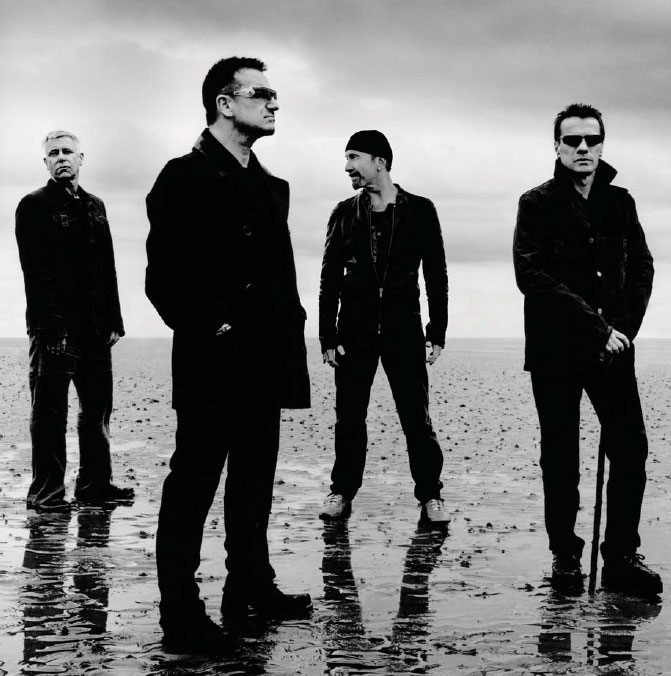
As an ‘80s baby who came of age in the 90’s, I’ve never known life without the music of U2. And I’m OK with that. A lifelong fan of the band – especially their magnetic front man, Bono – their songs are forever entwined with countless formative moments in my life. Whether it was the history teacher that used Sunday, Bloody Sunday to teach us about ‘the troubles,’ in Northern Ireland, the awkwardly sweet high school slow dance to With or Without You, the hostel café in Berlin where strangers from different parts of the world became friends while singing an acoustic version of Running to Stand Still, or driving around the neighborhoods of USC in my friend Ryan’s Volkswagen Jetta, belting the lyrics to Beautiful Day out of the car windows – just because we could – their songs are forever linked to my happy and hopeful past.

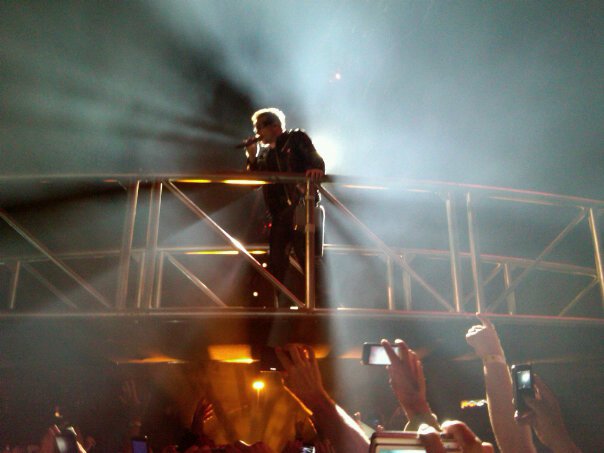
And while I’ve been to numerous U2 concerts over the years – each one its own spellbinding– almost spiritual – experience, there is one U2-related event in my life that has eclipsed all the others. It was the time I worked at the Grammy Awards and met Bono – if only for a nanosecond – backstage.

During my sophomore year of college, I interned for an entertainment PR firm in Beverly Hills that shared an office building with the event company in charge of producing the Grammy Awards. The Grammy producer became friendly with my boss, and asked if any of her interns wanted to work the awards ceremony, their main job being to escort the talent through the various backstage pressrooms. Umm, yes. Yes, I did.

This was 2001 – the year that U2 was nominated for a whole slew of awards for their album All That You Can’t Leave Behind, and in particular, their single Beautiful Day. I knew there would be a ton of security around the band, I knew they’d be hard to get to, but I also knew that this was my chance. I was going to meet them, or at least, Bono, if it was the last thing I did.

The week of the Grammys came. At a volunteer orientation, I let the powers that be know what a huge fan I was. Unfortunately, a high profile band like U2 already had ‘people’ to take them through the pressrooms. But, U2 would be doing a sound check at Staples Center the day before the awards ceremony. Would I like to attend that? Oh.My.God. YES.

I’ll never forget walking into that stripped down, empty arena, press pass swinging around my neck, my roommate Kate in tow, both of our eyes wide as saucers as Bono, short in stature but big as life, took the stage and started cracking jokes with the band and the crew. No big deal, just business as usual. The band played Beautiful Day a couple times to make sure everything sounded alright. It did. I could have died right then, one of only a handful of people witnessing a private U2 concert. All in all – it probably only lasted about twenty minutes. But it. Was. Magic.

u2-in-concert

The actual Grammy ceremony and the nanosecond in which I met Bono, wished him congratulations and shook his hand when the band came backstage after winning the Record of the Year award for Beautiful Day was so impactful that I wrote a performance piece about it. It was a ten-minute monologue that I performed as part of a solo performance workshop during my senior year at USC. I called the piece Moxie, in which I recounted the night of the Grammy Awards through two dueling characters: Sarah (me) and Moxie, my braver, bolder, sassier alter ego who, rather than stammering like some idiot groupie, would have ever so coolly finagled an invite to the after party, hung out with the band, and become Bono’s bestie for life.

Thirteen years after that magical Grammy week, I still battle with the duality that I wrote about in Moxie. There’s the person that I show the world, and there’s the person that I know that I am, deep down inside. Though the disconnect between the two is shrinking as I get older and more confident, my ongoing struggle continues to be to challenge myself to be braver, to take more risks, and to live life on a larger scale. Essentially, to be more like Moxie.

Tomorrow – May 10th – is Bono’s 54th birthday (and perhaps coincidentally – or not – it is also the birthday of my friend and sound check buddy, Kate). So, in tribute to one of my musical idols and to a band that I’ve loved my whole life, I want to publicly say thank you. Thank you for the music. Thank you for providing the soundtrack that has helped shaped my life. Thank you for reminding me that even if I Still Haven’t Found What I’m Looking For, that’s OK. And thank you for the following lyric from that award-winning song; a song that’s all about keeping the faith in the face of despair, that no matter how bad things may seem, we are blessed with so much beauty all around us. A song that whenever I’m feeling a bit down, I return to:

See the world in green and blue


See China right in front of you


See the canyons broken by cloud


See the tuna fleets clearing the sea out

See the Bedouin fires at night


See the oil fields at first light


And see the bird with a leaf in her mouth


After the flood all the colors came out


It was a beautiful day


Don’t let it get away


Beautiful day

Touch me


Take me to that other place


Reach me


I know I’m not a hopeless case

What you don’t have you don’t need it now


What you don’t know you can feel it somehow


What you don’t have you don’t need it now


It was a beautiful day

Until next time, friends.
u211

Fiction.

DSC_1613-02-small

I’m writing a screenplay that’s loosely (OK, maybe not so loosely) based upon my life. The lead character is, essentially, me. Except she’s cooler than I am, she’s more screwed up, she’s funnier than I am and she’s more of a bad ass. She’s me, but she’s more. She’s the me I wish that I could be.

As I’ve been writing, I’ve realized something: penning a story about a character that’s a hyper-realized version of myself is my attempt to re-write my life. I’m writing my girl into scenes that are thisclose to some of my actual life experiences, but I’m making them more exciting, more dangerous, sexier, and flat out more interesting than real life. This screenplay is becoming my own revisionist history, where my life is made more compelling (at least, that’s the goal) through added conflict and drama.

The opportunity to step into different shoes and experience lives that are more adventurous, bolder, and more on the edge than my own is why I like acting and it’s why I like writing. But sometimes I wonder if I’m spending so much time living in other people’s heads that I’ve lost sight of what’s really in front of me. I put my earphones in and daydream movies in my mind as I listen to music. I make up stories about people – both complete strangers and people that I know – because making up stories is fun. But am I so attracted to the fantasy version of life that it has eclipsed actual reality? And if that were the case, would I even know it?

The roots of this behavior began when I was very young. As a child, I spent a lot of time alone. Dad traveled a lot, drank a lot, and Mom was often sad and difficult to reach out to. My parents were loving, but – if I’m honest – they were emotionally distant and wrapped up in their own worlds and problems. I didn’t have siblings my own age so I grew up essentially as an only child, daydreaming up fantasy worlds and entertaining myself through songs, games and stories. If I felt like psychoanalyzing myself, I’d say that my early isolation is probably the very reason I became attracted to showbiz and the arts in the first place. My stories and my imagination were a coping mechanism, they were a form of self-protection, and they became my world.

I wonder about the fantasy/reality distinction in my non-fiction blogging as well. While the events I write about are all true and have all really happened, I wonder if I don’t make them sharper, more interesting, and somehow different than they actually are simply in the act of retelling them? It’s quite impossible for a storyteller to divorce an experience from their unique perspective on it. But if every single event, every single human interaction is filtered through experience, then is everything subjective and somehow, shaded?

Pablo Picasso famously said, ‘Art is not the truth. Art is a lie that makes us realize the truth.’ By telling stories about my real life and turning them into art, am I somehow getting closer to my truth? Or have I simply become entranced by my own fiction?

Until next time, friends.
Blog at WordPress.com.