The month of May.

“Time is the school in which we learn.”

-Joan Didion

Mom Wales

I don’t want to write about my mother. I don’t even really want to think about her, which, of course, I feel immediately guilty for saying out loud. It’s also not true. I do want to think about her, and write about her, I just don’t want those thoughts and words to be sad or painful anymore. I don’t want to be possessed by grief, or by the unanswered questions surrounding her death. I don’t want to pen another depressing Mother’s Day missive, tinged with longing and regret.

But as I think about all the motherless daughters (and sons) out there, facing the onslaught of greeting cards and flowers and an entire industry built around trumpeting “Mom’s special day,” I also feel that it’s important to be honest. I feel that it’s important to say that for some of us, Mother’s Day is just a day we have to endure, a day we need to get through. And there’s nothing shameful or wrong in admitting that.

My mother is everywhere lately. She’s been showing up in my dreams on the regular, uninvited, in places where she normally wouldn’t be, in places that don’t make sense.

They’re not bad dreams, not scary or unpleasant. Most of the time I don’t even remember them; they fade from view as soon as I wake up. I only know that in my subconscious mind, my mom and I have been spending a lot of time together lately.

Maybe it’s because the calendar has flipped to May, which was always her month. The month of Mother’s Day and her birthday, but also the month when spring flowers bloom, after those proverbial April rains that never seem to fall in Los Angeles. My mother was an avid gardener. She loved planting things and watching them grow.

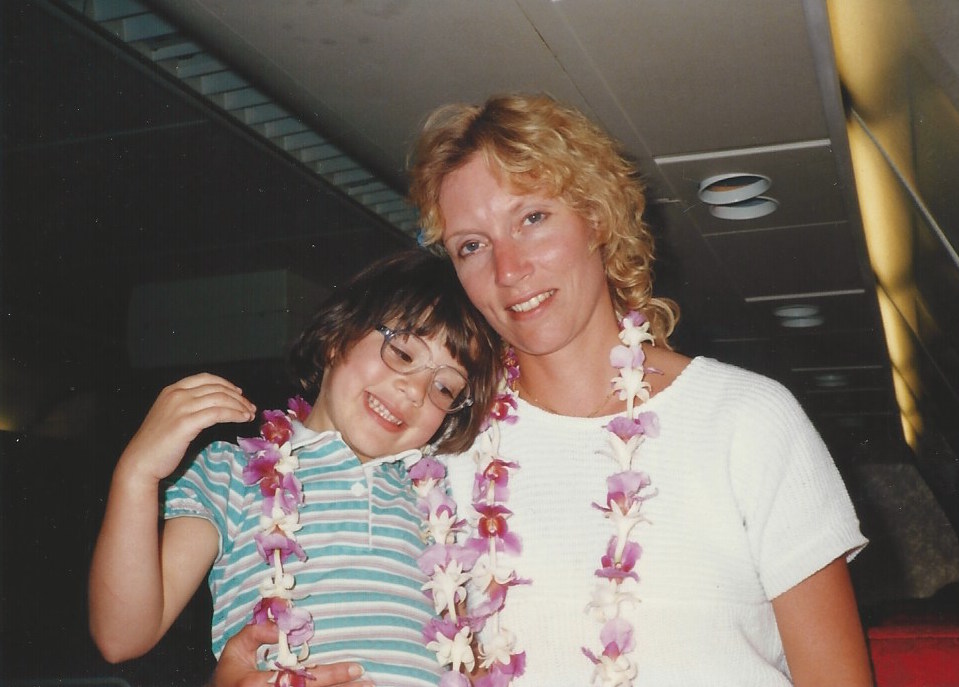
Hawaii Babes

So maybe it is the season. Or maybe it’s just the place I’m at in my life – one of uncertainty and change – that has me craving maternal guidance. There are so many questions I want to ask her, so many things I want to say. There’s something about losing your parents that propels you into adulthood in a way that simply getting older never can. There’s something strangely disorienting about no longer needing to seek permission or approval, of having to own your life choices – both good and bad – because they are yours, alone.

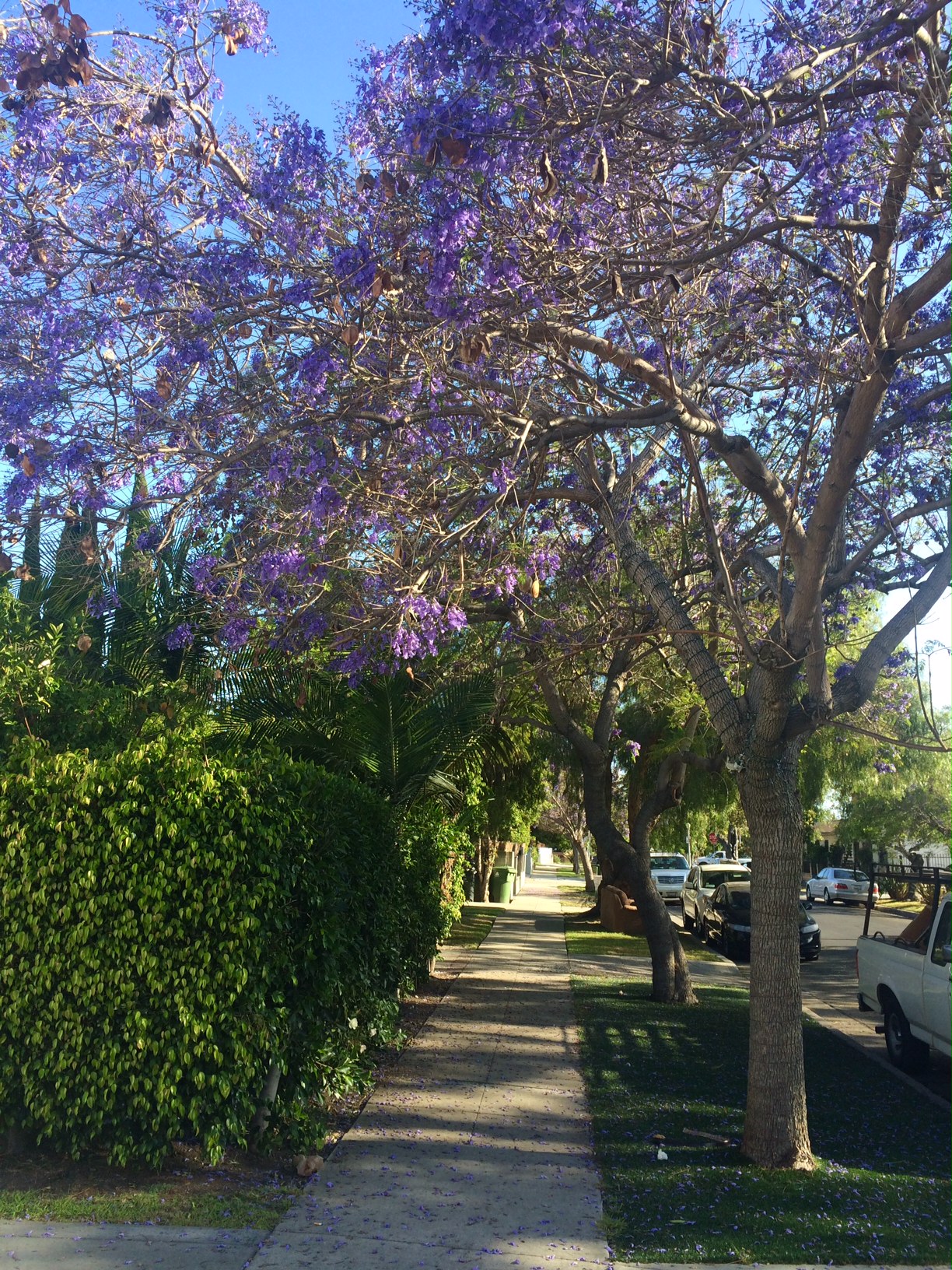
The Jacarandas are blooming in Los Angeles. All over the city, trees burst with purple flowers, blossoms spilling onto the street, leaving a trail of vibrant lavender. I’ve always loved the color of Jacaranda purple, even before I knew Jacarandas were a thing. It was the color of my high school bedroom, and I remember feeling cheerful and happy inside of those walls. Even now, there’s something soothing and dreamy about those bluish violet flowers filling up the sky. Some days, a walk through my neighborhood feels like stepping onto the canvas of an Impressionist painting.

But as pretty as they are, Jacarandas are also a real nuisance. Their flowers float down from the sky in droves, blanketing the streets with purple carcasses. And as they turn brown and die, they leave a sticky, slippery, gelatinous residue on everything they touch. Park your car underneath a shedding Jacaranda tree for more than a few minutes, you begin to hate the things.

I suppose, like everything in life, it’s about perspective. If you look up, the Jacaranda trees are beautiful. Look down, not so much.

I’m trying to keep that in mind as I approach this Mother’s Day. On difficult days, looking up toward the sky doesn’t always come naturally. But when you do – if you can – it’s bound to be more beautiful.

Until next time, friends.

FullSizeRender

Gerry.

Come fly with me, let’s fly, let’s fly away

If you can use some exotic booze

There’s a bar in far Bombay

Come fly with me, let’s fly, let’s fly away

The tide is high on the morning of Halloween. So high, that the magic rock is hidden from view. “Where is it?” someone asks. “Underwater,” I say.

Grandma and Grandpa

As we reminisce about Grandpa’s daily swims in Case Inlet – the way he circled that tall, narrow, granite rock formation as though it were his prey, his snorkel mask strapped on, swim fins slicing through the water – I realize I don’t know the answer to the most basic of questions: “Why is the rock magic?”

No one seems to know. Finally, the only reply that makes sense: “Because Grandpa said it was.”

My grandfather, Gerald James Popelka (or “Gerry,” to those who knew him), lived a whole half century before I met him. There are so many things about his life that I don’t know, but what is clear to me as we gather on this Halloween morning, a group of twenty or so family and close friends, the hospice chaplain, and a Vietnam veteran who will honor Grandpa for his service as a Navy court reporter during World War II and the Korean War, is this: it was more than just a rock that he made magic, it was this whole place, this handful of acres tucked away on western Washington’s Case Inlet, a place that has been known to my family for the last five and a half decades simply as “the beach.”

The beach isn’t special simply because of its picturesque setting on a saltwater bay framed by tall banks of evergreen trees, Mt. Rainier towering above, keeping watch over us all. It’s special because over so many years, during all those summers spent boating and swimming, digging clams on the rocky beach, building great big bonfires, roasting S’mores and telling stories under the stars, this place has always been infused with the same spirit of delight with which my Grandfather undertook everything he did. As my Uncle Glenn said during closing remarks at Grandpa’s Navy blessing, looking around at the place, at all of us: “All of this is because of you, Dad.”
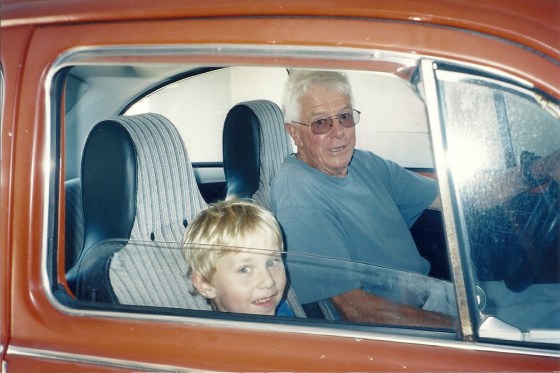
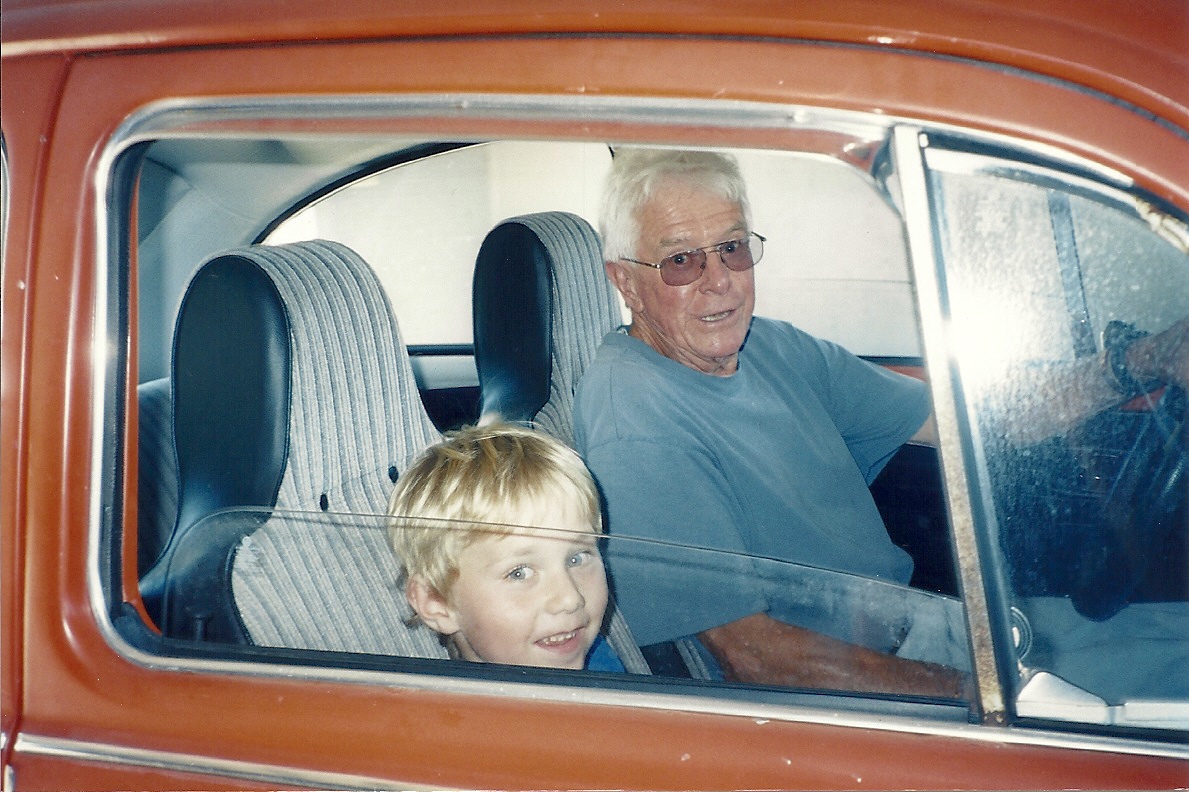
July 2005 Joyride

My Grandpa Gerry was a spirited Bohemian whose sense of humor and zest for life were utterly infectious. He was a lover of the lexicon, honing his skills by working daily crossword puzzles and ever ready to stump some poor unsuspecting victim with an impossible-to-figure-out vocabulary word. He was a practical joker, often following up a witty wisecrack with a mischievous twinkle in his eye. The bold striped t-shirts he favored matched his perfect shock of thick white hair and his larger than life personality.

Grandpa was tremendous fun to be around, but above all else, he was kind. To me, he was a bright light that illuminated the dark corners of an often sad and lonely childhood. He was the one person with whom I never fought, never exchanged a harsh word. In fact, I can’t remember him ever saying an unkind word about anyone.

On October 12th, I received word that Grandpa – at 89 years old – was terminally ill. After a recent series of what can only be described as traumatic experiences with death – my mother, my father, my grandmother – this sudden turn of events felt unnecessarily cruel. After so much loss, how could I possibly be expected to say goodbye to my beloved grandfather too? It wasn’t fair. I needed more time.

Hospice prepared us for the worst, telling us that given Grandpa’s failing liver, intense pain, nausea and heavy bleeding were all likely to happen “near the end.” As the social worker cautioned, “People hope their loved ones will pass away quietly in their sleep, but that rarely happens. Dying is usually quite an active process.”

Sarah Grandpa Black and White

I wasn’t ready, but I went to the beach anyway. For sixteen days, Grandpa and I sat together. We looked at old photos and reminisced. We shared secret jokes, poking fun at those who weren’t in on them. We counted the Canada geese that glided serenely across Case Inlet and congregated on a neighbor’s lawn.

But after sixteen days, without a dramatic change in Grandpa’s health, I headed back to Los Angeles with a plan to return in two weeks. It was only four days later that I got the call: Grandpa was weak, bedridden, and asking for me. Back to the beach I went.

I arrived on a Tuesday night. Friends and family were gathered in Grandpa’s room, and outside, the wind howled and rain poured. Grandpa drifted in and out of sleep, but he opened his eyes long enough to look at me and squeeze my hand. He tried to speak and couldn’t, but I told him that it was OK. I already knew.

I awoke the next morning, Veteran’s Day, to the sun streaming through my window, the clear blue skies and calm winds an unexpected gift after such a long and miserable night. Grandpa was sleeping peacefully, so I took a break to do some work. Around lunchtime, Glenn informed me he’d just gone to see Grandpa and told him that my mother was waiting for him to start cocktail hour. “Don’t be late,” he said.

FullSizeRender[1]

Now this next part will sound like I’ve made it up, because it’s the type of Hollywood ending a writer like me would invent, but I swear on everything that I am that it’s exactly what happened. I took my laptop to Grandpa’s room, and as my Aunt Sandy searched through his decades’ old collection of compact discs, I pulled up an iTunes playlist of standards. I tried a few oldies before I settled on a Sinatra classic. I sat next to his bed and turned up the volume:

Come fly with me, let’s float down to Peru

In llama land there’s a one-man band

And he’ll toot his flute for you

Come fly with me, let’s take off in the blue

Grandpa’s breathing slowed considerably and halted for several beats in between breaths. This was different, and we knew it. We called Glenn, who appeared in the doorway of Grandpa’s room somewhere around here:

Once I get you up there where the air is rarified

We’ll just glide, starry-eyed

Once I get you up there I’ll be holding you so near

You may hear angels cheer ’cause we’re together

Before Sinatra had finished singing, my grandfather quietly, gently, drew his last breath. As we hovered around his bed in a sort of reverent silence, waiting, knowing, yet not quite ready to speak the words out loud, I imagined Grandpa sitting with my Mom in the cozy living room of their old West Seattle house on Beach Drive, sipping martinis, enjoying the view of Puget Sound, Ol’ Blue Eyes softly crooning in the background.

FullSizeRender[3]

I inherited my love of language from my grandfather. And I believe that a wordsmith like him would understand better than most that there are times when words simply aren’t enough. After all, how could I possibly explain to you that after all of my fear surrounding what would happen when my grandfather died, that what actually did happen was so beautiful that it somehow made all the other deaths a little easier to bear? How could I express to you the depth of my gratitude for an exit so gentle that it helped restore my faith that sometimes, good things do happen to good people? And most importantly, how could I possibly capture in words the essence of a man who meant so much to so many, so that you could know him as I knew him, love him as I loved him?

I can’t. Words are not enough. I can only tell you that my grandfather, Gerald James Popelka, was the best man I ever knew.

And he made us all believe that a rock was magic, just by saying it was so.

Weather-wise it’s such a lovely day

You just say the words and we’ll beat the birds

Down to Acapulco Bay

It’s perfect for a flying honeymoon, they say

Come fly with me, let’s fly, let’s fly away

 Until next time, friends.

FullSizeRender[2]


Ten thousand.

Last week, I reached an incredible milestone on this blog: 10,000 email subscribers. I can scarcely believe it.

When I first started Extra Dry Martini 3 ½ years ago, I had no idea what the hell I was doing. I only knew that I had a lot of ideas and opinions and I wanted to carve out my own little corner of the Internet on which to share them. I named this blog after my favorite cocktail, while the tagline, Straight up, with a twist, was a nod to my often blunt (sometimes foot-in-the-mouth!) Sagittarian nature, and my rather edgy, sarcastic sense of humor. Away I went.

909435cabc5f20ab3361e68647053b83

I couldn’t have anticipated that only a few short months later, life as I knew it would fall apart. Or maybe I could have. Maybe I did. Maybe I intuited, in some strange, cosmic, sixth sense-ical way – the way animals can sense an impending natural disaster – that creating this platform to express myself would be the very thing to save me during the darkest nights of the soul I have ever experienced.

When it all came down, I didn’t write for a year. One whole year. To this day, I have only a vague, foggy idea of where that time went. I call that period of my life “the vortex,” a black hole of funerals and whiskey and airports and late night phone calls and never ending to-do lists and sleeping with one eye open.

But when I did come up for air, my writing was different. I wrote with a sort of raw honesty that would previously have been unthinkable to the me that started this blog. I wrote and I wrote, without a goal or a clear direction other than to simply keep going. And through the process of turning Extra Dry Martini into a sort of public journal to air my very private feelings, I changed. No, strike that. I didn’t change. Writing through pain, trying desperately to find meaning where there was none, the real me started to shine through the cracks in the old, broken me, the one I’d unwittingly hidden for years under layers of self-doubt and insecurity. It’s as Steven Pressfield says in his brilliant, essential, book The War of Art: “Our job in this lifetime is not to shape ourselves to some idea we imagine we ought to be, but to find out who we already are and become it.”

f584ece2290a1c9b52f44c7f9691f49f

Thank you to everyone who has read this blog. The sheer volume of kind-hearted, compassionate, thoughtful comments that I receive from readers never ceases to astound me. While I don’t always have time to respond to all of them – particularly on the posts that WordPress has chosen to feature on Freshly Pressed­ – I do read every single one, and they mean the world to me. Thank you.

Speaking of thank you’s, thank you to WordPress.com, without whom and all of their generous shares of my blog posts, reaching the 10K milestone never would have been possible. In just over a year, Extra Dry Martini has been featured on Freshly Pressed a whopping SEVEN times, including just last week. If you haven’t yet had a chance to read these posts, or if you’d simply like to revisit them, I’ve linked them below at the bottom of this page.

People sometimes call me “brave” for writing about some of the things I do, and for sharing intimate details of my life on the Internet. I’m not brave. I simply write to survive. I write to remind myself of who I am. And I write for all of the people who respond to one of my posts with the comment: “I thought I was the only one.” Let me tell you, with one hundred percent certainty:  you are not the only one. If there’s a single lesson I take away from writing this blog, it’s that despite all of our differences – geographic location, family background, age, gender, ethnicity, religious faith or lack thereof – we are far more alike than we are different. We share the same hopes, the same heartbreaks, the same struggles and the same joys. We are united by the same powerful experience of being human and in this experience no one – not one of us – is alone.

0a047ea1064112b049e20b2aad9bddc0

Ten thousand is an impressive number. It’s a humbling number. But I’m not resting on my laurels. As I prepare to head off for a few days of creative recharge at Write Doe Bay, I’ll be thinking about how to make this blog bigger, better, and somehow more. Among the things I’m considering: spinning off Extra Dry Martini into some other iteration like a book, a play, a film, or possibly all of the above. I have no idea how that will look, or what the next steps will be. All I know is that anything that I create will be undertaken with the same commitment to honesty, to cutting to the core of the human experience, and will always, always be served straight up, with a twist.

Thank you for reading. Thank you for sharing my journey. And – fingers crossed – here’s to the next ten thousand.

Until next time, friends.

P.S. – If you would like to read the posts that WordPress featured in their Freshly Pressed section, here they are:

Ice Water

Time Out

Things My Mother Never Did

Putting off Tomorrow

Little Steps. Big Steps. First Steps.

Moments

Three Years

e9b14c954e5ddfd4015d1d6e2d6cc373

Three years.

I’m perched on a paint-splattered stool, located downstage right, in a darkened forty-seat theatre. We’re well into the second act of Barenaked Angels, a show that’s a sort of hybrid between solo performance and an ensemble piece (I wrote about it here). My fellow cast mate Phil is standing on the opposite side of the stage, recounting a story about his niece Sam, a young girl who died after a battle with Mitochondrial disease. Sam had an affinity for butterflies and ladybugs, and in this particular story, Phil tells the audience that on the day of his first big acting job, a ladybug appeared next to him on set during the filming of his scene. The ladybug remained in the same spot for several takes, and Phil was convinced that the ladybug was in fact Sam, turning up in the form of the creature she loved, to let him know that she was all right.

DSCF5397-small copy

This is not the first time I’ve heard the story of the ladybug, but during this particular performance, something is different. As I sit on my stool, listening, I’m transported back to an evening in late September: the night that followed the long day during which we eulogized my mother. After most of the guests had gone home, I sat on the deck of my grandparents’ beach cabin, staring out at the sea. The sunset was slowly shifting into twilight, and a huge full moon hung high in the pink and purple-streaked sky, casting a rosy glow over Case Inlet, which was so flat that it seemed a great mirror, reflecting the heavens back onto themselves. As I sat there, the silence so loud it was nearly reverberating, warmth filled my core and spread outward, tickling the tiny hairs on my arms. Stillness enveloped me like a blanket and the moon and the sea and sky seemed to be speaking directly to me, whispering words of calm and comfort, telling me that my mother was at peace, and that everything would be OK.

Almost immediately after that night, the world as I knew it came tumbling down. Illness. More death. Identity theft. A move. A break up. The pace of life was frenetic as I moved from crisis to crisis. The magic of that September evening and its tranquil, perfect moment all but vanished from my memory.

That is, until this night – nearly three years later – as I sit on stage listening to the story of the ladybug. A warm vibration floods my center, goose bumps rise on my legs and arms. The quiet audience, intently listening, the hum of the stage lights – everything feels more somehow. And suddenly, I’m right back there, possessed of the same calm, all-knowing that visited me on that September night.

As quickly as the moment arrives, it is gone. Phil finishes his story and I snap back to reality, knowing it’s my turn to speak. I choke back the lump in my throat and rise from my stool, crossing downstage center to find my light.

Scan 1

Today, September 23rd, marks three years. Three years since I received the worst news of my life: my mother – my best friend – was dead.

If there is an emotion that a person can feel, over these last three years, I have felt it. Crushing sorrow. Denial to the point of delusion. Blinding rage. Crippling guilt. Red-faced shame. Paralysis-inducing fear.

I have spent much of the last three years trying to feel “better.” It is only recently that I have learned – with the help of counseling, writing, and the passage of time – that I am not meant to feel better. I don’t even know what better means. Life has changed, and I am changed in it. And in this new reality – a reality where certainty is no longer certain – I am awake and alive to every moment, knowing the weight and import of each one.

A few weeks ago, I found myself sorting through some boxes from my parents’ old house that had been in storage for the last two plus years; boxes that I had only recently been able to bring myself to open. Among the assorted mementos, I found some treasured photographs – taken before everything went digital – that I had feared were forever lost.

The photos were from a trip my Mom took to visit me in England, after I finished a college semester studying abroad. We spent a few days in London, and then traveled to Wales. Craving luxury, I booked us into a fancy hotel in Cardiff. But Mom wanted something a little more rugged. She wanted to see the natural beauty of the countryside.

Scan 2

After asking around, we took a train to Swansea and then boarded a small bus bound for the Gower Peninsula. When we arrived, we stood on jagged cliffs, looking out in wonder at the vast sea before us, feeling as though we had come to the edge of the world. Among the handful of photographs we took that day, my favorite is of my Mom, pretending to drive a golf ball (she was an avid golfer) over a cliff, a huge grin spread across her face.

I had forgotten how full of life my mother had been on that trip, how adventurous she was. That memory is such a departure from the mother I became used to in the years leading up to her death: someone who mostly stayed at home and avoided crowds, contenting herself with simple pleasures like gardening and cooking. Someone who gradually became more and more anti-social as she clung to memories of the past, slowly disappearing before my eyes.

It is so easy for the worries and the fears and the anxieties to grab hold of you and to keep you from moving forward, as they did my mother. It is much harder to know how much life can hurt you, and to throw your arms around it anyway, embracing it with all you have.

Three years is an awfully long time. It’s an awfully long time to miss someone, and it’s an awfully long time to feel stuck and lost and searching in their absence. But it’s a short time too. Elapsed so quickly, in the blink of an eye.

I have felt it all these last three years. Every dark, impossible, hopeless thing. But today, as I think of my mother, I think of the woman who insisted we travel by train and bus to the edge of the world so that we could gaze out at the sea, sensing all the possibility that spread out before us. And I think of that serene September evening after we said goodbye, when I knew in the core of my being that she was all right.

She is all right. And I am all right too.

Until next time, friends.

Scan 5


The beach.

If only you’d have known me before the accident/

For with that grand collision came a grave consequence/

Receptors overloaded, they burst and disconnect/

‘Til there was little feeling, please work with what is left.

IMG_4960

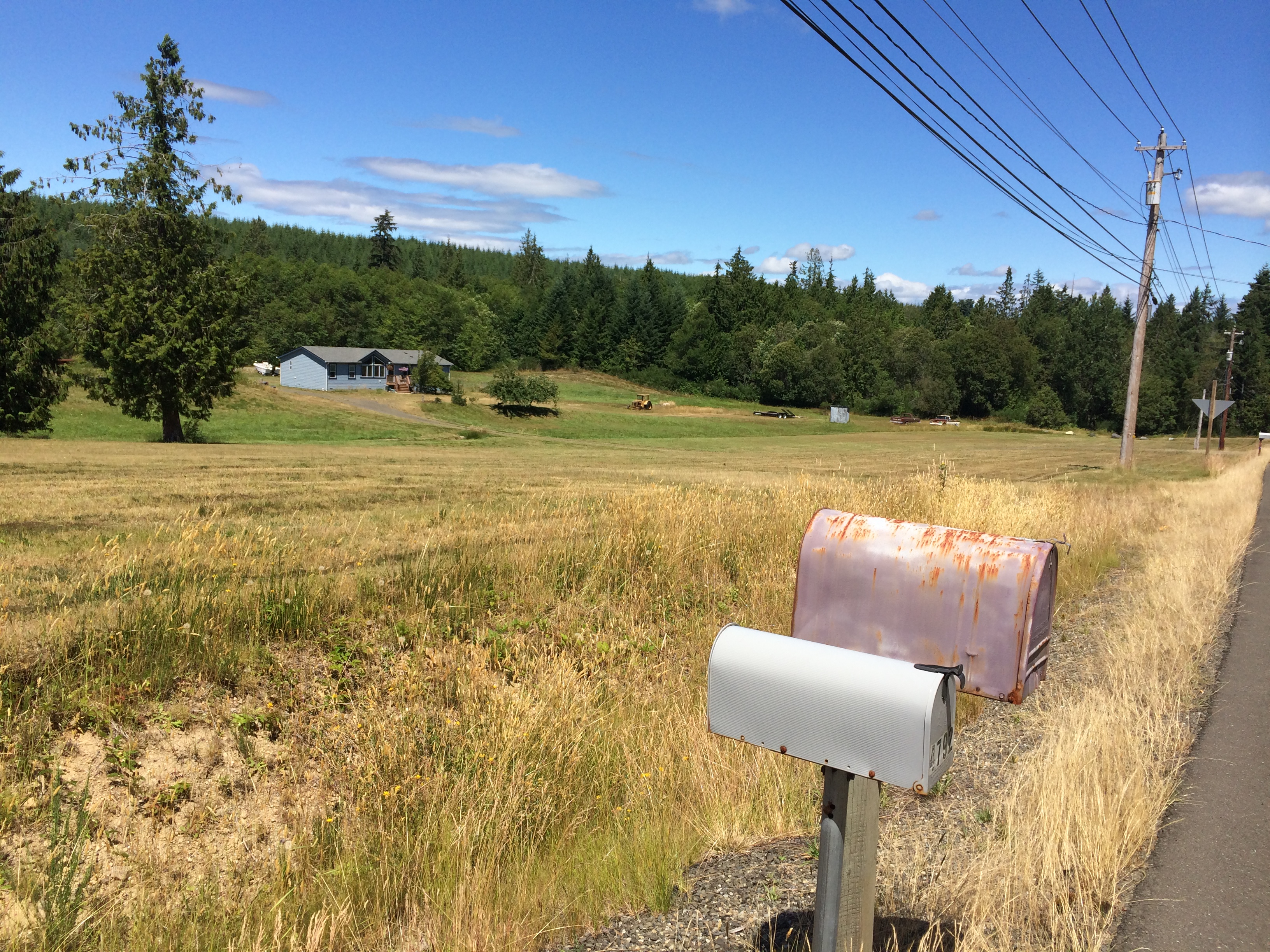
I’m running along Grapeview Loop Road in the sleepy Western Washington town of Allyn. It’s Friday afternoon and the rain that has been falling steadily all morning has let up, topaz blue skies peeking through the still stormy, not-quite-white cotton candy clouds. It’s what people in the Pacific Northwest call a “sun break,” and I’m taking full advantage of it. Rain is usually an unwelcome sight in this part of the world during the late summer months, but it’s desperately needed due to abnormally dry weather conditions and a series of terrible fires that are pummeling the Eastern side of the state. For me, the rain also offers a welcome respite from the 100-degree temperatures currently baking Southern California, where I live. As I imagine the wall of heat permeating my little stucco bungalow in West Los Angeles, I am grateful that I’m here and not there.

As I wave appreciatively at the motorists who drift toward the median, giving me the widest possible berth as I jog by on the shoulder, I savor the delicious irony of the Death Cab for Cutie song, The Ghosts of Beverly Drive, pulsating through my headphones. It’s a song about damaged and jaded people in Los Angeles, people with “no firsts anymore.”

I don’t know why, I don’t know why/

I return to the scenes of these crimes/

Where the hedgerows slowly wind/

Through the ghosts of Beverly Drive.

While I don’t consider myself to be damaged or jaded by Los Angeles, after sixteen years of living there, I understand where those lyrics come from. Over the last decade and a half, I’ve changed dramatically from the eighteen-year-old college student who first arrived there, bright-eyed and full of hope. It took me years to get to where I am now, living a life that actually fits me, rather than trying too hard to be someone I’m not in a desperate effort to impress other people or feel worthy of their attention.

And yet. Despite the fact that I have greater ownership over my life than I’ve ever had, L.A. still doesn’t feel like home. It never really has. Not in the way that this place does: the place where I’m currently jogging down the road.

IMG_4995

For just over a week, I’ve been staying in Allyn, in an area of the Pacific Northwest that my family simply calls, “the beach.” It’s a large parcel of waterfront land overlooking Case Inlet, a piece of property first purchased by my grandparents in 1959, when they were court reporters working in Seattle and looking for a place to build a summer home.

As a child, I remember the beach as nothing short of magical. It was far away from everything, tucked away at the edge of the world like some sort of family secret. I spent all of my summers there: foraging for driftwood to build great big bonfires, roasting s’mores under the starlight, digging for clams at low tide (still the best clams you’ve ever tasted), cruising around Case Inlet in my uncle’s boat, dogpaddling through the saltwater and dodging big scary jellyfish.

As I got older, the magic began to fade as reality set in. My first cousin, who was, for many years, the closest thing I had to a brother, turned to drugs and violence and severed all ties with our family. My once vital and full-of-life grandfather suffered a stroke, leaving him wheelchair-bound and depressed. My dad was diagnosed with stage-four pancreatic cancer, but my mother shocked everyone by dying first, just a few months before him. My maternal grandmother quickly followed suit, succumbing to Alzheimer’s disease that had gone undiagnosed for years.

It got to the point where I started to hate the beach, because every visit was a painful reminder that so many people I loved had been so abruptly ripped away. Memories of carefree childhood summers were replaced with harsh adult realities like probate court, property tax, and estate planning. The left turn off of Grapeview Loop Road and on to our property – with its still, serene view of Mt. Rainier rising above Case Inlet – no longer made my heart swell. It leveled me.

IMG_4938

It took some time, many return visits, and no small amount of healing to realize that in spite of all of the change and loss, the beach is deeply rooted in my DNA. Not long ago, among a box full of mementos, I found a letter that my grandfather wrote me upon my college graduation, just over a decade ago. I was about to embark on my new, exciting life as an adult in Los Angeles, and he sweetly implored me not to forget where I came from. He closed the letter with these words: The beach never changes, ‘tis only we who change.

He’s right. I have changed. We all have. But as life shapes and shifts around me, the beach remains a constant. During these last three years of navigating emotional chaos and loss and questioning my life choices, years where I’ve slept with one eye open due to nightmares and panic attacks and occasionally crippling anxiety, the beach is the only place where I’ve continued to feel sheltered and safe. It’s the only place where I’ve been able to submit to deep grief and let it wash over me, allowing the healing process to begin. It’s the only place where my equilibrium returns, and where I’ve often thought – sometimes in spite of all evidence to the contrary – that everything is going to be OK.

It’s ironic to think that it took my mother dying for me to understand why she loved this place so much. Why it was always, throughout her life, her True North. Why she insisted, as far back as I can remember, that her ashes be scattered here, so that she could forever be a part of the sea and the sky and the evergreen trees. The other day, as I swam in Case Inlet, feeling the tingle of saltwater in my mouth, with the air perfectly still and everything around me slowing down, I whispered aloud, almost as though it were a prayer: I get it, Mom. And I wonder if somehow she heard me. I wonder if somehow she knew.

The beach never changes, ‘tis only we who change.

Until next time, friends.

IMG_4997

Words: a Love Story.

I’ve been writing my whole life, but until recently I never really considered myself a writer. Not like that. Writing was just something that I did. Whether they were high school essays, papers for a college journalism class, or the plays and short films I wrote when I first started acting, writing was always just something that came naturally and was fun to do, but nothing I ever took too seriously.

That all started to shift about three years ago. I’d been writing Extra Dry Martini for just a couple of months – something I started doing for fun – when my entire life fell apart. I’ve written in great detail about loss on this blog and I don’t feel the need to rehash it, but suffice it to say that the spring of 2012 through the spring of 2013 was a very difficult year for me. A very difficult year, the ramifications of which are still reverberating throughout my now very different life. When I finally came up for air and felt brave enough to write about it, I published a piece on this blog about my experiences entitled The Lost Year. And from there on out, my writing was different.

So it was that writing became less of a hobby and more of a lifeline. In the last year and a half, writing has been not only my most reliable creative outlet, but it has been my therapy. I would no sooner give it up than I would give up breathing, and in fact, I’ve often wondered if I were to give it up, if I would still be able to go on breathing.

When I feel lost or adrift, getting all those thoughts and feelings down on the page is sometimes the only thing that brings any relief. And while I don’t really believe that you can “get it all out,” there is something liberating about being able to wrap my mind around a moment, around pain or sorrow, around joy, around love, and to articulate it in such a way that it’s no longer a swirl of chaos in my brain, but something more ordered and easier to understand. Once on the page, with the words and thoughts at a slightly safer distance, I can read them with a measure of objectivity and think, maybe this thing has a little less power to hurt me than it used to.

I write out of a burning desire to transform the sad, empty spaces within me into art and in doing so, transcend the parts of me that still feel broken. And while I cherish the time I’ve spent absorbed in thought putting pen to paper or fingers to keyboard, I sometimes wonder if all the hours I’ve invested in crafting pretty sentences have left me less able than before to say the things that need to be said when it comes to face to face interaction with real, live people.

At this moment, I find myself juggling two projects that will soon bridge that gap: a gap between the solitude I’ve been spending in my own little creative laboratory and the big, bad outside world. The first project is a play. In July, I’m going to stand on a stage and talk about some of the very personal, very vulnerable things I’ve been writing about on this blog as part of a solo performance workshop called (appropriately) Barenaked Angels. For the first time, I’m going to say some of the things I’ve been writing down out loud, in front of an audience. Yikes.

The second project is my screenplay, a project and process I’ve detailed in earlier posts like Putting off tomorrow and Little steps. Big steps. First steps. As I continue to work through the second draft and push toward a looming deadline to hand over scripts to actors for the first table read, I am discovering more and more that the parts of the story that aren’t yet working are the parts where I haven’t delved deeply enough into the main character’s hopes, dreams, and flaws. In other words, it’s an autobiographical story without quite enough autobiography in it.

Words are seductive. There is something exquisitely satisfying about capturing a moment on paper and thinking, yes, that’s exactly what happened, how I felt about it, and why it mattered. Words have an incredible capacity to illuminate a life. But in the end, words are not life, and one cannot live by words alone. I’m so grateful for what writing has given me – for the way it has sheltered me through pain and has allowed me to connect with the hearts and minds of other writers through this blog. I will always, always be writing. But the writer’s life is also about finding balance. A writer needs to experience the world in order to write about it, and I haven’t been doing nearly enough of that lately. So now it’s time for me to take the next step: to take the lessons I’ve learned and not just write better, but live better too.

Until next time, friends.

Things my mother never did, part two.

I dreamt about my mother last night.  It was the first time I’d dreamt about her in awhile, at least that I remember.  I used to dream of her often after she died.  They were horrible, wrenching dreams.  Dreams in which she cried out to me to help her, but in which, one way or another, I was never able to.  Inevitably, I woke from these dreams sweating, sobbing, sometimes crying out.  And like my mother, unable to be helped.

Scan 142120026-2

Last night’s dream was different.  My mother and I were alone in a vacant old house.  She was as rail thin as I remember her the last time I saw her, six weeks before she died.  Her eyes had the same vacant, staring look, like black holes peering into the distance.  I pleaded with her to eat something, but she just shook her head no.  And then I noticed something strange:  my mother had in her possession a large black satchel full of food.  She had refused to eat anything, no matter how much I pleaded with her, yet she was hoarding food, stockpiling it.  To what end?

I woke to a still dark apartment in the early morning hours and I sat, frozen in my bed, utterly stunned by the sharp clarity with which I remembered every detail of my dream.  A phrase popped into my head:  “There was nothing you could do.”  And then another:  “It wasn’t your fault.”  Both phrases circled through my brain over and over until I became dizzy and I wept, hoping they were true.

Scan 142500001-2

I don’t know why my mother appeared to my subconscious mind in such a strange fashion after so long of an absence.  It may have something to do with the fact that as I write this, I’m sitting in the international terminal at LAX, waiting to board a flight that will take me the furthest away from home I’ve been for the longest among of time I’ve been away since my mother died, the prospect of which has me both exhilarated and terrified.  Or it may have something to do with the fact that since WordPress republished my blog post Things My Mother Never Did two weeks ago, I’ve heard from hundreds of people all over the world in countless heartfelt messages.  Messages of encouragement, of heartbreak, of hope, of loss, of dysfunction and love, all revolving around the most fundamental, yet often, the most anguishing relationship out there:  that of parent and child.  And over and over again, throughout all of the messages and the reblogs, the overwhelming theme has been this:  “Thank you for writing this.  I thought I was the only one.”

How can it be that there are so many of us, yet we still feel so desperately alone?  Well, let me be the first to tell you, friends, you are not alone.  As scary as it is for me to tell my dark family secrets, I will continue to do so.  Because the only way out is through, and for me, through is a road paved with honesty.

My mother was the love of my life.  I’m still angry with her.  I’m still racked with guilt that I couldn’t save her.  And I’m not running from either one of these truths.  But, as I embark on this journey, the first big scary adventure of my new life – the life dedicated to all the Things My Mother Never Did – I hope that for all of you out there who have so lovingly and kindly reached out to me, I hope that I can offer you some inspiration about forging a path back to acceptance and love, a path forged straight through forgiveness.  A path in which you are the architect of your own life.

Thank you to everyone who wrote me.  You have no idea how grateful I am.

Here I go!

Until next time, friends.

x

Sarah

Main blog photo chrome filter


Things my mother never did.

I think I know what’s wrong with me. No, that’s not true. I know I know what’s wrong with me. Or at least, I know one of the things that’s wrong with me. The Big Thing.

I have been putting off writing this, because the act of writing it, of putting it on paper, makes it a real thing. A real thing I can’t run away from, a real thing I’ve got to face. I’ve spent a lot of time over this last year 2014 alone; alone with myself and my thoughts, taking time and space – the likes of which I’d never allowed myself before – to process and to grieve a string of losses and difficult life events. And as 2014 drew to a close and I thought about the ways that I wanted 2015 to be different – and I want it to be different in just about every which way – I kept coming back to one thing: the truth must out.  We are only as sick as our secrets, and until I start telling the truth about the darkness – difficult as it may be – the darkness is going to continue to own me.

Summer 1988

So here goes. For as long as I can remember, I have been living with a tension between two powerful and conflicting emotions: anger and guilt. It wasn’t until the death of my mother two years ago and the subsequent unraveling of my nuclear family that I began to realize how profoundly this tension had been affecting me, how it had affected my entire life.

I am angry. I am angry with my mother. I have been angry with her for a very long time. You see, for most of my life, I was the parent, and she was the child. She was a fragile dove that needed to be protected, and she leaned on me to help her, to fix her, to save her. But I was never very good at it. I am angry with her because she knew that I was ill equipped to give her what she needed, but she insisted upon it anyway. I am angry with her because she set me up for failure.

And you would not believe the guilt that my anger produces, the way that it spins through my stomach like so much fire. The guilt is relentless. I am haunted because I think and feel such awful things about the person I loved more than anyone in this world. I am guilty for admitting these things, for saying them out loud. Guilty for being a horrible, selfish, ungrateful daughter. Guilty for not wanting to grow up to be like my mother, for – in point of fact – being terrified of growing up to be like her. And, most of all, guilty because I let her down when she needed me the most. Guilty because she died on my watch.

Mom frosting cake

Guilt and anger are a potent enough cocktail, but when you mix in grief and regret it’s enough to knock you sideways. And it, that, is what has been keeping me stuck. I never wanted to be like my mother when she was alive, but now that she’s gone, I can’t seem to stop embodying her worst traits. The chronic anxiety, the depression, the self-isolation, the use of alcohol as a coping mechanism, the stubborn refusal to ask for help. My 2014 was a dark year awash with all of these things, and all of them – I can only assume – have been some sort of twisted, semi-conscious attempt on my part to keep her alive.

Please don’t misunderstand me: my mother was wonderful. She was kind and sweet and loving and generous. She was a much better person than I am. But she was always so unhappy. She wanted more from her life than what she got. She gave up on her first dream of becoming a professional tennis player because her parents didn’t support it and she wasn’t strong enough to stand up to them. She was never very happy as the office manager of my father’s law practice, but she was good at it and it gave her the flexibility to raise a young child (me). But I grew up, and dad closed the law firm, and there were still so many things that she wanted to do. She wanted to go back to school and pursue a master’s degree in psychology, she wanted to refine her (already impressive) culinary skills with additional classes, she wanted to volunteer for political campaigns and charitable organizations, she wanted to travel the world. More than anything, I think my mom wanted to feel that she had value. That she could make a contribution that was important, a contribution that other people would notice and appreciate. But she was paralyzed to take that first step. There was always tomorrow, next week, next month, next year. And as the years went by, I watched her put together a life built on deferred dreams, a life where she preferred to look back on the past with fond nostalgia, and a resignation that her best years were already behind her.

But here’s the thing about dreams. They don’t die quietly. Hers certainly didn’t. They tortured her with visions of a life un-lived and she stuffed them down and pushed them aside and put everyone else’s needs before her own and she drank to dull the sharp edges of pain and longing.

Mom Dad Wedding

As she got sicker, the signs that had always been there – that I’d been too deep in denial to acknowledge because, in spite of the very personal resentments I’d harbored toward her, she was still my mother, and therefore, perfect – grew stark and outlined in thick edges. She had always lived with a bit of a disconnect between fantasy and reality (don’t we all?), but that disconnect turned borderline delusional. Her already small frame whittled away to nothing, her eyes turned hollow and vacant, she stopped making sense. I implored her to get help and her only response was to invent a therapist she was ‘seeing’ to get me off her back. (I know this because, well, Google. That, and she was a terrible liar.)

In the end, dying was the most purposeful thing that she’d done in years. She’d made up her mind that life wasn’t worth living anymore. She shunned all help. She shunned me. And she drank until she didn’t hurt anymore. She drank until she disappeared. And when she died, I started disappearing, too.

So here I am, two years after her death, still sitting at the cross streets of anger and guilt, streets intersected by avenues of grief and regret. It’s a four way stop full of monsters, and until now, my foot has been placed firmly on the brake pedal. And so, for this New Year 2015, I made a pact with myself. I’m going to start doing all of the things my mother never did. I’m going to do them actively, defiantly, and on purpose. Things like asking for help. Things like telling my truth, even if it’s uncomfortable or ‘inappropriate.’ Things like pushing myself out of my comfort zone and signing up for big, scary adventures. Things like not putting off my life. I’m going to take her mistakes and self-sabotage and heartache and unfulfilled dreams and use them as a road map to do the opposite, at Every. Single. Turn. And I’ve already started: I’m in the process of shopping for the most amazing therapist ever, I’m nearly two weeks into an thirty-day alcohol and sugar-free detox during which I’m digging in and focusing on my creative work, and soon, I’ll be leaving on a solo trip to Europe. And there are other things too. Things I’m not quite ready to talk about, but that are quietly, actively at work beneath the surface of my life.

Rejecting my mother’s life and her choices in such a cold and calculated fashion makes me feel like a malicious, rebellious child. And maybe that’s what I am. But at this point, after all of the darkness, after all of the self-sabotage and regret, making this choice sort of feels like life or death.  Along the way, I hope that I can finally learn to let go of the anger, and forgive her. I hope that I can finally learn to let go of the guilt, and forgive myself.

It’s worth a shot.

Until next time, friends.

disneyland


Birthday Girl.

This week, I turned thirty-four.  THIRTY-FOUR.  Holy hell, I am older than I ever thought I’d be.

(To all of my readers out there who are a little – or a lot – older than thirty-four, please accept my apologies.  Life, it seems, is all about perspective.  Isn’t it?)

I’ve always been big on birthdays.  Always.  But this year, I approached it quietly.  Not avoiding or ignoring, but not fully embracing it, either.  Figuring that this year, it simply is what it is.

Though I’m not necessarily delighted to be another year older, I was not sad to say goodbye to thirty-three.  It was without a doubt, the hardest year of my life.  That may seem like an odd statement, considering that thirty-one and thirty-two were particularly brutal years, during which a lot of really bad, painful things happened.  Nobody I love died during my thirty-third year, but in a way, it was sort of like I did.  And (metaphorical) death while living can be just about the toughest thing one can experience.  Or at least, it was for me.

I started thirty-three pretending I was OK (I wasn’t).  I was desperate to feel better, and I convinced myself that I needed to shake up my life because I wasn’t really living.  I was right about the not living part, but I went about the shaking up my life part in the wrong way.  In truth, I got a little bit crazy.  Not only did my new ‘fierce urgency of now’ maxim not work out, but I learned a hard lesson: I couldn’t just fake it to make it, and the more I tried, the less it worked.  I had been sad for a long time, but I wasn’t grieving, just shoving my feelings under the rug and trying to act like some superhuman strong woman, which ultimately just made everything worse.

And so I stopped the quick fix, impulsive behavior, and I started making the changes that were harder, and that would take more time.  I moved to a new neighborhood away from almost everyone I knew.  I stopped doing things I ‘loved,’ things that I’d always done, because honestly, my heart wasn’t in them any more.  I tried on lots of new, different things, trying to figure out which ‘Sarah’ was a fit, and it turned out that none of them were.  When all else failed, I borrowed a friend’s beach house and spent one of the most beautiful weeks of the summer crying into the sand.  I spent a lot of time alone.  And I wrote.  A lot.

None of the realizations I came to during my thirty-third year – the year of dying while living – came easy or cheap.  I learned that I wasn’t so much grieving the loved ones that I’d lost as I was grieving the person that I now was, without them.  I learned that the path toward healing ultimately involved grieving myself, grieving the old me that I no longer was, and then learning how to lovingly let her go.  I learned that the biggest source of my suffering came from trying to hold on to what was no longer true, that the sooner I could release the image in my mind of how things were ‘supposed’ to be, and accept them for what they actually were, the better off I’d be.  And I learned that letting go is a real bitch.

So when thirty-four arrived this past Tuesday, it was fittingly, a different type of birthday.  No splashy party, no big fanfare, no weekend trip away.  I worked a twelve-hour day styling a photo shoot for the company I’ve worked at for the last ten years.  We ordered in lunch, and in the afternoon, my coworkers got me a cake, sang me Happy Birthday, and I made a wish (a good one) and blew out the candles.  That night, I went home, put on a dress and got in a cab to meet a handful of friends for a small, low-key dinner, ending the evening over cocktails and conversation with some really good people.  And when I finally collapsed into bed, nearly twenty hours after my day had begun, I felt something that, while definitely not the unbridled joy I’ve been chasing, was a little bit like contentment, and a lot like peace.

I’ve always liked the fact that my birthday falls in December, so close to the end of the year.  It’s sort of like my own personal new year is closely aligned with the calendar New Year, and it gives me an opportunity to look back and take stock as both myself and the planet turn another year older.  And while I still believe in making resolutions, I no longer boldly predict that ‘this is going to be my best year yet,’ because life, in all its unpredictability, has taught me differently.  But what I do know is this:  that the hard lessons I took the time to learn during thirty-three have prepared me to have a better thirty-four.  That, while I’m not yet on the other side of the grief or the healing, I’m a wiser, stronger, and (strangely), more hopeful person than I was a year ago.  That I can’t rush this process or fake it till I make it, and that where I’m at, today, tomorrow, next week, is just fine.  And while I’d never boldly predict that this New Year will be my ‘best year yet,’ I’m pretty certain I’m going to end thirty-four in a better place than where I began it.

So – Happy New Year.

Until next time, friends.

On depression, and empathy.

Matthew: What are you working on?

Cory: Actually, I’m working on a book about the depression.

Matthew: So, you have an interest in historical material?

Cory: My depression. I’m writing a book about my depression.

Matthew: I see.

Cory: It’s an epic.

From the play, Private Eyes, by Steven Dietz

IMG_1435

I have an embarrassing admission to make. For most of my life, I didn’t believe that depression was a real, legitimate thing. Don’t get me wrong, I have always known that it exists, but as someone, who, for the most part, always found it pretty easy to be happy, I took it for granted that other people could do the same. I dismissed those who were frequently sad – including my own mother – as negative, or simply not trying hard enough. Like most people, I would get an occasional case of the blues – the result of a tough day or receiving some bad news – but I found that if I just went for a run, or watched a funny movie, or played some upbeat music, I could chase away the doldrums pretty easily. This too shall pass.  Because it always did.

And then, in an instant, everything changed. My dad got sick. My mom went crazy. They both died. On the heels of my mother’s death, my maternal grandmother was diagnosed with advanced Alzheimer’s disease. Suddenly, she too, was gone. And in the midst of it all, a close friend from college dropped dead in the gym of his apartment building, less than two weeks after his 31st birthday. A life full of promise cut abruptly short. Just like that.

All of this happened in the space of less than a year. For a while, I was in shock, moving from one tragedy to the next. But eventually, I was forced to confront the person left standing: me. A series of impossible events held a mirror up to my own life and what it reflected back was soul-searing. I was lost, unfulfilled, unhappy, but it was worse than that: I had given up. Given up on my dreams, given up on the idea that I deserved to be happy, given up on the person I had always wanted to be. I didn’t recognize myself anymore, and it was terrifying. Confronted with the choice of change or die, I chose to change. And that’s when things got really scary.

I suddenly found myself alone, trying to build a new life from scratch, with no idea what to do or how to start. I was 33, feeling utterly adrift while everyone around me seemed to have their lives figured out – relationships, kids, fulfilling careers.

And that’s when the sadness shifted into something more: the big D. Depression. For the first time in my life, it was no longer easy to get out of bed. I found social events with even the closest of friends exhausting, and anything that involved meeting strangers nearly unthinkable. My everyday worries and anxieties became worse; an above average fear of heights turned crippling. My motivation to tackle even the most basic of tasks was utterly nonexistent. I (once again) took up smoking, and continued to smoke even though it made me feel sick, taking some sort of perverse pleasure in how destructive it was. I hated myself.

IMG_1312

But I also found something else in my spiral into sadness, something that I didn’t expect: empathy. As a former ‘ happy girl,’ I never understood the monumental effort it could take someone with depression just to get dressed, to leave the house, to plaster on a smile, to make the requisite small talk that fills life’s daily interactions. But now I did. I understood all too well.

I’m pretty sure that depressed people – or at least this depressed person – don’t want to be depressed. If given the chance, they’d prefer to be joyful rather than sorrowful, prefer to find it easy to be with people rather than difficult, prefer to be up, rather than down. Who wouldn’t?

But the thing I never understood until I started wrestling with my own depression was that in the face of all of my friends’ well-meaning advice about focusing on the positive, about choosing to be happy, about the fact that our thoughts make our worlds, for some people, the pursuit of happiness is a constant, ongoing battle. I am tough, and relentlessly stubborn. I don’t give up easily, and throughout this dark period I’ve fought. I’ve worked really damn hard: forcing myself to be social when I didn’t feel like it, exercising regularly, practicing gratitude, joining organizations, going on trips, getting involved in my community, and doing all the things you’re supposed to do to shift your outlook. But the key words here are hard and work. I never could have imagined that a simple quest to feel lighter could be so damn heavy. That the most basic tasks could spend me as though I’d just run miles through beach sand. That sometimes in spite of my best efforts, there wouldn’t be one single solitary thing that would make any of it better.

But here’s the flip side of sitting with this darkness, of living in it, of trying to learn from it: gratitude. I’m grateful for what my struggle has taught me. Being incapable of walking through this phase of my life as anything other than a broken person has stripped away all pretense and artifice. It has attracted people into my life that the old me never would have met, and it has caused me to chase new, different experiences, things the old me never would have done. In my battle to get better, I’ve met some truly beautiful souls – both in person and online through writing this blog – that have known profound pain, pain deeper than anything I’ve experienced. And like me, they too, are doing the best they can.

We all have our particular prejudices, our long-held beliefs, our wealth of experiences that form the framework through which we view the world. Sometimes – as in my case – they can cause us to be too judgmental toward other people, to feel self righteous about their choices. Human beings are naturally curious and though we want to understand each other, sometimes we don’t, we can’t. What the last couple of years have taught me is that there is always more to the story than meets the eye, that no one has it easy, and that, while some of us are better at dealing with hardship, none of us are left unscathed by the joys and sorrows that make up this beautiful, difficult, complicated life.

As a former happy girl currently engaged in the battle to get better, I have learned patience, gained self-awareness, and discovered the true value of gratitude. But empathy, above all, is the gift that my depression has given me.

Until next time, friends.

IMG_1719

Blog at WordPress.com.